The global balance of power is undergoing one of its most significant shifts since the end of the Cold War. At the centre of that transformation is the growing competition between the United States and China, a rivalry that increasingly shapes military planning, trade routes, technological development, and geopolitical alliances across the Indo-Pacific.
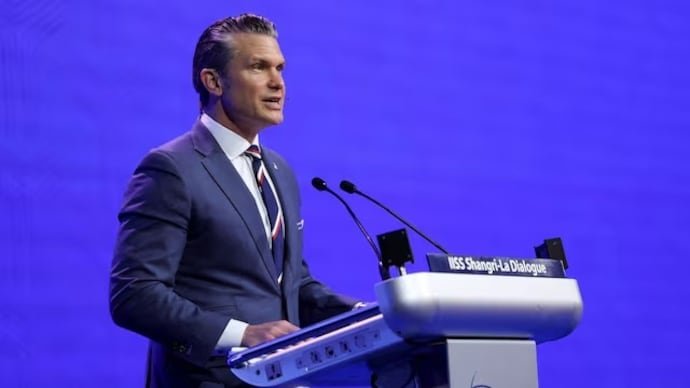
That reality was on full display when US Defence Secretary Pete Hegseth addressed the Shangri-La Dialogue in Singapore, Asia’s most influential security forum. His message was direct: Washington will continue supporting allies in the Indo-Pacific, but wealthy partners must invest more in their own defence capabilities. At the same time, he warned that the United States would not accept any attempt by China to establish regional hegemony.
The remarks reflect a broader strategic shift underway in US Foreign Policy. Rather than acting as the sole security guarantor, Washington increasingly wants allies to become stronger military partners capable of sharing the burden of regional deterrence.
As tensions over Taiwan, the South China Sea, military modernization, and strategic competition continue to intensify, the significance of Hegseth’s comments extends far beyond a single conference speech.
The Bigger Picture: Why the Indo-Pacific Matters More Than Ever
The Indo-Pacific has become the most strategically important region in the world. It hosts several of the world’s largest economies, carries a substantial share of global maritime trade, and contains critical supply chains for semiconductors, energy, manufacturing, and advanced technologies.
Any major disruption in the region would have immediate consequences for the Global Economy.
China’s rapid economic rise over the past four decades has been accompanied by an equally dramatic military transformation. The country has invested heavily in naval expansion, missile systems, cyber capabilities, artificial intelligence, and space technologies.
According to publicly available defence assessments, China now possesses the world’s largest navy by number of vessels and continues to modernize its armed forces at an unprecedented pace.
For the United States and many of its regional partners, the concern is not merely China’s military growth itself. The larger question is how that military power could be used to reshape regional security arrangements and alter existing balances of power.
What Pete Hegseth Actually Signaled
While headlines focused on his warning about Chinese influence, Hegseth’s speech carried several important strategic messages.
- The United States intends to remain deeply engaged in the Indo-Pacific.
- Washington views China’s military expansion as a major strategic challenge.
- Regional allies are expected to increase defence spending.
- The era of heavily subsidized security guarantees is ending.
- Deterrence not direct confrontation remains the primary objective.
These points reveal an evolving American strategy that combines military strength with alliance burden-sharing.
Rather than withdrawing from Asia, Washington appears to be asking allies to become more capable security contributors while maintaining US leadership within the broader alliance network.
The Rise of China’s Military Power
China’s military modernization has accelerated significantly over the past two decades.
The People’s Liberation Army (PLA) has transformed from a largely land-focused force into a modern military capable of operating across multiple domains, including sea, air, cyber, space, and electronic warfare.
Several developments have attracted international attention:
- Expansion of aircraft carrier programs
- Growth of advanced missile capabilities
- Modernization of naval fleets
- Increased military exercises near Taiwan
- Construction of military infrastructure in disputed maritime areas
- Investment in cyber and artificial intelligence technologies
For neighbouring countries, these developments create both opportunities and concerns. China remains a major trading partner for many Asian nations, yet its growing military influence has prompted governments to strengthen their own defence planning.
Why the US Wants Allies to Spend More on Defence
One of the most notable aspects of Hegseth’s remarks was his emphasis on defence spending.
The Pentagon chief suggested that Asian allies should move toward spending approximately 3.5% of GDP on defence. That figure would represent a significant increase for many countries in the region.
The argument from Washington is straightforward.
If allies face increasing security challenges, they should invest proportionally in their own defence capabilities rather than relying excessively on American military protection.
This approach mirrors a trend already visible within NATO, where the United States has repeatedly urged European members to spend more on defence.
| Strategic Objective | US Position | Expected Outcome |
|---|---|---|
| Increase Allied Defence Spending | Partners invest more in military capabilities | Stronger regional deterrence |
| Reduce Overdependence | Shared security responsibilities | More balanced alliances |
| Counter Regional Threats | Combined military readiness | Greater stability |
| Preserve Balance of Power | Prevent dominance by any single power | Open Indo-Pacific region |
The Taiwan Factor: The Issue Behind Many Strategic Calculations
Although Taiwan was not the sole focus of the discussion, it remains one of the most sensitive issues in US-China relations.
Beijing considers Taiwan part of its territory and has repeatedly stated that reunification remains a long-term objective.
The United States maintains a policy of strategic ambiguity while providing Taiwan with defensive support under existing legislation.
Military analysts frequently identify Taiwan as one of the most significant geopolitical flashpoints of the 21st century.
Any escalation around the Taiwan Strait could have consequences far beyond East Asia, potentially disrupting global semiconductor production, international trade flows, and financial markets.
As a result, many regional security initiatives are designed with deterrence and crisis prevention in mind.
The Economic Dimension Often Gets Overlooked
Most discussions about US-China competition focus on military developments. However, economics remains equally important.
China is a leading trading partner for much of Asia. The United States is also deeply integrated into regional commerce, investment, and technology networks.
This creates a unique strategic challenge.
Many countries want security cooperation with Washington while maintaining strong economic relationships with Beijing.
That balancing act has become one of the defining characteristics of modern Asian diplomacy.
Countries across Southeast Asia increasingly seek strategic flexibility rather than choosing sides in a binary competition.
The South China Sea Remains a Major Flashpoint
The South China Sea continues to be one of the world’s most contested maritime regions.
Multiple countries maintain overlapping territorial claims, while trillions of dollars in global trade pass through its waters annually.
Several governments have expressed concerns about military activities, maritime disputes, and freedom of navigation.
The United States regularly conducts naval operations in the region, arguing that international waterways must remain open and accessible under international law.
China, meanwhile, argues that its activities are consistent with protecting its sovereignty and national interests.
The competing interpretations ensure that the South China Sea remains a central issue in regional security discussions.
A New Security Architecture Is Emerging
One of the most important trends often missed in daily news coverage is the emergence of a broader Indo-Pacific security network.
Rather than relying solely on bilateral alliances, countries are increasingly building interconnected partnerships.
Examples include:
- US-Japan security cooperation
- US-South Korea military coordination
- The Quad involving the United States, India, Japan, and Australia
- AUKUS security cooperation among Australia, the United Kingdom, and the United States
- Expanded defence partnerships across Southeast Asia
This networked approach creates multiple layers of deterrence and cooperation, making regional security arrangements more resilient.
What This Means for India
India occupies a unique position within the evolving Indo-Pacific landscape.
As one of the world’s fastest-growing major economies and a significant military power, India has become an increasingly important player in regional security discussions.
New Delhi continues to pursue a strategy of strategic autonomy while expanding partnerships with multiple countries.
Its participation in forums such as the Quad highlights growing cooperation with other Indo-Pacific democracies, while India simultaneously maintains diplomatic engagement across a broad spectrum of international partners.
For India, stability in the Indo-Pacific is directly linked to trade, Energy Security, maritime commerce, and economic growth.
Any major disruption would have significant implications for national interests.
The “No Freeloading” Message and Its Global Significance
Perhaps the most politically significant phrase from Hegseth’s remarks was his warning against “freeloading.”
That language reflects a broader shift that has gained momentum in Washington over several years.
Across multiple administrations, policymakers have increasingly argued that allies should contribute more resources toward collective defence.
This does not necessarily signal reduced American commitment.
Instead, it reflects a desire for more balanced partnerships where security responsibilities are shared rather than concentrated.
The message resonates not only in Asia but also across Europe and other allied regions.
Expert Insight: The Real Competition Is About Influence, Not Territory
A common misconception is that modern great-power competition resembles historical territorial rivalries.
In reality, today’s competition is largely about influence.
The United States and China are competing to shape international institutions, technology standards, trade systems, supply chains, and security frameworks.
The question is not simply who has the largest military.
The larger question is which vision of regional order becomes more attractive and sustainable for other countries.
This makes diplomacy, economic policy, technological leadership, and alliance management just as important as military capabilities.
Future Outlook: What Happens Next?
Several trends are likely to shape the next phase of Indo-Pacific security.
- Continued growth in regional defence budgets
- Deeper military cooperation among allies
- Further modernization of China’s armed forces
- Expansion of strategic partnerships across Asia
- Greater focus on cyber, AI, and space capabilities
- Ongoing diplomatic efforts to prevent direct confrontation
While strategic competition between the United States and China is expected to continue, both powers also have strong incentives to avoid open conflict given the enormous economic and geopolitical consequences.
Conclusion: The Indo-Pacific’s Defining Strategic Debate
Pete Hegseth’s remarks in Singapore were about far more than defence spending targets or diplomatic rhetoric. They highlighted a fundamental reality shaping global politics: the Indo-Pacific has become the central arena of 21st-century strategic competition.
The United States is signaling that it will remain committed to regional security, but it expects allies to play a larger role. China, meanwhile, continues expanding its economic and military influence across Asia and beyond.
The resulting competition will influence everything from trade routes and technology standards to military alliances and global economic stability.
The key challenge for policymakers is ensuring that competition remains manageable, deterrence remains credible, and diplomacy remains active.
For businesses, investors, governments, and ordinary citizens, the stakes could hardly be higher. The future balance of power in the Indo-Pacific will not only shape Asia’s security environment it may ultimately define the global order for decades to come.
For breaking news and live news updates, like us on Facebook or follow us on Twitter and Instagram. Read more on Latest World on thefoxdaily.com.



COMMENTS 0