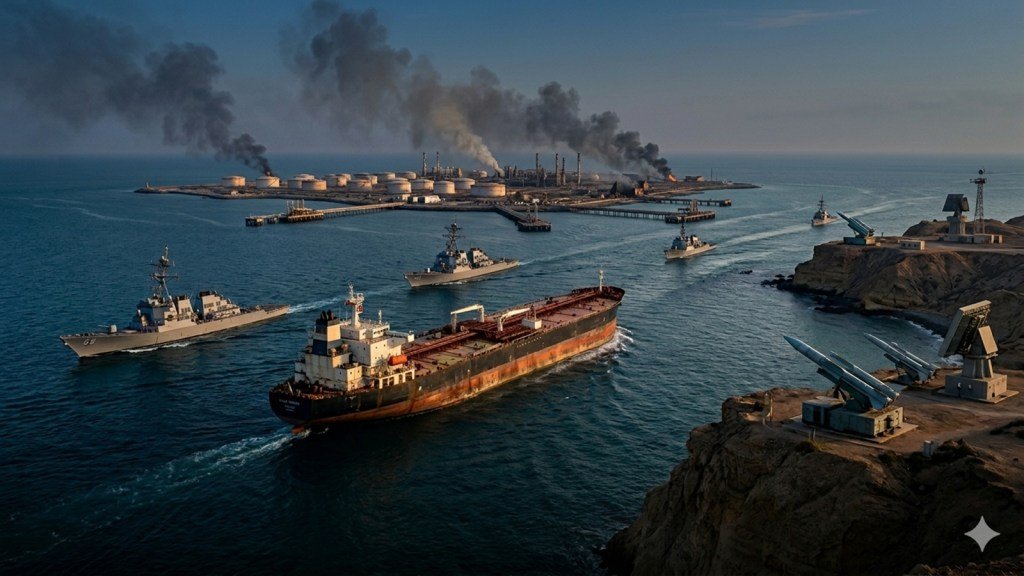
Iraq has taken a significant step toward strengthening its Energy Security by signing a one-year agreement with Turkiye to increase crude Oil Exports through the Iraq–Turkiye pipeline to the Mediterranean port of Ceyhan. The agreement comes at a time when disruptions in the Strait of Hormuz have highlighted the risks of relying heavily on a single maritime export route. As one of the world’s largest oil producers, Iraq is seeking to protect its Economy, stabilize exports, and improve resilience against geopolitical uncertainty.
The agreement establishes a minimum export target of 750,000 barrels of crude oil per day through the Ceyhan pipeline. While this remains below Iraq’s total pre-conflict export capacity, it represents a major increase from current pipeline volumes and provides Baghdad with a more diversified export strategy.
Why the Iraq–Turkiye Pipeline Agreement Matters
Oil exports are the backbone of Iraq’s economy. The overwhelming majority of government revenue comes from crude oil sales, making uninterrupted exports essential for public spending, Infrastructure investment, salaries, and economic stability.
For years, most Iraqi crude has been exported through southern terminals connected to the Persian Gulf, with shipments passing through the Strait of Hormuz. The waterway is one of the world’s most strategically important energy corridors, carrying a significant share of globally traded crude oil and liquefied natural gas.
Recent geopolitical tensions and shipping disruptions have exposed the vulnerability of relying almost entirely on this narrow maritime passage. The new agreement with Turkiye provides Iraq with an important alternative route that connects northern Iraqi oil fields directly to the Mediterranean Sea.
Key Highlights of the New Agreement
| Category | Details |
|---|---|
| Agreement Duration | One year |
| Pipeline Route | Kirkuk, Iraq to Ceyhan, Turkiye |
| Minimum Export Volume | 750,000 barrels per day |
| Primary Objective | Diversify Iraq’s oil export routes |
| Strategic Benefit | Reduce dependence on Strait of Hormuz shipping |
| Future Cooperation | Oil, electricity, water resources and infrastructure projects |
Background: Why the Ceyhan Pipeline Is Important
The Iraq–Turkiye Pipeline has long served as one of Iraq’s major export corridors. Stretching hundreds of kilometers from the Kirkuk oil-producing region to Turkiye’s Mediterranean coast, the pipeline allows Iraqi crude to reach European and international markets without passing through the Persian Gulf.
However, operations have faced repeated interruptions over the past several years due to legal disputes, commercial disagreements, infrastructure challenges, and regional political issues involving Iraq’s semi-autonomous Kurdish region.
Although limited exports resumed after extended negotiations, the pipeline has remained significantly underutilized compared with its historical capacity.
The latest agreement signals renewed political commitment from both Baghdad and Ankara to maximize the infrastructure’s potential while preparing for future energy cooperation.
Timeline of Recent Developments
| Period | Development |
|---|---|
| 2023 | Pipeline exports largely halted following legal and commercial disputes. |
| 2024 | Limited exports gradually resumed. |
| February 2026 | Regional tensions increased following disruptions affecting Strait of Hormuz shipping. |
| July 2026 | High-level Iraq-Turkiye discussions expanded cooperation in energy, trade and infrastructure. |
| August 2026 | One-year pipeline agreement signed to boost exports through Ceyhan. |
Reducing Dependence on the Strait of Hormuz
The Strait of Hormuz remains one of the world’s most important maritime chokepoints for global energy trade. Any disruption whether caused by geopolitical tensions, military conflict, or security incidents can immediately influence global oil prices and shipping costs.
For Iraq, which traditionally exports most of its crude through southern Gulf terminals, diversification is becoming an economic necessity rather than simply a strategic option.
Expanding exports through the Ceyhan pipeline creates greater flexibility. If one export route faces disruption, another can continue operating, helping reduce supply interruptions and providing greater confidence to international buyers.
Economic Importance for Iraq
Iraq possesses some of the world’s largest proven crude oil reserves and remains among the leading producers within OPEC. Oil revenue finances much of the country’s national budget, making export continuity critical.
Stable exports support:
- Government salaries and pensions
- Infrastructure investment
- Healthcare and education spending
- Public services
- Foreign currency reserves
- Economic development programs
Increasing pipeline exports also helps reduce logistical risks associated with relying on a single shipping corridor.
How the Agreement Benefits Turkiye
The agreement is strategically valuable for Turkiye as well. The Mediterranean port of Ceyhan has evolved into one of the region’s most important energy terminals, handling crude from multiple sources before shipment to international markets.
Higher throughput strengthens Turkiye’s role as an energy transit hub connecting the Middle East, Europe, and the Mediterranean. Increased pipeline activity can also generate additional economic benefits through port operations, storage facilities, transportation services, and supporting industries.
Broader Energy Cooperation Beyond Oil
The one-year agreement is only part of a wider framework under discussion between the two neighboring countries.
Officials indicated that negotiations are continuing across several sectors, including:
- Electricity cooperation
- Water resource management
- Cross-border infrastructure
- Trade expansion
- Energy investment
- Transport connectivity
Such cooperation reflects growing recognition that energy security increasingly depends on integrated regional infrastructure rather than isolated national projects.
The Proposed Basra–Haditha–Ceyhan Energy Corridor
Among the projects under consideration is a major pipeline connecting Basra in southern Iraq to Haditha in western Iraq before continuing toward Ceyhan in Turkiye and potentially reaching Syria’s Mediterranean port of Baniyas.
If developed, this corridor could significantly reshape Iraq’s export network by connecting southern production areas directly with Mediterranean outlets.
Such infrastructure would provide additional redundancy, greater export flexibility, and improved resilience against future disruptions affecting Gulf shipping routes.
Global Energy Market Implications
Although the agreement primarily serves Iraq’s national interests, international energy markets will also be watching closely.
Reliable export infrastructure helps stabilize global oil supplies, particularly during periods of geopolitical uncertainty. Markets generally respond positively when producers expand multiple transportation routes because diversified logistics reduce the likelihood of prolonged supply interruptions.
For energy-importing countries, increased reliability can improve planning and reduce uncertainty in international crude markets.
Comparison: Gulf Shipping vs. Mediterranean Pipeline Exports
| Factor | Strait of Hormuz Route | Ceyhan Pipeline Route |
|---|---|---|
| Transportation | Marine tankers | Pipeline to Mediterranean port |
| Main Risk | Maritime disruptions | Pipeline operational reliability |
| Export Flexibility | Highly dependent on Gulf access | Alternative export corridor |
| Strategic Value | Primary traditional route | Diversification and resilience |
Expert Insight: Diversification Is Becoming a Competitive Advantage
Modern energy security is no longer measured solely by production capacity. Increasingly, countries are evaluated on how effectively they can transport energy to global markets under changing geopolitical conditions.
For Iraq, developing multiple export corridors could become just as important as increasing oil production itself. Nations with diversified transportation networks are generally better positioned to manage regional disruptions, maintain customer confidence, and reduce financial risk.
The Ceyhan agreement reflects this broader shift in global energy strategy, where infrastructure resilience has become a central component of national economic planning.
Challenges That Remain
While the agreement marks meaningful progress, several challenges remain before Iraq fully achieves export diversification.
- Maintaining long-term political cooperation between both countries.
- Ensuring stable pipeline operations and maintenance.
- Resolving any remaining commercial or legal issues affecting northern exports.
- Expanding infrastructure to accommodate future production growth.
- Coordinating regional energy investments over the coming years.
Successfully addressing these issues will determine whether the current agreement evolves into a long-term strategic partnership.
Future Outlook
The one-year agreement represents more than a temporary increase in oil exports. It lays the foundation for broader cooperation that could reshape Iraq’s energy infrastructure over the coming decade.
If additional pipeline projects move forward and cross-border investments continue, Iraq could gradually build a more balanced export system capable of serving multiple international markets through both Gulf and Mediterranean routes.
Such diversification would strengthen economic resilience, improve investor confidence, and provide greater stability during periods of geopolitical uncertainty.
Conclusion
The Iraq–Turkiye agreement to increase crude exports through the Ceyhan pipeline marks an important milestone in Iraq’s effort to strengthen energy security and reduce reliance on the Strait of Hormuz. By committing to a minimum export volume of 750,000 barrels per day and expanding cooperation across energy and infrastructure sectors, Baghdad and Ankara are reinforcing a partnership that extends beyond oil alone.
As regional energy dynamics continue to evolve, diversified export routes are becoming an essential strategic asset rather than a luxury. While operational and political challenges remain, the renewed focus on the Ceyhan pipeline demonstrates how infrastructure investment, regional cooperation, and export flexibility can play a central role in safeguarding economic stability and supporting reliable global energy supplies.
For breaking news and live news updates, like us on Facebook or follow us on Twitter and Instagram. Read more on Latest World on thefoxdaily.com.






COMMENTS 0