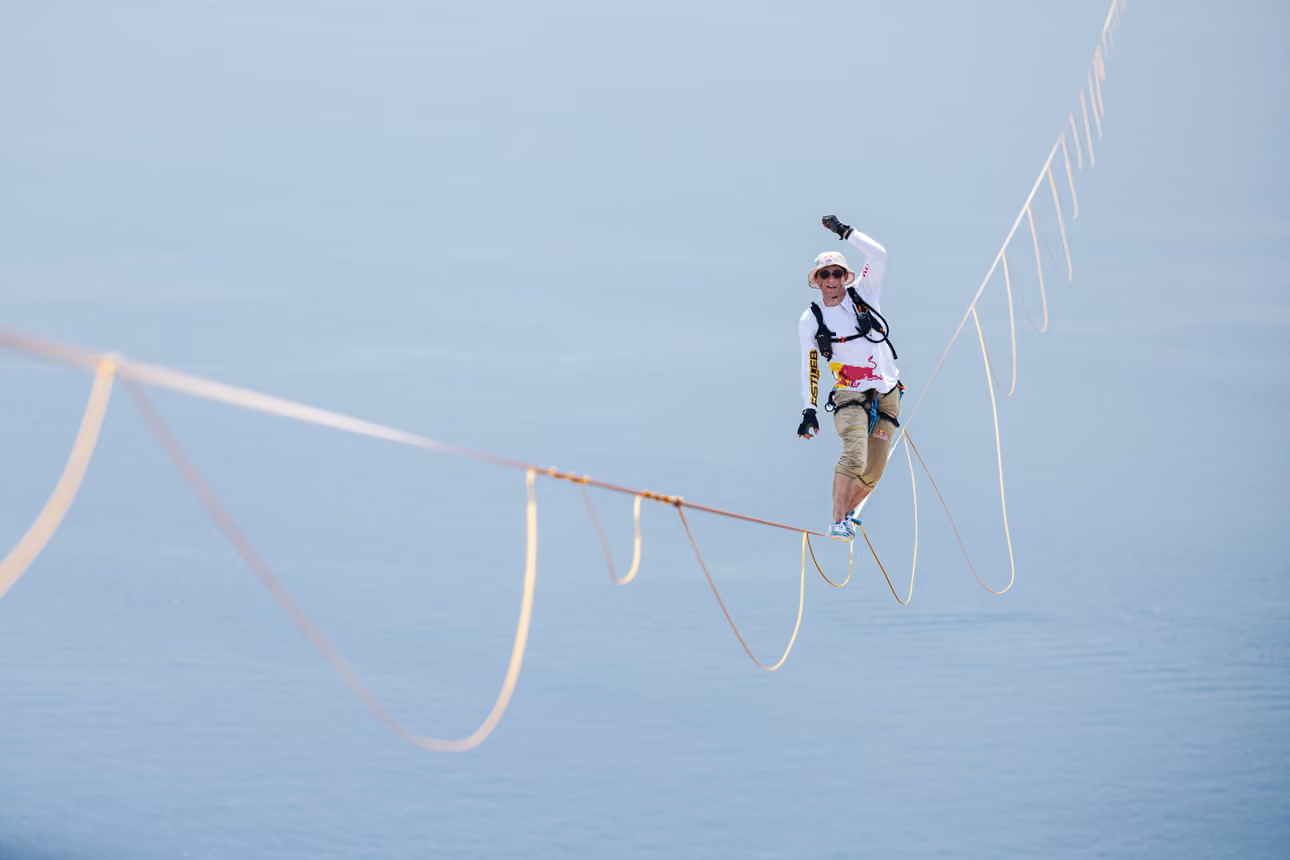
Estonian aerial athlete Jaan Roose has completed the first of two planned slackline crossings high above central Seoul, walking along a narrow 160-metre polyester ribbon suspended 120 metres above the ground.
The dramatic feat took place on Thursday near some of the South Korean capital’s most recognisable landmarks, with Roose crossing between the Koreana Hotel and the Dong-A Media Center, close to Gyeongbokgung Palace and Gwanghwamun Square.
Large crowds gathered to watch the three-time slackline world champion attempt the highline, with the spectacle scheduled for two crossings at 1pm and 4pm local time. The second attempt is subject to weather conditions, with organisers planning to postpone it if average wind speeds reach 10 metres per second or gusts reach 15 metres per second.
Jaan Roose takes on Seoul’s skyline
Roose, 34, has built an international reputation for taking slacklining into locations where the surrounding architecture and landscape add another level of difficulty to the sport.
His latest challenge placed him high above one of Seoul’s busiest central areas. The line stretched for 160 metres between two buildings, leaving the athlete to maintain his balance while exposed to the height, distance and changing atmospheric conditions.
Unlike conventional walking surfaces, a slackline is flexible and responds to the athlete’s movement. Every step requires constant adjustments in body position, foot placement and balance. At 120 metres above the city, even small movements become part of a highly demanding physical and mental exercise.
Roose’s safety equipment provides protection against a fall, but it does not remove the challenge of completing the crossing on the line itself. The athlete must repeatedly regain stability as the ribbon moves beneath his feet.
A career built around extraordinary highline challenges
The Seoul crossing is the latest addition to a series of ambitious projects that have taken Roose far beyond traditional slackline settings.
He previously made headlines for a 185-metre-high slackline crossing between the Katara Towers in Qatar. The urban setting turned the activity into a striking combination of athletic performance and aerial spectacle, with the athlete moving between high-rise structures above the ground.
Roose has also taken on challenges involving far greater distances. In 2024, he became the first person to slackline across the Strait of Messina between mainland Italy and Sicily.
That crossing covered 3.6 kilometres. Roose fell near the end of the traverse but was caught by his safety harness, allowing him to complete the attempt safely despite the setback.
The achievement demonstrated the difference between a short highline crossing and an endurance-based challenge. On a long line, the athlete has to maintain concentration and physical control for an extended period while dealing with fatigue and changing conditions.
14.7 kilometres above the Danube
Roose continued pushing the boundaries of distance last month when he covered 14.7 kilometres on a line above the Danube in Bratislava, Slovakia, over a period of 12 hours.
That feat highlights another side of modern slacklining. While highline performances are often associated with height and visual spectacle, long-distance attempts demand endurance, precision and the ability to remain focused over many hours.
His record of unusual locations has helped transform slacklining from a niche balance discipline into a form of large-scale aerial performance capable of attracting spectators in major cities.
Why Seoul has a special connection for Roose
The Seoul project has a personal connection for Roose. He said a visit to South Korea in 2022 inspired the idea for his Gwanghwamun walk.
During that visit, he encountered jultagi, Korea’s traditional form of tightrope walking. The performance tradition was added to UNESCO’s list of intangible cultural heritage in 2011.
For Roose, the Seoul highline therefore represents more than another extreme urban crossing. It connects a modern form of slacklining with a traditional Korean aerial performance that has been practised and developed as a cultural art form.
Jultagi is more than a test of balance
Although jultagi involves walking on a rope, its purpose and style differ significantly from the image many people have of traditional tightrope walking.
The performer is not simply expected to cross from one side to another. The tradition combines physical skill with Entertainment, storytelling and interaction.
A jultagi performer can sing, joke and dance while balancing on the rope. The performance also involves interaction with a clown on the ground, while musicians provide accompaniment.
That combination of acrobatics and theatrical performance gives Korean tightrope walking a distinctive cultural character. The rope becomes a stage rather than simply an obstacle to be crossed.
Roose’s Seoul project draws a modern parallel with that tradition. His highline performance is built around contemporary equipment and an urban environment, but the central visual idea remains familiar: a performer suspended above the ground, relying on balance, concentration and controlled movement.
Weather could determine the second crossing
The conditions around the second planned crossing are particularly important because highline performances are sensitive to wind.
The line is narrow and flexible, meaning wind can influence its movement. As the height increases, the consequences of losing balance also become more significant, making weather assessment an essential part of planning.
The second walk will be postponed if average wind speeds reach 10 metres per second or if gusts reach 15 metres per second. The forecast for Thursday was sunny with light breezes, creating conditions suitable for the first scheduled performance.
These thresholds illustrate why highline projects require more than athletic preparation. Weather monitoring, safety systems, structural planning and coordination around the performance area all form part of the attempt.
Thousands of eyes on a narrow line
The spectacle attracted large crowds in central Seoul, where spectators could watch Roose move across the line high above the city.
Performances of this kind create a striking contrast between the scale of a modern metropolis and the small movements of a single athlete. From the ground, the line can appear extremely thin against the surrounding buildings, while every step taken by the performer becomes visible as part of the larger spectacle.
The location near Gyeongbokgung Palace and Gwanghwamun Square also places the modern aerial performance close to one of Seoul’s best-known historic and civic areas.
That setting adds another layer to Roose’s stated connection with jultagi. Instead of performing on a traditional rope in a dedicated cultural setting, he is bringing a contemporary highline performance into the city’s urban landscape while drawing inspiration from a Korean tradition.
The physical demands of slacklining at extreme height
Slacklining requires constant corrections because the line moves in response to the athlete’s weight and movement. Unlike walking across a rigid surface, the performer has to anticipate how the line will react to each step.
At a height of 120 metres, concentration becomes especially important. The athlete needs to control posture, maintain a steady rhythm and respond to the movement of the line without allowing distractions from the surrounding environment to affect balance.
Long lines can also introduce additional movement. The farther the athlete travels from an anchor point, the more pronounced the dynamics of the line can become. This makes highline walking a combination of balance, body control, timing and endurance.
Roose’s previous projects show how he has approached these challenges in different ways. The Katara Towers crossing emphasised height and an urban environment, the Strait of Messina crossing introduced extreme distance, and the Danube challenge tested endurance over many hours.
Seoul adds another chapter to Roose’s highline career
The completed first crossing in Seoul adds another distinctive location to Roose’s growing list of aerial achievements.
What makes the project particularly notable is the combination of extreme height, a central city setting and the cultural inspiration behind it. The 160-metre line is considerably shorter than his 3.6-kilometre Strait of Messina traverse, but the height above central Seoul creates a very different challenge.
For spectators, the performance offers a rare view of a sport that normally takes place away from major urban centres. For Roose, the crossing connects his international highline career with an experience from his earlier visit to South Korea.
The outcome of the second scheduled crossing will depend on the conditions at the time. If winds remain within the required limits, Roose is expected to return to the line for another attempt later in the day.
Whether viewed as extreme sport, aerial performance or a modern interpretation of an old idea, the Seoul highline has brought slacklining directly into the heart of the South Korean capital, with Roose once again turning an ordinary stretch of open Space into an extraordinary test of balance.
For breaking news and live news updates, like us on Facebook or follow us on Twitter and Instagram. Read more on Latest World on thefoxdaily.com.

COMMENTS 0