India’s investigation into whisky imports by Diageo and Pernod Ricard has triggered concerns that the country’s interpretation of reduced Scotch whisky tariffs could undermine a key market-access benefit under the India-UK Trade agreement. An industry group representing liquor makers Diageo and Pernod Ricard has urged the Indian government to clarify whether bulk Scotch whisky concentrates qualify for preferential import duties under the pact.
In a letter to India’s commerce minister on Friday, October 23, the International Spirits and Wines Association of India (ISWAI) warned that the dispute over customs classification could prevent companies from benefiting from tariff concessions negotiated by India and the United Kingdom. The letter, seen by Reuters, said the issue risked undermining an important benefit agreed between the two countries.
The dispute follows searches of the offices of Diageo and Pernod Ricard by India’s Directorate of Revenue Intelligence (DRI) earlier in October. Investigators also questioned executives as part of an inquiry into whether the companies had misclassified imported products to qualify for lower tariffs.
At the centre of the controversy is whether bulk Scotch concentrates imported from Britain should receive the reduced 75% import duty available under the trade agreement or remain subject to a 150% tariff under a different customs classification. The disagreement has emerged as the first significant dispute over the trade agreement since it took effect on July 15.
Why India’s Scotch Whisky Tariff Dispute Matters
The dispute concerns the practical implementation of tariff concessions negotiated under the India-UK trade agreement. Although India agreed to reduce import duties on certain Scotch whisky imports, Indian investigators have privately told companies that the lower tariff does not apply to bulk Scotch concentrates.
The distinction is commercially significant for international spirits companies that import Scotch concentrates and use them to manufacture popular whisky brands in India. If the concentrates are classified under a customs category carrying a 150% duty, companies could lose access to the tariff reduction they expected under the agreement.
ISWAI has argued that this interpretation could make the preferential treatment negotiated by India and the United Kingdom effectively unavailable for the affected imports.
In its letter, the industry group said the classification issue:
“risks undermining, in practice, an important market-access benefit negotiated and agreed between India and the United Kingdom.”
The group also warned that the preferential tariff treatment could effectively become unavailable for these imports if the issue remained unresolved.
The dispute therefore extends beyond the investigation into two major spirits companies. It raises questions about how the tariff provisions of the bilateral trade agreement will be interpreted and whether businesses can rely on the concessions negotiated under the pact.
India-UK Trade Deal: How Scotch Whisky Tariffs Were Supposed to Change
Import duties on whisky were a major sticking point during the lengthy negotiations that preceded the India-UK trade agreement. India has historically imposed high tariffs on imported alcoholic beverages, making access to the Indian market a significant issue for British spirits producers.
Under the agreement, India agreed to reduce import taxes on certain Scotch whisky imports from 150% to 75% immediately, with a further reduction to 40% over 10 years.
The British government had highlighted the benefits of the agreement for iconic UK products, including whisky. The tariff concessions were expected to improve market access for British spirits in India, where Scotch whisky accounts for a substantial share of imported alcoholic beverages.
However, the current dispute concerns the scope of those concessions. Indian investigators have indicated that bulk Scotch concentrates do not qualify for the reduced 75% tariff and must instead be declared under a customs classification that attracts a 150% duty.
The industry group disputes that interpretation, arguing that the agreement expressly provides preferential tariff treatment for whisky under the relevant tariff lines.
Until the classification issue is clarified, companies importing Scotch concentrates face uncertainty over whether the tariff benefits negotiated under the agreement will apply to their products.
ISWAI Urges Government to Clarify Tariff Classification
The International Spirits and Wines Association of India has called for an urgent clarification from the Indian government to resolve the disagreement over the treatment of bulk Scotch concentrates.
In its letter to the commerce minister, the organisation argued that the relevant provisions of the India-UK agreement provide preferential tariff treatment for whisky under the applicable tariff lines.
The group warned that the current interpretation could prevent legitimate industry participants from accessing the benefits negotiated under the trade deal. It also highlighted the potential for uncertainty and disruption if the classification dispute continued.
The letter stated that an urgent clarification could help ensure that the market-access benefits agreed by India and Britain were realised while avoiding uncertainty and disruption for legitimate industry participants.
ISWAI declined to comment on the contents of its letter when approached by Reuters. India’s commerce ministry did not immediately respond to a request for comment.
The government’s interpretation of the relevant customs classifications will be important in determining whether bulk Scotch concentrates can benefit from the reduced duty or must continue to face the higher tariff.
DRI Investigation Into Diageo and Pernod Ricard
India’s Directorate of Revenue Intelligence searched the offices of Diageo and Pernod Ricard earlier in October and questioned executives as part of an investigation into the classification of imported products.
The inquiry is examining whether the companies misclassified imported goods to benefit from the reduced tariff rate. Investigators have reportedly told companies that bulk Scotch concentrates do not qualify for the preferential 75% duty and instead fall under a customs classification attracting a 150% tariff.
Three people with direct knowledge of the matter told Reuters that government inspectors had communicated this position to companies. The same people said Diageo and Pernod Ricard believe concentrates imported from Britain should qualify for the lower tariff.
Both companies have said they are cooperating with the Indian authorities conducting the investigation, according to statements they gave Reuters earlier in the week.
Pernod Ricard declined to comment on the latest development, while Diageo did not respond to a request for comment. The investigation remains centred on whether the imported products were correctly classified for customs purposes.
The tariff disagreement has created uncertainty because the companies and the authorities appear to hold different interpretations of how the trade agreement applies to bulk Scotch concentrates.
How Bulk Scotch Concentrates Are Used in Popular Indian Whisky Brands
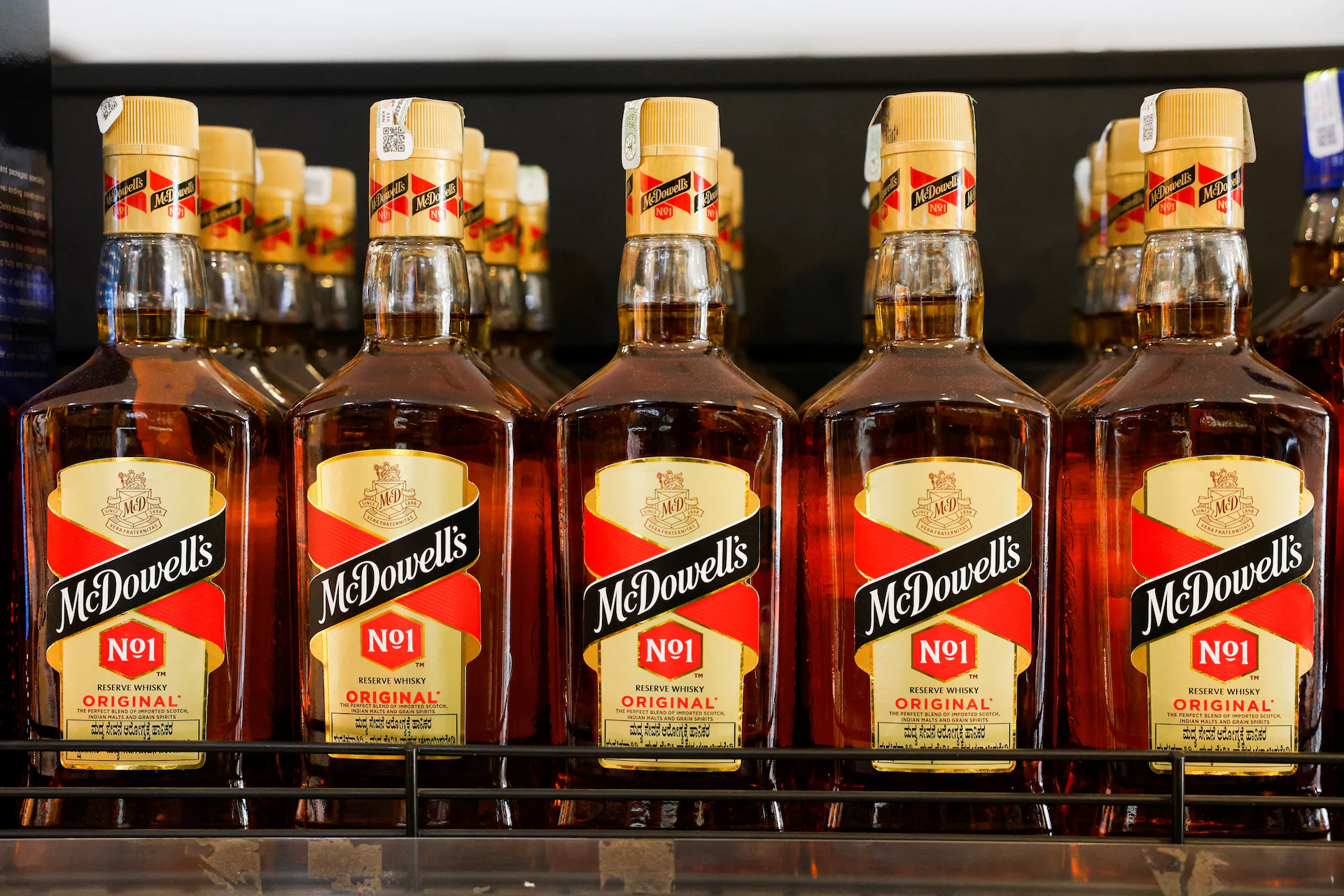
Diageo and Pernod Ricard import bulk Scotch concentrates, which are mixed with other ingredients to produce whisky brands sold in India. The products mentioned in the report include Royal Stag, Blenders Pride and McDowell’s.
The companies’ business models make the customs classification of imported concentrates particularly important. The duty applied to these imports can affect the cost of bringing the material into India for use in the production of popular domestic-market brands.
If the concentrates qualify for the lower tariff, the companies could benefit from the concessions negotiated under the India-UK trade agreement. If they are classified under a category carrying a 150% duty, the tariff reduction would not apply to those imports under the interpretation communicated by investigators.
The disagreement is therefore not simply about the headline tariff rate for Scotch whisky. It concerns which products qualify for the concession and how customs authorities should classify imported concentrates used in manufacturing.
ISWAI has argued that the agreement’s relevant tariff provisions expressly provide preferential treatment for whisky. The Indian authorities’ reported position, however, is that bulk concentrates must be declared under a different classification that attracts the higher duty.
India’s $65 Billion Alcohol Market Faces Trade Uncertainty
The investigation has sent ripples through India’s alcohol industry, which ISWAI’s letter highlights as a major market affected by the tariff dispute. The issue is particularly significant for British spirits producers because the United Kingdom accounts for almost 75% of India’s imported spirits, primarily driven by Scotch whisky, according to Crisil Ratings.
India’s large alcohol market makes the interpretation of import duties commercially important for both domestic and international companies. Changes in tariff treatment can affect the cost of imported products and the economics of businesses that use imported ingredients in locally produced brands.
The disagreement also comes at a sensitive point in India-UK trade relations, following the implementation of an agreement intended to improve market access for products from both countries.
For companies operating in the Indian market, the central concern is whether the tariff concessions will be applied in a predictable and consistent manner. ISWAI’s intervention reflects the industry’s concern that the treatment of bulk Scotch concentrates could weaken the practical value of the negotiated agreement.
The industry group has therefore asked the government to clarify the applicable classification rather than allow uncertainty to persist over which imports qualify for the lower rate.
Import Tax Disputes Have Long Troubled Foreign Companies in India
The dispute involving Diageo and Pernod Ricard comes against a wider background of tax and customs disagreements between Indian authorities and foreign companies.
Import tariff disputes have long been a concern for international investors operating in India. Foreign companies have previously faced demands for substantial back taxes, with cases involving Samsung and Volkswagen among the examples cited in the report.
Such disputes can create uncertainty over the interpretation of tax rules and the potential financial liabilities facing multinational businesses. The latest investigation adds another case to the broader debate over how import classifications and tariff obligations are applied.
For the spirits industry, the immediate issue is whether the tariff treatment of bulk Scotch concentrates is consistent with the terms negotiated under the India-UK agreement. For businesses more broadly, the dispute highlights the importance of clear customs rules and predictable implementation of trade commitments.
However, the existence of earlier tax disputes does not itself establish whether the current classification adopted by Indian investigators is correct. That question depends on the applicable customs rules and the interpretation of the relevant trade agreement provisions.
Pernod Ricard Already Faces Other Regulatory and Tax Challenges in India
Pernod Ricard is also dealing with separate regulatory and tax disputes in India. According to the report, the company faces antitrust cases and a $314 million back-tax demand from Indian authorities.
The authorities have accused Pernod of undervaluing certain imports. The company denies wrongdoing.
The latest investigation into the classification of bulk Scotch concentrates adds to the regulatory issues facing the French spirits group in its largest market by volume.
India is particularly important to Pernod Ricard because of the scale of its operations and the popularity of its products in the country. The outcome of the tariff dispute could therefore have implications for the company’s import arrangements and its interpretation of the India-UK trade agreement.
The separate back-tax demand and the current tariff investigation should not be treated as the same case. The supplied report describes them as distinct matters involving different allegations and regulatory questions.
Diageo and Pernod Ricard Say They Are Cooperating With Investigators
Both Diageo and Pernod Ricard have said they are cooperating with Indian authorities carrying out the investigation into the classification of imported products.
The companies have not publicly resolved the disagreement over whether bulk Scotch concentrates qualify for the reduced tariff. According to people familiar with the matter, both companies believe that concentrates imported from Britain should benefit from the lower rate agreed under the trade deal.
The authorities’ reported position differs, with inspectors indicating that the concentrates must be declared under a classification carrying a 150% duty.
The investigation will therefore need to address the classification question, while the industry group is pressing the commerce ministry for a clarification of the agreement’s tariff provisions.
Neither company has, in the information provided, announced a final resolution of the matter. The dispute remains an unresolved question about customs treatment and the practical application of the India-UK trade agreement.
What Happens Next in the India-UK Scotch Tariff Dispute?
The next significant development could be a clarification from the Indian government on whether bulk Scotch concentrates qualify for preferential tariff treatment under the trade agreement.
ISWAI has called for an urgent explanation, arguing that the uncertainty could prevent companies from receiving the market-access benefits negotiated by India and Britain. The commerce ministry had not immediately responded to a request for comment when Reuters reported the matter.
The authorities’ investigation into Diageo and Pernod Ricard is also continuing, with both companies saying they are cooperating. The supplied report does not provide a final finding on whether the companies misclassified their imports.
The outcome will depend on how the relevant customs classifications and tariff provisions are interpreted. If the government confirms that bulk Scotch concentrates qualify for the reduced rate, it could address the immediate uncertainty highlighted by the industry group. If the higher-duty classification remains applicable, the companies may not receive the expected tariff benefit for those imports.
At this stage, neither outcome has been confirmed in the supplied report. The central issue remains the interpretation and implementation of the tariff provisions agreed under the bilateral trade pact.
Frequently Asked Questions (FAQs)
1. Why is India investigating Diageo and Pernod Ricard?
India’s Directorate of Revenue Intelligence has searched the companies’ offices and questioned executives as part of an investigation into whether imported products were misclassified to benefit from reduced tariffs under the India-UK trade agreement. Both companies have said they are cooperating with the authorities.
2. What is the dispute over Scotch whisky import tariffs?
India agreed to reduce import taxes on certain Scotch whisky imports from 150% to 75% immediately, with a further reduction to 40% over 10 years. Indian investigators have reportedly told companies that bulk Scotch concentrates do not qualify for the reduced rate and instead attract a 150% duty.
3. What has ISWAI said about the investigation?
The International Spirits and Wines Association of India has warned that the classification dispute risks undermining an important market-access benefit negotiated under the India-UK trade agreement. It has urged the commerce minister to clarify the applicable tariff treatment.
4. Which Indian whisky brands use imported Scotch concentrates?
According to the report, Pernod Ricard and Diageo import bulk concentrates that are mixed with other ingredients to produce popular Indian brands, including Royal Stag, Blenders Pride and McDowell’s.
5. How important is the UK to India’s imported spirits market?
According to Crisil Ratings, Britain accounts for almost 75% of India’s imported spirits, primarily driven by Scotch whisky. This makes the tariff dispute significant for British spirits producers and businesses importing Scotch-related products into India.
6. Has the Indian government clarified whether bulk Scotch concentrates qualify for the lower tariff?
The supplied report does not provide a final clarification. Indian investigators have reportedly said that bulk concentrates attract the 150% duty, while ISWAI argues that the trade agreement provides preferential treatment for whisky under the relevant tariff lines.
7. Is Pernod Ricard facing other disputes in India?
Yes. The report says Pernod Ricard is facing antitrust cases and a $314 million back-tax demand over allegations that it undervalued certain imports. The company denies wrongdoing. These are separate matters from the current investigation into tariff classification.
Conclusion
India’s investigation into Diageo and Pernod Ricard has exposed a significant disagreement over the scope of Scotch whisky tariff concessions under the India-UK trade agreement. While the pact reduced import duties on certain Scotch imports from 150% to 75%, the authorities’ reported position is that bulk Scotch concentrates remain subject to the higher rate.
ISWAI has warned that this interpretation could undermine the market-access benefits negotiated by the two countries and has called for an urgent clarification from the Indian government. The dispute is commercially important because British spirits account for a substantial share of India’s imported spirits market, while bulk Scotch concentrates are used in the production of popular whisky brands sold domestically.
Both Diageo and Pernod Ricard have said they are cooperating with investigators, but the classification dispute remains unresolved in the supplied report. The government’s eventual clarification could determine whether the lower tariff applies to these imports and help establish how the India-UK trade agreement will operate in practice.
For breaking news and live news updates, like us on Facebook or follow us on Twitter and Instagram. Read more on Latest World on thefoxdaily.com.

COMMENTS 0