Motorists travelling through Staffordshire are facing major disruption after a collision forced the closure of the M6 motorway between Junction 14 for Stafford and Junction 15 for Stoke-on-Trent on Wednesday, November 25, 2026. Emergency services, including the air ambulance, attended the scene after a crash involving a heavy goods vehicle (HGV) and a car.
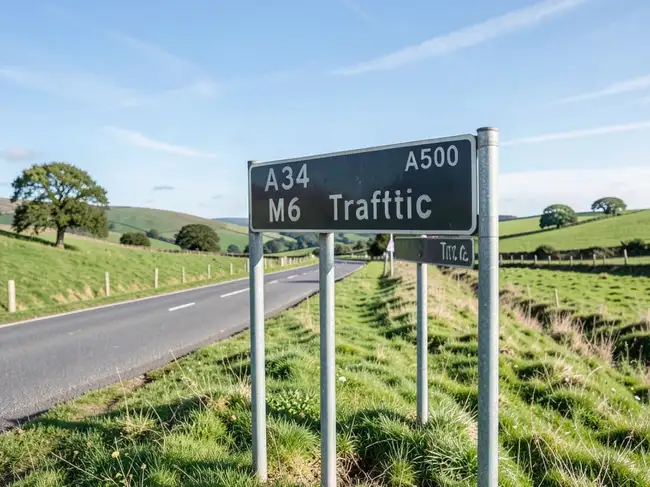
With both northbound and southbound carriageways affected, drivers have been advised to leave the motorway and follow official diversion routes using the A34 and A500. The alternative route connects the two affected junctions through Hanford, allowing motorists to bypass the closed stretch of motorway.
However, the diversion is not necessarily a shortcut. As thousands of motorists may be redirected onto the same roads, congestion around the A34, A500 and Hanford could add considerable time to journeys. Some southbound motorists were already facing delays exceeding 100 minutes, according to reports published during the incident.
Drivers planning to travel through Stafford, Stoke-on-Trent and surrounding areas should check the latest traffic information before setting off. There is no confirmed reopening time, and journey conditions may change as emergency services continue to deal with the collision.
Why Is the M6 Closed Between Junctions 14 and 15?
The M6 was closed in both directions following a collision involving an HGV and a car between Junction 14 and Junction 15. The incident occurred on Wednesday morning, with National Highways reporting that the collision happened shortly before 8:30 a.m.
Emergency services attended the scene, including police, fire and ambulance crews. The air ambulance was also reported to be among the services responding to the incident. National Highways Traffic Officers were deployed to assist with traffic management and the road closure.
The affected section is an important part of the motorway network connecting Stafford with Stoke-on-Trent and routes towards the wider West Midlands and North West England. Closing both carriageways means motorists cannot simply continue through the affected stretch, creating disruption for local traffic as well as long-distance journeys.
The closure affects:
- M6 Junction 14: Stafford, where the motorway connects with the A34.
- M6 Junction 15: Stoke-on-Trent, where the motorway connects with the A500.
- Both directions: Northbound and southbound traffic between the two junctions.
Until emergency services complete their work and the motorway is declared safe to reopen, motorists must use alternative roads or consider delaying their journeys.
Official M6 Diversion Route: How to Use the A34 and A500
National Highways has established separate diversion routes for northbound and southbound motorists. Both routes use the A34 and A500, with the interchange at Hanford serving as the connection between the two roads.
Drivers should follow the official hollow-triangle diversion symbols displayed on road signs rather than relying solely on navigation applications. The signed routes are designed to direct traffic around the closed motorway section.
Northbound Diversion: From Junction 14 to Junction 15
Motorists travelling northbound towards Stoke-on-Trent and beyond should leave the M6 at Junction 14 and use the A34 and A500 to reach Junction 15.
- Exit the M6 northbound at Junction 14, serving Stafford.
- Join the A34 northbound.
- Continue along the A34 towards Hanford, where it meets the A500.
- Take the exit onto the A500 westbound.
- Follow the A500 towards the M6 Junction 15 roundabout.
- Rejoin the M6 northbound at Junction 15.
This route allows northbound traffic to bypass the closed motorway section without entering the affected carriageway. However, queues may develop at the A34 and A500 connections as diverted vehicles converge around Hanford.
Southbound Diversion: From Junction 15 to Junction 14
Drivers heading southbound towards Stafford and the West Midlands should leave the M6 at Junction 15 and follow the reverse diversion through the A500 and A34.
- Exit the M6 southbound at Junction 15, near Stoke-on-Trent.
- Join the A500 eastbound.
- Continue towards the A34 interchange at Hanford.
- Take the exit onto the A34 southbound.
- Follow the A34 towards the M6 Junction 14 roundabout.
- Rejoin the M6 southbound at Junction 14.
The two diversion routes effectively reverse one another, using the A34 and A500 to reconnect with the motorway beyond the collision site. Drivers should pay particular attention to signs at Hanford, where traffic movements between the two roads may become busy.
Could the A34 and A500 Diversion Save Motorists Hours?
The A34 and A500 provide an official alternative to the closed M6 section, but whether they save motorists time depends on traffic conditions throughout the diversion. The route avoids the immediate collision site, yet it cannot eliminate delays caused by the large volume of redirected vehicles.
Reports during the disruption indicated that southbound M6 motorists were facing delays of more than 100 minutes. Additional delays were also reported on the northbound side. Such conditions make the official diversion an important option for drivers who need to continue their journeys, but they do not mean that every motorist will reach their destination faster.
The A34 and A500 are also used by local commuters, commercial vehicles and other road users. When motorway traffic is diverted onto these roads, the additional demand can create queues at junctions, roundabouts and traffic signals.
Why the Diversion Could Still Be Slow
There are several reasons why taking the alternative route may not save as much time as motorists expect.
- Concentrated traffic: Large numbers of motorway drivers may enter the A34 and A500 at the same time, increasing pressure on roads that also serve local traffic.
- Hanford interchange congestion: The connection between the A34 and A500 is a key point on both diversion routes. Queues here could affect motorists travelling in either direction.
- Local traffic movements: Drivers travelling between Stafford, Stoke-on-Trent and nearby communities may encounter additional traffic as diverted vehicles pass through the area.
- Commercial vehicle volumes: HGVs and other large vehicles using the alternative roads can affect traffic flow, particularly at junctions and roundabouts.
- Changing incident conditions: Emergency response activity and decisions about the motorway reopening may alter traffic patterns throughout the day.
For motorists already approaching the closure, following the signed diversion may be the most practical way to continue. Those who have not yet started their journeys may benefit from delaying travel or checking whether a different route avoids the affected area altogether.
Which M6 Junctions Are Affected by the Staffordshire Crash?
The closure is concentrated between two major junctions on the M6 in Staffordshire. Junction 14 provides access to Stafford through the A34, while Junction 15 serves the Stoke-on-Trent area and connects with the A500.
The disruption affects traffic travelling between these junctions in both directions. Motorists approaching from further north or south may also experience knock-on delays as vehicles queue before reaching the closure.
Drivers should distinguish between the closed section and the wider motorway network. The reported incident specifically affects the M6 between Junctions 14 and 15; it does not automatically mean that every section of the motorway around Staffordshire is closed.
Nevertheless, traffic congestion can spread beyond the immediate closure as motorists attempt to leave the motorway, join diversion roads or find alternative routes. Drivers approaching Junction 13, Junction 16 and other nearby connections should therefore check current conditions before deciding whether to continue.
When Will the M6 Reopen Between Junctions 14 and 15?
No confirmed reopening time has been announced. The motorway will remain closed until emergency services have completed their response and the relevant authorities are satisfied that the affected carriageways can safely reopen.
The time required can depend on several factors, including the severity of the collision, the condition and position of the vehicles, the need for recovery operations and any investigation work required at the scene.
Because the incident involves an HGV and a car and has required an extensive emergency response, motorists should avoid assuming that the motorway will reopen within a particular number of minutes or hours.
National Highways is the key source for official updates on the closure, traffic management arrangements and reopening information. Motorists should monitor its live travel updates and regional traffic announcements rather than relying on unverified social media posts or estimated reopening times.
What Should Motorists Do Before Travelling Through Staffordshire?
Drivers heading towards Stafford, Stoke-on-Trent or other destinations connected by the M6 should check road conditions before leaving. The situation can change quickly during a major motorway incident, particularly when emergency services are working at the scene and traffic is being redirected.
The following precautions can help motorists avoid unnecessary delays and travel more safely:
- Check National Highways updates: Look for the latest information on the M6 closure, diversion arrangements and any reopening announcement.
- Allow additional journey time: Drivers travelling towards Stafford or Stoke-on-Trent should plan for delays, even if they intend to use the A34 and A500.
- Follow official diversion signs: Use the signed routes and follow the hollow-triangle symbols for the correct direction of travel.
- Check congestion around Hanford: Traffic conditions at the A34 and A500 interchange may influence how long the diversion takes.
- Consider delaying non-essential journeys: If travel is not urgent, waiting until the closure is lifted may be a more practical option.
- Use navigation applications carefully: Live navigation can help identify changing traffic conditions, but drivers should not make sudden lane changes or unsafe manoeuvres to follow an alternative route.
- Maintain safe distances: Congestion and stop-start traffic increase the risk of rear-end collisions, particularly around motorway exits and diversion junctions.
Motorists should also avoid stopping on the motorway or using their phones while driving to check traffic applications. Any route changes should be planned safely before setting off or made after pulling over at a suitable location.
How the M6 Closure Could Affect Stafford and Stoke-on-Trent Traffic
The M6 is a major transport corridor, carrying commuters, freight vehicles and long-distance travellers through Staffordshire. A closure between Junctions 14 and 15 can therefore affect more than motorists whose journeys begin or end in the immediate area.
Stafford and Stoke-on-Trent are important local centres, while the motorway provides connections to other parts of the Midlands and North West England. When the motorway is blocked, some drivers may switch to local roads, increasing traffic in places that are not normally part of their journeys.
The A34 and A500 are particularly important during this incident because they form the official diversion between the affected junctions. Their ability to handle the additional traffic will influence how quickly motorists can pass around the closure.
Businesses and delivery operators may also experience disruption. HGV drivers could face longer journey times, while time-sensitive deliveries and scheduled transport movements may need to be adjusted. Commuters travelling through the area should expect conditions to remain unpredictable until the motorway reopens and traffic begins to return to normal.
Is It Better to Take the Diversion or Wait for the M6 to Reopen?
The decision depends on where a motorist is travelling from, how close they are to the closure and whether their journey is urgent. Drivers already approaching Junction 14 or Junction 15 should follow the official diversion instructions rather than attempting to pass through the closed section.
Those planning a journey several hours in advance have more flexibility. If the trip is not essential, delaying departure until National Highways confirms that the motorway has reopened could help avoid the uncertainty of diverted traffic.
For drivers who must travel, checking live congestion around Hanford and the surrounding A34 and A500 connections is particularly important. An alternative route may be useful, but choosing one without checking current conditions could simply move the delay from the motorway to another road.
There is no reliable basis for promising that the diversion will save every motorist hours. The route is an official way around the closure, not a guarantee of a quicker journey. Real-time traffic conditions, rather than distance alone, will determine whether it offers a meaningful time saving.
What Drivers Need to Know About the M6 Closure
The M6 remains the focus of a major traffic disruption in Staffordshire following a collision involving an HGV and a car between Junctions 14 and 15. Both directions have been closed, emergency services have attended the scene, and National Highways has directed motorists onto the A34 and A500.
The official diversion provides a route between Stafford and Stoke-on-Trent, but congestion on the alternative roads could still result in lengthy journeys. Reports of delays exceeding 100 minutes on the southbound carriageway underline the scale of the disruption.
Until a reopening time is confirmed, motorists should plan ahead, follow official diversion signs and check live traffic updates before travelling. Taking the A34 and A500 may help drivers bypass the closed section, but whether it saves hours will depend on how quickly traffic moves through the diversion.
For breaking news and live news updates, like us on Facebook or follow us on Twitter and Instagram. Read more on Latest World on thefoxdaily.com.

COMMENTS 0