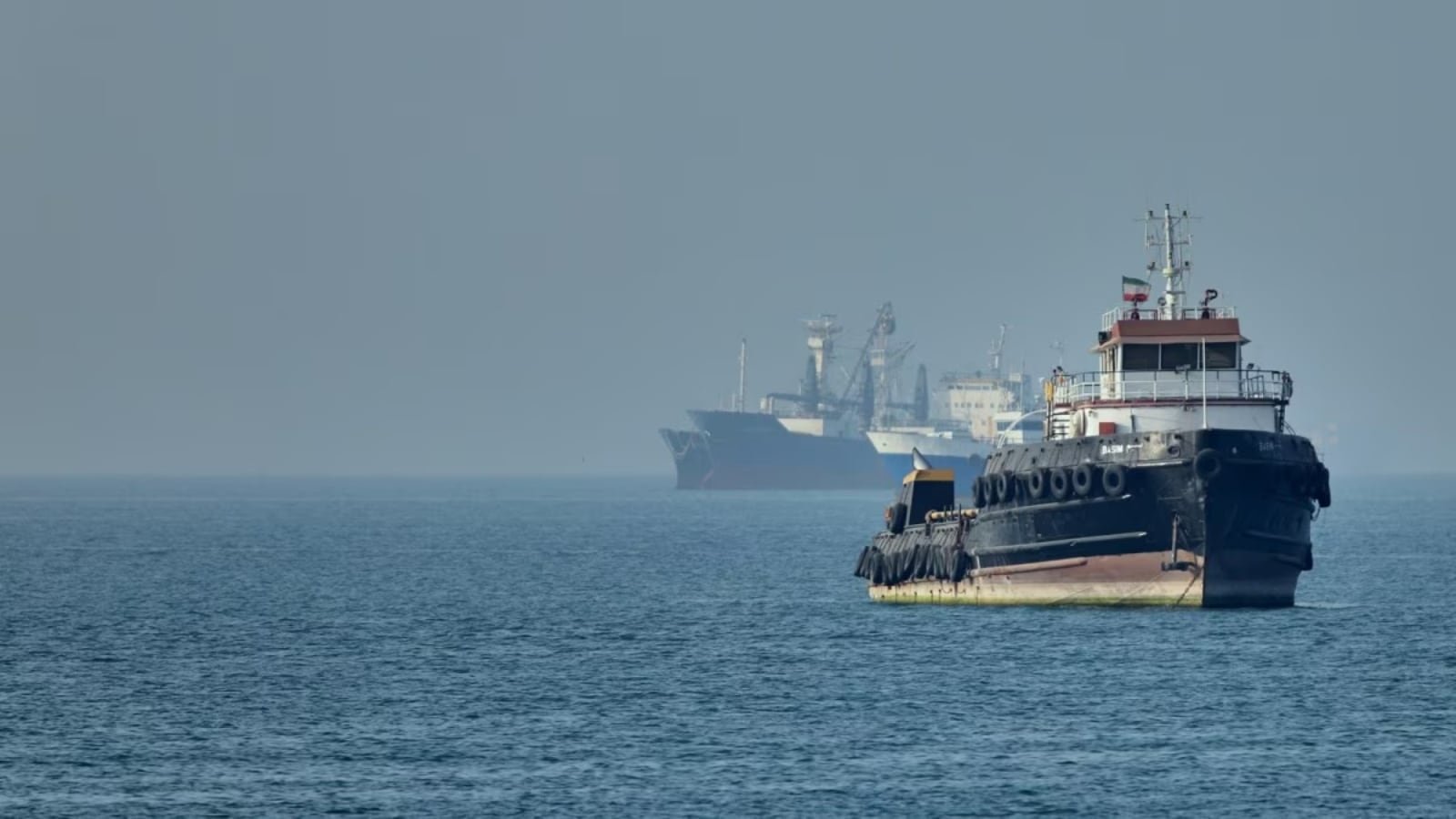
The ongoing confrontation involving the United States and Iran has entered a dangerous new phase, with commercial shipping increasingly becoming part of the conflict. One incident in particular has drawn attention in India after American forces struck the oil tanker MT Settebello near the Strait of Hormuz while 24 Indian crew members were onboard.
The attack has become more than a Maritime Security story. It has evolved into a diplomatic issue involving India, the United States, international shipping companies, and the broader geopolitical battle unfolding in the Gulf region.
Although American officials insist the operation was aimed at disabling a vessel allegedly transporting Iranian oil in violation of a Naval Blockade, the presence of Indian Sailors onboard has intensified scrutiny over how military operations are affecting civilian maritime traffic.
With three Indian crew members still missing, the incident highlights the growing risks facing commercial vessels operating in one of the world’s most strategically important waterways.
What Happened to MT Settebello?
According to reports, MT Settebello was sailing near the Strait of Hormuz when it was intercepted by US forces.
American military officials stated that the Palau-flagged tanker was allegedly involved in transporting Iranian oil despite restrictions imposed under a US-led blockade connected to the broader conflict involving Iran.
The US Military claimed that warnings were issued to the vessel before action was taken.
According to the American account, the tanker ignored those warnings and continued its voyage.
US Central Command subsequently conducted what it described as a precision strike targeting the vessel’s engine room rather than the ship itself.
Officials said the objective was to disable the tanker and prevent it from continuing its mission, not to sink it.
However, the strike placed dozens of civilian crew members in immediate danger.
Why Did the United States Target the Ship?
The central question surrounding the incident is why a commercial vessel carrying civilian sailors became a military target.
According to US officials, the tanker was allegedly attempting to breach restrictions imposed under a naval blockade aimed at limiting Iran’s ability to export oil during the conflict.
From Washington’s perspective, enforcement of the blockade is part of a broader strategy designed to pressure Tehran economically and militarily.
US officials have argued that vessels transporting sanctioned Iranian oil contribute to Iran’s financial resources and therefore become legitimate enforcement targets under the blockade framework being applied during the conflict.
The US military maintains that MT Settebello fell within that category.
Critically, American officials have emphasized that the attack was intended to disable the vessel rather than cause loss of life.
The distinction is important because maritime enforcement actions often seek to stop ships without destroying them or harming civilian crews.
Understanding the Strait of Hormuz: Why This Waterway Matters
To understand why incidents like this carry global significance, it is essential to understand the strategic importance of the Strait of Hormuz.
The strait is one of the world’s most critical maritime chokepoints.
| Strategic Feature | Importance |
|---|---|
| Location | Connects the Persian Gulf to global shipping routes |
| Energy Trade | Major route for global oil and gas exports |
| Military Significance | Key operational area for regional and international navies |
| Economic Impact | Vital to global energy markets and international trade |
Any military activity in this narrow waterway immediately affects international shipping, energy prices, insurance costs, and regional stability.
Because so many commercial vessels pass through the region every day, the risk of civilian ships becoming entangled in military operations is significant.
Who Were the Indian Crew Members?
The vessel carried 24 Indian seafarers, reflecting India’s enormous contribution to the global maritime workforce.
Indian sailors are employed across thousands of merchant ships worldwide, serving as officers, engineers, technicians, and crew members.
Following the strike, a rescue operation involving Omani authorities and maritime agencies successfully recovered 21 Indian crew members.
However, three sailors remain missing, making the incident particularly sensitive for the Indian government and the families involved.
The rescue operation prevented what could have become a much larger humanitarian tragedy.
Nevertheless, the disappearance of three crew members ensures that the diplomatic and political fallout is far from over.
Why India Summoned the Top US Diplomat
India responded by summoning the senior-most American diplomat available in New Delhi.
While official statements remained measured, the move carried clear diplomatic significance.
When a government summons a foreign diplomat, it typically seeks explanations, expresses concerns, or requests clarification regarding actions that affect its citizens or national interests.
In this case, India was confronted with a situation where dozens of its citizens had been exposed to military action during an international conflict.
Although New Delhi stopped short of publicly condemning Washington, the diplomatic engagement signaled that India expects accountability and transparency regarding incidents involving Indian nationals.
The Growing Risk to Indian Seafarers
The MT Settebello incident highlights a broader challenge that often receives limited public attention.
India is one of the world’s leading suppliers of maritime manpower.
Thousands of Indian sailors work aboard merchant ships operating across conflict-prone regions, including:
- The Persian Gulf.
- The Gulf of Oman.
- The Red Sea.
- The Arabian Sea.
- The Mediterranean.
- East African shipping routes.
These sailors frequently find themselves exposed to geopolitical risks over which they have little control.
Whether the threat comes from piracy, military conflict, Sanctions enforcement, or regional tensions, commercial crews often become unintended victims of disputes between states.
The latest incident serves as a reminder that maritime workers are among the most vulnerable civilians during periods of international instability.
The Legal Debate: Can Commercial Ships Be Targeted?
One of the key questions arising from the incident concerns international maritime law.
Under normal circumstances, commercial vessels enjoy protections as civilian assets.
However, during armed conflicts, sanctions enforcement operations, or naval blockades, legal complexities emerge.
Military forces may argue that certain vessels are assisting sanctioned activities or supporting hostile operations.
Critics, meanwhile, often contend that commercial ships carrying civilian crews should not be exposed to military action except under the most exceptional circumstances.
The legal justification for such operations frequently becomes a subject of international debate.
In the case of MT Settebello, discussions are likely to focus on whether the enforcement action was proportionate and whether sufficient measures were taken to protect civilian lives.
The Economic Impact of Attacks on Merchant Shipping
Beyond the immediate humanitarian concerns, incidents involving commercial shipping have broader economic consequences.
When military actions occur in major trade corridors, several effects typically follow:
- Higher shipping insurance premiums.
- Increased freight costs.
- Longer shipping routes.
- Delays in cargo deliveries.
- Greater fuel expenses.
- Volatility in energy markets.
For countries heavily dependent on imported energy, including India, disruptions in Gulf shipping routes can have significant economic implications.
Even isolated incidents can increase uncertainty across global commodity markets.
How the Iran Conflict Is Expanding Beyond Battlefields
The attack on MT Settebello illustrates how modern conflicts increasingly extend beyond traditional military targets.
Today’s wars affect:
- Commercial shipping.
- Global supply chains.
- Energy infrastructure.
- Civilian transportation networks.
- International financial systems.
- Diplomatic relationships.
As tensions between Washington and Tehran continue to escalate, merchant vessels operating near strategic waterways face growing uncertainty.
What was once considered routine commercial navigation can quickly become entangled in broader geopolitical calculations.
Why This Incident Matters for India’s Foreign Policy
India maintains important relationships with both the United States and countries across the Gulf region.
This balancing act has become a defining feature of Indian foreign policy.
New Delhi has consistently sought to protect its strategic interests while maintaining constructive ties with multiple competing powers.
The MT Settebello incident tests that approach because it involves three sensitive issues simultaneously:
- The safety of Indian citizens.
- Relations with the United States.
- The stability of Gulf shipping routes.
India’s response is therefore likely to focus on protecting its nationals while avoiding unnecessary escalation with key international partners.
The Human Cost Behind Geopolitical Headlines
Much of the public discussion surrounding the incident has focused on military strategy, sanctions enforcement, and diplomatic reactions.
Yet the most important aspect remains the human dimension.
Twenty-four Indian sailors boarded a commercial vessel expecting to perform routine professional duties.
Instead, they found themselves in the middle of a military confrontation involving some of the world’s most powerful armed forces.
For the families of the missing crew members, debates about sanctions, blockades, and geopolitical strategy are secondary to a much more immediate concern: whether their loved ones will return home safely.
What Happens Next?
Several developments are likely to shape the next phase of the story.
Investigations will focus on the circumstances surrounding the strike and the fate of the missing crew members.
Diplomatic discussions between India and the United States are expected to continue.
Maritime authorities may also review operational procedures for commercial vessels navigating conflict-prone waters.
Most importantly, search and rescue efforts concerning the missing sailors remain a priority.
The outcome of those efforts will significantly influence both the humanitarian and diplomatic dimensions of the incident.
Conclusion
The US strike on MT Settebello near the Strait of Hormuz has become one of the most significant maritime incidents involving Indian nationals during the current Iran Conflict. While Washington argues that the vessel was targeted as part of blockade enforcement operations against Iranian oil shipments, the presence of 24 Indian crew members has transformed the event into a sensitive diplomatic issue.
The rescue of 21 sailors prevented a larger tragedy, but the disappearance of three crew members ensures that questions about the operation will continue. Beyond the immediate incident, the attack highlights the growing risks facing commercial shipping in conflict zones and underscores how geopolitical rivalries increasingly affect ordinary civilians working far from home.
As the Iran conflict deepens and maritime tensions rise across the Gulf, the MT Settebello case serves as a stark reminder that in modern warfare, the line between military confrontation and civilian exposure is becoming increasingly blurred.
For breaking news and live news updates, like us on Facebook or follow us on Twitter and Instagram. Read more on Latest World on thefoxdaily.com.






COMMENTS 0