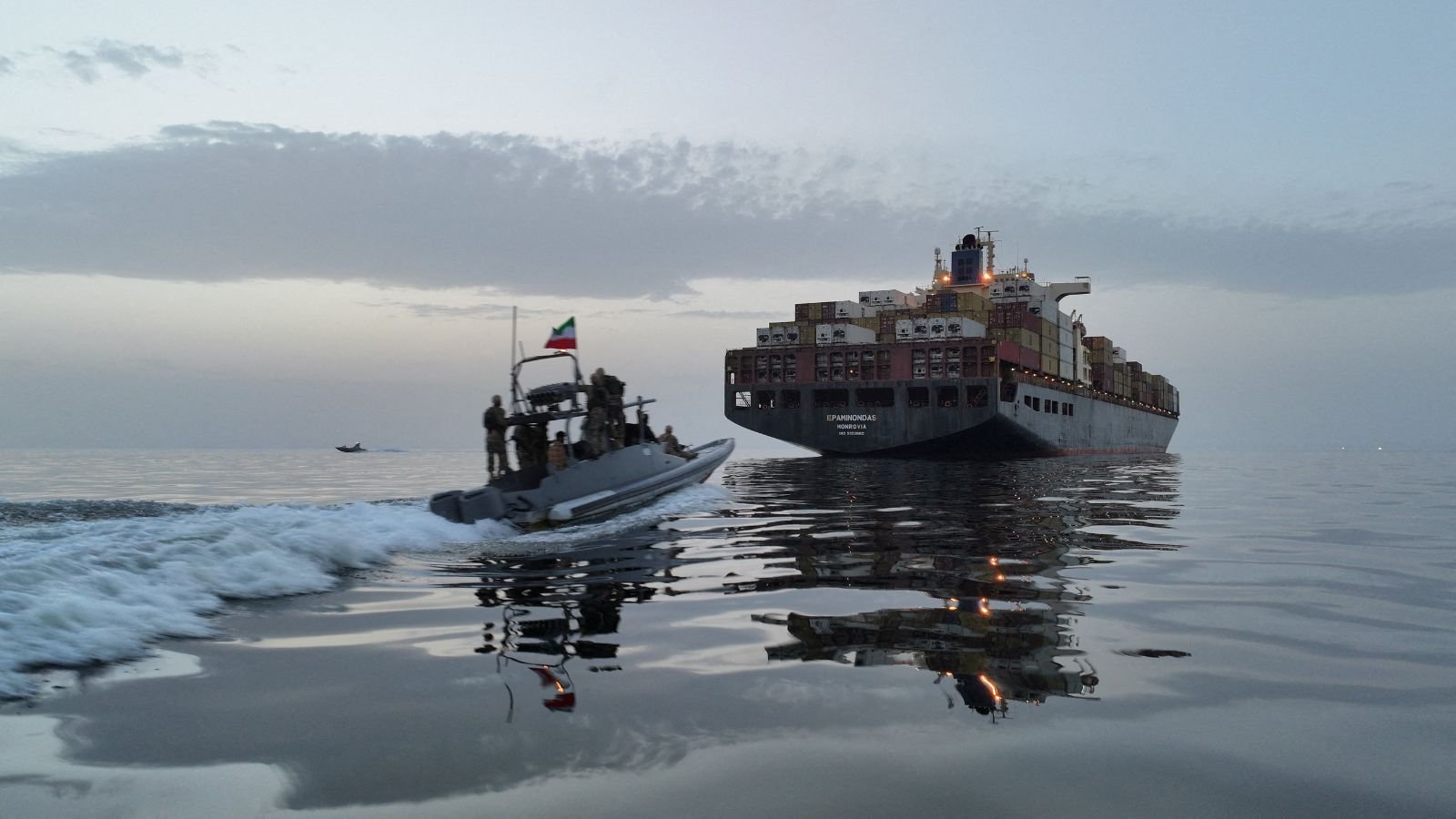
A container ship running aground in the Strait of Hormuz may appear to be a routine maritime accident, but the circumstances surrounding the incident have transformed it into a significant geopolitical flashpoint. Iranian authorities said the vessel ignored a navigation corridor designated by Tehran and instead entered shallow waters, leaving it unable to continue its voyage.
The development comes as indirect diplomatic efforts between Iran and the United States continue in Doha, where mediators are attempting to ease tensions surrounding regional security, maritime freedom, and broader Middle East stability. The grounding has renewed global attention on the Strait of Hormuz, a narrow waterway through which a substantial share of the world’s oil and liquefied natural gas exports passes every day.
Beyond the immediate shipping disruption, the incident reflects a larger struggle over maritime authority, international law, freedom of navigation, and energy security. With Iran seeking greater control over commercial shipping routes and Western powers rejecting new transit restrictions or fees, the dispute has implications that extend far beyond a single stranded vessel.
What Happened in the Strait of Hormuz?
According to Iranian authorities, the foreign container ship failed to follow a navigation route approved by Iran’s security forces while transiting the Strait of Hormuz. Instead, it entered shallower waters, where it ran aground and became immobilized.
Iranian officials stated that commercial vessels should comply with navigation instructions issued by the Islamic Revolutionary Guard Corps (IRGC) while passing through the strategic waterway. Tehran argued that using unauthorized routes increases navigational risks and could result in serious maritime incidents.
The incident occurred during heightened regional tensions, making it more than a simple shipping accident. It has become another example of how geopolitical disputes are increasingly affecting international maritime trade.
Why the Strait of Hormuz Matters to the World
The Strait of Hormuz is one of the most strategically important maritime chokepoints on Earth. Connecting the Persian Gulf with the Gulf of Oman and the Arabian Sea, it serves as the primary export route for energy shipments from several major oil-producing nations.
Countries including Saudi Arabia, iraq, Kuwait, the United Arab Emirates, Qatar, and Iran rely heavily on this narrow passage for global exports.
| Strategic Importance | Why It Matters |
|---|---|
| Global Energy Supply | Major route for crude oil and liquefied natural gas exports. |
| International Trade | Handles thousands of commercial vessel transits annually. |
| Regional Security | Frequently affected by military tensions and naval deployments. |
| Global Markets | Any disruption can influence energy prices and shipping costs. |
Because there are limited alternative routes capable of replacing its capacity, any disruption in the Strait of Hormuz immediately attracts worldwide attention from governments, investors, and shipping companies.
Iran’s Push to Control Shipping Routes
The latest incident highlights Iran’s growing insistence that vessels comply with routes designated by its authorities while navigating the strait.
Tehran argues that regulating shipping lanes enhances Maritime Safety and national security. Iranian officials have also indicated they ultimately want greater authority over transit procedures, including the possibility of charging passage fees in the future.
However, many maritime nations reject this position, arguing that international waterways should remain open to commercial navigation under established international legal principles.
This disagreement has become one of the most contentious issues in wider diplomatic discussions between Iran, the United States, and regional partners.
US-Iran Talks Add Diplomatic Pressure
The grounding coincided with indirect diplomatic engagements in Doha involving American representatives and Qatari mediators, while Iranian negotiators were also expected to participate through separate channels.
Although no direct negotiations were officially confirmed between Washington and Tehran, Qatar has continued serving as an intermediary in efforts to reduce tensions and explore longer-term agreements on regional security.
Among the issues reportedly under discussion are:
- Freedom of navigation.
- maritime security.
- Regional military de-escalation.
- Economic sanctions.
- Broader Middle East stability.
The Strait of Hormuz remains one of the most difficult subjects because it directly affects global commerce and national security interests.
Understanding Freedom of Navigation
One of the central legal questions concerns freedom of navigation.
International maritime law generally recognizes transit rights through international straits used for global navigation. Many countries argue that commercial vessels should be able to pass continuously and without unnecessary interference.
Iran, meanwhile, maintains that national security considerations justify greater oversight of shipping movements within waters under its jurisdiction.
This difference in legal interpretation has fueled repeated confrontations over several decades.
Timeline: Rising Tensions in the Strait of Hormuz
| Period | Major Development |
|---|---|
| 1980s | Tanker War during the Iran-Iraq conflict threatens commercial shipping. |
| 2000s | Repeated disputes over naval operations and sanctions. |
| 2019-2023 | Several commercial tankers seized or detained amid regional tensions. |
| 2026 | Disputes intensify over shipping routes and proposed transit regulations. |
| Latest Incident | Container ship runs aground after bypassing Iran-approved route. |
The latest episode fits into a much longer history of geopolitical competition surrounding one of the world’s busiest maritime corridors.
Impact on Global Shipping Companies
Commercial shipping companies carefully monitor developments in the Strait of Hormuz because even minor disruptions can significantly affect operating costs.
Potential consequences include:
- Higher marine insurance premiums.
- Longer voyage planning.
- Additional security measures.
- Possible rerouting expenses.
- Delays in cargo delivery.
Although many vessels continue transiting safely, uncertainty itself increases logistical complexity for Global shipping operators.
Could Energy Prices Be Affected?
Markets closely watch every incident involving the Strait of Hormuz because energy prices respond not only to actual supply disruptions but also to perceived risks.
Even when exports continue normally, heightened geopolitical uncertainty can increase price volatility in crude oil and natural gas markets.
If shipping delays become more frequent or insurers raise premiums substantially, transportation costs may eventually filter through global supply chains.
Comparison: Routine Shipping Accident vs Geopolitical Maritime Incident
| Routine Grounding | Current Strait of Hormuz Incident |
|---|---|
| Caused primarily by navigation error. | Occurred amid disputes over navigation authority. |
| Limited commercial impact. | Raises international diplomatic concerns. |
| Minimal geopolitical attention. | Closely watched by governments and financial markets. |
| Resolved through maritime salvage. | Influences broader negotiations on regional security. |
This comparison illustrates why the current event has attracted far greater international attention than a typical maritime accident.
Regional Security Concerns Continue
The grounding occurred alongside broader security developments across the Middle East, including increased military vigilance and ongoing concerns about drone activity and proxy conflicts.
Although some commercial vessels have successfully resumed transit through the strait, governments continue advising shipping operators to exercise heightened caution.
Several countries have reported that most of their merchant fleets have departed the region safely, suggesting that maritime traffic continues despite elevated tensions.
The Role of Qatar in Regional Diplomacy
Qatar has increasingly positioned itself as an important diplomatic intermediary in Middle Eastern negotiations.
Its ability to maintain communication channels with multiple regional and international actors allows it to facilitate indirect discussions even when formal diplomatic relations remain strained.
In the current situation, Doha’s mediation efforts extend beyond maritime security to encompass wider issues including regional conflicts, ceasefire implementation, and political stability.
Why Businesses Should Pay Attention
The implications of maritime tensions extend well beyond governments.
Manufacturers, exporters, importers, logistics providers, and financial institutions all depend on predictable shipping routes.
Any prolonged uncertainty in one of the world’s busiest maritime corridors can influence:
- Freight rates.
- Delivery schedules.
- Inventory planning.
- Commodity prices.
- Global inflation pressures.
Businesses with international supply chains therefore monitor developments in the Strait of Hormuz almost as closely as energy traders do.
A Bigger Trend: Shipping Routes Are Becoming Strategic Assets
One overlooked aspect of the current dispute is the growing geopolitical importance of commercial shipping lanes.
As international trade becomes increasingly interconnected, control over maritime chokepoints has evolved into a strategic tool of statecraft.
Governments now view shipping routes not merely as transportation corridors but also as instruments influencing national security, economic resilience, and diplomatic leverage.
The Strait of Hormuz is only one example. Similar strategic attention surrounds the Bab el-Mandeb Strait, the Suez Canal, the Panama Canal, and emerging Arctic shipping routes.
The container ship grounding is significant not simply because a vessel became stranded, but because it illustrates how commercial navigation and geopolitical competition are becoming increasingly intertwined in today’s Global Economy.
Future Outlook
The immediate priority will be safely refloating the grounded vessel and ensuring uninterrupted commercial traffic through the Strait of Hormuz. However, the broader dispute over navigation authority is unlikely to disappear quickly.
Future developments will depend largely on the progress of diplomatic discussions involving Iran, the United States, Gulf states, and international partners. Any lasting agreement on maritime transit could help reduce uncertainty for global shipping and energy markets. Conversely, continued disagreements over navigation rights or transit regulations could increase the likelihood of additional confrontations.
For the international community, the incident serves as a reminder that the stability of global trade depends not only on economic demand but also on secure and predictable maritime routes. As geopolitical rivalries continue to shape strategic waterways, the Strait of Hormuz will remain one of the world’s most closely watched maritime corridors, with implications reaching far beyond the Middle East.
For breaking news and live news updates, like us on Facebook or follow us on Twitter and Instagram. Read more on Latest World on thefoxdaily.com.






COMMENTS 0