- Why Israel Allegedly Built a Secret Base in Iraq
- The Shepherd Who Changed the Operation
- What Happened When Iraqi Troops Approached the Site
- Why the Report Matters Beyond Israel and Iran
- The Strategic Importance of Western Iraq
- Israeli Silence and Strategic Ambiguity
- The Hidden Risk of Long-Range Air Campaigns
- How This Could Affect Regional Diplomacy
- The Bigger Lesson: Modern Wars Are Increasingly Invisible Until They Suddenly Aren’t
- Conclusion
The Middle East’s long-running shadow war may have crossed another invisible line. According to a detailed report by The Wall Street Journal, Israel secretly operated a covert Military base inside western Iraq during its confrontation with Iran, using the remote desert site to support rescue missions, Logistics operations and special forces deployments tied to strikes deep inside Iranian territory.
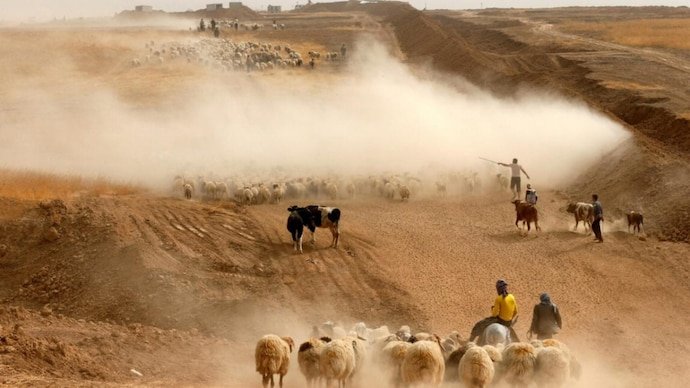
The existence of the hidden base allegedly remained unknown until an unlikely figure disrupted the operation: a shepherd. After noticing repeated low-flying helicopters and unusual military activity in the desert, the local resident alerted Iraqi authorities, setting off a chain of events that ultimately led Iraqi troops toward the concealed site.
What followed, according to the report, was deadly. Iraqi soldiers approaching the area reportedly came under attack, leaving one soldier dead and two injured. Baghdad initially blamed foreign forces and even suspected US involvement before reports later suggested the operation had been carried out solely by Israel.
The revelation is significant not only because of the covert military activity itself, but because it highlights how the Israel-Iran conflict is increasingly spilling across borders and drawing neighbouring countries into dangerous grey-zone confrontations they may neither control nor fully understand.
Why Israel Allegedly Built a Secret Base in Iraq
At the centre of the report is a strategic calculation. Israeli planners reportedly feared that long-range operations against Iran could leave fighter pilots stranded deep inside hostile territory if aircraft were shot down or disabled.
Iran sits roughly 1,000 miles from Israel, making any direct military campaign logistically complicated. Unlike shorter regional operations, strikes inside Iran require extensive refuelling coordination, intelligence support, rescue contingencies and fallback infrastructure.
That is where the Iraqi desert reportedly became useful.
Western Iraq’s sparsely populated terrain has historically been viewed as ideal for covert military activity because of its isolation and difficult geography. The same region was used by US-led coalition forces during the Gulf War and the Iraq invasion.
According to the report, Israel’s covert site housed:
- Special operations personnel
- Rescue teams for downed pilots
- Logistics support units
- Forward operational infrastructure
- Emergency extraction capabilities
The outpost allegedly served as an insurance policy in case Israeli aircraft conducting operations against Iran encountered trouble far from home.
The Shepherd Who Changed the Operation
One of the most striking aspects of the story is how such a sophisticated covert mission was reportedly compromised.
Not by satellite surveillance.
Not by cyber intelligence.
But by ordinary local observation.
According to Iraqi reports cited in the investigation, a shepherd noticed helicopters repeatedly flying unusually low over remote desert areas. In isolated regions, such activity stands out immediately, especially in communities deeply familiar with normal movement patterns.
The report illustrates a recurring reality in modern warfare: even in an age dominated by drones, satellites and AI-driven surveillance, human observation still matters enormously.
Military historians often note that local civilians frequently become accidental intelligence gatherers during covert operations. In Afghanistan, Iraq and Syria, ordinary residents have repeatedly exposed hidden troop movements simply because unfamiliar activity disrupted routine life.
In this case, the shepherd’s report allegedly triggered Iraqi security forces to investigate.
What Happened When Iraqi Troops Approached the Site
According to Iraqi officials cited in regional media, soldiers travelling in Humvees toward the suspected area before dawn suddenly came under intense attack.
One Iraqi soldier was reportedly killed, while two others were wounded.
The incident immediately escalated into a diplomatic and political crisis inside Iraq because the government initially believed foreign forces had attacked Iraqi troops on Iraqi soil without authorisation.
Lieutenant General Qais Al-Muhammadawi reportedly described the operation as reckless and unauthorised.
“This reckless operation was carried out without coordination or approval.”
At first, suspicion fell heavily on the United States because of America’s long military presence in Iraq and its operational capabilities in the region. Iraq later reportedly raised complaints at the United Nations regarding foreign military activity.
However, the emerging reports suggested that US forces were not involved in the strike on Iraqi troops and that Israel had acted independently.
Why the Report Matters Beyond Israel and Iran
The alleged covert base is not just another intelligence story. It reveals several broader shifts shaping the region.
1. The Israel-Iran Conflict Is Becoming Fully Regional
For years, Israel and Iran fought largely through proxies, cyberattacks and covert operations.
Now the conflict appears increasingly direct and geographically expansive.
Operations tied to the confrontation are reportedly unfolding across:
- Iran
- Iraq
- Syria
- Lebanon
- The Persian Gulf
- The Strait of Hormuz
The alleged Iraq base suggests the battlefield is no longer confined to conventional frontlines.
2. Iraq Is Caught in the Middle Again
Iraq has repeatedly found itself trapped between competing regional powers.
Since the US invasion in 2003, the country has struggled to balance relations with:
- The United States
- Iran
- Gulf states
- Turkey
- Western allies
The revelation that a foreign covert military base may have operated inside Iraq without public knowledge is politically explosive because it touches directly on Iraqi sovereignty.
For Iraqi leaders, the situation is deeply uncomfortable:
- If they knew about the base, they face accusations of complicity.
- If they did not know, it exposes intelligence and security vulnerabilities.
3. Covert Warfare Is Replacing Traditional Frontlines
Modern conflicts increasingly rely on:
- Special operations
- Cyberwarfare
- Intelligence missions
- Drone surveillance
- Proxy networks
- Hidden logistics infrastructure
The reported Israeli outpost reflects how states now seek operational depth without formally declaring broader wars.
These operations often remain deniable until accidents, leaks or civilian observation expose them.
The Strategic Importance of Western Iraq
Western Iraq has quietly become one of the Middle East’s most strategically sensitive zones.
The region offers:
- Vast desert cover
- Low population density
- Access corridors toward Syria and Iran
- Limited civilian monitoring
- Historic military infrastructure routes
For decades, military planners from multiple countries have viewed the area as ideal terrain for covert manoeuvres.
During the Gulf War and later US campaigns, coalition special forces frequently used western Iraq for staging and reconnaissance missions.
The latest report suggests that geography continues to shape modern regional conflict in powerful ways.
Israeli Silence and Strategic Ambiguity
Israel has not officially confirmed the existence of the base.
That silence fits a long-established Israeli doctrine known as strategic ambiguity.
Israel often avoids formally acknowledging covert operations even when international reporting strongly attributes actions to Israeli forces.
This approach serves multiple purposes:
- Reducing diplomatic fallout
- Maintaining operational flexibility
- Avoiding escalation pressure
- Protecting intelligence methods
- Allowing rivals room to avoid public retaliation
However, outgoing Israeli Air Force chief Tomer Bar appeared to hint at secret operations in a message praising special units involved in missions capable of “igniting the imagination.”
Such carefully worded statements often signal unofficial acknowledgement without formal confirmation.
The Hidden Risk of Long-Range Air Campaigns
One underreported aspect of the Israel-Iran confrontation is the extraordinary logistical complexity involved.
Long-distance air operations require:
| Operational Need | Why It Matters |
|---|---|
| Aerial refuelling | Aircraft cannot complete long-range missions without fuel support |
| Electronic warfare | Helps avoid enemy radar and missile systems |
| Search-and-rescue teams | Critical if pilots are downed behind enemy lines |
| Forward staging zones | Provide operational depth and emergency fallback options |
| Intelligence coordination | Necessary for tracking targets and avoiding interception |
The alleged Iraqi base reportedly existed primarily because Israeli planners feared pilot recovery scenarios.
That detail alone reveals how seriously military officials viewed the risks involved.
How This Could Affect Regional Diplomacy
The report may further complicate already fragile regional Diplomacy.
Several governments are attempting to prevent the Israel-Iran confrontation from spiralling into a wider regional war.
But revelations involving covert military infrastructure inside third countries risk increasing mistrust across the region.
For Iraq specifically, domestic political pressure may intensify.
Iran-backed factions inside Iraq are likely to use the report to criticise both Western and Israeli influence, while nationalist groups may demand stronger territorial control measures.
The incident could also affect:
- US-Iraq military cooperation
- Regional intelligence sharing
- Airspace agreements
- Border security coordination
- Counterterrorism operations
The Bigger Lesson: Modern Wars Are Increasingly Invisible Until They Suddenly Aren’t
The story of the alleged Israeli base carries a deeper lesson about 21st-century conflict.
Much of modern warfare now happens quietly:
- Hidden bases
- Cyber operations
- Proxy groups
- Satellite surveillance
- Intelligence networks
- Special operations missions
Most of it remains unseen by the public.
But sometimes these invisible wars abruptly surface through accidents, leaks or ordinary civilians witnessing something unusual.
In this case, a shepherd’s observation reportedly exposed a covert military footprint connected to one of the world’s most volatile geopolitical confrontations.
That contrast advanced military operations uncovered by basic human observation may become one of the defining images of this phase of the Middle East conflict.
Conclusion
The reported discovery of a secret Israeli operational base inside Iraq adds another dramatic layer to the rapidly evolving Israel-Iran confrontation. If accurate, the revelations highlight how far regional powers are willing to go to gain strategic advantage and how increasingly blurred the lines between covert action, regional sovereignty and open warfare have become.
More importantly, the incident underscores that the Middle East’s current tensions are no longer isolated flashpoints. They are interconnected conflicts stretching across borders, involving intelligence networks, hidden infrastructure and fragile alliances.
And perhaps most strikingly, the story demonstrates that in modern Geopolitics, even the most carefully concealed operations can unravel unexpectedly sometimes not through satellites or spies, but through the eyes of an ordinary person noticing something unusual in the desert sky.
For breaking news and live news updates, like us on Facebook or follow us on Twitter and Instagram. Read more on Latest World on thefoxdaily.com.






COMMENTS 0