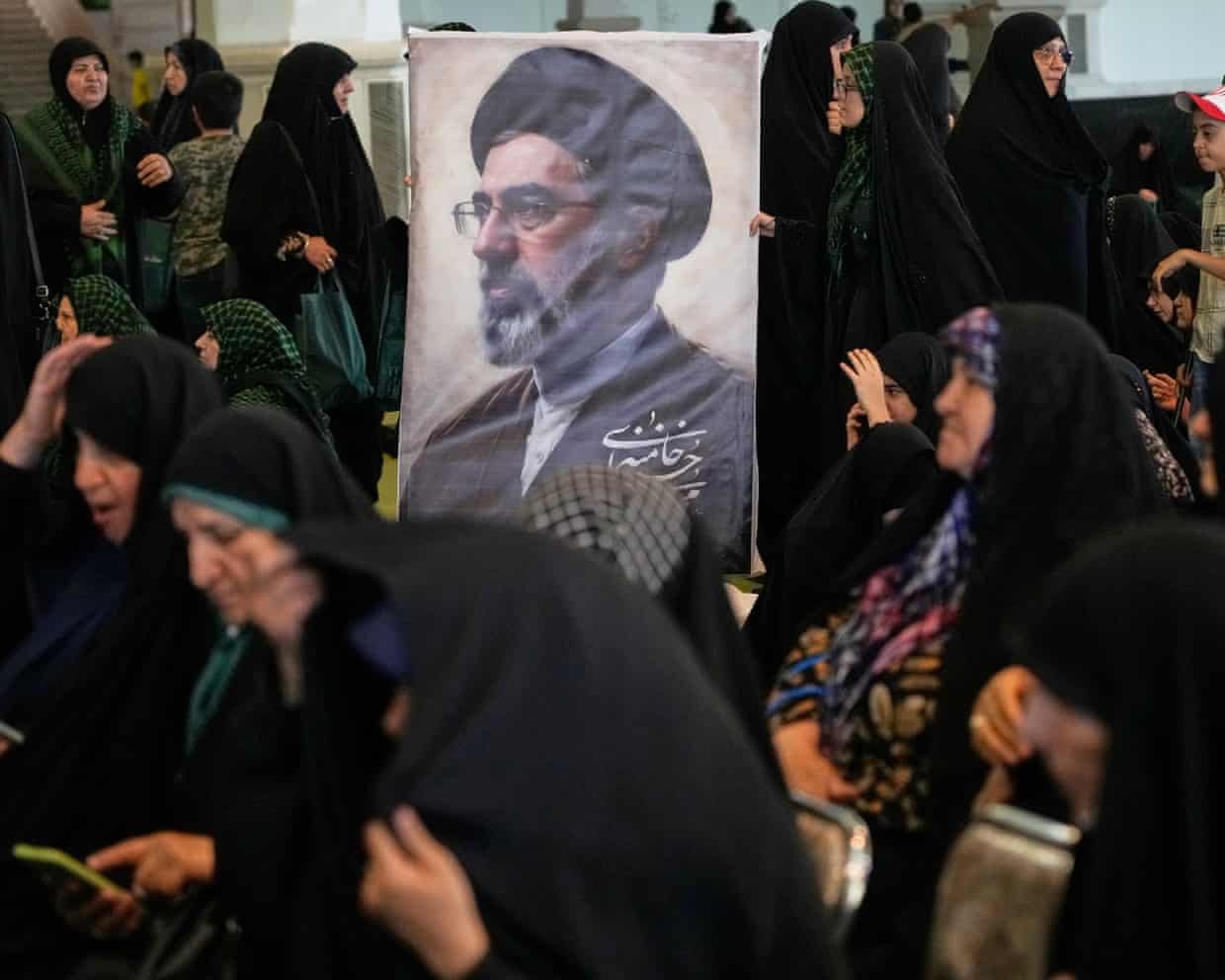
The possibility of a new peace agreement between the United States and Iran is no longer a distant diplomatic fantasy. After months of military escalation, economic disruption, and rising fears of a wider Middle East war, negotiations between Washington and Tehran appear to have entered their most sensitive phase yet.
But despite optimistic messaging from US President Donald Trump and signs of progress through Pakistani mediation efforts, the proposed agreement still faces one major obstacle: approval from Iran’s supreme leadership structure.
Iranian officials confirmed that the country’s supreme national security council and Supreme Leader Mojtaba Khamenei must still approve the deal before it can move forward. That detail matters enormously because, in Iran’s political system, strategic national security decisions ultimately flow through the office of the supreme leader.
In other words, diplomats may have drafted the framework, but the real political decision has not yet been made.
The stakes could hardly be higher. The proposed agreement reportedly includes sanctions relief, the release of frozen Iranian assets, negotiations over Iran’s nuclear programme, and the reopening of the Strait of Hormuz the world’s most important oil shipping chokepoint.
At the same time, the deal has triggered backlash from Republican hardliners in the United States, concern inside Israel, and fresh debate about whether Washington is effectively returning to a version of the same Diplomacy Trump once fiercely opposed.
This is not merely another diplomatic negotiation. It is a test of whether war fatigue, economic pressure, and geopolitical reality can overcome decades of mistrust.
What the Proposed US-Iran Deal Actually Includes
Although final details remain under negotiation, reports emerging from diplomatic channels suggest the proposed framework is far broader than a simple ceasefire.
The agreement reportedly contains multiple interconnected elements involving security, energy, sanctions, and nuclear negotiations.
| Proposed Deal Component | Expected Outcome |
|---|---|
| Ceasefire between US and Iran | Reduction in military escalation |
| Reopening Strait of Hormuz | Stabilization of global oil trade |
| Sanctions relief for Iran | Economic breathing room for Tehran |
| Release of frozen Iranian assets | Access to billions in overseas funds |
| 60-day nuclear negotiations | Talks on enrichment and monitoring |
| Regional de-escalation commitments | Pressure to reduce proxy conflicts |
One of the most controversial aspects involves reports that Iran could regain access to nearly $20 billion in frozen assets, including substantial funds reportedly held in Qatar.
That issue alone has sparked fierce criticism from US conservatives who argue the deal risks empowering Tehran economically without guaranteeing permanent nuclear restrictions.
Why Iran’s Supreme Leader Holds the Real Power
To understand why final approval matters so much, it is important to understand how Iran’s political system works.
Unlike Western democracies, Iran’s president does not have ultimate authority over military and strategic policy. The supreme leader sits above elected institutions and exercises decisive influence over:
- National security decisions
- Foreign policy direction
- Military strategy
- Nuclear negotiations
- Islamic Revolutionary Guard Corps operations
That means even if Iranian diplomats and President Masoud Pezeshkian support the agreement, the deal cannot move forward without approval from the supreme leader and the supreme national security council.
Iranian officials have indicated that “one or two clauses” still require clarification before ratification becomes possible.
Those unresolved points may sound minor publicly, but in Middle Eastern diplomacy, wording can determine the difference between temporary calm and renewed conflict.
The Strait of Hormuz Is Driving Global Urgency
The most immediate reason global powers are desperate for progress is the Strait of Hormuz.
The narrow maritime corridor sits between Iran and Oman and serves as the primary route for a huge share of global oil and gas shipments.
| Why Strait of Hormuz Matters | Global Impact |
|---|---|
| Major oil export route | Influences global fuel prices |
| Critical LNG shipping corridor | Affects electricity and industrial sectors |
| Gateway for Gulf producers | Vital for Asian economies like India and China |
| Strategic leverage point for Iran | Creates geopolitical pressure on the West |
Since the escalation of conflict earlier this year, disruptions around Hormuz have rattled financial markets and raised fears of prolonged inflation.
Oil traders understand a simple reality: even rumors involving Hormuz can move prices dramatically.
That economic pressure explains why countries across the Gulf region have reportedly lobbied Trump aggressively to avoid further escalation.
Why Gulf States Suddenly Want De-Escalation
One of the most fascinating aspects of this crisis is how regional governments that traditionally opposed Iran are now pushing hard for stability.
Saudi Arabia, Qatar, the UAE, Turkey, and Egypt all reportedly urged Washington to avoid expanding the war.
Their reasoning is straightforward.
Another prolonged military campaign could:
- Damage Gulf energy infrastructure
- Trigger shipping chaos
- Drive inflation higher globally
- Threaten regional investment plans
- Create political instability inside neighboring countries
Many Gulf governments are currently pursuing ambitious economic diversification projects. A major regional war would undermine those long-term plans overnight.
In many ways, economic modernization is now competing directly with ideological confrontation in the Middle East.
Trump’s Political Balancing Act
Donald Trump now faces one of the most difficult political calculations of his presidency.
On one side, he wants to present himself as a leader capable of ending wars and stabilizing global markets. On the other, many Republican hawks view any agreement with Iran as unacceptable.
This tension exploded publicly after news of the potential deal emerged.
Several influential Republican figures sharply criticized the framework, arguing it resembles the same type of diplomacy Trump condemned when he withdrew from the 2015 Iran nuclear agreement.
Former Secretary of State Mike Pompeo accused the administration of effectively reviving Obama-era strategy.
Senators Ted Cruz, Roger Wicker, and Lindsey Graham also warned that sanctions relief and diplomatic concessions could strengthen Iran strategically.
The criticism reveals a major divide inside conservative foreign policy circles:
- One faction prioritizes maximum military pressure on Iran
- Another fears endless conflict and economic instability
Trump appears to be attempting a middle-ground approach combining hardline rhetoric with pragmatic diplomacy.
How This Differs From the 2015 Iran Nuclear Deal
Trump insists the emerging agreement is “the exact opposite” of Barack Obama’s nuclear deal. However, critics argue there are clear similarities.
| 2015 JCPOA Deal | 2026 Proposed Framework |
|---|---|
| Sanctions relief for Iran | Potential sanctions easing |
| Nuclear restrictions | Nuclear negotiations planned |
| International monitoring | Future verification discussions expected |
| Focus on diplomacy over war | Current framework also seeks de-escalation |
| Criticized by Israeli leadership | Current talks also raising Israeli concerns |
The key difference may lie in sequencing.
Unlike the JCPOA, this new framework emerges after direct military confrontation and energy disruptions. That changes negotiating leverage for all sides.
Israel’s Uneasy Position
Israel remains deeply skeptical of any arrangement that could reduce pressure on Iran.
Prime Minister Benjamin Netanyahu has repeatedly insisted that any final agreement must eliminate what Israel sees as Iran’s nuclear threat entirely.
At the same time, Israel wants continued military flexibility in Lebanon against Hezbollah.
This creates a major diplomatic complication.
Iran reportedly wants any ceasefire to apply across all fronts, including Lebanon. Israel, however, appears unwilling to fully limit its operations there.
That disagreement could become one of the biggest obstacles to long-term regional stability.
Pakistan’s Quiet but Growing Diplomatic Role
One underreported development is Pakistan’s increasing role as a mediator.
Pakistani intermediaries have reportedly been involved in transmitting messages and helping bridge communication gaps between the parties.
This matters strategically because it reflects a broader geopolitical shift:
- Regional powers are becoming more active mediators
- Middle Eastern diplomacy is becoming increasingly multipolar
- Washington no longer monopolizes crisis management
Pakistan’s involvement also demonstrates how interconnected South Asian and Middle Eastern Geopolitics have become.
Iran’s Domestic Narrative: Turning Survival Into Victory
Inside Iran, officials are already shaping the political narrative carefully.
Iranian President Masoud Pezeshkian described national unity as the force that preserved the country during the crisis.
That messaging is important because governments emerging from conflict often attempt to frame survival itself as strategic success.
Even if Iran accepts compromises privately, leaders may present the agreement domestically as proof that Tehran resisted Western pressure successfully.
This political storytelling matters because regime legitimacy inside Iran remains deeply tied to resistance narratives.
The Real Economic Story Competitors Are Missing
Most coverage of the US-Iran negotiations focuses heavily on military and nuclear issues.
But the bigger long-term story may actually be economic.
The world economy is entering a period where energy security, shipping stability, and inflation control are becoming central geopolitical priorities again.
The Iran crisis exposed how fragile global supply chains remain.
Even limited disruptions around Hormuz created ripple effects across:
- Oil prices
- Freight costs
- Insurance premiums
- Manufacturing sectors
- Consumer inflation
That economic pressure likely accelerated diplomatic urgency more than public officials admit.
In simple terms: the world economy may no longer tolerate prolonged Gulf instability the way it once did.
Prediction: What Happens Next?
Scenario 1: Conditional Approval
The most likely outcome is that Iran’s leadership approves the framework after minor adjustments, allowing negotiations to move forward.
Scenario 2: Temporary Stability, Not Permanent Peace
Even if a deal is finalized, regional tensions involving Israel, Hezbollah, and proxy groups are unlikely to disappear completely.
Scenario 3: Oil Market Stabilization
If Hormuz shipping normalizes, energy markets could calm significantly, reducing inflationary pressure globally.
Scenario 4: Political Backlash in Washington
Trump may face increasing criticism from Republican hawks if concessions to Iran appear too generous.
Conclusion: A Diplomatic Breakthrough Still Hanging by a Thread
The proposed US-Iran peace framework may represent the closest the two sides have come to de-escalation in years, but the agreement remains fragile.
Iran’s supreme leader and national security establishment still hold the final decision-making power. Israel remains wary. Republican critics are intensifying pressure on Trump. And unresolved issues surrounding nuclear restrictions and regional security continue to loom over negotiations.
Yet despite those challenges, the momentum toward diplomacy reflects an important reality: the economic and geopolitical costs of continued war have become extraordinarily high for nearly everyone involved.
The coming days could determine whether the Middle East enters a phase of cautious stabilization or slides back toward confrontation.
For now, the world is watching Tehran’s leadership closely because one signature or one rejection could reshape global energy markets, regional alliances, and the future of US-Iran relations for years to come.
For breaking news and live news updates, like us on Facebook or follow us on Twitter and Instagram. Read more on Latest World on thefoxdaily.com.



COMMENTS 0