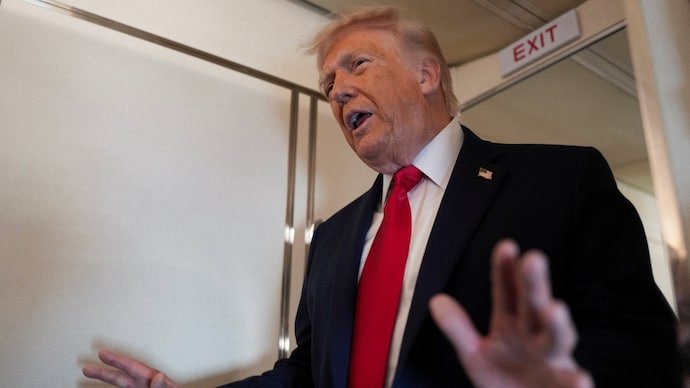
The future of US-Iran relations may depend on a single question: who blinks first?
US President Donald Trump has made it clear that his administration will not provide Sanctions relief, unfreeze Iranian assets, or ease economic pressure before a formal agreement is finalized. The remarks offer one of the clearest indications yet of Washington’s negotiating position as talks with Tehran continue amid heightened tensions across the Middle East.
Trump’s comments also clarified another important issue. While some observers expected regional matters such as Lebanon and Hezbollah to become central parts of any future arrangement, the US president indicated that Lebanon is not a prerequisite for a short-term deal.
The statements reveal both the opportunities and obstacles facing negotiations. Although discussions appear to be progressing on some nuclear-related issues, major disagreements remain over uranium enrichment, verification mechanisms, sanctions relief, and the future of Iran’s nuclear infrastructure.
The outcome could significantly shape Middle Eastern Security, global energy markets, international Diplomacy, and the future of nuclear non-proliferation efforts.
Trump’s Core Message: No Deal, No Relief
The central message from Trump’s interview was straightforward: economic incentives will come only after Iran reaches an agreement and fulfills its obligations.
For Tehran, this represents a significant challenge. Iranian officials have long argued that sanctions relief should accompany or precede major concessions. Washington, meanwhile, believes maintaining economic pressure strengthens its bargaining position.
This approach reflects a broader strategy often described as “pressure first, concessions later.” Under this framework, sanctions remain an important source of leverage until negotiators secure commitments that satisfy American security objectives.
By publicly ruling out upfront sanctions relief, Trump has narrowed expectations regarding what Iran can receive during the negotiation phase.
Why Frozen Iranian Assets Matter So Much
One of the most important yet misunderstood aspects of US-Iran negotiations involves frozen assets.
Frozen assets are funds or financial holdings that Iran cannot freely access due to international sanctions and restrictions. These assets represent billions of dollars accumulated through trade, energy exports, and financial transactions over many years.
For Iran, gaining access to these resources could help support economic recovery, stabilize domestic markets, and improve government finances.
For the United States, those assets serve as powerful negotiating leverage.
The disagreement over when and how these funds should be released has repeatedly complicated diplomatic efforts between the two countries.
Trump’s latest comments indicate that Washington currently sees no reason to surrender that leverage before securing concrete commitments from Tehran.
The Bigger Battle: Iran’s Nuclear Program
Although sanctions dominate headlines, the core issue remains Iran’s nuclear program.
The United States insists that any future agreement must prevent Iran from obtaining nuclear weapons capabilities. Trump indicated that negotiators have made progress on certain aspects of this issue, but disagreements remain regarding implementation and enforcement.
The debate extends beyond the development of an actual nuclear weapon.
Washington also seeks assurances that Iran cannot acquire, develop, purchase, or otherwise obtain technologies that could support future nuclear weapons programs.
This distinction is important because modern nuclear agreements often focus not only on weapons themselves but also on the infrastructure, materials, and technical capabilities required to build them.
Understanding Uranium Enrichment and Why It Matters
At the center of negotiations is Iran’s stockpile of enriched uranium.
Uranium enrichment increases the concentration of a specific uranium isotope used in nuclear fuel and, at much higher levels, nuclear weapons.
Low-level enrichment can support civilian nuclear energy programs. Higher levels raise international concerns because they can potentially shorten the time required to develop a nuclear weapon.
Before recent military operations targeting Iranian nuclear facilities, international inspectors estimated that Iran possessed a significant quantity of uranium enriched well above the limits established under the 2015 nuclear agreement.
This stockpile remains one of the most sensitive issues in current negotiations.
| Key Negotiation Issue | US Position | Iran’s Position |
|---|---|---|
| Sanctions Relief | After agreement is finalized | Earlier economic relief preferred |
| Frozen Assets | Remain restricted until compliance | Wants access restored |
| Enriched Uranium | Reduce or eliminate stockpiles | Rejects foreign control claims |
| Nuclear Inspections | Strong verification required | Seeks protection of sovereignty |
| Regional Issues | Not central to short-term deal | Varies depending on negotiations |
The Dispute Over Iran’s Uranium Stockpile
One of the most significant revelations from Trump’s comments involves what should happen to Iran’s enriched uranium if an agreement is reached.
The president suggested that the United States would work with Iran to remove and destroy the material, either at existing facilities or through off-site arrangements.
Iranian officials, however, have consistently rejected claims that they have agreed to transfer enriched uranium to the United States or any other country.
This disagreement highlights a major obstacle in negotiations.
From Washington’s perspective, reducing or eliminating enriched uranium stockpiles provides a measurable way to limit nuclear risks. From Tehran’s perspective, surrendering strategic nuclear material could be viewed as compromising national interests and technological achievements.
Bridging this gap may prove one of the most difficult aspects of any future agreement.
The Missing Piece: International Nuclear Inspections
Another critical issue involves transparency and verification.
The International Atomic Energy Agency (IAEA), the world’s leading nuclear watchdog, plays a central role in monitoring compliance with nuclear agreements.
Inspectors help verify whether nuclear materials remain accounted for, whether enrichment activities comply with agreed limits, and whether facilities are being used for declared purposes.
Recent restrictions on access to certain sites have created uncertainty regarding the status of some nuclear materials and facilities.
For many Western governments, meaningful inspections will likely be a non-negotiable requirement of any future deal.
Without credible verification mechanisms, even the strongest diplomatic agreements can struggle to gain international support.
Why Lebanon Was Mentioned in the Negotiations
One of the more surprising elements of Trump’s interview involved Lebanon.
The president clarified that while some parties may prefer Lebanon-related issues to be included in discussions, he is not demanding that they become part of a short-term agreement.
This distinction matters because Lebanon is closely linked to regional security concerns through Hezbollah, one of Iran’s most important allies.
Some analysts expected negotiations to expand beyond nuclear issues and address broader regional tensions. Trump’s comments suggest that Washington may currently prefer a more focused approach centered on nuclear concerns and immediate security objectives.
Limiting the scope of negotiations could potentially make an agreement easier to achieve, though it may leave other regional disputes unresolved.
The Military Option Remains on the Table
Perhaps the most consequential part of Trump’s remarks was his warning that military action remains an option if diplomacy fails.
Throughout modern international negotiations, the combination of diplomatic engagement and military deterrence has often been used to increase pressure on opposing parties.
By emphasizing that the United States remains prepared to act if talks collapse, Trump signaled that negotiations are occurring within a broader framework of strategic pressure.
This approach is intended to convince Iran that reaching an agreement is preferable to prolonged confrontation.
However, such warnings can also increase tensions and complicate diplomatic efforts if they are perceived as threats rather than negotiating tools.
The Economic Stakes Extend Far Beyond Iran
The consequences of any US-Iran agreement would extend beyond the two countries.
Global energy markets closely monitor developments because Iran possesses some of the world’s largest oil and natural gas reserves.
Changes in sanctions policy could affect:
- Global oil prices
- Energy supply chains
- Shipping routes
- Investment flows
- Regional economic growth
- International financial markets
For businesses and governments worldwide, the outcome of negotiations carries both economic and geopolitical significance.
This explains why developments in the talks often influence market sentiment even before formal agreements are announced.
How This Differs From Previous Nuclear Agreements
The current negotiations differ from earlier diplomatic efforts in several important ways.
First, the regional security environment is considerably more volatile than it was during earlier negotiations. Multiple conflicts, shifting alliances, and technological advancements have transformed the strategic landscape.
Second, trust between the parties remains limited. Years of sanctions, diplomatic disputes, and military tensions have created deep skepticism on both sides.
Third, the questions being discussed now extend beyond simple enrichment limits. They involve verification, enforcement, uranium stockpiles, sanctions timing, and long-term security guarantees.
This makes the negotiations both more complex and potentially more consequential.
The Key Insight Most Coverage Misses
Much of the public discussion focuses on whether a deal will happen. The more important question may be what kind of deal is actually achievable.
Both Washington and Tehran appear to agree that avoiding a larger crisis is desirable. However, they remain divided on the sequence of concessions.
The United States wants commitments before rewards. Iran wants evidence that rewards will actually materialize before making major concessions.
This sequencing problem has complicated numerous international negotiations throughout history and may ultimately determine the success or failure of current talks.
In many ways, the dispute is no longer just about nuclear technology. It is about trust, verification, leverage, and the future balance of power in the Middle East.
What Happens Next? Three Possible Scenarios
Scenario One: A Limited Agreement
Negotiators reach a narrow deal focused on nuclear restrictions, inspections, and phased sanctions relief while leaving broader regional issues for future discussions.
Scenario Two: Extended Negotiations
Talks continue for months as both sides seek better terms without abandoning diplomacy altogether.
Scenario Three: Diplomatic Breakdown
Negotiations collapse, increasing economic pressure and raising the risk of military confrontation.
At present, the first two scenarios appear more likely than a complete breakdown, though significant obstacles remain.
Conclusion: A Defining Moment for US-Iran Relations
Donald Trump’s refusal to unfreeze Iranian assets or lift sanctions before a final agreement marks a critical moment in ongoing negotiations between Washington and Tehran. The comments clarify the administration’s strategy while highlighting the major disagreements that continue to divide both sides.
Beyond sanctions and frozen assets, the talks involve some of the most important security questions facing the Middle East today: nuclear proliferation, regional stability, military deterrence, and international verification.
Whether negotiators can bridge differences over uranium stockpiles, inspections, and economic relief will determine not only the future of US-Iran Relations but also the broader security landscape of the region.
The coming months may reveal whether diplomacy can overcome decades of mistrust or whether the standoff enters an even more uncertain phase.
For breaking news and live news updates, like us on Facebook or follow us on Twitter and Instagram. Read more on Latest World on thefoxdaily.com.





COMMENTS 0