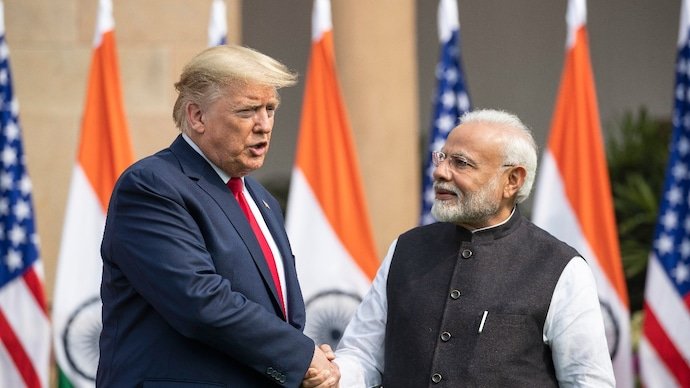
The upcoming meeting between Prime Minister Narendra Modi and US President Donald Trump at the G7 Summit in France is far more significant than a routine diplomatic engagement. It will be the first face-to-face interaction between the two leaders since Modi visited Washington in February 2025 following Trump’s return to the White House.
At a time when the global Economy is facing uncertainty, supply chains are being redrawn, and geopolitical tensions continue to affect trade and energy markets, the outcome of this meeting could influence not only India-US relations but also broader global economic dynamics.
Although officials from both countries have indicated that discussions will focus heavily on a proposed trade agreement, the talks are expected to extend well beyond Tariffs and market access. Energy Security, Artificial Intelligence, defence cooperation, and strategic alignment in the Indo-Pacific are all likely to feature prominently.
Why This Modi-Trump Meeting Matters
India and the United States have emerged as two of the world’s most important strategic partners. Over the past two decades, bilateral ties have expanded dramatically across trade, defence, technology, Education, healthcare, and security.
Today, India is among the fastest-growing major economies, while the United States remains the world’s largest economy and a leading force in global innovation. Together, they represent a partnership that has increasing influence on international trade, technology standards, and regional security.
The June 17 meeting arrives at a delicate moment. Despite strong cooperation, several issues have created friction in recent months, making high-level political engagement essential.
India-US Trade Deal: The Centrepiece of Discussions
The biggest item on the agenda is expected to be the ongoing India-US trade negotiations.
Both countries have spent months attempting to finalize a framework that could expand market access, increase investment flows, and strengthen economic cooperation. However, major differences remain.
Key areas under discussion include:
- Tariffs on Indian exports
- Market access for US agricultural products
- Digital trade regulations
- Manufacturing cooperation
- Intellectual property protections
- Technology transfers
- Supply chain resilience initiatives
For India, the objective is to secure better access for its exports while protecting domestic industries. For the Trump administration, the focus remains on reducing trade imbalances and expanding opportunities for American businesses.
While officials have indicated that a final agreement is unlikely during the summit itself, the meeting could provide political momentum needed to close remaining gaps in the coming weeks.
How Big Is the India-US Economic Relationship?
The scale of economic cooperation explains why both governments are eager to find common ground.
| Sector | Importance in India-US Relations |
|---|---|
| Trade | One of the fastest-growing bilateral economic partnerships |
| Technology | Critical cooperation in AI, semiconductors and digital innovation |
| Defence | Major strategic partnership with expanding military cooperation |
| Energy | Growing trade in oil, LNG and clean energy technologies |
| Investment | Significant cross-border capital flows and business expansion |
| Services | Strong growth driven by IT and professional services |
The relationship has evolved from a traditional diplomatic partnership into a multifaceted economic alliance that affects millions of jobs and businesses in both countries.
Tariffs Remain a Major Challenge
One of the most contentious issues continues to be tariffs imposed by Washington on several categories of imports.
Indian exporters have expressed concerns that higher duties reduce competitiveness and create uncertainty for businesses. Industries ranging from manufacturing to engineering goods have been closely monitoring developments.
Meanwhile, the Trump administration views tariffs as a negotiating tool designed to secure better terms for American companies.
The challenge for both governments is finding a balance between domestic political priorities and the benefits of deeper economic integration.
Energy Security Could Shape the Conversation
While trade will dominate headlines, energy security may be one of the most important underlying topics.
The conflict involving Iran and disruptions affecting maritime trade routes have highlighted vulnerabilities in global energy markets. For India, which imports a significant portion of its energy requirements, stability in oil and gas supplies is a national priority.
Recent incidents involving vessels carrying Indian sailors have added urgency to discussions about maritime security and freedom of navigation.
Higher energy prices directly affect inflation, industrial growth, transportation costs, and household budgets. As a result, India is expected to emphasize the importance of keeping critical shipping routes open and ensuring stability in global energy markets.
Russia, Oil Imports and Strategic Autonomy
Another important topic is likely to be India’s continued purchase of Russian oil.
India has consistently maintained that its energy decisions are guided by national interests and economic requirements rather than geopolitical considerations.
New Delhi argues that affordable energy is essential for sustaining growth and protecting consumers from global price shocks.
While the United States has occasionally expressed concerns, both countries have generally avoided allowing disagreements over Russian oil imports to derail broader strategic cooperation.
The G7 meeting could provide an opportunity to address these differences while maintaining focus on shared interests.
Artificial Intelligence and Emerging Technologies
The future of India-US cooperation increasingly revolves around technology.
Artificial intelligence, semiconductor manufacturing, quantum computing, cybersecurity, and advanced telecommunications are becoming central to economic competitiveness and national security.
India’s participation in discussions on responsible AI deployment during the G7 Summit reflects its growing role in shaping global technology governance.
Potential areas of cooperation include:
- Artificial intelligence research and development
- Semiconductor manufacturing partnerships
- Digital public infrastructure
- Cybersecurity frameworks
- Space technology collaboration
- Advanced defence innovation
- Clean energy technologies
As companies worldwide race to develop next-generation technologies, collaboration between India and the United States could become increasingly important.
The Indo-Pacific Factor
Beyond economics, strategic considerations remain central to the partnership.
The Indo-Pacific region has emerged as the world’s most important economic and geopolitical theatre. It accounts for a large share of global trade and maritime commerce.
India’s geographic location and growing naval capabilities make it a critical player in maintaining regional stability. The United States views India as a key partner in ensuring a rules-based order and protecting freedom of navigation.
This shared vision has driven deeper cooperation through military exercises, defence agreements, intelligence sharing, and maritime security initiatives.
France Visit Highlights India’s Multi-Alignment Strategy
Prime Minister Modi’s participation in the G7 Summit is part of a broader diplomatic engagement that includes high-level meetings with French President Emmanuel Macron and leaders from other countries.
France has become one of India’s closest strategic partners in Europe, particularly in defence, aerospace, energy, and technology.
The sequence of meetings demonstrates India’s increasingly sophisticated foreign policy approach, which seeks to strengthen relationships with multiple major powers simultaneously while preserving strategic autonomy.
This strategy has allowed India to maximize economic opportunities and geopolitical flexibility in an increasingly fragmented world.
What Success Would Look Like
A successful meeting should not necessarily be measured by whether a Trade Deal is signed immediately.
Instead, positive outcomes could include:
- Progress toward a comprehensive trade agreement
- Reduced tensions over tariffs
- Stronger cooperation on energy security
- Expanded technology partnerships
- Greater alignment on supply chain resilience
- Enhanced strategic coordination on global challenges
Even incremental progress across these areas would represent a meaningful step forward.
Why Global Markets Are Watching Closely
Investors, multinational corporations, and policymakers around the world will closely monitor the outcome of the Modi-Trump meeting.
A stronger India-US partnership could influence global investment flows, technology supply chains, energy markets, and trade patterns.
At a time when geopolitical uncertainty remains elevated, closer coordination between two of the world’s largest democracies could provide greater stability and confidence for businesses and markets.
The implications extend far beyond bilateral relations and could shape economic trends across Asia, Europe, and North America.
The Bigger Picture for India-US Relations
The significance of the June 17 meeting goes beyond trade negotiations.
It represents an opportunity for both leaders to reaffirm a relationship that has become increasingly important to their economic and strategic objectives. While disagreements remain on tariffs, energy policy, and certain geopolitical issues, the broader trajectory of the partnership remains positive.
India and the United States share common interests in economic growth, technological innovation, supply chain diversification, and regional stability. These shared priorities provide a strong foundation for future cooperation.
Conclusion
The upcoming meeting between Prime Minister Narendra Modi and President Donald Trump at the G7 Summit could become one of the most consequential diplomatic engagements of 2026.
Trade negotiations may dominate the agenda, but the discussions are expected to cover a much wider range of issues, including energy security, artificial intelligence, defence cooperation, and geopolitical stability.
While a final trade agreement may still require additional negotiations, the summit offers both leaders an opportunity to strengthen trust, address areas of friction, and set the direction for the next phase of India-US relations.
In a world increasingly shaped by economic competition, technological transformation, and geopolitical uncertainty, the partnership between India and the United States is likely to remain one of the defining relationships of the decade. The June 17 meeting could play a pivotal role in determining how that partnership evolves in the years ahead.
For breaking news and live news updates, like us on Facebook or follow us on Twitter and Instagram. Read more on Latest India on thefoxdaily.com.






COMMENTS 0