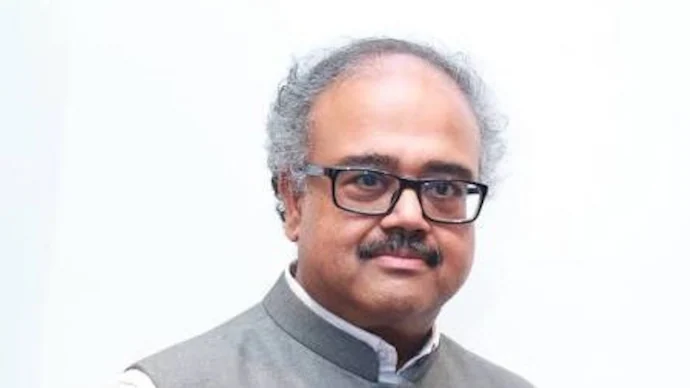
Artificial Intelligence systems cannot be considered trustworthy simply because they produce accurate answers, according to Professor Balaraman Ravindran, Head of the Department of Data Science and AI at the Indian Institute of Technology (IIT) Madras. Speaking at ConfAI 2026 at Plaksha University, he argued that AI evaluation must also consider fairness, safety and reliability, particularly as these systems become increasingly involved in real-world decisions.
In his keynote address on AI governance, Ravindran questioned the effectiveness of accuracy-only assessments, pointing out that an AI system’s response can change depending on how a question is framed. He emphasised the need for more rigorous evaluation methods that examine how consistently and responsibly AI models behave across different situations.
His remarks came during a three-day conference that brought together more than 500 researchers and industry professionals to discuss developments in artificial intelligence, foundation models and responsible AI. The event concluded on November 1, 2026, with discussions covering the challenges of making AI systems safer, fairer and more useful for society.
Why AI Accuracy Alone Cannot Guarantee Trust
Accuracy is one of the most commonly used measures for evaluating artificial intelligence systems. It helps determine whether a model produces correct answers or predictions when tested against a particular dataset or set of questions. However, according to Ravindran, this measure does not provide a complete picture of whether an AI system can be trusted.
One concern is that an AI model may produce different responses depending on how a question is worded. Even when two questions seek the same information, changes in phrasing or context can influence the model’s output. This raises questions about consistency and whether users can depend on the system across different situations.
An AI model may perform well in a controlled evaluation but behave differently when exposed to unfamiliar questions, incomplete information or real-world conditions. A high accuracy score in one test therefore does not automatically establish that the system is reliable in every setting.
Ravindran’s argument highlights the difference between measuring whether an AI model can produce a correct answer and determining whether its behaviour is dependable. Trust requires examining not only the final output but also how the system responds to variations in questions, users and circumstances.
Fairness, Safety and Reliability Must Become Part of AI Evaluation
Ravindran highlighted the need to expand AI evaluation beyond conventional performance measurements. As artificial intelligence becomes part of decision-making across industries, developers and institutions must examine whether systems behave fairly and safely in different contexts.
Three important areas stand out in this discussion:
- Fairness: AI systems should be evaluated for whether their outputs treat different individuals and groups consistently rather than reproducing unfair patterns or biases.
- Safety: Models need to be assessed for potentially harmful responses, inappropriate recommendations and behaviour that could create risks for users.
- Reliability: AI systems should produce dependable results even when questions are framed differently or when they encounter situations outside familiar testing conditions.
These considerations become particularly important when AI is used in areas such as healthcare, education, agriculture and public services. In such settings, an inaccurate or unfair output can have consequences beyond a poor user experience.
The broader message from Ravindran’s address was that trustworthy AI requires a more comprehensive evaluation framework. Accuracy remains important, but it should be considered alongside the system’s ability to behave consistently, responsibly and fairly.
ConfAI 2026 Brings Together More Than 500 AI Researchers and Industry Professionals
ConfAI 2026 was a three-day conference hosted at Plaksha University, bringing together more than 500 researchers and industry professionals to discuss developments in artificial intelligence and its applications.
The event featured academic researchers, technology leaders and experts working across different areas of AI. Discussions covered foundation models, multilingual artificial intelligence, responsible AI, healthcare applications, robotics and the use of emerging technologies to address practical challenges.
Among the prominent participants was Dr Manish Gupta, Vice-President at Google’s DeepMind, who discussed advances in foundation models and their potential applications. His presentation examined the development of AI systems capable of understanding different languages and cultures, as well as the use of satellite imagery in agriculture.
Gupta also addressed the challenges involved in making these technologies safer, fairer and more accessible. His remarks highlighted that technological progress must be accompanied by efforts to ensure AI can work effectively for people across different communities and environments.
Google DeepMind’s Manish Gupta Tells Students to Keep Learning
During an interaction with students, Dr Manish Gupta emphasised the importance of continuous learning as artificial intelligence and related technologies evolve.
“Learning to learn, always,” Gupta told students, encouraging them to remain curious and adapt as technology changes.
The message reflects a growing challenge for students and professionals entering the AI field. New models, tools and applications are developing rapidly, making the ability to acquire new skills and adapt to changing technologies increasingly important.
Gupta’s discussion also connected technical advances with broader questions about accessibility and practical applications. AI systems that understand different languages and cultural contexts could help expand access to technology, while satellite-based applications could support work in areas such as agriculture.
Plaksha University Vice-Chancellor Calls for Stronger Indian AI Capabilities
Professor Rudra Pratap, Vice-Chancellor of Plaksha University, stressed the importance of developing India’s own artificial intelligence capabilities rather than relying exclusively on technologies created elsewhere.
“India needs to build its own AI capabilities, not merely adopt technologies developed elsewhere. Universities must connect research across disciplines with the real problems our society faces.”
His remarks highlighted the role of universities in strengthening India’s research ecosystem. Building domestic AI capabilities involves more than developing new models. It also requires research institutions to connect computer science and engineering with fields such as healthcare, agriculture, urban development and public policy.
Universities can contribute by supporting interdisciplinary research, training skilled professionals and encouraging collaboration between researchers and industry. Such efforts can help ensure that AI development addresses challenges relevant to India’s population, languages and economic conditions.
The discussion also raised a broader question about technological independence: how can India develop AI systems that reflect its own requirements instead of depending entirely on products and models designed for other markets?
Leading Researchers and Academics Participate in ConfAI 2026
The conference featured several prominent academics and researchers from India’s artificial intelligence and scientific research communities. Participants included Professor Parag Singla of IIT Delhi and Professor Ponnurangam Kumaraguru of IIIT Hyderabad.
Other speakers included Padma Shri awardee Dr Sanghamitra Bandyopadhyay, former Director of the Indian Statistical Institute (ISI), Kolkata, and Professor Santanu Chaudhuri of Ashoka University.
The participation of researchers from different institutions provided an opportunity to discuss AI from multiple perspectives, including foundational research, practical applications and the social implications of emerging technologies.
Rather than focusing exclusively on the capabilities of new AI models, the conference also examined how research can be translated into solutions that work outside laboratories and controlled testing environments.
AI Research at ConfAI 2026: Healthcare, Robotics and Drug Design
Research presentations at the conference covered several areas where artificial intelligence is being explored to address complex problems. These included healthcare, robotics, urban systems, drug design and responsible AI.
AI for Early Detection of Alzheimer’s Disease
One area of research focused on using artificial intelligence to support the early detection of Alzheimer’s disease. AI-based approaches can help researchers examine complex health-related data and identify patterns that may be useful in studying neurological conditions.
Early detection is an important area of healthcare research because identifying potential signs of a disease sooner can help inform further medical assessment and care. However, AI-based findings must be evaluated carefully before being used in clinical settings.
Robots That Learn From Human Demonstrations
Another research area involved robots that learn by observing human demonstrations. Instead of relying entirely on manually programmed instructions, such systems aim to learn how to perform tasks by watching people carry them out.
This approach could help make robots more adaptable to tasks that involve changing environments or movements. It also raises important questions about how reliably robots can reproduce demonstrated actions when conditions differ from the original examples.
AI in Drug Design and Urban Planning
Researchers also presented work on the use of AI in drug design and urban planning. In drug research, computational models can help scientists explore potential compounds and analyse complex biological information.
In urban systems, AI can support the analysis of data related to infrastructure, mobility and city planning. These applications demonstrate how artificial intelligence research is expanding beyond chatbots and general-purpose language models into specialised areas with practical requirements.
Beyond Chatbots: Can AI Deliver Real-World Impact in India?
One of the conference’s key discussions took place during a panel titled “Beyond Chatbots: Bridging the Gap Between AI Use and Real-World Impact in India.” The session examined the challenges of deploying artificial intelligence in sectors such as healthcare, agriculture, education and small businesses.
The panel focused on the difference between demonstrating that an AI system works and making it useful in everyday environments. A model may perform well during testing, but its effectiveness can decline when it encounters limited data, different languages or resource constraints.
Participants highlighted several challenges:
- Limited data: AI systems may struggle when reliable, representative datasets are unavailable, particularly in specialised or underserved sectors.
- Language diversity: India’s linguistic diversity creates challenges for systems that are primarily developed or tested using a limited number of languages.
- Resource constraints: Organisations with limited infrastructure, computing resources or technical expertise may find it difficult to deploy and maintain AI solutions.
- Real-world conditions: Systems developed in controlled environments must be tested against the complexity and unpredictability of actual working conditions.
These issues are especially relevant in India, where AI applications may need to serve users with different levels of digital access, language preferences and technological resources.
For example, an AI tool designed for healthcare must be useful in environments with varying levels of infrastructure and data availability. Similarly, agricultural applications must account for differences in local conditions and the information available to farmers.
The panel’s central concern was how to move beyond experimentation and ensure that AI systems deliver measurable benefits in real-world settings.
Why ConfAI 2026’s AI Trust Discussion Matters for India
The discussions at ConfAI 2026 reflect a broader shift in the artificial intelligence debate. As AI systems become more capable, attention is increasingly moving from what they can generate to whether their outputs can be trusted and safely used.
For India, this distinction matters because AI adoption is expanding across sectors that directly affect people’s lives. Healthcare, education, agriculture and public services require systems that can work reliably across different languages, communities and operating conditions.
Ravindran’s emphasis on fairness and better evaluation is particularly relevant to this challenge. An AI system that produces accurate results in a limited test environment may still fail to serve users fairly when deployed at scale.
The conference also highlighted the importance of developing domestic research capabilities. As Professor Rudra Pratap argued, Indian universities need to connect research with problems facing society rather than simply adopting technologies developed elsewhere.
Together, these discussions point to three priorities for India’s AI ecosystem: stronger research capabilities, more comprehensive evaluation methods and practical deployment strategies that account for local conditions.
Conclusion: The Future of AI Depends on Trust, Not Just Performance
ConfAI 2026 brought together researchers and technology professionals to examine both the opportunities and limitations of artificial intelligence. Professor Balaraman Ravindran’s warning that accuracy alone cannot establish trust highlighted an important challenge as AI systems become part of everyday decision-making.
The conference’s discussions on fairness, safety, multilingual AI, healthcare, robotics and real-world deployment showed why the next stage of AI development must go beyond improving model performance. Systems also need to be evaluated for consistency, reliability and their ability to serve different communities responsibly.
For India, building trustworthy AI will require collaboration between universities, researchers, technology companies and policymakers. The larger challenge is not simply creating more powerful AI models, but ensuring that the technology works safely and fairly when people depend on it.
For breaking news and live news updates, like us on Facebook or follow us on Twitter and Instagram. Read more on Latest Education on thefoxdaily.com.






COMMENTS 0