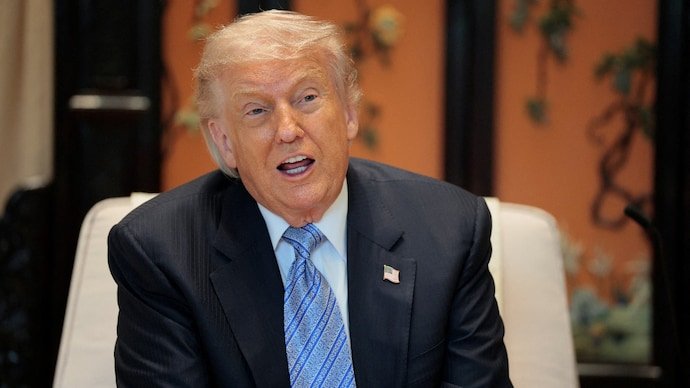
A fresh geopolitical flashpoint has emerged in one of the world’s most strategically important waterways after US President Donald Trump claimed that Iran carried out a Drone Attack targeting Indian vessels departing the Strait of Hormuz.
The allegation, made through Trump’s Truth Social platform, comes at a particularly sensitive moment. The United States and Iran have been engaged in discussions aimed at reducing regional tensions, yet conflicting statements, military incidents, and mutual accusations continue to undermine prospects for a lasting agreement.
While Trump described the alleged attack as “totally unacceptable,” no public evidence has yet been released to support the claim, and Iranian authorities had not officially responded at the time the statement was made.
The accusation immediately drew attention because of its potential implications not only for US-Iran Relations but also for India, global energy markets, international shipping, and security in the persian gulf region.
What Did Trump Say About the Alleged Attack?
In a strongly worded message, Trump claimed that Iranian forces attempted a drone strike against Indian ships leaving the Strait of Hormuz.
He described the operation as unsuccessful and used the incident to criticize Tehran’s conduct during ongoing diplomatic discussions.
According to Trump, Iran had also provided misleading information about the status of negotiations and leaked details that allegedly differed from the terms agreed upon between the parties.
The US president argued that Iran’s public statements did not accurately reflect the understandings reached during talks and accused Tehran of failing to negotiate in good faith.
The remarks mark another escalation in rhetoric between Washington and Tehran after months of military tensions, sanctions disputes, and diplomatic maneuvering.
Why the Strait of Hormuz Matters So Much
The significance of the allegation extends far beyond the immediate incident because of where it allegedly occurred.
The Strait of Hormuz is one of the most important maritime chokepoints in the world.
Located between the Persian Gulf and the Gulf of Oman, the narrow waterway serves as a critical passage for global energy supplies and international trade.
| Strategic Importance of Strait of Hormuz | Why It Matters |
|---|---|
| Global Oil Exports | Major route for crude oil shipments |
| LNG Transport | Key pathway for liquefied natural gas exports |
| International Trade | Connects Gulf economies with global markets |
| Energy Security | Vital for energy-importing nations including India |
| Regional Stability | Frequent focus of geopolitical tensions |
Any security incident in or around the strait immediately attracts global attention because disruptions can affect shipping costs, energy prices, insurance premiums, and investor confidence.
Why India Has a Strong Interest in Hormuz Security
India is among the countries most closely connected to developments in the Persian Gulf.
The country’s growing economy depends heavily on imported crude oil and energy supplies that pass through maritime routes linked to the Strait of Hormuz.
Large volumes of Indian trade also move through regional Shipping Lanes.
As a result, any threat to commercial vessels, regardless of nationality, has potential implications for India’s economic interests.
Shipping security in the Gulf region has become increasingly important as India expands its trade relationships with Middle Eastern nations and strengthens its role in global commerce.
Have Indian Authorities Confirmed the Incident?
At the time of Trump’s statement, no independent confirmation had emerged from Indian authorities regarding the alleged drone attack.
Similarly, there was no publicly available evidence detailing:
- The identity of the vessels involved.
- The exact location of the incident.
- The type of drone allegedly used.
- Any damage caused.
- The number of ships affected.
- The identity of those responsible.
Without official verification from multiple sources, many details surrounding the allegation remain unclear.
This uncertainty is likely to keep the incident under close scrutiny from governments, shipping operators, security analysts, and international observers.
The Timing Is Particularly Sensitive
The accusation comes during a period of intense diplomatic activity involving the United States and Iran.
In recent weeks, both sides have publicly discussed the possibility of agreements related to regional security, sanctions relief, maritime stability, and Iran’s nuclear program.
However, optimism surrounding potential breakthroughs has repeatedly been interrupted by conflicting statements from Washington and Tehran.
While US officials have occasionally suggested that progress has been made, Iranian representatives have frequently cautioned that important disagreements remain unresolved.
The latest allegation risks adding another layer of mistrust to an already fragile negotiating environment.
How Maritime Security Has Become a Major Global Concern
The reported incident highlights a broader trend affecting international trade.
Maritime security has become one of the most important geopolitical issues of the modern era.
Several factors have contributed to this shift:
- Rising geopolitical tensions.
- Increased use of drone technology.
- Energy supply vulnerabilities.
- Growing dependence on maritime trade.
- Regional conflicts near major shipping routes.
- Expanding strategic competition among major powers.
Shipping lanes that were once viewed primarily through an economic lens are now increasingly considered national security assets.
The Growing Role of Drones in Modern Conflicts
One notable aspect of Trump’s allegation is the reference to drone technology.
Over the past decade, drones have transformed military and security operations worldwide.
Compared with traditional weapons systems, drones offer several advantages:
- Lower operational costs.
- Greater flexibility.
- Long-distance capabilities.
- Reduced risk to personnel.
- Rapid deployment.
Because of these advantages, drones have become increasingly common in regional conflicts and maritime security incidents.
Their proliferation has also created new challenges for navies, commercial shipping operators, and coastal defense systems.
Potential Impact on Global Energy Markets
Even isolated security incidents near the Strait of Hormuz can have economic consequences.
Energy traders closely monitor developments in the region because uncertainty often influences market sentiment.
Concerns over shipping disruptions can lead to:
- Higher oil prices.
- Increased shipping costs.
- Rising insurance premiums.
- Greater market volatility.
- Supply chain concerns.
Although a single unverified incident may not immediately affect energy markets, repeated tensions can contribute to broader concerns about regional stability.
An Overlooked Insight: The Real Issue May Be Confidence, Not Conflict
Much of the discussion surrounding incidents in the Strait of Hormuz focuses on military risks.
However, the bigger challenge may be maintaining confidence in the security of international trade routes.
Global Shipping networks depend on predictability.
Businesses, energy companies, insurers, and governments make long-term decisions based on expectations that critical maritime corridors will remain open and secure.
Even when conflicts do not escalate into larger confrontations, uncertainty itself can create economic costs.
In that sense, preserving confidence may be just as important as preventing military escalation.
Comparison: Why Hormuz Remains One of the World’s Most Sensitive Chokepoints
| Global Chokepoint | Strategic Importance |
|---|---|
| Strait of Hormuz | Major energy export route |
| Suez Canal | Europe-Asia trade corridor |
| Panama Canal | Atlantic-Pacific shipping link |
| Malacca Strait | Critical Asian trade route |
| Bab el-Mandeb | Red Sea access point |
Among these routes, Hormuz remains particularly sensitive because of its direct connection to global energy supplies and regional geopolitical rivalries.
What Happens Next?
Several questions remain unanswered following Trump’s allegation.
Observers will likely look for:
- Official statements from India.
- Responses from Iranian authorities.
- Evidence supporting the claim.
- Shipping industry assessments.
- Updates from international maritime agencies.
- Potential diplomatic reactions.
The answers to these questions will determine whether the incident becomes a short-lived controversy or develops into a larger diplomatic dispute.
Future Outlook: Another Test for US-Iran Relations
The allegation against Iran arrives at a critical moment for Diplomacy in the Middle East.
With negotiations already facing challenges and trust between Washington and Tehran remaining fragile, accusations involving international shipping are unlikely to improve the atmosphere.
For India, the episode serves as another reminder of the strategic importance of secure maritime trade routes and stable energy supplies.
For global markets, it highlights the continuing vulnerability of critical shipping corridors to geopolitical tensions.
Whether Trump’s claim is ultimately substantiated or disputed, the incident underscores a larger reality: the Strait of Hormuz remains one of the world’s most consequential waterways, where local events can quickly generate international repercussions.
As governments seek to balance diplomacy, security, and economic interests, developments in the region will continue to be closely watched by policymakers, investors, and businesses around the globe.
For breaking news and live news updates, like us on Facebook or follow us on Twitter and Instagram. Read more on Latest World on thefoxdaily.com.





COMMENTS 0