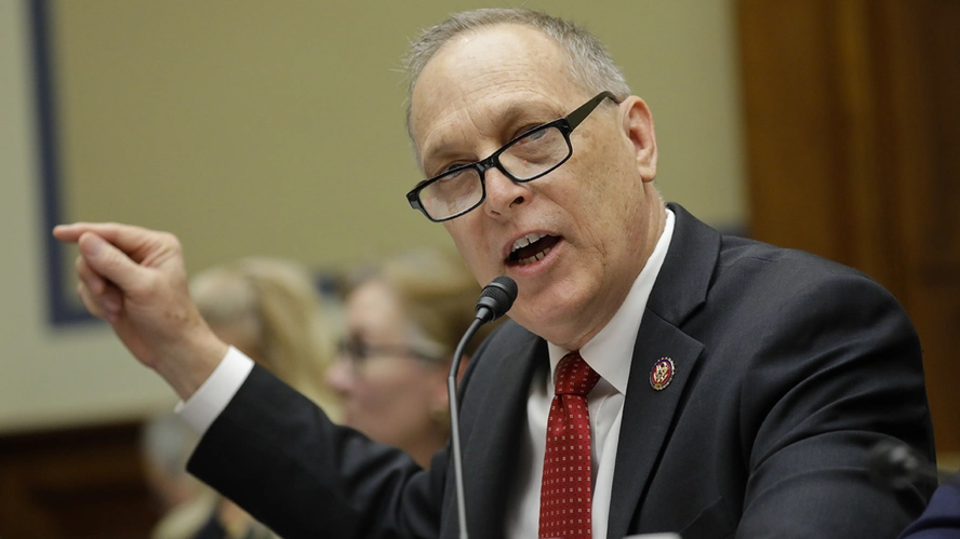
Andy Biggs has been a familiar figure in Arizona Republican politics for more than a decade, serving in the state legislature before moving to the US House of Representatives. Now, the Arizona native is seeking a new political position: governor of the Grand Canyon State.
Biggs, a Republican congressman representing Arizona’s 5th Congressional District, is running for governor in the 2026 midterm elections. His campaign is centred on tax reductions, business growth, border security, energy production and reducing government regulations.
His long political career, conservative positions and involvement in national political controversies have made his record an important part of the gubernatorial contest. As he seeks to move from Washington to the Arizona state government, his experience in the state legislature and Congress is likely to remain central to how voters assess his candidacy.
The race also places attention on his positions on immigration, artificial intelligence infrastructure, trade policy and the Iran conflict. These issues could shape debates about the direction of Arizona’s economy, public services and relationship with the federal government.
Who Is Andy Biggs?
Andy Biggs is a Republican politician from Arizona who has served in both chambers of the state’s legislature and in the US House of Representatives. Born on November 7, 1958, in Tucson, Arizona, he has spent much of his political career associated with the conservative wing of the Republican Party.
Biggs studied Asian studies at Brigham Young University. He later earned a master’s degree in political science from Arizona State University and a law degree from the University of Arizona.
Before entering politics, he worked as an attorney and was licensed to practise law in Arizona, Washington and New Mexico. His legal background preceded a political career that began in the Arizona House of Representatives.
Biggs served in the Arizona House for eight years before moving to the state Senate, where he spent six years. During his time in the Senate, he became Senate President in 2012, giving him a leadership role in the state’s legislative process.
In 2016, Biggs won election to the US House of Representatives, representing Arizona’s 5th Congressional District. His move to Washington marked a new stage in his political career, taking him from state-level policymaking to national legislative debates.
Andy Biggs’ Role in the US Congress
During his time in Congress, Biggs has served on the House Judiciary and Oversight committees. These positions have placed him in the middle of debates involving federal law, government accountability and the administration’s use of executive authority.
He also previously chaired the conservative House Freedom Caucus, a Republican group known for challenging party leadership on issues such as federal spending, immigration and government oversight.
The Freedom Caucus has frequently pushed for more conservative positions within the Republican Party, particularly on budgetary matters and the scope of federal government programmes. Biggs’ leadership role in the group helped establish his position within the party’s conservative wing.
He has also participated in congressional delegations focused on border security and reviewing war powers. These issues have remained important parts of his political record and are now reflected in his campaign priorities for Arizona governor.
His experience in Congress gives him familiarity with federal policymaking, but the responsibilities of a governor are different. A state governor must deal with issues such as state budgets, education, infrastructure, public safety and the implementation of state laws.
Andy Biggs’ Family
Andy Biggs has been married to Cindy Biggs for more than four decades. The couple has six children and 12 grandchildren, and they have lived in Gilbert, Arizona, for more than 30 years.
Although Biggs has maintained a long public career, much of his family life has remained outside the political spotlight. Some members of his family have nevertheless attracted public attention through their own experiences and involvement in politics.
One of his daughters, Mylie Biggs, entered public view as a candidate for the Arizona legislature in District 14. She was reported to be 25 years old when her candidacy attracted attention.
Another daughter, Cosette, died in 2025 at the age of 37 after battling cancer. She left behind her husband and three children.
There is limited publicly available information about Biggs’ parents. His family has generally maintained a relatively private profile despite his long involvement in state and national politics.
Andy Biggs’ Policy Positions and Political Record
Biggs’ campaign for Arizona governor is focused on reducing taxes and regulations, encouraging business investment and expanding the state’s energy production. His proposals reflect a conservative approach that emphasises a smaller regulatory burden and a greater role for private businesses in economic growth.
His campaign agenda also addresses housing, workforce development, technology infrastructure and the state’s long-term energy requirements.
Tax Cuts and Business Regulations
One of the central proposals in Biggs’ gubernatorial campaign is eliminating Arizona’s state income tax. He has presented tax reduction as a way to make the state more attractive to residents, employers and businesses considering expansion.
He has also called for streamlining regulations related to home construction. Reducing regulatory requirements for housing development is intended to make it easier for builders to construct homes and support the state’s housing supply.
Business incentives form another part of his economic agenda. Biggs has proposed encouraging companies to establish operations or expand existing facilities in Arizona, alongside efforts to reduce the laws and regulations affecting businesses.
However, eliminating a state income tax would have implications for public finances. Any such proposal would need to be considered alongside the state’s spending requirements and the revenue needed to support public services.
Energy Production and Nuclear Power
Energy policy is another major component of Biggs’ campaign. He has advocated increasing Arizona’s energy production, including through nuclear power, as part of an effort to secure reliable electricity supplies.
His position links energy availability with economic development. Businesses, manufacturing facilities and large technology operations require dependable electricity, making energy infrastructure an important consideration for companies deciding where to invest.
Biggs has also called for expanding workforce training programmes. Such initiatives would be intended to help prepare workers for employment opportunities connected to energy production and other growing industries.
His approach combines support for additional energy generation with a broader effort to reduce regulatory barriers affecting businesses and infrastructure development.
Artificial Intelligence and Data Centres
Artificial intelligence and data centres have become another issue in Biggs’ campaign. Although he supports expanding Arizona’s business and technology sectors, his approach to data centre development has been more cautious.
He has advocated ending state incentives for data centres and establishing standards governing their use of water and energy. These concerns are particularly relevant in Arizona, where water availability and electricity demand are important considerations for infrastructure planning.
Data centres require substantial electricity to operate servers and cooling systems. Their water consumption can also become a concern depending on the technology used and the location of the facilities.
Biggs’ position seeks to place limits on the use of public incentives while introducing standards for resource consumption. His proposals reflect the challenge of attracting technology investment without overlooking the infrastructure and environmental demands associated with large computing facilities.
Trade Policy and Tariffs
Biggs’ trade positions have generally aligned with the America First approach associated with his congressional career. The approach places emphasis on American economic interests and domestic industries.
However, he has not supported every tariff proposal. He has warned that some tariffs could increase costs for American consumers and businesses.
This position highlights a distinction between supporting policies intended to protect domestic economic interests and opposing measures that could raise prices for households or increase operating costs for companies.
Trade policy could remain an important issue in the governor’s race because Arizona’s economy is connected to cross-border commerce, manufacturing and international supply chains.
Early Controversies in Andy Biggs’ Political Career
Biggs has brought several controversies from his congressional career into the Arizona gubernatorial race. One of the most prominent concerns his role in efforts to overturn the results of the 2020 US presidential election.
His involvement in those efforts has drawn criticism from Democrats and election officials. The issue has remained part of the political debate surrounding his record and could become a point of contention during the campaign.
Election-related controversies have been particularly significant in Arizona, where disputes over the 2020 presidential election attracted national attention. Biggs’ role in the broader effort to challenge the results is therefore likely to remain relevant as voters assess his candidacy.
His time as Arizona Senate President has also come under renewed scrutiny. This includes his involvement in a 2013 dispute with the Colorado City Marshal’s Office and a polygamous religious community.
Biggs has denied allegations about his conduct in that episode. The controversy forms another part of the political record that could feature in discussions about his experience in state government.
For voters, these issues provide a contrast between his policy proposals and the controversies associated with his earlier political activities. His campaign will need to address both his legislative record and the questions raised by critics.
Immigration and Border Security: A Major Part of Biggs’ Campaign
Immigration and border security are among the most prominent issues in Biggs’ campaign for governor. He has taken a hard-line position focused on stronger border enforcement and greater participation by state and local authorities in immigration law enforcement.
His 2026 campaign platform calls for restoring a Border Strike Force, expanding state and local participation in the federal 287(g) programme and coordinating border-security efforts through a proposed position known as a border czar.
The 287(g) programme allows participating state and local law enforcement agencies to enter into agreements with federal immigration authorities to carry out certain immigration enforcement functions, subject to federal requirements.
Biggs has also supported completing the border wall and mass deportations. These proposals place immigration enforcement at the centre of his campaign’s public safety and border policy agenda.
Arizona shares an international border with Mexico, making immigration and border management important issues in state politics. The governor’s office has responsibilities involving state law enforcement, coordination with federal authorities and the management of state resources.
Biggs’ proposals would therefore involve both state-level decisions and cooperation with federal agencies. Their implementation would depend on legal authority, available resources and the relationship between Arizona and the federal government.
Andy Biggs’ Position on the Iran War
The Iran war has also become a point of discussion surrounding Biggs’ congressional record and his campaign for governor.
During his time in Congress, Biggs voted against resolutions seeking to withdraw American forces from hostilities involving Iran. His votes attracted attention amid broader congressional debates over presidential war powers and the role of lawmakers in decisions involving military action.
He later said during his 2026 gubernatorial campaign that he did not support the war itself. He distinguished his position on the conflict from his views on the president’s authority to use military force.
The distinction reflects a broader debate in Washington over the constitutional responsibilities of Congress and the executive branch in decisions involving military operations.
Presidential war powers have been a recurring issue in US Politics, particularly when military action takes place without a formal declaration of war. Congress has the authority to debate and pass legislation concerning military engagement, while the president serves as commander-in-chief.
Biggs’ voting record and subsequent campaign statements provide different parts of his position on the issue. The Iran conflict could therefore remain a subject of scrutiny as he seeks to move from federal office to state leadership.
What Could Biggs’ Agenda Mean for Arizona?
Biggs’ campaign brings together several policy areas that could shape Arizona’s economic and political direction if he becomes governor. His proposals on taxation, housing regulations and business incentives are intended to encourage investment and reduce the regulatory burden on companies.
His energy agenda focuses on increasing electricity production, including nuclear power, while expanding workforce training. These priorities are closely connected to the state’s ability to support new businesses and energy-intensive industries.
His position on data centres introduces another consideration. Arizona could seek to attract technology companies while addressing concerns about electricity consumption and water resources. Biggs’ proposal to end state incentives and introduce resource-use standards reflects this tension.
On immigration, his platform would place greater emphasis on state participation in enforcement and coordination with federal authorities. The practical scope of such measures would depend on the legal powers available to the governor and the resources provided by the state legislature.
His policy agenda therefore combines economic deregulation with more intervention in areas such as border security and data centre resource use. How these proposals would work together, and how they would affect state finances and public services, could become important questions during the campaign.
From Washington to the Arizona Governor’s Office
Biggs’ campaign represents an effort to move from national politics back to state-level leadership. His experience includes eight years in the Arizona House, six years in the state Senate, a period as Senate President and years representing Arizona in Congress.
That background gives him experience with legislative negotiations at both state and federal levels. His time in Washington has also placed him in national debates over immigration, government oversight, federal spending and presidential authority.
However, the responsibilities of a governor differ from those of a member of Congress. The governor must work with the state legislature, oversee executive agencies and deal directly with the implementation of state policies.
Biggs is seeking to use his political experience and conservative policy agenda to make that transition. His proposals on taxes, energy, business regulations and border security are expected to form the core of his campaign message.
What to Watch in Andy Biggs’ 2026 Gubernatorial Campaign
Several issues are likely to shape the debate around Biggs as the Arizona governor’s race progresses.
- Tax policy: His proposal to eliminate the state income tax could prompt debate about state revenue, public spending and the funding of government services.
- Border security: His plans for a Border Strike Force, expanded 287(g) participation and a border czar place immigration enforcement at the centre of his campaign.
- Energy and technology: His support for expanding energy production, including nuclear power, will be considered alongside his proposals to regulate data centre resource use.
- Election controversies: His involvement in efforts to overturn the 2020 presidential election results could remain a major issue for critics and political opponents.
- Federal policy record: His votes and statements on the Iran war, tariffs and presidential powers could influence how voters assess his congressional experience.
Andy Biggs Seeks to Turn His Political Experience Into a Governorship
Andy Biggs enters the 2026 Arizona gubernatorial race with a long record in Republican politics, including leadership roles in the state legislature and a prominent position in the conservative wing of the US House of Representatives.
His campaign is built around cutting taxes, reducing regulations, encouraging business investment, expanding energy production and strengthening border enforcement. His proposals on artificial intelligence data centres and resource consumption also show how technology infrastructure has become part of the state’s political debate.
At the same time, his congressional record and earlier controversies are likely to remain important subjects during the campaign. His involvement in the 2020 election dispute, the 2013 Colorado City controversy and his votes concerning the Iran conflict provide areas for political scrutiny.
For Biggs, the election represents an opportunity to move from Washington to Arizona’s state government after years in public office. Whether his conservative agenda and political experience translate into support from Arizona voters will be central to his bid to become the state’s next governor.
For breaking news and live news updates, like us on Facebook or follow us on Twitter and Instagram. Read more on Latest World on thefoxdaily.com.






COMMENTS 0