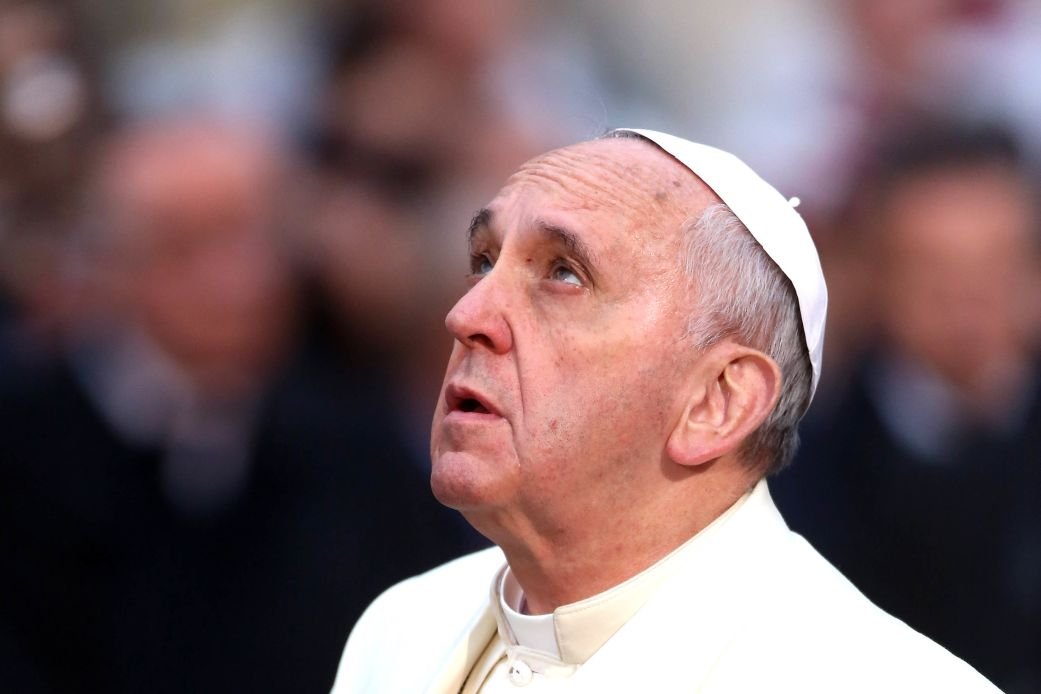
Newly published personal diaries of Pope Francis have revealed an unusually intimate account of the spiritual struggles that accompanied his years as head of the Catholic Church. The late pontiff described what he believed were encounters with the devil, recalled a terrifying experience involving what he called the entrance to hell and documented a profound spiritual crisis between 2021 and 2022 over the temptation to misuse authority.
The revelations offer a different perspective on a pope widely associated with humility, simplicity and efforts to reform the Catholic Church. Behind his public image, the diaries describe a religious leader who regularly examined his own motivations, questioned how he exercised power and struggled with exhaustion, internal opposition and difficult decisions.
The accounts appear in The Private Diary of Pope Francis, a 160-page book written by Cardinal Víctor Manuel Fernández, one of Francis’ closest collaborators. Published through the Vatican Publishing House, the book brings together selected diary entries and Fernández’s commentary on their spiritual and personal significance. The material covers parts of Francis’ life from 1992 to 2024, including his years as an archbishop in Argentina and his 12-year pontificate.
Among the most striking revelations are three encounters with what Francis identified as the devil, his description of seeing the entrance to hell in a dreamlike experience and his admission that the responsibilities of the papacy had exposed him to a dangerous temptation: believing that his authority placed him above others.
What Pope Francis’ diaries reveal about his spiritual struggles
The diaries are not simply a record of Vatican decisions or major Church events. They offer an account of Francis’ inner life, including his understanding of spiritual conflict, his relationship with God and the personal discipline he believed was necessary to remain faithful to his responsibilities.
Francis reportedly wrote 86 pages in a black-covered diary that initially served as a 1992 planner while he was in Argentina. Another 55 pages were written during his papacy. The surviving material contains reflections, personal observations and accounts of experiences that he considered important to his spiritual development.
Fernández explained that Francis had shown him several books, including an old agenda filled with handwritten notes. When the future pope opened it, he reportedly told his aide: “From this, you will all see.”
The publication is significant because personal diaries of popes are relatively uncommon. Some pontiffs have reportedly arranged for private papers to be destroyed, while the writings of Pope John XXIII and selected personal papers of Pope John Paul II were published after their deaths. Francis’ diaries provide another opportunity to understand how a pope interpreted the personal and spiritual demands of his office.
Pope Francis described three encounters with the devil
One of the most attention-grabbing sections concerns what Francis described as repeated demonic attacks. In the diary entries, he recalled three occasions when he believed he encountered the devil: two during his time as archbishop of Buenos Aires and another after becoming pope.
His descriptions focused particularly on the figure’s eyes. Francis remembered them as fiery, threatening and seductive. In an entry dated August 18, 2024, he reflected on the experiences and wrote that he could not forget the eyes he had seen during the first two encounters.
One incident reportedly occurred while he was returning home in a car. Another took place in a choir loft during Mass. Francis suggested that the figure appeared in different circumstances but remained an unsettling presence in his recollections.
The third experience was connected to a meeting in 2018, shortly after his return to Rome from a visit to Chile. That trip had become controversial because of the clerical sexual abuse scandal and the criticism surrounding Francis’ initial handling of allegations against a Chilean bishop.
In an entry dated January 24, 2021, Francis recalled seeing what he identified as the devil during a meeting. He described hearing a triumphant, rough voice declaring: “Now I’ve gotten everything I wanted.”
Francis wrote that he could not forget the voice’s raspiness. He also described leaving the meeting, an action he interpreted as an opportunity granted by God that freed him from the situation.
These accounts should be understood as the pontiff’s personal religious experiences and interpretations rather than independently established supernatural events. The diaries reveal how Francis understood them within his Catholic faith and how seriously he regarded the possibility of spiritual temptation.
The entrance to hell and the power of prayer
Another disturbing passage describes an experience in which Francis believed he had seen the entrance to hell. The account reportedly came from 2018 and was connected to what he described as the overwhelming force of pagan seduction and the worship of idols.
Francis recalled looking into the entrance briefly before becoming terrified. He described reaching for his rosary, which he treated as a spiritual weapon, and thanking God for the assistance he believed he had received.
The passage reflects the importance of prayer and spiritual protection in Francis’ understanding of religious life. Rather than presenting himself as immune to fear or temptation because of his position, he described himself as someone who needed divine assistance.
In Catholic teaching, the devil is understood as a fallen angel and a real spiritual presence. Catholic tradition also recognises spiritual temptation as a challenge that can accompany a person’s pursuit of holiness. Francis frequently used the language of the devil in public discussions, particularly when warning against destructive behaviour within the Church and society.
He often connected evil with everyday temptations, including greed, gossip and the misuse of money. His warning that the devil enters through people’s pockets reflected his broader concern that financial interests and personal ambition could undermine religious responsibility.
The diary accounts therefore fit into a wider pattern of Francis’ public teaching. He did not treat spiritual danger as something limited to dramatic or supernatural experiences. He also associated it with ordinary decisions that could gradually move people away from humility, compassion and service.
The two-year spiritual crisis over power and authority
Perhaps the most important revelation in the book concerns a spiritual crisis Francis experienced between 2021 and 2022. Unlike the accounts of supernatural encounters, this struggle was directly connected to the practical responsibilities of governing the Catholic Church.
Francis reportedly recognised that he was becoming vulnerable to the temptation of exercising power for its own sake. The diaries describe this as a form of curiosity about what it meant to use his own authority, alongside feelings of self-sufficiency and the belief that he could solve everything through personal decisions.
He connected the crisis to governance problems, pressure surrounding important decisions, excessive activity and periods of spiritual dryness and desolation. The responsibilities of the papacy had placed him in a position where almost every major decision could affect people, institutions and the direction of the Church.
For Francis, the danger was not simply making an incorrect administrative choice. It was allowing the authority of his office to change his understanding of himself and his relationship with other people.
He recognised that a leader could begin to treat others as instruments for achieving personal objectives rather than as individuals deserving dignity and independent judgment.
In a diary entry dated December 30, 2022, Francis reportedly reflected on refusing the temptation to treat other people like puppets. The observation became central to understanding how he approached internal disagreements and the exercise of authority inside the Vatican.
Why Francis refused to dismiss a Vatican official who criticised him
Cardinal Fernández provided an example of how Francis attempted to respond to the temptation of power. According to his account, a bishop once asked the pope why he had not dismissed a person working in the Roman Curia who was publicly speaking against him and allegedly pursuing a personal agenda.
Fernández recalled that Francis remained silent for an unusually long time before explaining his decision. The pope reportedly felt strongly that God did not want him to become a puppeteer who manipulated people according to his own convenience.
Instead of removing the individual simply because of personal opposition, Francis preferred to allow that person to remain in the position.
The episode illustrates the distinction Francis tried to maintain between authority and personal control. In his understanding, being pope did not mean that every disagreement had to be resolved through punishment or that every official had to demonstrate personal loyalty to him.
This approach was particularly relevant during a pontificate marked by major disagreements over the future direction of the Catholic Church. Francis introduced changes and encouraged discussions on issues including the treatment of LGBTQ Catholics and the role of women in Church life. Some of his positions faced strong resistance from bishops, cardinals and other conservative figures within the Vatican.
His decision to avoid certain dismissals may therefore be understood as part of a broader attempt to govern without turning institutional authority into a tool for settling personal conflicts. However, the diaries do not provide detailed examples of every official or decision connected to the crisis.
Francis feared becoming a powerful figure separated from ordinary people
Fernández’s commentary offers another important explanation of the pope’s struggle. He described Francis as being concerned about the possibility of feeling above the world because of his position.
According to Fernández, the desire to experience personal power could lead to what Francis considered an especially dangerous form of spiritual worldliness. The pope sought to resist this by avoiding symbols and expressions that presented the papacy primarily as an institution of majesty, prestige or personal glory.
This perspective helps explain several aspects of Francis’ public image. After his election in March 2013, he chose to live in the Vatican’s Casa Santa Marta guesthouse rather than move into the traditional papal apartment. He also maintained a relatively simple personal style, including his preference for black orthopedic shoes and his refusal of certain elaborate papal garments.
These choices were not merely matters of comfort or appearance. They reflected his stated concern that the symbols surrounding the papacy should not create an exaggerated sense of personal importance.
Francis’ approach also reflected the spiritual discipline associated with his membership in the Jesuit religious order. Jesuit spirituality places considerable importance on discernment, a process of examining thoughts, motivations and decisions to understand whether they are directed towards God and the good of others or towards personal interests.
For Francis, this process was particularly important because the pope holds considerable influence over the Church’s leadership, administration and public direction. His diaries suggest that he considered self-examination essential to preventing authority from becoming personal ambition.
The Chilean abuse scandal left Pope Francis devastated
The diaries also provide insight into one of the most difficult episodes of Francis’ papacy: the clerical sexual abuse controversy in Chile in 2018.
During his visit to the country, Francis faced criticism over his defence of a bishop accused of witnessing and covering up abuse when he was a priest. The pope initially dismissed aspects of the allegations, drawing strong reactions from survivors and critics who believed that he had failed to understand the seriousness of the situation.
Francis later acknowledged mistakes in his handling of the controversy, apologised and summoned the country’s bishops to Rome. In an unprecedented response, the bishops collectively offered their resignations to the pope.
The diary reveals that the episode had a significant personal impact on him. Francis described feeling devastated by the situation in Chile and by his conversations with journalists during the return flight.
He also wrote that he had fallen off the cot, an expression that Fernández explained as meaning a sudden awakening to a reality that had previously not been fully understood.
Francis admitted that he had found it difficult to accept what had happened because he had not initially believed the situation was so serious.
The admission is important because it offers a glimpse into how the pope understood his own mistakes. The Chilean scandal was not simply a public relations problem or a disagreement with local Church officials. It exposed the difficulty of responding appropriately to allegations of abuse and the responsibility of Church leadership to take survivors’ concerns seriously.
Francis would subsequently support several measures and reforms aimed at strengthening the Church’s response to clerical sexual abuse. His reflections in the diary suggest that the Chilean episode became a deeply personal moment of reassessment.
What Pope Francis thought about his successor, Leo XIV
Another significant revelation concerns Francis’ assessment of Cardinal Robert Prevost, who later became Pope Leo XIV following Francis’ death.
Francis had brought Prevost to the Vatican to lead the department responsible for the appointment of bishops. The position gave him an important role in the selection and evaluation of Church leadership around the world.
According to Fernández, Francis held Prevost in high regard, describing him as “a great pastor, a generous missionary, and an irreproachable man.”
The description is particularly noteworthy because it records Francis’ positive assessment of the man who would eventually succeed him as head of the Catholic Church. It also suggests that Francis regarded Prevost as a person whose pastoral qualities and character made him worthy of considerable trust.
The diaries also show that Francis could express respect for people who disagreed with him. Fernández wrote that the pope considered Cardinal Robert Sarah to have refined spiritual sensitivity. He also reportedly described German Cardinal Gerhard Müller as someone who appeared aggressive but was nevertheless a good man.
These observations provide a more nuanced picture of Francis’ relationships with critics. His disagreements with certain Church figures did not necessarily mean that he rejected their personal character or spiritual contributions.
Exhaustion and the personal cost of leading the Catholic Church
Beyond the spiritual crisis and internal controversies, the diaries reveal how physically and emotionally demanding Francis found his responsibilities.
His entries frequently referred to exhaustion, both during his years in Argentina and after becoming pope. Francis rarely took a full day off and did not go on holidays outside the Vatican during his pontificate.
In 2019, he described himself as feeling exhausted, almost without spiritual support and without a point of reference. The statement highlights the isolation that can accompany a position carrying enormous religious and administrative responsibilities.
The pope’s demanding schedule involved leading major Church events, meeting world leaders, travelling internationally, addressing global issues and managing the Vatican’s internal affairs. At the same time, he continued to regard pastoral care and spiritual guidance as central to his responsibilities.
Fernández argued that the diaries reveal the heart of Jorge Mario Bergoglio, the Argentine cardinal elected pope on March 13, 2013, who chose the name Francis. He described a man who was demanding of himself and expected a similar level of dedication from priests.
Fernández interpreted the pope’s continued commitment despite frequent exhaustion as an expression of heroic pastoral charity. The diary entries suggest that Francis understood his role less as an opportunity for personal distinction and more as a responsibility requiring constant service.
Pope Francis’ final days and legacy
Francis died on April 21, 2025, at the age of 88, following a period of serious illness that included hospitalisation with double pneumonia. His death came on Easter Monday, bringing an end to a pontificate that had reshaped several aspects of the Catholic Church’s public image and internal debates.
Even during the final days of his life, Francis continued to make public appearances despite medical advice to rest. He greeted people gathered in St. Peter’s Square, demonstrating the commitment to public ministry that had characterised much of his papacy.
His funeral took place on April 26, 2025, in St. Peter’s Square at the Vatican. Thousands of people attended, including heads of state and international representatives, reflecting the global significance of his death.
The diaries add another dimension to the legacy he left behind. They reveal a pope who could speak about fear, spiritual attacks, personal weakness and uncertainty while occupying one of the most influential religious positions in the world.
His reflections on power are particularly relevant to understanding his leadership. Francis recognised that authority could create the illusion of self-sufficiency and that the ability to make decisions did not automatically make those decisions morally correct. His effort to resist treating people as instruments of personal control was central to his understanding of Christian leadership.
The book does not resolve every question about the internal tensions of his pontificate or explain every decision he made. Nor do the reported supernatural experiences establish anything beyond Francis’ own interpretation of what he believed he had encountered. Their importance lies in showing how he understood the spiritual challenges of his life and how those beliefs influenced his conduct.
Ultimately, The Private Diary of Pope Francis presents a deeply personal portrait of a religious leader who viewed the papacy as a demanding spiritual responsibility rather than a position of personal glory. From his accounts of the devil and the entrance to hell to his two-year struggle with the temptation of power, the writings reveal how seriously Francis questioned his own motivations while attempting to lead the Catholic Church.
For breaking news and live news updates, like us on Facebook or follow us on Twitter and Instagram. Read more on Latest World on thefoxdaily.com.

COMMENTS 0