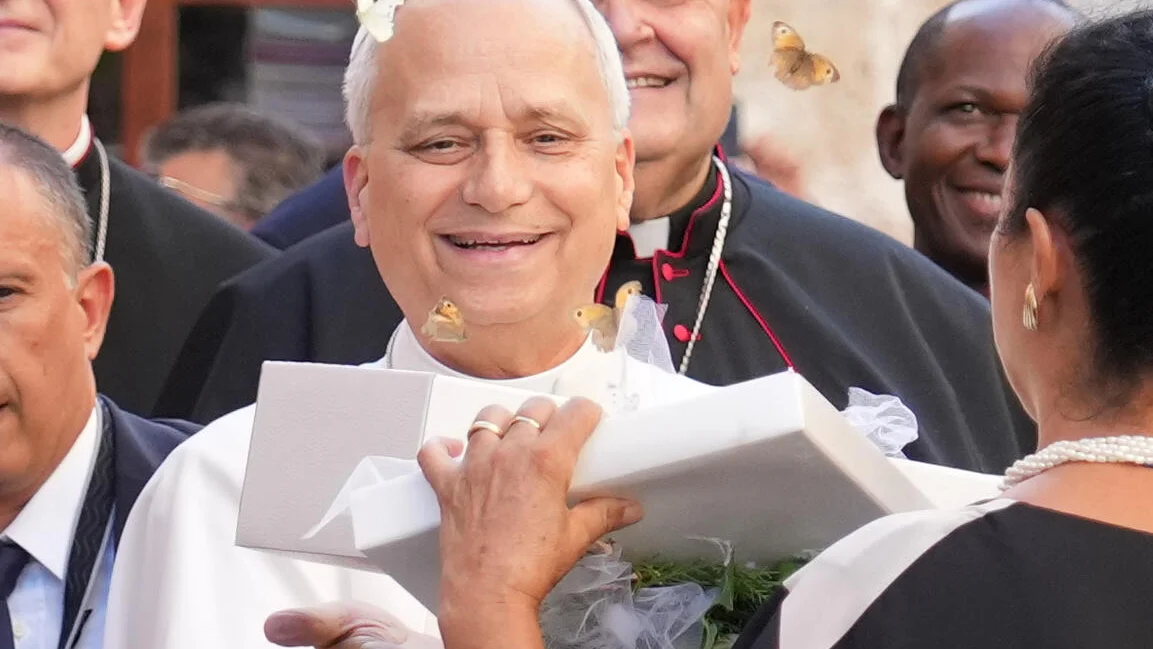
Hundreds of thousands of people gathered along the Champs-Elysees in central Paris on Saturday for an open-air Mass celebrated by Pope Leo XIV, producing one of the largest public demonstrations of Catholic faith in France in recent years and renewing debate over the place of Religion in the country’s strongly secular public life.
The Vatican said around 700,000 people attended the Mass at the Place de la Concorde, exceeding the more than 600,000 people WHO had registered in advance. The extraordinary turnout came during Leo’s four-day visit to France, which has combined religious ceremonies, meetings with young people and public appearances at some of the country’s most significant Catholic sites.
The event also highlighted a complicated picture of religion in modern France. While participation in traditional Catholic practices has declined substantially over the decades, adult baptisms have increased in recent years and large numbers of people continue to respond to major public religious events.
700,000 Gather for Pope Leo XIV’s Paris Mass
Pope Leo travelled through Paris in his popemobile along a roughly two-kilometre route before reaching the Place de la Concorde, where the outdoor Mass was held.
The atmosphere was festive despite extensive security measures and road closures across central Paris. People waved flags, cheered as the pope passed and lifted babies and young children above the crowd in the hope of receiving his blessing.
The gathering was not limited to practising Catholics. People from different religious backgrounds, as well as those who do not identify with a faith, were also present.
Leontine Joseph, 42, attended with two friends of Moroccan origin who had grown up in Muslim cultural surroundings. She said Leo’s message reached beyond Catholic audiences, particularly when he spoke about issues such as social justice.
That broader appeal was one of the defining features of the Paris gathering. Rather than being simply a traditional Catholic ceremony, the event became a large public gathering around themes of faith, peace, community and social values.
Pope Leo Says He Is Surprised by New Catholic Converts
Earlier Saturday, during a visit to the Catholic Institute of Paris, Leo spoke about the increase in people converting to Catholicism in France.
The pope said he was surprised by the number of new converts in recent years and expressed gratitude for what he described as God’s “unfathomable work,” particularly in the face of broader demographic and sociological Trends affecting religious practice.
He urged French Catholics to recognize and protect what he described as a small flame of faith growing despite the challenges posed by an increasingly secular society.
Leo has repeatedly encouraged French Catholics to remain committed to their faith even as religious practice becomes less central to everyday life for much of the population.
The message reflects the central tension surrounding his visit. France remains a country where Catholicism has deep historical roots, but modern public life is shaped by a strict tradition of secularism.
Adult Baptisms Are Rising Despite Long-Term Decline
Recent figures illustrate the contrast between renewed interest among some adults and the longer-term decline in Catholic participation.
Adult baptisms in France have tripled since 2016, reaching around 13,000 this year. The increase has attracted attention because it suggests that some adults are actively seeking religious affiliation even as traditional Catholic practices continue to weaken.
However, the rise in adult baptisms has not reversed the broader decline in Catholic religious participation.
France recorded around 513,000 baptisms in 1980. By 2024, the total had fallen to approximately 186,000. The figures reflect a major long-term change in how religion is transmitted between generations.
Fewer children from practising Catholic families are attending Mass or being baptised, even as some adults independently choose to enter the Church.
The result is a more complicated religious landscape than a simple revival or decline. Traditional forms of participation have weakened, while certain forms of adult engagement have shown renewed momentum.
Why Non-Practising Catholics and Others Joined the Crowd
The enthusiasm in Paris extended well beyond regular churchgoers.
Thierry Chen, a 40-year-old Paris startup entrepreneur, said the gathering offered people a reminder of values that can be difficult to see amid disturbing events around the world. He also emphasized the diversity of the crowd, describing it as a gathering that went beyond a single nationality, race or religion.
For some attendees, the event was less about returning to regular Catholic practice and more about experiencing a major public moment centered on peace, unity and shared values.
Sylvane Le Goff, 68, attended with her 10- and 12-year-old grandchildren. Although she was raised Catholic and no longer regularly practises the faith, she said she wanted to give the children an unforgettable experience and expose them to Leo’s message of peace and unity.
That mix of motivations helps explain why the crowd was so diverse. Some attended as committed Catholics, others because of family traditions, curiosity or an interest in the pope’s message, while some were drawn by the historic nature of the visit itself.
80,000 Young People Gathered Before Paris Mass
Leo’s appearance in France had already generated a strong response among young people before Saturday’s Mass.
On Friday night, around 80,000 young people gathered at the national stadium north of Paris for fireworks and a theatrical presentation of French Catholic history.
Speaking in French, Leo thanked the young people for their courage, presence and faith, telling them they were the saints of France.
The size of the Youth gathering added another dimension to the debate about the future of Catholicism in France. While overall religious participation has declined, the presence of thousands of young people at events connected to the pope suggests that religion continues to have the capacity to attract younger audiences in particular settings.
It does not, however, by itself demonstrate a reversal of the country’s longer-term secularization. A large public event can attract people for many reasons, and attendance at a papal gathering is different from sustained participation in religious life.
Place de la Concorde Creates Secularism Debate
The choice of the Place de la Concorde as the venue for the Mass added political and historical significance to Leo’s visit.
Organizers said it was the only suitable central Paris location capable of accommodating the expected crowd. The viewing area was expanded the previous week after organizers anticipated higher attendance.
But the choice drew criticism from strong supporters of France’s secular tradition. They argued that the square represents the French Republic and that another location, such as the Invalides, would have been more appropriate.
Pope Benedict XVI celebrated Mass at the Invalides in 2008 before an estimated 240,000 people.
The debate reflects France’s distinctive approach to the relationship between religion and the state. The country follows a strict model of secularism known as laïcité, rooted in the 1905 law separating church and state.
The Place de la Concorde itself carries a particularly complicated historical legacy. Designed in the late 18th century, it became one of the major execution sites during the French Revolution. King Louis XVI and Queen Marie-Antoinette were among those guillotined there.
In modern France, the square has a very different role. French presidents traditionally use the location for Bastille Day celebrations, further reinforcing its association with the French Republic.
The decision to hold a major Catholic ceremony there therefore placed two important aspects of French history side by side: the country’s Catholic heritage and its modern secular republican identity.
Paris Crowd Echoes France’s Biggest Public Celebrations
The scale of Saturday’s gathering was comparable in atmosphere to other enormous public celebrations that have brought people onto the Champs-Elysees.
France has witnessed similar scenes following major Football victories, particularly after its World Cup triumphs in 1998 and 2018. The crowds surrounding Leo were similarly enthusiastic, with flags, cheering and families lining the route.
Yet the occasion carried a very different meaning. Instead of celebrating a sporting achievement, hundreds of thousands had gathered around a religious figure and a ceremony rooted in Catholic tradition.
For regular Catholics such as Jean-Claude Farnabe, the gathering was evidence of a growing interest in religion. Farnabe, who turned 63 on Saturday, spent the morning securing a position along the pope’s route.
A lifelong Catholic who attends Mass every Sunday in Suresnes, a suburb of Paris, he said he had noticed increasing interest among younger people and more adults seeking baptism.
His observation reflects the same trend highlighted by the recent increase in adult baptisms, even though national figures continue to show a much larger long-term decline in overall Catholic baptisms.
What Pope Leo’s France Visit Says About Faith
Leo’s four-day visit has placed the changing role of religion in French society under renewed attention.
The pope began his visit on Friday with prayer at the restored Notre Dame cathedral and will continue to Lourdes, one of the most important Catholic pilgrimage destinations in France.
The crowds accompanying the visit show that Catholicism still has the ability to mobilize large numbers of people in France. At the same time, the country’s baptism figures, declining traditional participation and secular public institutions demonstrate that religious practice has undergone a profound transformation.
These developments can exist simultaneously. A society can become increasingly secular in its institutions and everyday life while certain religious events continue to attract large audiences.
The Paris Mass also showed that the audience for religious figures can extend beyond regular worshippers. Some people attended because of an interest in the pope’s message about peace and social justice rather than because they regularly attend church.
That distinction may be particularly important as the Catholic Church considers how to connect with younger generations and adults who are not part of traditional parish life.
A Renewed Conversation About Religion in Secular France
The 700,000-person turnout has not erased the long-term decline in Catholic practice in France, but it has created a striking public moment around religion.
The combination of a massive crowd, growing numbers of adult baptisms, strong youth attendance and controversy over the use of the Place de la Concorde has brought competing aspects of French society into focus.
There is the country’s historic Catholic identity, the modern principle of secularism, and a population whose relationship with religion is becoming increasingly diverse.
For some attendees, Pope Leo’s visit was primarily a religious experience. For others, it represented an opportunity to hear a message about peace, unity and social justice. Still others came because of the scale and historical significance of the event.
The result was a gathering that went beyond a single Mass. It became a public reflection of the complicated place faith continues to occupy in France: less dominant than it once was, but still capable of drawing hundreds of thousands of people into the heart of Paris.
With PTI Inputs
For breaking news and live news updates, like us on Facebook or follow us on Twitter and Instagram. Read more on Latest World on thefoxdaily.com.





COMMENTS 0