Attacks on commercial shipping in and around the Strait of Hormuz have surged to a record high, raising concerns about the security of one of the world’s most important energy corridors. The escalation has already reduced oil flows through the region, unsettled energy markets and created fresh pressure on global fuel prices.
The growing disruption also presents a political challenge for US President Donald Trump, whose efforts to bring down gasoline prices face additional uncertainty as shipping risks increase. With the US midterm elections approaching, higher energy costs could complicate the administration’s economic message and intensify scrutiny of its response to Iran.
The Strait of Hormuz is a critical passage for international oil and liquefied natural gas shipments. Any sustained disruption can affect energy supplies, shipping costs, insurance premiums and market expectations well beyond the Middle East. The latest surge in attacks has therefore placed maritime security and the stability of global energy markets under renewed pressure.
Why the Strait of Hormuz Is Critical to Global Oil Supplies
The Strait of Hormuz connects the Persian Gulf with the Gulf of Oman and the wider Arabian Sea. Major oil-producing countries, including Saudi Arabia, Iraq, Kuwait, the United Arab Emirates and Iran, depend on the surrounding waterways to transport significant volumes of energy to international markets.
Because so much oil moves through this narrow maritime passage, the strait is widely regarded as one of the world’s most strategically important energy chokepoints. Many shipments are destined for Asian economies, although disruptions can influence prices and supply expectations in Europe and other regions as well.
When commercial vessels face attacks, threats or restrictions in the area, shipping companies may delay departures, alter routes where alternatives exist or demand additional security arrangements. These decisions can reduce the volume of oil reaching buyers even when production at exporting countries’ oilfields continues.
There are limited alternatives to the strait for some regional exporters. Certain countries have pipelines that can carry part of their production to ports outside the Gulf, but available capacity cannot necessarily replace all the oil normally transported through Hormuz.
Consequently, sustained insecurity in the waterway can have consequences beyond the immediate location of an attack. Refiners may face uncertainty over deliveries, traders may adjust their expectations for future supplies, and governments may need to consider measures to protect energy security.
Iran Escalates Attacks on Commercial Shipping
The recent escalation has been marked by more frequent attacks on vessels travelling through the Strait of Hormuz and nearby waters. Maritime monitoring organisations have reported a sharp increase in incidents, making October one of the most dangerous periods for commercial shipping since the US-Israeli war with Iran began in February 2026.
According to reporting by The Washington Post, Iran struck at least nine vessels in the strait during the first week of October, based on data from the United Nations and maritime tracking company Kpler. Subsequent incidents added to the disruption, with attacks extending to surrounding waters near Oman, Qatar and the United Arab Emirates.
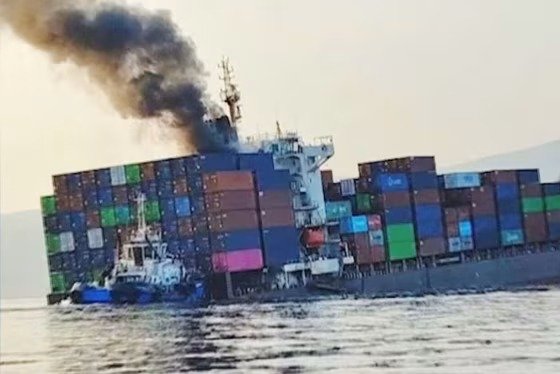
On October 14, reports emerged that two ships had sunk following Iranian attacks. A Singapore-registered container ship, the GFS Pride, caught fire after being attacked while transiting the strait. Its crew was evacuated, and no injuries were reported. A separate bulk carrier sank after sustaining damage in an earlier attack, according to the International Maritime Organization.
The incidents have highlighted the risks facing shipowners and crews operating in the region. Even when an attack does not result in a vessel sinking, damage to a ship, evacuation of its crew or the threat of further strikes can disrupt schedules and discourage other operators from entering the area.
The increase in attacks has also complicated efforts to restore shipping movements to levels seen before the conflict. Although some vessels have continued transiting the strait, the renewed violence has made the recovery of oil flows more uncertain.
Iran Changes Its Tactics to Increase Pressure on Washington
Iran’s escalation comes amid a wider struggle with Washington over control of the waterway, sanctions and the movement of energy supplies. Tehran has faced growing economic pressure from US restrictions on its oil exports, while the US has sought to limit Iran’s ability to finance its military operations.
Reuters reported on October 14 that Iranian officials had described changes in the country’s approach to attacking ships, including adjustments to the methods and frequency of operations. The reported strategy involved targeting vessels Tehran considered to be violating its restrictions on passage through the strait.
Iran has also expanded maritime surveillance and warned ships against switching off their tracking transponders. According to reports on the escalation, the Islamic Revolutionary Guard Corps has used smaller boats and unarmed spotters to help identify vessels. Such methods can make it more difficult for commercial operators to assess the risks of travelling through the area.
The reported tactics reflect Iran’s effort to use its position near the strait as leverage in its confrontation with the United States. By threatening a vital energy route, Tehran can raise the economic costs of the conflict for Washington and other countries that depend on Gulf oil and gas exports.
Iranian officials have reportedly considered the potential impact on US domestic politics, including the November midterm elections. Higher fuel prices and economic uncertainty could increase pressure on the Trump administration to seek a settlement. However, the extent to which attacks are intended to influence American voters remains an assessment based on reporting about Iranian strategy, rather than a guarantee of a particular political outcome.
US Response Faces Questions as Shipping Risks Increase
The surge in attacks has raised questions about Washington’s ability to protect commercial shipping while avoiding a further escalation of the conflict. The Trump administration has pursued a combination of naval pressure, restrictions on Iranian exports and military measures aimed at limiting Tehran’s ability to threaten vessels.
However, the recent increase in attacks has demonstrated that these measures have not eliminated the danger to commercial shipping. The US Navy has maintained a significant presence in the region, while American forces have also targeted vessels that Washington says were violating its blockade or supporting Iran’s war effort.
The situation is therefore more complicated than a complete absence of US action. The administration has continued applying economic and maritime pressure, but its recent approach has included a reduced pace of direct strikes against Iranian missile and drone launchers, according to reporting by Axios and other outlets.
That restraint comes amid concerns about the wider consequences of renewed military action. Further US strikes could trigger Iranian retaliation against commercial vessels or regional infrastructure, potentially worsening the disruption to energy supplies. At the same time, a response that fails to deter attacks could leave shipping companies exposed to continuing risks.
Washington faces a difficult balance between protecting freedom of navigation, limiting Iran’s ability to disrupt the waterway and preventing the conflict from expanding. The latest incidents suggest that achieving all three objectives simultaneously remains a significant challenge.
Oil Flows Decline as Shipping Companies Reassess Risks
The most immediate economic consequence of the escalation has been renewed pressure on oil shipments through the Strait of Hormuz. When attacks become more frequent, shipowners and energy companies must reassess whether voyages can be completed safely and whether the financial risks justify continuing operations.
Some operators may delay departures, suspend voyages or demand higher compensation for sending vessels into the region. Others may continue using established shipping arrangements, including transfers between vessels outside the strait, but these alternatives can be slower and more expensive than normal operations.
Earlier in October, maritime data showed that some crude exports through Hormuz had recovered significantly from the lowest levels recorded during the conflict. However, the renewed attacks have placed that recovery under pressure, with reports indicating a steep decline in oil volumes moving through the waterway as the violence intensified.
The disruption also affects the timing and reliability of deliveries. Refineries that depend on Gulf crude may need to adjust their purchasing strategies, while traders face greater uncertainty about when shipments will arrive. Even when oil remains available at the production level, difficulties transporting it can tighten effective supplies in international markets.
The resulting uncertainty can influence oil prices before any long-term shortage becomes evident. Traders take into account not only the volume of oil currently reaching buyers but also the possibility that future shipments could be delayed or interrupted.
Higher Insurance and Freight Costs Add to the Energy Crisis
Attacks on ships can increase the cost of moving energy even when vessels continue to pass through the region. Maritime insurers may raise premiums for voyages through high-risk waters, while shipping companies may charge more to cover security arrangements, delays and the possibility of damage.
These additional costs can be passed along the supply chain, affecting oil traders, refiners, distributors and eventually consumers. Longer voyages or alternative transport arrangements can also increase fuel consumption and operating expenses.
The problem extends beyond crude oil. The Gulf is an important source of liquefied natural gas and other energy products, and disruptions can affect the availability and delivery schedules of multiple commodities. Countries that rely heavily on imported energy may face increased costs as they compete for supplies from alternative sources.
Governments and energy companies may respond by drawing on inventories, diversifying suppliers or seeking alternative shipping routes where infrastructure permits. However, these measures cannot always replace the volumes normally transported through Hormuz, particularly over short periods.
The scale of the economic impact will depend on how long the attacks continue, how much shipping capacity remains available and whether diplomatic efforts can restore confidence among vessel operators.
Why the Escalation Matters for Trump’s Midterm Election Strategy
The shipping crisis has developed at a politically sensitive time for President Donald Trump, with US midterm elections scheduled for November 2026. Fuel prices are an important concern for American households, and increases can influence perceptions of inflation, economic management and the administration’s handling of international crises.
The president has faced pressure to lower gasoline prices, but developments in the Middle East have complicated that objective. Disruptions to oil transportation can keep crude prices elevated and increase the costs associated with refining, shipping and distributing fuel.
According to an Associated Press report published in October, US households have experienced significant increases in fuel and transportation costs during the conflict. Gasoline and diesel prices have risen substantially compared with levels before the war, adding to the financial pressure on consumers and businesses.
Higher energy costs can affect more than motorists. Airlines, trucking companies, manufacturers and agricultural businesses all depend on fuel or energy-intensive transport. When their expenses increase, some companies absorb the additional costs, while others pass them on to customers through higher prices.
The administration therefore faces a broader economic challenge than simply increasing the volume of oil passing through Hormuz. It must also contend with the effects of shipping uncertainty, elevated insurance costs and potential disruptions to regional refining and energy infrastructure.
For Trump, a sustained period of high fuel prices could weaken the effectiveness of promises to ease household expenses before voters head to the polls. However, the political impact will depend on the wider economic environment, the duration of the crisis and how voters assess the administration’s response.
Can Alternative Routes Offset the Strait of Hormuz Disruption?
Some Gulf oil producers have pipelines that allow crude to bypass the Strait of Hormuz and reach export terminals elsewhere. Saudi Arabia, for example, operates infrastructure that can transport oil towards the Red Sea, while the United Arab Emirates has a pipeline connecting its oil-producing region to the port of Fujairah on the Gulf of Oman.
These routes can provide some flexibility when maritime traffic through the strait is disrupted. However, their capacity is limited relative to the total volume of oil normally transported through Hormuz, and they cannot provide a complete substitute for the waterway.
Alternative routes also face their own logistical and security challenges. The effectiveness of pipelines depends on available capacity, the condition of infrastructure and the ability of ports to handle additional shipments. Regional instability can create risks even outside the immediate strait.
For countries importing energy from the Gulf, diversification may help reduce exposure to a single shipping corridor. Yet replacing established supply chains takes time, and alternative sources may be more expensive or unable to meet demand immediately.
As a result, the most effective way to restore normal shipping conditions would be to reduce the threat to commercial vessels and establish reliable arrangements for safe passage.
Diplomacy Remains Central to Restoring Maritime Security
The escalating attacks have reinforced the connection between maritime security and the broader confrontation between Iran and the United States. The dispute involves not only shipping but also sanctions, restrictions on Iranian exports, military operations and disagreements over the conditions needed to end the conflict.
Diplomatic efforts face significant obstacles because the two sides have competing demands. Washington has sought to maintain pressure on Iran, while Tehran has attempted to use its influence over the waterway to improve its position. The continuing exchange of military and economic measures has made a rapid return to normal conditions difficult.
Any durable arrangement would need to address the safety of commercial vessels, the status of restrictions on shipping and the wider issues driving the confrontation. Clear communication and reliable maritime procedures could help reduce risks, but such measures would be difficult to sustain without broader political progress.
For shipping companies, uncertainty is itself a major cost. Operators need confidence that vessels can transit safely, crews can be protected and cargoes can reach their destinations without unpredictable delays or attacks.
Until that confidence improves, even periods of increased traffic may not represent a lasting recovery. Shipping patterns can change quickly when a new attack occurs or tensions rise, leaving energy markets vulnerable to renewed disruption.
What Happens Next for Global Energy Markets?
The outlook for oil markets will depend on the frequency of attacks, the volume of shipments able to pass through the Strait of Hormuz and the effectiveness of efforts to protect commercial navigation. If the escalation continues, the combination of lower flows, higher freight costs and expensive insurance could keep energy markets under pressure.
A sustained reduction in shipments would increase the risk of supply shortages for some importers and could force refiners to seek alternatives. If attacks ease and confidence among shipowners improves, traffic could recover, although insurance costs and logistical difficulties may take longer to normalise.
Markets will also watch for changes in US policy, Iranian military activity and any progress towards negotiations. Statements from officials may influence expectations, but actual shipping volumes and verified maritime incidents will remain important indicators of whether conditions are improving.
For governments, the crisis highlights the importance of energy diversification, emergency planning and reliable international shipping routes. For businesses and consumers, it demonstrates how insecurity in a single strategic waterway can affect fuel prices and transportation costs across the world.
Conclusion: Hormuz Attacks Put Shipping, Oil Prices and US Policy Under Pressure
The record surge in attacks on ships around the Strait of Hormuz has renewed concerns about global energy security at a time when oil markets remain vulnerable to geopolitical shocks. The escalation has disrupted shipping, reduced oil flows and increased uncertainty for energy companies and importing countries.
Iran’s reported shift in tactics has complicated efforts to protect commercial vessels, while the US faces the challenge of maintaining pressure on Tehran without triggering a wider escalation. Although Washington has continued naval and economic measures, the recent attacks show that the risks to shipping remain significant.
The consequences extend beyond the Gulf. Higher transportation and insurance costs can feed into energy prices, while prolonged disruption could affect businesses and households far from the conflict zone. For Trump, the crisis also creates an economic and political challenge ahead of the November midterm elections, particularly if fuel costs remain elevated.
Ultimately, restoring stable oil flows through Hormuz will depend on reducing attacks, improving maritime security and addressing the broader confrontation between Iran and the United States. Until there is greater certainty over safe passage, the strait will remain a critical pressure point for global energy markets and international politics.
For breaking news and live news updates, like us on Facebook or follow us on Twitter and Instagram. Read more on Latest World on thefoxdaily.com.




COMMENTS 0