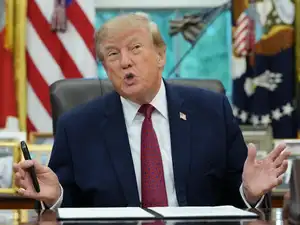
The possibility of renewed diplomacy between US President Donald Trump and North Korean leader Kim Jong Un has returned to the spotlight following the November 3, 2026, US midterm elections. The Republican Party’s losses have weakened Trump’s position in domestic politics, creating expectations that he may devote greater attention to foreign policy achievements during the remaining two years of his presidency.
North Korea could become an important part of that effort. Trump has repeatedly expressed interest in meeting Kim, with whom he developed an unusually direct diplomatic relationship during his first presidential term. However, Pyongyang has shown little enthusiasm for restarting negotiations, and analysts believe Kim may see limited benefits in meeting a US president whose domestic political position has weakened.
The situation also presents challenges for South Korea and Japan. Both countries are concerned that Washington could pursue direct negotiations with Pyongyang without adequately consulting its regional allies, particularly if Trump becomes willing to make concessions to secure a diplomatic breakthrough.
Why Trump’s Midterm Setback Could Push Him Towards North Korea Diplomacy
The 2026 midterm elections have changed the political environment in Washington. Democrats have gained control of both chambers of Congress, giving them greater opportunities to investigate the administration, challenge its domestic agenda and scrutinise major policy decisions.
Although Trump retains significant authority over foreign policy, a Democratic-controlled Congress could make it more difficult for him to secure legislative support for controversial decisions. The change may also encourage the president to focus on areas where he can pursue visible achievements through executive diplomacy.
Foreign policy offers Trump an opportunity to shape his presidential legacy independently of some domestic legislative battles. Analysts believe he could therefore look towards international negotiations, particularly with countries where a direct meeting between leaders might generate significant global attention.
North Korea fits that diplomatic profile. Trump has previously demonstrated a willingness to engage directly with Kim, and a renewed meeting could allow him to present himself as a leader capable of opening communication channels with a country that has remained isolated from much of the international community.
However, the possibility of renewed engagement does not automatically mean that negotiations will produce an agreement. Kim’s willingness to participate and the concessions Washington is prepared to consider will remain central questions. :chatgpt-content-reference{index=”0″}
Trump and Kim Jong Un’s Earlier Diplomatic Relationship
Trump and Kim established an unprecedented relationship during Trump’s first presidential term. After an extended period of hostile rhetoric and rising tensions over North Korea’s nuclear and missile programmes, the two leaders began direct engagement in 2018.
Their diplomatic efforts produced three face-to-face meetings between 2018 and 2019:
- Singapore summit, June 2018: Trump and Kim met for their first historic summit and signed a joint statement outlining commitments related to improved relations, peace on the Korean Peninsula and denuclearisation.
- Hanoi summit, February 2019: The second meeting ended without an agreement after the two sides failed to resolve disagreements over sanctions relief and North Korea’s nuclear programme.
- Panmunjom meeting, June 2019: Trump met Kim at the Demilitarised Zone separating North and South Korea. The encounter renewed expectations of working-level negotiations, but no comprehensive nuclear agreement followed.
The Singapore meeting was widely viewed as a significant diplomatic moment because a sitting US president had met directly with a North Korean leader for the first time. However, the subsequent breakdown in negotiations exposed the major differences between Washington and Pyongyang.
The United States continued to seek meaningful progress towards North Korea’s denuclearisation, while Kim’s government wanted sanctions relief and changes to Washington’s broader security policy towards the country.
Those disagreements have not disappeared. Any new diplomatic initiative would have to address the same fundamental questions, although North Korea’s military capabilities and international relationships have changed considerably since the earlier meetings. :chatgpt-content-reference{index=”1″}
Why Kim Jong Un May Have Little Interest in Meeting Trump
Despite Trump’s interest in restarting direct diplomacy, North Korea has shown limited enthusiasm for accepting a new invitation. Analysts believe Kim may have fewer reasons to negotiate with Washington than he did during the 2018-2019 diplomatic period.
One important factor is the expansion of North Korea’s nuclear and missile capabilities. The country has continued developing its military programme, strengthening its position and making the prospect of denuclearisation more complicated.
Kim’s government has also deepened relationships with Russia and China. These partnerships provide North Korea with diplomatic and strategic options that may reduce its dependence on improved relations with the United States.
Consequently, Pyongyang may calculate that it can maintain its current position without making major concessions to Washington. A meeting with Trump could generate international attention, but Kim would need to believe that the potential benefits justify the risks of entering negotiations.
North Korea wants a different starting point for negotiations
A central obstacle is the disagreement over denuclearisation. Washington has traditionally insisted that negotiations should lead towards the dismantling of North Korea’s nuclear weapons programme.
Kim, however, has indicated that he could consider dialogue if the United States abandoned what Pyongyang describes as its hostile policy and stopped making denuclearisation a precondition for engagement.
This creates a fundamental difference between the two sides. Washington wants negotiations to address North Korea’s nuclear capabilities, while Pyongyang wants changes in the broader relationship before considering meaningful concessions.
If Trump agrees to negotiate without making denuclearisation the central requirement, he could face criticism from regional allies concerned about the long-term consequences for Asian security.
Kim may question Trump’s ability to deliver lasting concessions
The midterm election outcome could also influence how North Korea assesses Trump’s negotiating position. With Democrats controlling Congress, Pyongyang may question whether the US president can secure lasting policy changes.
Some potential concessions, particularly those involving sanctions, would face legal and political obstacles. A presidential meeting could produce announcements or political commitments, but implementing a comprehensive agreement would require additional negotiations and cooperation across the US government.
Analysts have therefore suggested that Kim may see little reason to meet Trump unless Washington offers substantial and durable changes in its policy towards North Korea. :chatgpt-content-reference{index=”2″}
North Korea’s Growing Ties With Russia and China Change the Diplomatic Equation
North Korea’s international position has evolved since the previous Trump-Kim summits. Its closer relationship with Russia and continued strategic ties with China have changed the diplomatic calculations surrounding any potential negotiations with Washington.
Russia and North Korea have expanded military and political cooperation, particularly in the context of the war in Ukraine. Their relationship has become an important part of Pyongyang’s external engagement and provides Kim with additional diplomatic options.
China also remains a major economic and diplomatic partner for North Korea. Its influence is particularly important because Beijing has historically played a central role in efforts to address tensions surrounding the Korean Peninsula.
These relationships could reduce the urgency for Kim to seek economic or diplomatic relief from Washington. If Pyongyang believes it can maintain its position through cooperation with Beijing and Moscow, it may demand more substantial concessions before agreeing to another summit.
For Trump, this means that the diplomatic environment is more complicated than it was during his first term. Recreating the atmosphere of the Singapore summit would not necessarily produce the same negotiating opportunities. :chatgpt-content-reference{index=”3″}
South Korea and Japan Fear Being Left Out of US-North Korea Talks
Any direct negotiations between Trump and Kim would have consequences beyond Washington and Pyongyang. South Korea and Japan are closely connected to the security situation on the Korean Peninsula and remain concerned about North Korea’s nuclear and missile programmes.
Both countries depend heavily on their security relationships with the United States. Their governments therefore want Washington to coordinate major decisions affecting regional security rather than negotiate independently with Pyongyang.
Officials and analysts in the region have expressed concern that Trump could prioritise securing a personal diplomatic achievement over maintaining a coordinated approach with allies.
South Korea’s security concerns
South Korea faces the most immediate consequences of North Korea’s military activities because the two countries remain technically at war, with their conflict suspended by the 1953 armistice rather than a formal peace treaty.
Seoul has an interest in reducing military tensions and creating opportunities for dialogue. However, it also needs to ensure that any agreement between Washington and Pyongyang does not weaken the security arrangements protecting South Korea.
A deal that focuses primarily on limiting certain North Korean weapons capabilities while overlooking broader security concerns could create difficult questions for the South Korean government.
South Korean officials are also concerned about the possibility of being excluded from important negotiations. Better relations between Washington and Pyongyang would not automatically guarantee improved relations between the two Koreas.
Japan’s concerns over North Korea’s missiles
Japan also has significant security interests in any negotiations involving North Korea. Pyongyang’s missile development and nuclear programme remain major concerns for Tokyo.
Japanese officials fear that a US-North Korea agreement could focus on limiting threats to the American mainland while leaving other regional security concerns insufficiently addressed.
For Japan, an agreement that does not adequately consider the range and capabilities of North Korean missiles could create new uncertainties about regional deterrence.
These concerns explain why Tokyo wants close coordination with Washington before any major diplomatic shift. A summit that produces political headlines without addressing the security priorities of regional allies could create friction within existing partnerships. :chatgpt-content-reference{index=”4″}
Could Trump Accept North Korea as a Nuclear Power to Secure a Deal?
One of the most sensitive questions surrounding renewed diplomacy is whether Trump could consider an agreement that does not require North Korea to give up its nuclear weapons immediately.
Trump has previously referred to North Korea as a nuclear power, although the United States and its regional allies have not formally accepted Pyongyang’s nuclear status as legitimate.
Recognising North Korea as a nuclear-armed state, even informally through negotiations, could represent a significant change in Washington’s approach. It could also raise concerns about the future of the international non-proliferation framework and the security balance in East Asia.
South Korea and Japan are particularly concerned about this possibility. Both countries could view an agreement that effectively accepts North Korea’s nuclear arsenal as a weakening of long-standing regional security commitments.
There is also a distinction between engaging with North Korea as a country that possesses nuclear weapons and formally accepting its status as a legitimate nuclear-weapon state. Diplomatic contact does not automatically imply recognition.
Any administration considering a new negotiating framework would therefore have to balance the possibility of reducing immediate tensions against the long-term consequences of changing its position on denuclearisation. :chatgpt-content-reference{index=”5″}
Why a New Trump-Kim Summit May Not Produce a Nuclear Agreement
Even if Trump and Kim agree to meet, the possibility of a diplomatic breakthrough would remain uncertain. A summit can create an opportunity for dialogue, but resolving the nuclear dispute requires agreement on complicated technical, political and security issues.
One major obstacle is the question of sanctions. North Korea wants relief from international economic restrictions, while Washington would need assurances that any concessions would produce meaningful changes in Pyongyang’s behaviour.
Another challenge involves verification. Any agreement aimed at limiting North Korea’s nuclear programme would require mechanisms to monitor facilities, weapons-related activities and compliance with negotiated commitments.
The two sides would also need to address military exercises, security guarantees and the broader political relationship between the United States and North Korea.
These issues cannot easily be resolved through a single meeting between the leaders. Even if a summit takes place, detailed negotiations between officials would be necessary to translate political commitments into an enforceable agreement.
Congressional opposition could create further complications. While Trump has considerable authority to conduct diplomatic meetings, major changes involving sanctions and long-term security arrangements could encounter legal and political restrictions. :chatgpt-content-reference{index=”6″}
Could the November APEC Summit Create an Opportunity for Talks?
Trump’s planned visit to China for the Asia-Pacific Economic Cooperation (APEC) summit in November has generated speculation about a possible diplomatic encounter with Kim.
The gathering, scheduled for November 18 and 19 in Shenzhen, could provide an opportunity for regional diplomatic engagement. However, the possibility of a Trump-Kim meeting remains uncertain, particularly given North Korea’s limited response to renewed American outreach.
China’s role could also influence the situation. Beijing maintains important relationships with both Washington and Pyongyang, giving it a significant position in the broader diplomatic environment.
Nevertheless, the existence of a regional summit does not guarantee that Kim will agree to meet Trump. North Korea would need to consider the timing, potential concessions and political consequences before accepting an invitation.
Reports indicate that analysts and officials see fading prospects for a meeting during Trump’s November Asia visit. The absence of a clear response from Pyongyang remains a major obstacle to arranging a summit. :chatgpt-content-reference{index=”7″}
What Happens Next in US-North Korea Relations?
The future of US-North Korea diplomacy will depend on whether both governments can identify a negotiating framework that addresses their competing priorities.
Trump may continue expressing interest in direct engagement because a diplomatic agreement could become a significant part of his presidential legacy. However, Kim’s calculations are likely to depend on whether Washington is prepared to offer meaningful changes rather than another high-profile meeting without concrete results.
Several developments will be important to watch:
- North Korea’s response: Whether Pyongyang provides a formal response to Trump’s renewed diplomatic overtures will indicate its willingness to reopen communication.
- US policy on denuclearisation: Any change in Washington’s negotiating position could influence Kim’s willingness to participate in talks.
- Sanctions negotiations: The possibility of economic relief will remain a major issue in discussions between the two countries.
- South Korea and Japan’s involvement: Coordination with regional allies will be important for maintaining confidence in existing security arrangements.
- China’s diplomatic role: Beijing’s relationship with both countries could influence the timing and structure of any renewed negotiations.
These factors will help determine whether Trump’s interest in meeting Kim develops into substantive diplomacy or remains an unfulfilled political objective.
Conclusion
Trump’s Republican Party setback in the 2026 US midterm elections could encourage him to pursue foreign policy achievements, with renewed engagement with North Korea emerging as one possible priority. His earlier relationship with Kim Jong Un provides a foundation for direct diplomacy, but the circumstances have changed considerably since their meetings in 2018 and 2019.
North Korea has expanded its military capabilities and strengthened its relationships with Russia and China, potentially reducing its incentive to negotiate with Washington. Kim may also question whether Trump can deliver lasting concessions while facing a Democratic-controlled Congress.
Meanwhile, South Korea and Japan remain concerned about the possibility of being excluded from negotiations that could directly affect their security. Any agreement that overlooks their interests or weakens regional deterrence could create tensions among long-standing allies.
A renewed Trump-Kim meeting remains possible, but a meeting alone would not resolve the nuclear dispute. The central challenge will be whether Washington and Pyongyang can agree on meaningful terms that address denuclearisation, sanctions, security guarantees and regional stability.
For breaking news and live news updates, like us on Facebook or follow us on Twitter and Instagram. Read more on Latest World on thefoxdaily.com.






COMMENTS 0