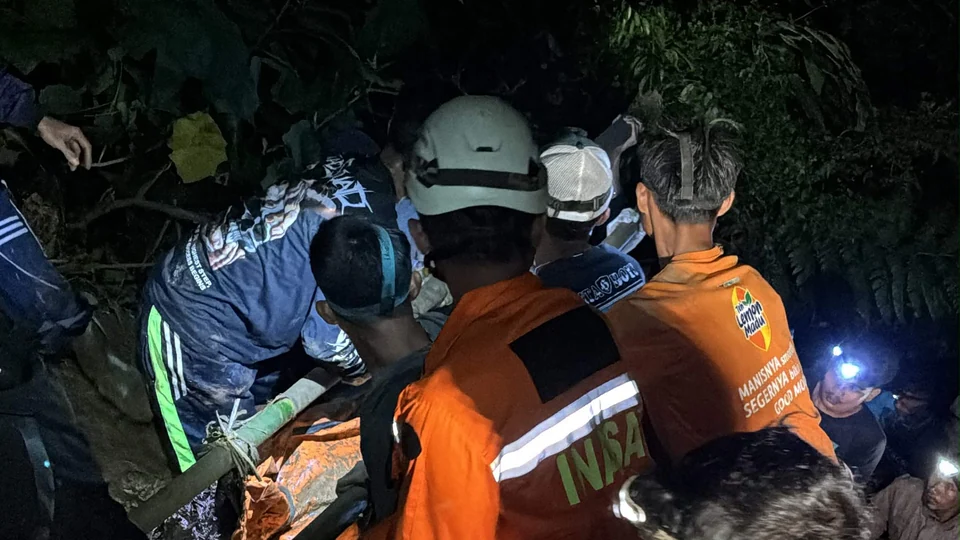
A desperate search and Rescue Operation is underway in Indonesia after flooding trapped miners inside an illegal gold mine in West Java, leaving at least 16 people dead and another 10 missing. The accident occurred late Monday when heavy rainfall caused the Ciseureuh River to overflow, sending water into an underground mining shaft where workers were searching for gold.
By Thursday, the fourth day of the operation, rescue teams had recovered 16 bodies, while authorities believed at least 10 miners could still be trapped underground. The chances of finding survivors were becoming increasingly slim as water continued to enter the excavation and rescuers struggled to reach the deepest sections.
The disaster occurred in the Bogor regency, in a mountainous area south of Jakarta, Indonesia’s capital. The flooded mine shaft was estimated to be around 100 metres deep, creating a difficult environment for rescue personnel working in narrow, slippery passages with limited visibility.
Authorities have deployed hundreds of personnel, submersible water pumps and specialised rope-access teams to search two adjacent mine shafts. The operation has also exposed the dangers of informal gold mining in Indonesia, where workers frequently enter poorly regulated underground excavations without adequate safety infrastructure.
How flooding trapped miners inside the illegal gold mine
The accident took place late Monday when miners were digging for small deposits of gold inside an unauthorised mining site in West Java. Heavy rainfall caused the nearby Ciseureuh River to overflow, allowing floodwater to enter the underground excavation.
Several miners managed to escape from one section of the mine before the water filled the shaft. Others were unable to get out as the flooding spread through the underground passages.
The mine’s depth and layout made the situation particularly dangerous. At approximately 100 metres below ground, workers trapped inside had limited escape options once water began entering the excavation. The narrow underground routes also complicated efforts to reach people who might have survived in isolated sections.
Unlike a properly managed industrial mining operation, an illegal excavation may not have the drainage systems, reinforced access routes, emergency exits or monitoring equipment needed to respond effectively to sudden flooding.
The Ciseureuh River’s overflow turned what had been a routine search for gold into a deadly underground emergency. Water accumulated inside the shaft, while additional groundwater seeped through openings in the surrounding terrain, making it difficult for rescue teams to bring the water level down.
Rescue operation delayed because miners were working illegally
One of the major challenges in the aftermath was the delay in notifying emergency authorities. Because the miners were operating illegally, officials were not immediately informed when the flooding occurred.
Local miners and residents initially attempted to remove water from the excavation using their own pumping efforts. However, the volume of water and the continuing seepage eventually made the situation too difficult for them to manage.
Police received reports that miners were trapped approximately 16 hours after the flooding began. A nearby state-owned mining company, PT Antam, subsequently forwarded a formal report to the Jakarta Search and Rescue Agency shortly after midnight on Wednesday.
That notification triggered a full-scale rescue operation involving specialised personnel and equipment. The delay meant that rescuers began their coordinated response long after the underground passages had been flooded.
The incident highlights a serious problem associated with illegal mining: when workers operate outside official systems, accidents may go unreported or reach emergency services late. In underground disasters, where trapped people have limited access to air and safe spaces, delays can sharply reduce the chances of survival.
16 bodies recovered as authorities fear 10 miners remain trapped
West Java police spokesperson Hendra Rochmawan confirmed that 16 bodies had been recovered by Thursday. Authorities continued to believe that at least 10 miners were still missing and potentially trapped inside the flooded excavation.
Rochmawan acknowledged that the prospects of finding survivors had deteriorated by the fourth day of the operation. He said the search would continue despite the increasingly difficult circumstances.
The recovery of 16 bodies represents a major loss of life, but the final death toll remains uncertain until the missing miners are accounted for and the operation is completed. Authorities have not established that all 10 missing workers are necessarily dead.
The possibility that miners could remain alive in isolated pockets of the underground structure has kept rescue teams working. However, continued flooding, limited access and the passage of time have made the operation increasingly challenging.
325 rescuers deployed to search two mine shafts
Thursday’s operation involved 325 personnel, according to Jakarta Search and Rescue Agency chief Desiana Kartika Bahari. Teams concentrated on two adjacent mine shafts believed to contain trapped workers.
Rescuers used rope-access techniques to reach difficult sections of the excavation. The approach was necessary because the shafts were narrow and the surrounding terrain was slippery, making conventional access methods difficult.
Submersible water pumps were deployed to remove accumulated water from the mine. These pumps are designed to operate while submerged and can help lower water levels in flooded underground spaces.
However, pumping water out has not been straightforward. Groundwater continued entering the excavation through openings in the surrounding structure. Rescue personnel therefore attempted to seal these openings to reduce the flow and prevent removed water from being replaced.
The operation involves several interconnected challenges:
- Continuous water inflow: Groundwater seepage has made it difficult to drain the flooded shafts completely.
- Narrow underground passages: Restricted access limits the movement of rescue personnel and equipment.
- Slippery terrain: Wet and unstable surfaces increase the risk of falls and further accidents.
- Limited visibility: Darkness and waterlogged passages make it harder to identify safe routes and locate trapped miners.
- Uncertain locations: Rescuers must search two adjacent shafts and determine where the missing workers may have been trapped.
The combination of these conditions means that every stage of the rescue requires careful coordination. Teams must balance the urgency of reaching possible survivors against the danger of exposing additional personnel to an unstable underground environment.
Why the flooded mine is difficult to access
Underground mining accidents are particularly difficult to manage when flooding occurs in narrow shafts. Water can rapidly block access routes, isolate workers and create pressure on surrounding structures. In an informal mine, the absence of engineered drainage and emergency systems can make the consequences even more severe.
The Bogor mine’s estimated depth of 100 metres adds another layer of complexity. Rescue personnel cannot simply enter the shaft and reach every section at once. They must establish safe access, manage water levels and assess whether the underground structure can support the movement of people and equipment.
Groundwater seepage is also a persistent obstacle. Even when pumps remove water from one section, additional water can enter through cracks and openings. Unless the inflow is controlled, the water level may remain high enough to prevent rescuers from reaching deeper areas.
Rope-access techniques can help teams reach locations that are difficult to approach through conventional routes. However, these methods require secure anchoring points, trained personnel and continuous assessment of the surrounding conditions.
The rescue operation is therefore not only a race against time but also a technical challenge involving water management, underground access and worker safety.
PT Antam says flooded mine is unrelated to its operations
The flooded excavation is located near facilities operated by PT Antam’s Pongkor gold mining unit, a state-owned mining operation in West Java. The proximity of the accident site to the company’s facilities has drawn attention to its role in reporting the incident.
PT Antam said the flooded mine was unrelated to its operations. The company nevertheless forwarded a formal report to the Jakarta Search and Rescue Agency after receiving information about the trapped miners.
The distinction is important because the accident occurred at an illegal mining site rather than within the company’s authorised operations. Its proximity to a formal mining facility does not, by itself, establish that PT Antam was responsible for the excavation or the incident.
The company’s notification helped trigger the coordinated rescue response after local efforts to remove water had proved insufficient. Authorities will need to establish the precise circumstances of the accident and the status of the underground site as part of their assessment.
Illegal gold mining in Indonesia: A persistent safety problem
Illegal and informal mining remains a significant challenge in Indonesia, where thousands of people are involved in small-scale mineral extraction. Gold mining is particularly attractive to workers in some areas because even small deposits can provide a source of income.
However, many unauthorised operations take place without the engineering standards, safety procedures and emergency arrangements expected at regulated industrial mines. Workers may enter narrow tunnels and unstable shafts with limited protective equipment, often relying on improvised tools and locally developed methods.
These conditions expose miners to several serious hazards:
Flooding and groundwater intrusion
Underground excavations can become dangerous when heavy rain causes rivers to overflow or groundwater levels to rise. Without adequate drainage and pumping infrastructure, water can enter tunnels faster than workers can escape.
Landslides and tunnel collapses
Unstable soil and poorly supported underground passages can collapse without warning. Heavy rainfall can further weaken surrounding ground, increasing the risk of landslides and structural failures.
Exposure to toxic chemicals
Gold extraction and processing can involve mercury and cyanide. In poorly regulated operations, workers may handle these substances without sufficient protective equipment or proper waste-management systems.
Mercury can damage the nervous system and affect other organs, while cyanide is highly toxic and can cause severe poisoning. Improper disposal can also contaminate water and soil, exposing surrounding communities and ecosystems to environmental risks.
Lack of emergency infrastructure
Unauthorised mines may not have clearly marked escape routes, reliable communication systems, ventilation arrangements or emergency response teams. When an accident occurs, workers can become trapped before outside authorities even know that a disaster has taken place.
The Bogor flooding incident illustrates how these risks can combine. A sudden rise in water levels, limited underground access and delayed notification created a situation in which rescuers were forced to begin their work under extremely difficult conditions.
Why illegal mining accidents are often harder to respond to
Formal mining operations generally operate under regulatory requirements that cover mine design, worker protection, environmental management and emergency preparedness. Although accidents can still occur at authorised sites, established procedures and reporting channels can help emergency services respond more quickly.
Illegal mines often lack these safeguards. Their locations may not be officially recorded, the number of workers underground may be unknown and operators may be reluctant to report accidents because of the risk of legal action.
This creates an information gap during emergencies. Rescue teams may not know how many people entered the mine, which shafts they used or where they were working when the accident occurred.
The delay in reporting the Bogor flooding incident demonstrates the practical consequences of this problem. Local miners and residents initially tried to deal with the emergency themselves, but the situation required specialised rescue resources.
Reducing the risk of similar disasters requires more than enforcement against illegal mining. Authorities also need effective monitoring, safer livelihood alternatives for communities dependent on informal mining, stronger awareness of underground hazards and rapid reporting mechanisms when workers are missing.
What happens next in the Indonesia gold mine rescue operation?
The immediate priority remains locating the 10 missing miners and recovering anyone still trapped inside the flooded shafts. Rescue teams are continuing to pump out water, control groundwater seepage and access difficult sections of the excavation.
The operation will also require authorities to establish the identities of the recovered victims and determine whether the missing workers are all accounted for. The final assessment will depend on the completion of the search and the condition of the underground site.
Once the emergency phase ends, investigators are likely to examine how the illegal excavation was operating, how many workers were present and whether any safety measures existed. The circumstances surrounding the delayed notification will also be important in understanding why the rescue response began approximately 16 hours after the flooding.
The incident may renew scrutiny of informal gold mining across Indonesia, particularly in areas where workers operate underground without adequate drainage, structural support or emergency equipment.
Indonesia mine flooding: A rescue operation against time
The flooding in Bogor has left at least 16 people dead and 10 others missing, turning an illegal gold-mining operation into a major rescue emergency. What began as a search for gold ended in disaster after the Ciseureuh River overflowed and water rapidly filled an underground shaft.
Hundreds of rescuers are now working in difficult conditions, using pumps and rope-access techniques to reach the flooded excavation. The continuing inflow of groundwater, narrow passages and unstable terrain have made the search increasingly difficult.
Although authorities have acknowledged that the chances of survival are declining, the operation remains underway. The immediate focus is on finding the missing miners, while the wider tragedy has renewed attention on the dangers faced by workers in Indonesia’s informal mining sector.
The disaster is a stark reminder that illegal mining is not merely a regulatory issue. Without safe excavation practices, reliable drainage, protective equipment and emergency reporting systems, workers can be exposed to life-threatening risks with little protection when an accident strikes.
For breaking news and live news updates, like us on Facebook or follow us on Twitter and Instagram. Read more on Latest World on thefoxdaily.com.






COMMENTS 0