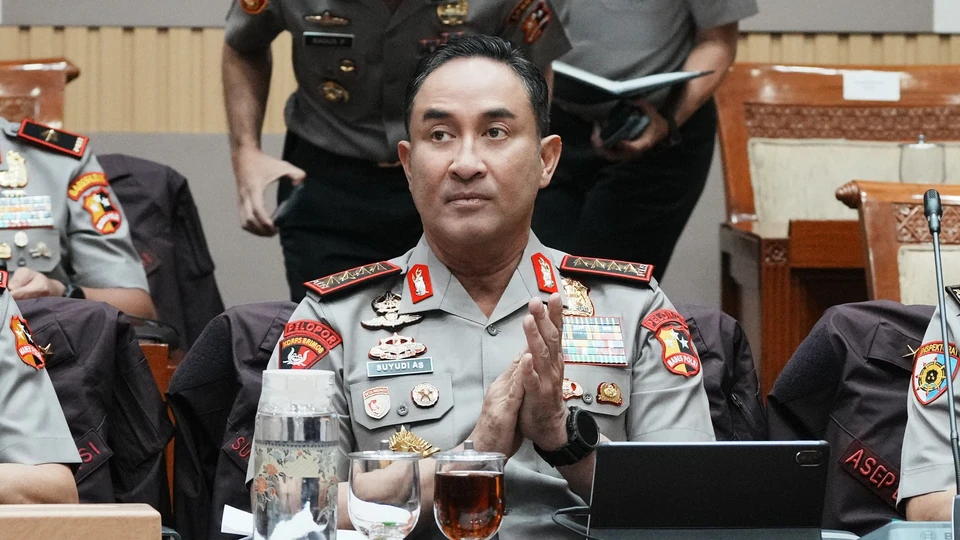
Indonesia’s alleged illegal wiretapping scandal has widened after National Police Chief Gen. Suyudi Ario Seto told parliament that the surveillance operation targeting President Prabowo Subianto also involved government officials, politicians, governors, law enforcement personnel, activists and students. The disclosure has intensified concerns about the misuse of police surveillance powers and raised questions about who authorised the operation and why so many public figures were monitored.
Speaking before the Indonesian parliament’s Commission III in Jakarta on Thursday, November 12, Seto said investigators had identified a broad range of surveillance targets, extending well beyond the presidential palace. The investigation has implicated several senior police officials, including former police chief Gen. Listyo Sigit Prabowo, who was appointed presidential chief of staff before becoming a suspect in the case.
Seto stressed that appearing on a surveillance list does not mean an individual is suspected of committing an offence. The Police Investigation is continuing as lawmakers seek to establish the motive, identify everyone involved and determine whether the alleged operation was part of a wider political effort.
Wiretapping Scandal Extended Beyond President Prabowo
Seto’s parliamentary testimony provided a broader picture of the alleged surveillance operation. According to the police chief, investigators found that the targets included President Prabowo, officials working within the presidential palace, ministries, state institutions, members of parliament, political party figures and regional governors.
The alleged surveillance also extended to police chiefs, anti-corruption officials, activists and students. This suggests that the operation, if established in full, reached across several parts of Indonesia’s political, administrative and law enforcement systems.
Seto cautioned lawmakers against assuming that everyone whose communications were monitored had done something wrong. He said the identification of individuals as surveillance targets should not be interpreted as evidence of misconduct.
The distinction is important because the investigation concerns the legality and authorisation of the interception itself. People whose telephone communications were allegedly monitored may be witnesses or affected individuals rather than participants in the operation.
The expanded list of targets has also increased pressure on investigators to establish how telephone numbers were selected, who approved the monitoring and whether the surveillance was conducted for any legitimate law enforcement purpose.
Four Senior Police Officials Implicated in the Investigation
The scandal has centred on four senior police officials, including former National Police Chief Listyo Sigit Prabowo. The other officials identified in connection with the case are Ahrie Sonta Nasution, who headed the National Police Legal Division; Eko Hadi Santoso, a senior instructor at the National Police Education and Training Institute; and Slamet Uliandi, who headed the Information and Communications Technology Division of the Criminal Investigation Agency.
Listyo is particularly significant because of his former position as national police chief and his subsequent appointment as Prabowo’s chief of staff. His involvement has turned the case into a major political and institutional controversy, rather than a routine investigation into unauthorised electronic surveillance.
Nasution and Eko were also among the senior officers detained during the investigation. Nasution was dishonourably discharged from the police following an internal ethics hearing on Tuesday. Proceedings against the other implicated officials were expected to follow, according to police spokesperson Johnny Eddizon Isir.
Uliandi has also been implicated but was not taken into custody because of health reasons. Authorities have not reported public statements from the suspects addressing the allegations.
The involvement of officers from different parts of the police hierarchy has raised questions about whether the alleged operation depended on a coordinated chain of command and how surveillance equipment and electronic records were managed.
Investigators Examine Alleged Chain of Command
During the November 12 parliamentary hearing, Seto outlined allegations concerning how the surveillance orders were communicated within the police organisation. According to his account, investigators believe the instructions originated with Listyo and were passed through other senior officers before reaching personnel responsible for operating the surveillance system.
The alleged chain involved Uliandi, Eko and Nasution. Investigators are examining whether instructions were communicated verbally or through messaging groups rather than through the formal applications and documentation required for authorised interception.
The reported procedure raises questions about whether the surveillance system’s safeguards were bypassed. Authorities are also examining how telephone numbers were entered into the system and whether the required verification procedures were followed.
These allegations remain part of the investigation and must be distinguished from findings established through a final judicial process. Determining who issued instructions, who implemented them and who knew about the alleged operation will be central to establishing individual responsibility.
Deleted Recordings Raise Questions About Evidence Destruction
Another major part of the investigation concerns the alleged deletion of recordings containing Prabowo’s telephone conversations. Police said Nasution requested permission from Uliandi in October to delete recordings produced through the surveillance operation, and that Uliandi approved the request.
Investigators are examining whether the deletion was intended to remove evidence of the alleged interception and conceal the operation’s activities. The handling of electronic records has become a separate focus because digital surveillance systems can contain information about targeted telephone numbers, recording activity, access permissions and the people responsible for operating them.
Nasution’s lawyer, Krisna Murti, has not directly addressed the specific allegations concerning the deleted recordings. However, he said his client would cooperate with investigators and clarify the case.
The alleged deletion of recordings could have significant implications for the investigation. If original files were removed, investigators may need to examine system logs, device records, communication histories and other digital evidence to reconstruct what happened.
The police have not publicly disclosed the complete contents of the recordings or identified all the individuals whose communications were allegedly intercepted. The full scale of the operation therefore remains unclear.
Parliament Seeks to Establish the Motive Behind the Surveillance
Indonesia’s Commission III is examining why the alleged wiretapping operation was conducted and whether additional officials or individuals were involved. The committee oversees law enforcement and security affairs and has demanded that the police investigation establish the facts rather than stop at the officers already implicated.
Commission III Chairman Habiburokhman said everyone found to have participated in the operation must face legal accountability. He has also called for investigators to examine whether the alleged conduct could amount to treason because the president and other prominent national figures were among the targets.
The possibility of treason has become a significant part of the political debate. The presidential palace previously described the alleged targeting of the head of state as conduct that could endanger national security, particularly if sensitive information obtained through surveillance was misused.
However, the precise legal direction of the investigation has been the subject of differing official statements. Seto outlined potential criminal provisions concerning unlawful interception and the handling of electronic information, while lawmakers have urged investigators to examine whether the evidence supports a treason investigation as well.
On Thursday, Reuters also reported that police said they had sufficient initial evidence to pursue treason charges against four suspects. The final charges and their application will depend on the evidence and the decisions of the relevant authorities.
What Charges Could the Suspects Face?
Seto identified several provisions under Indonesia’s new Criminal Code and Electronic Information and Transactions Law that investigators are considering in connection with the alleged surveillance.
- Article 258 of the Criminal Code: Prohibits unlawful interception, recording, diversion, alteration, obstruction or monitoring of non-public electronic communications. It carries a maximum prison sentence of 10 years.
- Article 332 of the Criminal Code: Provides for a maximum prison sentence of six years under the provisions cited by the police chief.
- Article 32 of the Electronic Information and Transactions Law: Criminalises unauthorised alteration, destruction, deletion, transfer or concealment of electronic information. The maximum penalty cited is eight years in prison.
These provisions cover different aspects of the alleged conduct, including the interception of private communications and the handling of electronic records. Investigators will need to establish the specific actions attributed to each suspect before the legal process can determine individual liability.
The distinction between potential charges and proven criminal responsibility remains important. The suspects have not been convicted, and the allegations must be tested through the applicable legal process.
20,000 Troops Ordered to Jakarta as a Precaution
The wiretapping controversy has also prompted heightened security preparations in Indonesia’s capital. The government ordered approximately 20,000 troops to Jakarta as a precaution while the investigation and political tensions continued.
However, the order has not translated into a large visible military deployment across the city. Most of the personnel have reportedly remained on standby in their barracks rather than being positioned on the streets.
The precautionary deployment reflects the sensitivity of a case involving the president, senior police officials and people connected to Indonesia’s political leadership. Authorities have not established that the alleged wiretapping operation was linked to an imminent threat of violence.
The investigation has nevertheless attracted public attention because it involves institutions responsible for protecting national security and enforcing the law. Any confirmed misuse of surveillance powers by senior officials could raise wider questions about oversight, accountability and the protection of private communications.
Political Tensions Between Prabowo and Former President Jokowi
The scandal has intensified scrutiny of the relationship between Prabowo and former president Joko Widodo, popularly known as Jokowi. Several of the officials connected to the investigation have been associated with the former president’s political circle, particularly Listyo, who served as national police chief during Widodo’s administration.
Prabowo’s political rise was closely linked to his relationship with Jokowi. After losing two presidential elections to Widodo, Prabowo joined his government as defence minister. He later contested the presidency as a successor to the outgoing leader, choosing Widodo’s son, Gibran Rakabuming Raka, as his running mate.
Widodo supported Prabowo’s campaign, helping establish a political partnership that shaped the transition of power in 2024. The current wiretapping investigation has placed that relationship under renewed pressure because of the alleged involvement of officials who previously held influential positions during Widodo’s presidency.
However, Widodo has not been implicated in the wiretapping investigation. He has said that the legal process should be respected while authorities establish what happened.
Analyst Evan Laksmana of the International Institute for Strategic Studies said the case could mark a significant change in the political relationship between the two leaders. He argued that Prabowo’s political decisions had often been viewed through the influence of his predecessor and that the scandal could lead to a more direct confrontation between their political camps.
The investigation alone does not establish that the former president ordered or knew about the alleged surveillance. Any such conclusion would require separate evidence.
Gibran’s Political Position Adds to the Uncertainty
The controversy has unfolded alongside a separate dispute involving Vice President Gibran Rakabuming Raka. On Tuesday, Gibran offered to resign in response to an investigation into questions about his academic credentials. That issue is unrelated to the alleged wiretapping operation but has added to the political uncertainty surrounding the current administration.
Protesters in several Indonesian cities have demanded accountability in the surveillance case while also criticising Widodo’s continued political influence. Some demonstrations have called for Gibran to resign from the vice presidency.
On Tuesday, 154 people were detained in Yogyakarta following clashes after a protest involving approximately 2,000 students and activists. Demonstrators raised concerns about political accountability and the alleged misuse of state institutions.
The overlapping controversies have increased pressure on Indonesia’s political leadership. However, the academic credentials investigation and the wiretapping case remain separate matters and should not be treated as evidence of a connection between the allegations.
Amnesty International Calls for a Complete Investigation
Amnesty International has called for a full investigation into the alleged wiretapping operation, warning that unauthorised surveillance could be used to intimidate critics and undermine civil liberties.
The organisation’s concerns reflect the wider implications of monitoring communications belonging to activists, students, journalists and other people engaged in public affairs. Surveillance without proper legal authority can discourage individuals from expressing opinions, organising demonstrations or communicating with civil society groups.
The allegations also raise questions about the safeguards governing access to police surveillance systems. Such tools can be used for legitimate investigations when authorised under the law, but their misuse can undermine public trust in law enforcement.
A credible investigation will therefore need to establish not only who was monitored but also whether the surveillance had any legal basis, who authorised it and how the collected information was used or distributed.
What Happens Next in Indonesia’s Wiretapping Investigation?
The investigation is expected to focus on establishing the full chain of command, identifying the people who operated the surveillance system and determining whether additional officials or outside individuals benefited from the intercepted information.
Investigators will also need to examine the alleged deletion of recordings and determine whether sufficient digital evidence remains to reconstruct the operation. The identities of many people reportedly included on the surveillance list have not been publicly disclosed.
Parliament’s Commission III is continuing to press the police for a complete explanation. Its examination of the case could influence public understanding of the alleged operation and the accountability expected from senior law enforcement officials.
The most significant unresolved question remains the origin and purpose of the surveillance orders. Establishing whether the operation was authorised by senior officials, carried out for political reasons or connected to another objective will be central to the case.
Indonesia’s wiretapping scandal has developed from allegations involving the president’s private communications into a much broader controversy over surveillance powers, police accountability and political influence. With senior officers implicated and parliament demanding answers, the investigation could have lasting consequences for the relationship between the presidency, the police and the country’s wider political establishment.
For breaking news and live news updates, like us on Facebook or follow us on Twitter and Instagram. Read more on Latest World on thefoxdaily.com.




COMMENTS 0