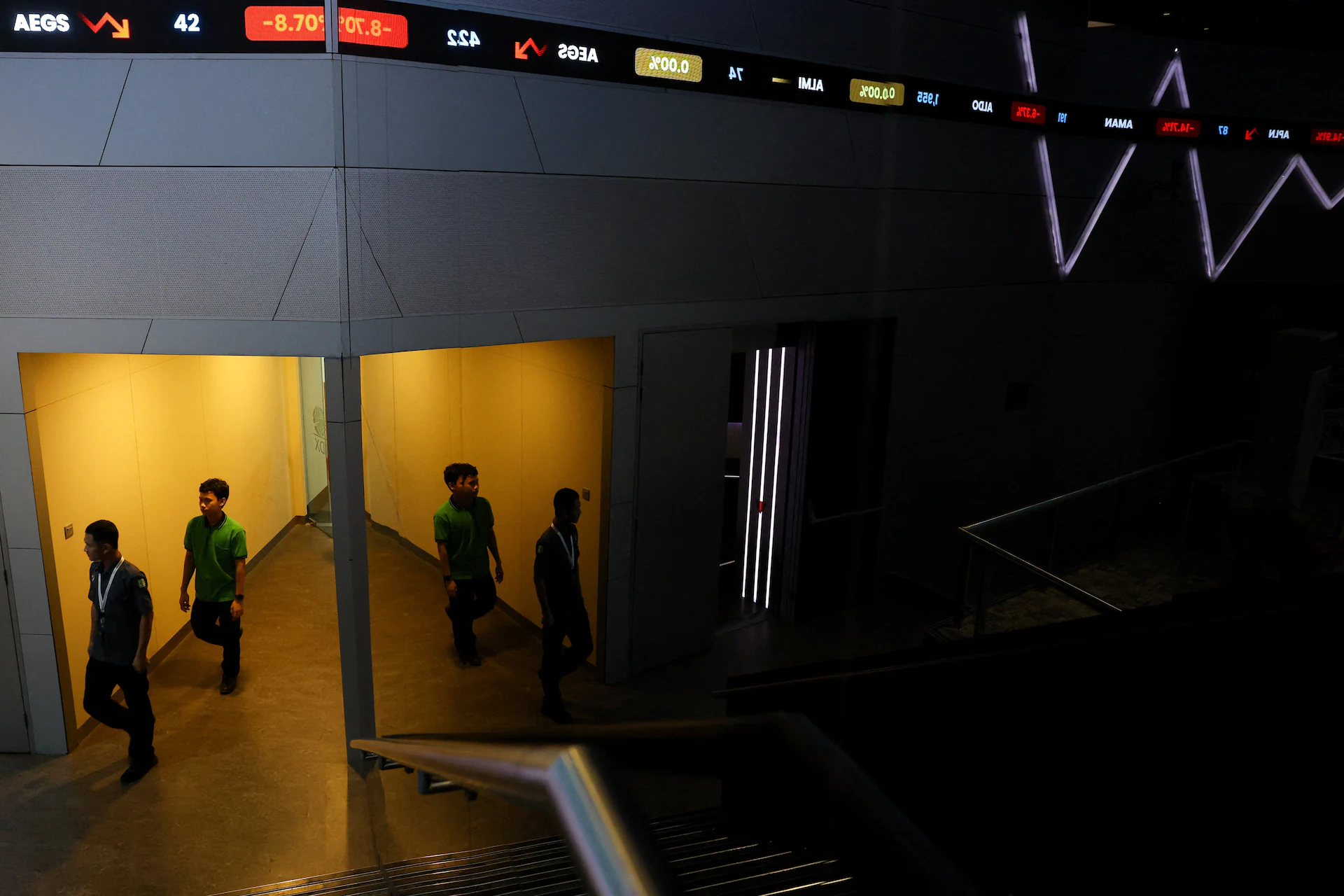
Indonesia’s stock exchange management is scheduled to meet global index provider MSCI on Monday, October 19, to seek clarification over a warning that the country’s equity market could lose its emerging-market classification. The announcement has unsettled investors, sending Indonesian shares sharply lower and intensifying concerns about the country’s standing among international investment destinations.
The meeting follows MSCI’s warning on Friday that Indonesia could be downgraded to the more restrictive standalone-market category because of concerns about market functioning, coordinated trading behaviour and the enforcement of trading rules. The announcement caught Indonesian market authorities and participants by surprise, according to Indonesia Stock Exchange chief executive Jeffrey Hendrik.
Indonesia’s main stock index suffered its worst trading day since 1998 on Friday and continued falling on Monday, dropping 5% to its lowest level in six years, according to the supplied Reuters report. Exchange data also showed that the market lost approximately $65 billion in market capitalisation on Friday alone.
The immediate concern is the potential effect of MSCI’s decision on international investment flows. Global funds use MSCI indices to measure market performance and, in some cases, determine where investment capital is allocated. A downgrade could make Indonesian equities less accessible to funds that follow emerging-market benchmarks.
For Indonesian authorities, Monday’s meeting represents an opportunity to understand MSCI’s concerns and determine what changes may be required to preserve the country’s position in global investment indices. However, the outcome will depend on the substance of MSCI’s concerns and whether the exchange and regulators can demonstrate that the identified market weaknesses are being addressed.
Why MSCI’s Warning Has Triggered a Sharp Market Reaction
The scale of the sell-off reflects the importance of international index classifications to modern equity markets. MSCI’s emerging-market indices are widely used by institutional investors to measure performance, compare investment opportunities and construct portfolios. A change in a country’s classification can therefore have consequences that extend beyond the immediate reaction to a downgrade announcement.
Investors who track an index may need to adjust their holdings when a market is removed from that benchmark. Depending on the rules governing their portfolios, some funds could reduce or eliminate exposure to Indonesian shares if the country loses emerging-market status.
The possibility of such changes can influence trading before any downgrade becomes effective. Investors may sell shares in anticipation of reduced demand from benchmark-tracking funds, while other market participants may reassess the risks associated with investing in Indonesian equities.
This helps explain why the warning itself can have a substantial market impact even before MSCI makes a final classification decision. Investors must consider not only Indonesia’s economic outlook and corporate earnings but also the possibility that its equities could become less accessible to major international investment portfolios.
According to the supplied Reuters report, approximately $65 billion was wiped off Indonesia’s market capitalisation on Friday alone. That figure represents a decline in the aggregate market value of listed companies, rather than evidence that an equivalent amount of cash physically left the country on that day.
Market capitalisation changes when share prices move. Actual investment outflows depend on trading activity, ownership changes and the movement of capital. Distinguishing between these measures is essential when assessing the financial consequences of a market sell-off.
What Is MSCI and Why Does Its Classification Matter?
MSCI is a global index provider whose benchmarks are used by investors to assess markets and construct investment portfolios. Its country classifications help international investors distinguish between developed markets, emerging markets, frontier markets and standalone markets.
These classifications are not simply labels describing whether a country’s economy is growing. They also reflect the accessibility and functioning of its equity market for international investors.
Factors relevant to market classification can include the ability to enter and exit investments, the availability of reliable market information, trading arrangements and the practical experience of foreign investors. MSCI evaluates markets against its classification framework, and changes can affect the way global portfolios are organised.
Indonesia’s current dispute with MSCI centres on concerns about the functioning of its Stock Market and the enforcement of rules. The exchange’s leadership, meanwhile, maintains that discussions with market participants indicate that Indonesia meets the criteria for retaining emerging-market status.
The disagreement makes the scheduled meeting important because the exchange is seeking clarification about the specific reasoning behind MSCI’s announcement. Understanding the concerns in detail will be necessary if Indonesian authorities want to respond with targeted reforms rather than measures that address only the immediate market decline.
Standalone Status Would Be More Severe Than a Frontier-Market Downgrade
One of the most significant aspects of MSCI’s warning is the possibility that Indonesia could be moved directly to the standalone category. The supplied report describes this as a more severe outcome than the possibility of a frontier-market classification raised in an earlier warning.
Emerging-market status allows a country’s equities to be included in a range of international investment benchmarks designed to represent developing financial markets. Frontier markets are generally less integrated into international investment portfolios, while standalone classifications place markets outside the main developed, emerging and frontier index groupings.
The practical consequences depend on the index provider’s rules and the mandates of individual funds. A standalone classification could exclude Indonesian equities from global indices that currently provide international investors with a standard benchmark for the market.
That distinction matters because not all investors make decisions in the same way. Some actively choose individual stocks based on company valuations, earnings prospects and other financial considerations. Others manage portfolios against benchmarks, meaning their holdings are influenced by the countries and companies included in those indices.
If Indonesia were excluded from an index followed by a fund, that fund might have to reduce its Indonesian holdings to remain consistent with its investment mandate. Investors with greater flexibility could continue holding Indonesian shares, but their decisions would depend on their assessment of the risks and potential returns.
It is important, however, not to treat the potential downgrade as a completed decision. The information provided describes a warning and a planned meeting to clarify MSCI’s reasoning. It does not establish that Indonesia has already been reclassified or that a final decision has been made.
What Concerns Has MSCI Raised About Indonesia’s Stock Market?
MSCI’s warning, as described in the Reuters report, centres on concerns about dysfunction in the market, including coordinated trading behaviour and failures to enforce rules. These issues relate to the reliability of market mechanisms and the confidence investors can place in the trading environment.
For international investors, market integrity is important because investment decisions depend on the availability of trustworthy information and the consistent application of trading rules. If investors believe prices may be affected by coordinated behaviour or that violations are not addressed effectively, they may demand a higher return to compensate for the perceived risk or choose to reduce their exposure.
Coordinated trading behaviour can be a concern when activity undermines confidence in price formation or creates doubts about whether a stock’s trading pattern reflects genuine market demand. The specific conduct MSCI has identified, and the evidence supporting its assessment, would need to be clarified through the discussions with Indonesian authorities.
Enforcement is equally important. Market rules can provide protections on paper, but investors also need confidence that violations will be detected, investigated and addressed consistently. A credible regulatory framework depends on both the rules themselves and the ability of the relevant authorities to implement them.
The supplied information does not identify particular companies, traders or transactions responsible for the concerns. It would therefore be inappropriate to attribute the warning to a specific individual or company without further evidence.
The planned meeting could help clarify which market practices MSCI considers problematic and what evidence or improvements it expects. That information would give the exchange and the Financial Services Authority a clearer basis for evaluating possible responses.
Indonesia Stock Exchange Halves Daily Price-Limit Threshold to 7%
In response to the sharp market decline, the Indonesia Stock Exchange, also known as IDX, halved the daily downward price-limit threshold to 7% on Monday. Chief executive Jeffrey Hendrik described the measure as an effective way to reduce volatility.
Price limits are mechanisms designed to restrict how far a security’s price can fall or rise during a trading session. By limiting the extent of price movements, exchanges seek to moderate abrupt changes and provide market participants with time to reassess information.
In Indonesia’s case, the reduced downward limit is intended to address the intensity of the sell-off. It represents an immediate market-management response while the exchange seeks clarification from MSCI and investors continue assessing the implications of the warning.
However, a trading limit does not resolve the underlying concerns about market integrity or international classification. It can constrain the pace of price declines during a session, but it cannot guarantee that investors will regain confidence or that selling pressure will disappear.
When investors want to sell more shares than buyers are willing to purchase at prevailing prices, a lower permitted price movement may delay some transactions or spread price adjustments over a longer period. The extent of that effect depends on market conditions and the behaviour of buyers and sellers.
The effectiveness of the measure should therefore be assessed separately from the broader question of whether Indonesia can preserve its emerging-market classification. Stabilising trading conditions may provide short-term relief, but the concerns raised by MSCI require a substantive response.
How the Warning Could Affect Foreign Investors
International investors assessing Indonesia now face uncertainty over both near-term market movements and the country’s future position in global benchmarks. The potential downgrade adds a classification risk to the usual considerations involved in investing in equities, including company performance, valuations, economic conditions and currency movements.
Benchmark-tracking funds are particularly relevant because their investment decisions are tied to the composition of the indices they follow. If Indonesian stocks are removed from a benchmark, those funds may need to adjust their holdings in line with their mandates.
Actively managed funds have more discretion, although they too may consider index membership when deciding how much capital to allocate to a market. Some may view falling prices as an opportunity, while others could wait for greater clarity about the regulatory concerns and the risk of further selling.
The potential impact would not necessarily be uniform across all Indonesian companies. Larger companies and stocks with greater international ownership may experience different effects from smaller firms, depending on their index representation, trading liquidity and investor base.
Nevertheless, uncertainty about classification can affect the broader market because investors often evaluate country-level risks when determining portfolio allocations. Even companies with sound financial performance may face pressure if market-wide selling intensifies.
The scale and duration of any investment outflows would depend on the final classification outcome, investor mandates, market conditions and the credibility of the authorities’ response. The available information does not establish how much additional capital could move out of Indonesian equities.
What Indonesia’s Authorities Need to Clarify
Jeffrey Hendrik said the exchange management would meet MSCI online on Monday to seek clarification about the announcement. He also said the exchange, the Financial Services Authority and market participants had not expected the warning.
According to Hendrik, discussions with market participants, including global investors, indicated that Indonesia met the criteria for retaining emerging-market status. That position differs from MSCI’s stated concerns and makes the planned discussion particularly important.
The immediate objective is to understand the basis of MSCI’s assessment. Without clarity about the specific concerns, the exchange and regulators may find it difficult to identify the changes most likely to address the perceived weaknesses.
The authorities may need to establish which aspects of trading behaviour, market transparency or enforcement have raised concern and determine what corrective measures are appropriate. The precise actions required cannot be established from the supplied report alone.
Communication will also matter. Investors need clear information about any proposed reforms, the responsibilities of the relevant authorities and the process for demonstrating that identified concerns have been addressed.
However, an effective response will require more than reassuring statements. If MSCI’s assessment reflects concerns about market practices or enforcement, credible evidence of improvements will be important in restoring confidence.
What Happens Next for Indonesian Stocks?
The next key development will be the outcome of the exchange’s discussion with MSCI and any subsequent clarification about the warning. The meeting could help identify the issues that need to be addressed, although the available information does not establish what conclusions the two sides will reach.
In the short term, investors will be watching market movements closely as they assess the risk of further losses. The introduction of a 7% daily downward price-limit threshold may affect the pace of trading adjustments, but it does not remove the uncertainty surrounding the country’s classification.
In the longer term, the outlook will depend partly on whether Indonesian authorities can address MSCI’s concerns and demonstrate that the market operates with reliable rules and effective enforcement. A credible resolution could help reduce uncertainty, while continued disagreement could leave investors cautious.
Any final classification decision would also need to be distinguished from the immediate performance of Indonesian shares. A market can experience a short-term rebound without resolving structural concerns, just as a market facing regulatory scrutiny can still contain companies with strong underlying businesses.
For investors, the important questions are whether the warning leads to changes in index eligibility, how individual investment mandates respond and whether market confidence stabilises. For Indonesian authorities, the challenge is to protect the country’s access to international capital while addressing concerns about transparency and the functioning of its equity market.
Conclusion: MSCI Meeting Could Shape Indonesia’s Market Outlook
Indonesia’s planned meeting with MSCI comes at a critical moment for its stock market. The warning about a possible downgrade has been followed by a severe sell-off, with the main index falling to a six-year low and approximately $65 billion in market capitalisation disappearing on Friday alone, according to the supplied report.
The dispute centres on MSCI’s concerns about market functioning, coordinated trading behaviour and enforcement of rules, which the exchange’s leadership is seeking to understand more clearly. The possibility of standalone status raises additional concerns because it could remove Indonesian equities from international indices used by benchmark-tracking investment funds.
The exchange’s decision to reduce the daily downward price limit to 7% is an immediate response to volatility, but the longer-term outcome will depend on the authorities’ engagement with MSCI and their ability to address the issues raised.
For now, Indonesia’s downgrade remains a risk rather than a confirmed outcome. The meeting could provide greater clarity, but investors will need to distinguish between temporary measures to stabilise trading and lasting improvements that address the concerns behind MSCI’s warning.
For breaking news and live news updates, like us on Facebook or follow us on Twitter and Instagram. Read more on Latest World on thefoxdaily.com.






COMMENTS 0