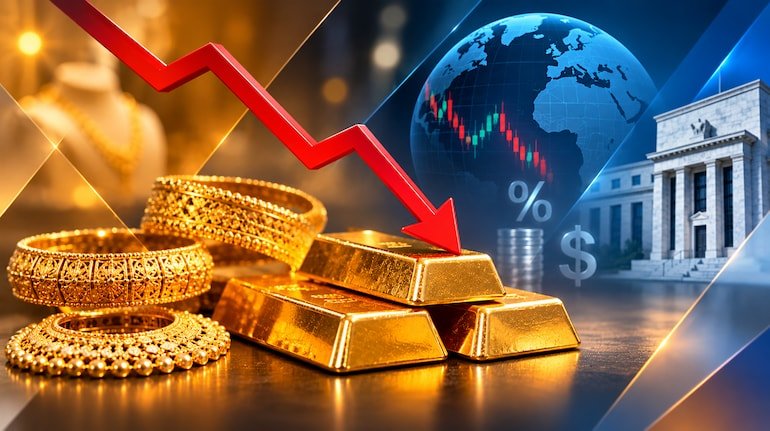
gold prices remained under pressure on Thursday, trading close to their lowest level in approximately 15 months as investors assessed the possibility of further US Federal Reserve interest rate increases and monitored developments in broader financial markets. Bullion edged lower towards $3,560 an ounce after touching its weakest level since August 2025 during Wednesday’s trading session.
The decline reflects growing concerns that the Federal Reserve could maintain a more hawkish monetary policy stance, making interest-bearing assets more attractive compared with gold. At the same time, a recovery in wider markets has influenced investor positioning after recent volatility triggered selling across several asset classes.
Trading activity was also expected to remain subdued because most US markets were closed for the Thanksgiving holiday on Thursday. Reduced participation can contribute to lower liquidity and sharper price movements, particularly when investors are responding to changing expectations about interest rates.
Gold Prices Remain Under Pressure Near $3,560
Spot gold fell 0.8% to $3,560.21 an ounce at 11:05 a.m. in London, keeping the precious metal close to the lowest level recorded since August 2025. The latest movement followed a volatile trading session on Wednesday, when bullion extended its recent decline.
Other Precious Metals showed mixed performance. Silver gained 0.5% to $41.44 an ounce, while platinum remained largely unchanged. Palladium advanced during the session.
The Bloomberg Dollar Spot Index, which measures the performance of the US currency against a basket of major currencies, was little changed on Thursday. Earlier in the week, however, the index had reached its highest level since April 2025.
A stronger dollar can create additional pressure for gold because the metal is priced internationally in US currency. When the dollar appreciates, gold becomes more expensive for buyers using other currencies, potentially reducing demand. Currency movements therefore remain an important factor in the direction of bullion prices.
The combination of a relatively firm dollar, changing interest rate expectations and broader market volatility has contributed to the difficult environment for gold investors.
Federal Reserve Rate Expectations Weigh on Bullion
Expectations of further monetary tightening by the Federal Reserve have become a central factor influencing gold prices. Investors are increasingly considering the possibility that the US central bank could raise borrowing costs again at its next policy meeting.
ANZ Group Holdings analyst Soni Kumari said gold prices were recovering from Wednesday’s volatile session, but overall market sentiment remained bearish.
“Prices are recovering after yesterday’s volatile session, but sentiment remains bearish,” Soni Kumari said.
She also noted that expectations of higher interest rates were tightening financial conditions ahead of the Federal Open Market Committee meeting.
Interest rate decisions matter significantly for gold because the metal does not generate interest or dividend income. When central banks increase borrowing costs, government bonds and other interest-bearing investments can become more attractive to investors. This raises the opportunity cost of holding gold, potentially reducing demand for bullion.
Higher interest rates can also strengthen a currency by increasing the return available on assets denominated in that currency. If expectations of tighter US monetary policy support the dollar, gold may face pressure from both currency movements and the changing relative attractiveness of alternative investments.
October Inflation Data Strengthens Expectations of Tighter Policy
The release of the Federal Reserve’s preferred measure of underlying inflation for October reinforced expectations that the central bank could tighten monetary policy in December.
Inflation remains a key consideration for policymakers because persistent price increases can make it difficult for the central bank to achieve its price stability objectives. If inflation data indicates that price pressures remain stronger than desired, policymakers may have less room to reduce interest rates and could consider additional tightening.
For financial markets, inflation reports are important because they influence expectations about the timing and direction of future monetary policy. Investors adjust their positions in response to changes in those expectations, affecting bond yields, currencies, equities and commodities.
Gold is particularly sensitive to these developments because it does not provide a regular financial return. When investors expect interest rates to rise, the appeal of holding non-yielding assets can weaken, even when gold continues to serve as a store of value during periods of uncertainty.
The latest inflation data has therefore added to the pressure on bullion by reinforcing the view that borrowing costs may remain elevated or increase further.
Gold Heads Towards a Third Consecutive Monthly Loss
Gold is on track to record its third monthly decline in November, extending a retreat from the record high reached in January. The recent sell-off has accelerated in the past few weeks as investors reassessed the outlook for US monetary policy and reduced exposure to assets affected by wider market volatility.
The decline marks a significant change in market sentiment following the strong rally that pushed gold to record levels earlier in the year. While the metal has traditionally attracted demand during periods of economic and geopolitical uncertainty, its performance can also be affected by interest rates, currency movements and investor liquidity requirements.
One important factor behind the recent decline has been the changing outlook for the Federal Reserve. Investors who previously expected a more supportive interest rate environment have increasingly adjusted their expectations towards tighter policy.
That shift can influence gold demand even when longer-term reasons for holding the metal remain in place. As expectations change, investors may sell bullion or move towards assets offering more attractive returns.
The recent weakness also demonstrates that gold does not always rise during periods of financial market uncertainty. When equity markets experience sharp declines, investors may sell other assets to raise cash, meet financial obligations or reduce overall portfolio risk. Such broad selling can temporarily affect gold alongside equities and other investments.
AI Stocks and the Wider Market Recovery Influence Investor Sentiment
Developments in technology shares, particularly stocks linked to artificial intelligence, have also formed part of the broader market backdrop influencing investor sentiment. The recent decline in equities triggered selling across financial markets, contributing to pressure on assets beyond the stock market itself.
However, a relief rally in wider markets has offered some support to risk appetite. Investors are now weighing whether the recovery in equities can continue while also assessing the implications of a potentially more restrictive Federal Reserve policy.
AI-related stocks have attracted significant investor attention because of expectations surrounding the commercial potential of artificial intelligence and the large investments being made in computing infrastructure. At the same time, high valuations and concerns about the sustainability of technology-sector gains can contribute to market volatility.
For gold, the relationship with equities is not always straightforward. A decline in technology stocks can encourage investors to seek defensive assets, potentially supporting bullion. But if falling equities trigger widespread liquidations and demand for cash, gold can also come under selling pressure.
This explains why recent equity market weakness has not automatically translated into stronger gold prices. Investor behaviour, liquidity needs and expectations about interest rates can sometimes outweigh traditional safe-haven demand.
Why the US Dollar Matters for Gold Prices
The movement of the US dollar remains another important consideration for the precious metals market. Because international gold prices are generally quoted in dollars, changes in the currency’s value influence purchasing costs for investors outside the United States.
A stronger dollar can make bullion more expensive in other currencies, potentially limiting international demand. A weaker dollar can have the opposite effect by making gold relatively cheaper for overseas buyers.
The Bloomberg Dollar Spot Index recently reached its highest level since April 2025 before stabilising. Its performance reflects the broader currency market’s response to economic data, monetary policy expectations and investor demand for dollar-denominated assets.
If expectations of higher US interest rates continue to support the dollar, gold could face an additional headwind. Conversely, any shift towards a less restrictive policy outlook could reduce pressure on bullion through both currency and interest rate channels.
Thanksgiving Holiday Could Reduce Trading Liquidity
Most US markets were closed on Thursday for the Thanksgiving holiday, creating the possibility of lower trading volumes across international financial markets.
Holiday-related reductions in participation can affect price movements because fewer active traders may be available to absorb large orders. In such conditions, relatively small changes in buying and selling activity can sometimes produce more noticeable price fluctuations.
Lower liquidity does not necessarily indicate a change in the underlying market outlook. It can, however, make short-term price movements less predictable, particularly when investors are waiting for further economic information or central bank signals.
For gold traders, the holiday comes at a sensitive moment. Bullion is already near a multi-month low, while expectations of Federal Reserve tightening continue to influence market positioning. Any further movement in the dollar or changes in interest rate expectations could therefore attract attention when normal trading activity resumes.
What Could Determine Gold’s Next Move?
The near-term direction of gold will largely depend on the interaction between US monetary policy expectations, inflation developments, currency movements and broader investor sentiment.
If markets become more convinced that the Federal Reserve will raise interest rates in December, gold could remain under pressure because higher borrowing costs generally reduce the relative appeal of non-yielding assets. A stronger dollar could add to that weakness.
On the other hand, a moderation in inflation or a change in the central bank’s policy outlook could reduce expectations of further tightening. Such a development may improve the appeal of bullion by easing pressure from interest rates and the US currency.
Equity market performance will also remain relevant. A sustained recovery in technology shares and other risk-sensitive assets could reduce immediate demand for defensive investments. However, renewed volatility could support gold if investors seek protection, although widespread selling for liquidity could limit that benefit.
For now, gold remains close to its lowest level since August 2025, with traders focused on the Federal Reserve’s next policy decision. The prospect of a third consecutive monthly decline highlights how quickly monetary policy expectations and financial market conditions can change the outlook for precious metals.
For breaking news and live news updates, like us on Facebook or follow us on Twitter and Instagram. Read more on Latest Business on thefoxdaily.com.






COMMENTS 0