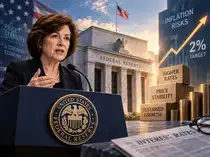
Federal Reserve Bank of Boston President Susan Collins has supported a gradual approach to further US interest rate increases, saying persistent Inflation and a relatively stable labour market indicate that monetary policy may need to become tighter. However, she cautioned against accelerating rate hikes too quickly, arguing that policymakers must remain flexible as economic conditions and uncertainties evolve.
Speaking to reporters at a housing conference hosted by the Boston Federal Reserve on November 14, Collins said a steady and measured path towards tighter monetary policy was appropriate for now. Her comments suggest that she expects Interest Rates could rise further over the coming year, although she does not support committing to a fixed schedule or pace of increases.
Her remarks come as Federal Reserve officials assess fresh evidence of broadening price pressures and a labour market that appears to have gained stability. The debate over how quickly to raise borrowing costs has become increasingly important ahead of the central bank’s December policy meeting.
Collins Supports a Steady and Gradual Rate Increase Path
Collins said a steady approach to monetary tightening would allow the economy time to adjust while helping the Federal Reserve address inflation. She described the economic risks as two-sided, pointing to persistent price pressures on one hand and uncertainty surrounding future economic activity on the other.
Inflation remains above the Federal Reserve’s 2% target, and Collins said recent data indicate that price increases are spreading across a broader range of the economy. At the same time, the labour market has remained stable and could strengthen further, potentially adding to inflationary pressure if economic growth accelerates.
These developments have strengthened the case for additional monetary tightening. However, Collins said they do not necessarily justify a more aggressive pace of rate increases.
Her position reflects a balancing act for policymakers. Raising interest rates can help control demand and reduce inflationary pressure, but tightening too quickly could weaken economic activity more than intended. A gradual approach would give officials more opportunities to assess how previous increases are affecting households, businesses and financial markets.
Inflation Data Pushes Interest Rate Expectations Higher
Recent inflation figures have played an important role in shaping Collins’ assessment of monetary policy. She said price data over the preceding three months had been stronger than she had expected, with signs that inflationary pressures were becoming more widespread.
Collins added that the labour market was on a firmer footing than she had anticipated a few months earlier. Together, these developments have changed her expectations about where interest rates could ultimately settle during the current tightening cycle.
She indicated that the policy rate over the next year might need to reach a somewhat higher level than she had previously considered. However, she stressed that the Federal Reserve would need to evaluate the appropriate scale and timing of each move as new economic information becomes available.
This distinction matters for financial markets. Expectations of higher interest rates can influence bond yields, mortgage costs, business borrowing and currency movements even before the Federal Reserve announces another policy decision.
Stable Labour Market Adds to the Case for Tighter Policy
The condition of the US labour market is another important factor in Collins’ outlook. A stable employment environment can support consumer spending and economic growth, but stronger demand can also make it harder for inflation to return to the central bank’s target.
Collins said the job market was stable, with the potential to accelerate. If hiring and economic activity strengthen further, businesses could face greater competition for workers, potentially increasing wage and operating costs.
However, the labour market is not the only source of uncertainty. Collins also highlighted the possibility of additional economic shocks that could affect demand and growth. This means policymakers must consider both the risk of inflation remaining elevated and the possibility that economic activity could weaken unexpectedly.
For the Federal Reserve, the challenge is to ensure that monetary policy is sufficiently restrictive to control inflation without creating unnecessary pressure on employment and economic activity.
Why Collins Is Cautious About Aggressive Rate Hikes
Although Collins sees a case for further tightening, she does not believe the current conditions automatically call for a faster pace of rate increases. She pointed to the possibility that rising longer-term interest rates could already be weighing on economic demand.
Longer-term borrowing costs affect a wide range of financial decisions, including mortgages, business investment and major household purchases. If these costs rise substantially, they can restrain spending even without an immediate increase in the Federal Reserve’s benchmark rate.
This creates an additional consideration for policymakers. If financial conditions are already tightening through higher market interest rates, the full effect of monetary policy may be greater than suggested by the central bank’s benchmark rate alone.
Collins therefore favours a measured approach that allows the Federal Reserve to assess the impact of changing financial conditions. She also made clear that gradual tightening does not mean following a predetermined timetable. The pace of future increases will depend on incoming economic data and the risks facing the economy.
Federal Reserve Rate at 3.75% to 4% After September Increase
The Federal Reserve last raised its benchmark interest rate in September 2026, taking the target range to 3.75%–4%. Policymakers are now facing pressure to consider further increases as inflation remains above target.
Market participants widely expect another quarter-percentage-point increase at the Federal Open Market Committee’s December 8–9 meeting, followed by a possible additional increase in January. These expectations reflect the recent inflation data and comments from several Federal Reserve officials.
However, market expectations should not be treated as confirmed policy decisions. The Federal Reserve has not committed to a particular sequence of increases, and Collins has emphasised that policymakers will need to make decisions meeting by meeting.
The debate has also included the possibility of a larger rate increase in December. Federal Reserve Governor Christopher Waller’s recent comments have raised the prospect of a stronger move among some policymakers. Collins, however, has cautioned against getting ahead of the available evidence when deciding how high rates should go or how quickly they should rise.
What Higher US Interest Rates Could Mean for Housing
Collins made her comments during a housing conference hosted by the Boston Federal Reserve, bringing attention to the relationship between monetary policy and housing affordability.
Higher interest rates can increase mortgage borrowing costs, making home purchases more expensive for households. They can also raise financing costs for developers and construction companies, potentially affecting the supply of new homes.
For this reason, further monetary tightening could create short-term challenges for the housing sector. Prospective homebuyers may face higher monthly payments, while developers could reconsider projects if borrowing becomes more expensive.
However, Collins has also highlighted the importance of price stability for the long-term health of the housing market. More predictable inflation can help households and businesses plan their finances, while reducing uncertainty around future costs.
The policy challenge is therefore not simply to avoid higher borrowing costs. It is to bring inflation under control while limiting the damage that tighter financial conditions could cause to housing activity and the wider economy.
How the Fed’s Policy Direction Could Affect Financial Markets
Collins’ comments are relevant to investors because expectations about US interest rates influence several major financial markets. Government bond yields often respond to changes in expectations for future monetary policy, while higher borrowing costs can affect stock valuations and corporate financing.
If the Federal Reserve continues raising rates, companies that rely heavily on borrowing could face higher interest expenses. Businesses may also become more cautious about investment and expansion if financing costs remain elevated.
Equity markets could experience pressure as investors reassess the value of future corporate earnings against higher interest rates. However, the effect may vary across industries depending on debt levels, profitability and sensitivity to economic growth.
Currency markets are also influenced by the expected direction of US monetary policy. Higher US interest rates can make dollar-denominated assets more attractive to investors, although exchange-rate movements also depend on policy decisions and economic conditions in other countries.
For investors, Collins’ comments indicate that further tightening remains possible, but the pace and scale of future increases are not settled. Inflation readings, employment data and financial conditions will remain important indicators for assessing the Federal Reserve’s next steps.
What to Watch Before the December Fed Meeting
The next stage of the Federal Reserve’s policy debate will depend heavily on incoming economic data. Inflation figures will be particularly important because policymakers need clearer evidence that price pressures are moving sustainably towards the 2% target.
Employment conditions will also influence the decision. A stronger labour market could support the case for additional tightening, while signs of weakening hiring or rising unemployment could encourage policymakers to take a more cautious approach.
Financial conditions will provide another important signal. If longer-term borrowing costs continue to rise, the Federal Reserve may need to consider how much restraint is already being applied to the economy through bond and lending markets.
Comments from other Federal Reserve officials will also matter because monetary policy decisions are made by the Federal Open Market Committee rather than by an individual regional Fed president. Differences in their assessments could shape the discussion around the size and timing of the next rate increase.
Fed’s Collins Signals Higher Rates but Rejects a Fixed Schedule
Susan Collins’ latest comments point towards a Federal Reserve that may need to continue tightening monetary policy as inflation remains persistent and employment conditions show signs of stability. Her expectation that interest rates could rise higher over the coming year suggests that policymakers are still concerned about the durability of price pressures.
At the same time, her preference for gradual increases highlights the uncertainty surrounding the economic outlook. Rising longer-term borrowing costs, potential economic shocks and the possibility of weaker demand all argue for a flexible approach.
The December 8–9 Federal Reserve meeting will be an important test of how policymakers interpret the latest inflation and employment data. Whether the central bank opts for another modest increase or considers a larger move will depend on the evidence available at that time.
For now, Collins’ position signals support for further monetary tightening without endorsing an aggressive or predetermined rate-hiking cycle. The direction of policy may be towards higher rates, but the pace will remain dependent on how the US Economy evolves.
For breaking news and live news updates, like us on Facebook or follow us on Twitter and Instagram. Read more on Latest Business on thefoxdaily.com.






COMMENTS 0