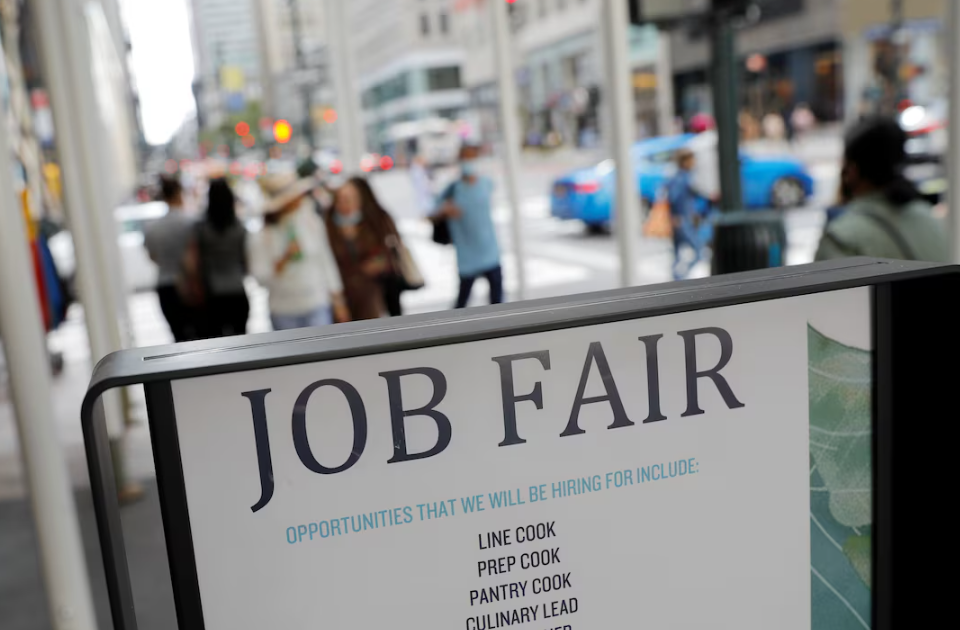
US weekly jobless claims declined by 1,000 to 197,000 in the week ended September 19, 2026, pointing to a labor market that has stabilized after a softer stretch during the summer. The latest figure was below the 201,000 claims economists surveyed by Reuters had expected, while the broader claims data continued to show relatively low levels of layoffs.
The report from the US Labor Department comes as businesses face a mixed employment environment. Employers have generally been reluctant to accelerate hiring, while shortages of available workers and difficulties finding suitable staff remain important factors affecting the labor market.
US Initial Jobless Claims Fall to 197,000
Initial claims for state Unemployment benefits decreased by 1,000 last week to a seasonally adjusted 197,000. The figure covers the week ending September 19 and was below the 201,000 level economists polled by Reuters had forecast.
Initial claims are closely watched because they provide a relatively timely indication of layoffs. A decline in new claims generally suggests that fewer workers are entering unemployment insurance programs, although weekly movements can be affected by seasonal patterns and other temporary factors.
The latest result follows several weeks of relatively low claims. The Labor Department reported 196,000 initial claims for the week ended September 12, after 206,000 in the week ended September 5. These figures show that claims have remained around historically low levels even as other parts of the labor market have experienced slower momentum.
Why Low Jobless Claims Matter for the US Economy
Low initial unemployment claims indicate that companies are not carrying out layoffs at a pace that would normally signal a sharp deterioration in labor-market conditions. For workers, this can mean greater job stability even when businesses are cautious about creating new positions.
However, jobless claims measure layoffs rather than the full hiring picture. A labor market can have low layoffs while also experiencing weak hiring. That distinction is important in the current environment because businesses have reportedly remained cautious about expanding payrolls.
In other words, the latest claims data provide evidence of relatively strong job retention, but they do not by themselves show that employers are aggressively adding workers.
Continuing Jobless Claims Rise to 1.719 Million
The number of people continuing to receive unemployment benefits after an initial week of assistance increased by 2,000 to a seasonally adjusted 1.719 million during the week ended September 12.
Continuing claims are commonly viewed as a useful indicator of how quickly unemployed workers are finding new jobs. When continuing claims remain elevated, it can indicate that people who have lost jobs are taking longer to return to employment.
The latest increase was modest, and economists cited by Reuters viewed the level as broadly consistent with a stable unemployment rate. The continuing-claims period also overlaps with the reference period used for the government’s September unemployment-rate survey.
US Unemployment Rate Was 4.1% in August
The US unemployment rate stood at 4.1% in August. While the headline unemployment rate remained unchanged, labor-market data showed that some people who had lost jobs were experiencing longer periods of unemployment.
That distinction is important when interpreting the latest jobless-claims report. A stable unemployment rate does not necessarily mean every part of the labor market is strengthening at the same pace.
Citigroup economist Veronica Clark said that if continuing claims remain at relatively low levels, the unemployment rate could remain around 4% in coming months. She also cautioned that a lower unemployment rate caused by a smaller labor force would not necessarily mean the labor market was becoming tighter.
Seasonal Factors Affect Jobless Claims Data
Although the latest claims figure points toward stability, economists caution that seasonal adjustment can make the data more difficult to interpret at certain times of the year.
Labor Day is one factor because its timing changes from year to year and can affect the pattern of unemployment-benefit filings. Economists have also identified what is known as residual seasonality, a statistical pattern that can push claims lower as the year progresses.
That means a single weekly decline should not be interpreted as proof of a major change in labor-market conditions. Analysts generally pay close attention to the trend over several weeks and to complementary indicators such as employment, unemployment and continuing claims.
Hiring Remains a Challenge for US Companies
The claims data point to low layoffs, but businesses remain cautious about hiring. Several economic factors are creating uncertainty for employers considering whether to expand their workforces.
Rising energy costs have increased pressure on businesses, while tariffs on imports can raise costs for companies that depend on imported products and materials. These pressures can make employers more careful about adding permanent workers.
At the same time, the supply of available workers has been affected by changes in immigration and by retirements. A smaller pool of available workers can make it harder for companies to fill open positions even when overall hiring demand is moderate.
Businesses Report Difficulty Finding Suitable Workers
A September survey from S&P Global also highlighted continued recruitment challenges. Companies reported increasing difficulties finding suitable staff, suggesting that labor shortages remain present even as hiring activity stays cautious.
This creates a complicated picture for the US labor market. Employers may want to control costs and limit hiring while simultaneously struggling to find workers with the skills they need.
The result can be a labor market where layoffs remain low but job creation and recruitment are not particularly strong. This helps explain why unemployment claims alone cannot provide a complete picture of economic conditions.
Labor Market Recovery After a Softer Summer
The latest claims report suggests that the labor market has regained some stability after showing signs of weakness during much of the summer.
Initial claims have remained close to historically low levels, indicating that widespread layoffs have not emerged. At the same time, continuing claims have remained around levels economists associate with a relatively stable unemployment rate.
The combination of low layoffs and cautious hiring creates what economists often describe as a low-turnover labor market. Workers are less likely to lose existing jobs, but people seeking new employment may not find opportunities as quickly as they would during a stronger hiring cycle.
Federal Reserve Interest Rates Add to the Economic Picture
The labor-market figures also come against the backdrop of US monetary policy. The Federal Reserve raised its overnight benchmark interest rate by 25 basis points last week, bringing the target range to 3.75% to 4.00%, according to the Reuters report.
The increase was the first rate hike in three years. The central bank also indicated that borrowing costs could rise further in the months ahead.
Higher interest rates can influence employment because they increase the cost of borrowing for households and businesses. Companies facing higher financing costs may become more selective about investment and hiring decisions, while consumers may reduce spending on interest-sensitive purchases.
For policymakers, the labor market is therefore an important part of assessing economic conditions. Persistent low layoffs can indicate resilience, while weak hiring can signal that businesses are becoming more cautious.
What the Latest Jobless Claims Report Shows
- Initial claims: 197,000 for the week ended September 19, down 1,000 from the previous week.
- Economists’ forecast: 201,000 claims.
- Continuing claims: 1.719 million for the week ended September 12, up 2,000.
- August unemployment rate: 4.1%, unchanged from the previous month.
- Labor-market trend: Layoffs remain low, while hiring remains cautious.
- Key pressures: Energy costs, tariffs, labor-supply constraints and difficulties finding suitable workers.
Why Investors and Economists Are Watching the Data
Weekly jobless claims are one of the earliest indicators available for assessing changes in the labor market. Because the data are released every week, economists and financial markets use them to identify changes that may not yet appear in monthly employment reports.
The latest decline provides evidence that layoffs remain contained. However, the increase in continuing claims and reports of cautious hiring show why the broader employment picture remains mixed.
Future readings will be important for determining whether the recent stability continues. A sustained period of low initial claims combined with stable continuing claims would indicate that job losses remain limited. A significant increase in either measure could point toward greater labor-market weakness.
US Labor Market Outlook
The September 19 claims data suggest that the US labor market entered late September with relatively low levels of layoffs. That is an important sign of resilience, particularly after the softer conditions seen during the summer.
At the same time, the hiring side of the labor market remains more complicated. Businesses are dealing with higher energy costs, tariffs and worker shortages, while some companies report difficulty finding appropriate candidates.
For that reason, the next phase of the US labor market may depend less on a surge in layoffs and more on whether employers become willing to increase hiring. The combination of initial claims, continuing claims, unemployment and monthly payroll data will provide a broader indication of whether labor-market stability is turning into renewed employment growth.
Frequently Asked Questions
What were US weekly jobless claims in the latest report?
US initial jobless claims fell by 1,000 to 197,000 for the week ended September 19, 2026.
What did economists expect for weekly jobless claims?
Economists polled by Reuters had expected 201,000 initial unemployment claims.
What are continuing jobless claims?
Continuing claims measure people who remain on unemployment benefits after their initial week of assistance and can provide information about how quickly unemployed workers are finding new jobs.
How many continuing claims were reported?
Continuing claims increased by 2,000 to a seasonally adjusted 1.719 million for the week ended September 12.
What was the US unemployment rate in August 2026?
The US unemployment rate was 4.1% in August and remained unchanged from the previous month.
Why are jobless claims considered important?
Initial jobless claims provide a timely measure of new unemployment-benefit filings and can help economists identify changes in layoffs and labor-market conditions.
Why are US companies cautious about hiring?
Businesses are facing several pressures, including higher energy costs, tariffs and constraints on the supply of available workers. Some companies are also reporting difficulties finding suitable staff.
Does a decline in jobless claims mean the labor market is fully recovered?
Not necessarily. Lower initial claims indicate that layoffs remain limited, but they do not measure every aspect of hiring or unemployment. Continuing claims, payroll growth and the unemployment rate also need to be considered.
For breaking news and live news updates, like us on Facebook or follow us on Twitter and Instagram. Read more on Latest Business on thefoxdaily.com.





COMMENTS 0