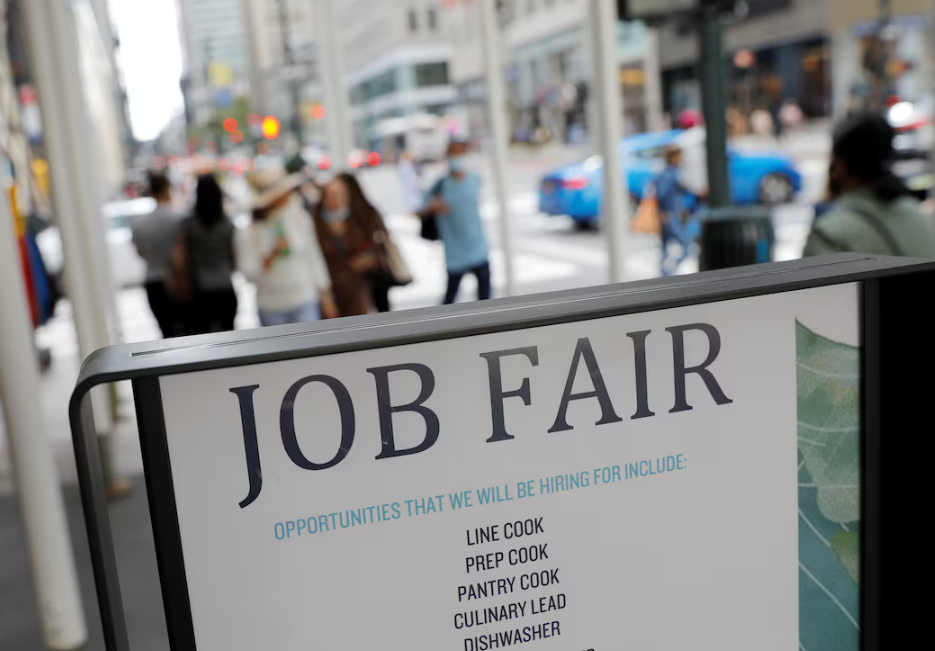
U.S. weekly jobless claims unexpectedly declined in the latest week, offering another sign that the American labor market remains relatively stable even as businesses face higher energy costs, inflation pressure and uncertainty over economic growth.
Initial claims for state unemployment benefits fell by 10,000 to a seasonally adjusted 196,000 for the week ended September 12, according to the U.S. Labor Department. Economists surveyed by Reuters had expected claims to rise to 208,000.
However, the headline decline needs to be interpreted cautiously. The Labor Day holiday can create unusual seasonal patterns in employment data, making weekly claims particularly volatile around this period. The latest number therefore does not necessarily mean that labor-market conditions have strengthened by the full amount suggested by the headline figure.
Weekly Jobless Claims Fall Below Expectations
The latest unemployment claims report showed a larger-than-expected decline. Initial claims dropped to 196,000, compared with the 208,000 economists had anticipated.
| Labor Market Indicator | Latest Data |
|---|---|
| Initial unemployment claims | 196,000 |
| Weekly change | Down 10,000 |
| Reuters economist forecast | 208,000 |
| Continuing claims | 1.730 million |
| Change in continuing claims | Down 39,000 |
The decline suggests that relatively few workers are being laid off, which remains one of the main sources of resilience in the U.S. labor market. At the same time, the data does not provide strong evidence that employers are rapidly increasing hiring.
Why the 196,000 Figure Needs Caution
Weekly unemployment claims are among the most timely indicators of labor-market conditions, but they can also be noisy. The Labor Day holiday moves between calendar dates from year to year, complicating seasonal adjustments.
Because of that holiday-related volatility, the sharp decline in claims may exaggerate the underlying improvement in labor-market conditions. Economists are likely to place greater weight on the broader trend rather than one week’s number.
The underlying picture remains one of relatively low layoffs combined with cautious hiring. Companies appear reluctant to make major increases in payrolls while they assess demand, costs and the wider economic environment.
Continuing Claims Also Decline
Another encouraging element of the report was the decline in continuing unemployment claims. The number of people receiving unemployment benefits after their initial week of assistance fell by 39,000 to 1.730 million for the week ended September 5.
Continuing claims can provide information about how quickly unemployed workers are finding new jobs. A decline can indicate that fewer people are remaining on unemployment benefits for extended periods.
However, continuing claims should also be viewed alongside broader hiring and employment data. A labor market can show low layoffs without generating strong job creation if employers remain cautious about adding workers.
August Payroll Growth Shows Some Improvement
The latest claims figures cover the period in which the government surveyed employers for the September nonfarm payrolls report.
U.S. employers added 162,000 jobs in August, following a significant slowdown in job creation during the previous three months. The August increase therefore provided some evidence that employment growth had regained momentum after a weaker stretch.
The combination of relatively low unemployment claims and moderate payroll growth suggests that the labor market has not experienced a sudden deterioration. Instead, businesses appear to be maintaining existing staffing levels while remaining selective about new hiring.
Fed Raises Interest Rates as Labor Market Remains Stable
The labor-market data arrives only one day after the Federal Reserve raised interest rates for the first time since July 2023.
The Fed increased its benchmark overnight interest rate by 0.25 percentage point to a range of 3.75% to 4.00%. Policymakers also indicated that additional increases could be necessary if inflation remains elevated.
Fed Chair Kevin Warsh highlighted the labor market as an important indicator of economic strength. Policymakers judged that the unemployment rate was broadly consistent with conditions associated with full employment.
This assessment helps explain why the central bank remains focused on inflation as it considers future policy. If employment remains sufficiently stable, policymakers have more room to maintain restrictive monetary conditions while attempting to bring inflation closer to their target.
Low Layoffs Are Supporting Labor-Market Stability
One of the most important features of the current labor market is the relatively low level of layoffs. Companies have generally been cautious about expanding payrolls, but that does not necessarily mean they are aggressively cutting existing positions.
This creates a labor market that is stable but less dynamic than during periods of rapid economic expansion. Workers who already have jobs may benefit from relatively low layoffs, while job seekers can face a more competitive environment if companies are not creating positions quickly.
Economists therefore distinguish between labor-market stability and strong labor-market growth. The latest claims report is more consistent with the first description.
Hiring Faces Economic Headwinds
Businesses are operating against several sources of uncertainty. Rising energy prices connected with the conflict involving Iran have increased costs for companies and households, while also creating additional inflation concerns.
Higher oil prices can affect transportation, manufacturing, logistics and other energy-intensive industries. Companies facing higher operating costs may become more cautious about expanding their workforce.
That helps explain why low layoffs have not necessarily translated into a rapid acceleration in hiring. Employers can preserve existing teams while delaying new recruitment until the economic outlook becomes clearer.
Labor Market and Inflation Create a Policy Balancing Act
The latest claims data illustrates the difficult balance facing the Federal Reserve.
If the labor market remains stable while inflation stays above the central bank’s desired level, policymakers may have reason to keep interest rates elevated or raise them further. But excessive tightening can eventually weaken hiring, consumer demand and business investment.
The Fed therefore has to monitor both sides of the economy. Employment indicators show whether businesses are reducing staff or continuing to support payrolls, while inflation indicators reveal whether price pressures are cooling sufficiently.
| Economic Signal | Potential Policy Relevance |
|---|---|
| Low initial claims | Suggests limited layoffs |
| Falling continuing claims | Indicates fewer people remaining on benefits |
| Moderate payroll growth | Shows continued employment expansion |
| Persistent inflation | Can increase pressure for tighter policy |
| Higher oil prices | Can add to inflation and business costs |
What the Claims Data Means for Workers
For workers, the latest figures provide a mixed picture. The low number of new unemployment claims suggests that widespread layoffs are not currently dominating the labor market.
At the same time, cautious hiring means people looking for new jobs may not experience the same opportunities available during stronger hiring cycles. Employers may take longer to fill vacancies, reduce recruitment plans or focus on positions considered essential to their operations.
This distinction is particularly important when interpreting unemployment data. A stable employment market can coexist with slower job creation because businesses are retaining current employees without significantly expanding their workforce.
What the Claims Data Means for the Fed
The Federal Reserve will likely continue looking at unemployment claims alongside payrolls, unemployment, wages and inflation measures rather than relying on a single weekly report.
The latest decline does not by itself establish a new trend because of the Labor Day seasonal distortion. Nevertheless, it reinforces the broader picture of a labor market that has remained resilient despite slower hiring growth.
If future reports continue to show low layoffs and steady employment, policymakers may have less concern about an immediate labor-market breakdown. Conversely, a sustained rise in initial and continuing claims would provide a clearer signal that tighter financial conditions are beginning to affect employment.
Key Indicators to Watch Next
- Initial unemployment claims: A sustained increase would provide stronger evidence of rising layoffs.
- Continuing claims: Changes can indicate whether unemployed workers are finding new jobs quickly.
- Nonfarm payrolls: Future employment reports will show whether August’s job growth continues.
- Unemployment rate: The Fed is closely watching whether employment remains consistent with full-employment conditions.
- Wage growth: Persistent wage pressure could influence the inflation outlook.
- Oil prices: Energy costs remain an important source of inflation risk.
- Fed guidance: Future comments will help markets assess the possibility of additional rate increases.
US Labor Market Outlook
The latest U.S. jobless claims report does not point to a sudden deterioration in employment conditions. Initial claims fell to 196,000, while continuing claims also declined, suggesting that layoffs remain relatively contained.
However, the Labor Day holiday makes the weekly figure unusually difficult to interpret. The broader employment picture remains more important than the single-week decline.
The central feature of the labor market is its combination of low layoffs and cautious hiring. That pattern can keep unemployment relatively stable while limiting the pace at which new workers enter employment.
The Federal Reserve’s latest rate increase adds another layer of uncertainty. If inflation remains persistent, especially because of elevated energy prices, borrowing costs could remain restrictive for longer. If price pressures eventually ease without a major deterioration in employment, the Fed could have more flexibility in future meetings.
Conclusion
U.S. weekly jobless claims unexpectedly fell to 196,000 for the week ended September 12, beating economists’ forecast of 208,000. Continuing claims also declined to 1.730 million, while August payroll growth reached 162,000 jobs.
The figures show that layoffs remain relatively low and that the labor market has retained considerable stability. But the Labor Day holiday may have distorted the latest weekly reading, while businesses remain cautious about expanding hiring amid inflation, higher energy costs and economic uncertainty.
With the Federal Reserve having raised interest rates to 3.75%-4.00% and signaling that further increases could be necessary, upcoming employment and inflation reports will remain central to the U.S. economic outlook. The key question is whether labor-market resilience can continue without allowing inflation pressures to remain entrenched.
For breaking news and live news updates, like us on Facebook or follow us on Twitter and Instagram. Read more on Latest Business on thefoxdaily.com.

COMMENTS 0