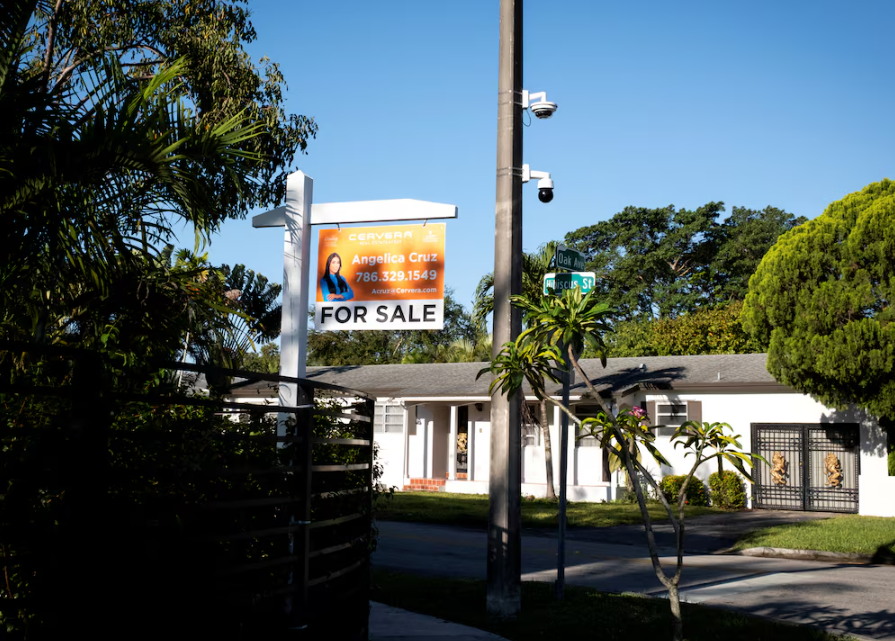
The average interest rate on the most common US home loan climbed to its highest level in almost three years last week, adding to affordability pressures for Homebuyers and weighing on mortgage demand. The increase comes as elevated Treasury yields, higher oil prices and renewed inflation concerns push borrowing costs higher across the US economy.
The average 30-year fixed-rate mortgage rose 19 basis points to 7.49% in the week ended October 2, according to the Mortgage Bankers Association (MBA). The rate was last higher in November 2023, highlighting the sharp increase in borrowing costs facing American households.
30-Year Mortgage Rate Rises to 7.49%
The 30-year fixed-rate mortgage is the most widely used home loan in the United States, making changes in its cost particularly important for the housing market.
The MBA said the average rate increased from the previous week’s level to 7.49%. The 19-basis-point increase represents a significant weekly move for mortgage borrowers, particularly at a time when home prices remain elevated in many parts of the country.
Higher mortgage rates increase the monthly cost of purchasing a home. For potential buyers who are already dealing with high property prices, the additional financing cost can make it harder to qualify for a mortgage or afford a desired property.
The latest increase could therefore further discourage some buyers from entering the housing market while encouraging others to delay purchases until borrowing conditions improve.
Why Are US Mortgage Rates Rising?
US mortgage rates are closely linked to movements in the broader bond market, particularly the yield on 10-year US Treasury notes. When Treasury yields rise, mortgage rates often move higher as lenders adjust pricing to reflect changes in borrowing costs and market expectations.
The 10-year Treasury yield recently reached its highest level in 24 years. Concerns about inflationary pressure from rising oil prices and signs of stronger US economic growth have contributed to the increase in Treasury yields.
Oil prices are particularly important because higher energy costs can raise inflation across the economy. If businesses and consumers face more expensive fuel and transportation, those costs can eventually spread to other goods and services.
Higher inflation expectations can influence bond markets and make longer-term borrowing more expensive, creating additional pressure on mortgage rates.
Mortgage Rates Have Climbed Sharply Since February
US home borrowing costs have risen substantially since joint US-Israeli strikes against Iran began in late February. The average 30-year mortgage rate is now about 1.4 percentage points higher than it was around that period.
The increase has broadly tracked the rise in the 10-year Treasury yield, which moved above 5.3% earlier this week.
Such a large change can significantly affect the economics of buying a home. Even when the purchase price remains unchanged, a higher interest rate can increase the total amount a borrower pays over the life of a mortgage.
For homeowners who already locked in lower mortgage rates in previous years, the increase can also reduce the incentive to move or refinance.
Mortgage Applications Fall 4.2%
The increase in mortgage rates was accompanied by weaker demand for home loans. Mortgage applications fell 4.2% last week from the previous week, according to the Mortgage Bankers Association.
Refinancing applications also declined sharply. Overall mortgage application volumes are now at their lowest level since February 2025 and have fallen nearly 50% since January.
The decline suggests that higher borrowing costs are having a direct impact on both existing homeowners and prospective buyers.
Homeowners who already have mortgages at substantially lower rates have little reason to refinance into a loan carrying a much higher interest rate. At the same time, prospective buyers may be reconsidering purchases because of the increased monthly cost of financing.
Why Refinancing Demand Is Weak
Refinancing generally becomes more attractive when new mortgage rates are meaningfully below the rate on an existing home loan. With current rates near 7.5%, many homeowners who obtained mortgages at lower rates have little financial incentive to replace those loans.
This creates what is sometimes described as a mortgage-rate lock-in effect. Homeowners with inexpensive existing mortgages may hesitate to sell their homes because moving would mean taking out a new loan at a much higher rate.
The result can be reduced housing turnover, with fewer existing homes entering the market and fewer homeowners choosing to refinance.
Joel Kan, the MBA’s deputy chief economist, said very few homeowners have an incentive to refinance at current rates and that higher borrowing costs have caused many potential borrowers to step back from the purchase market.
Higher Mortgage Rates Put Pressure on Home Affordability
Housing affordability depends on several factors, including home prices, household income, property taxes, insurance and mortgage rates. When interest rates rise sharply, monthly mortgage payments can increase even if home prices remain unchanged.
This can have a particularly strong impact on first-time buyers, who generally have less flexibility when managing the upfront and ongoing costs associated with purchasing a home.
Higher rates can also reduce the maximum loan amount that a household can comfortably afford. Some buyers may respond by looking for less expensive properties, increasing their down payments or delaying their purchases.
In markets where housing inventory is already limited, weaker demand could eventually influence home-price growth. However, the effect can vary significantly between regions depending on local employment, construction activity and housing supply.
Inflation Remains a Key Concern
Inflation is another important factor behind the rise in borrowing costs. The inflation measure targeted by the Federal Reserve registered 3.4% in August, above the central bank’s 2% target.
Persistent inflation can make it more difficult for the Federal Reserve to reduce interest rates. Financial markets therefore closely monitor inflation, economic growth and labor-market data when assessing the future path of monetary policy.
For mortgage borrowers, this means that changes in inflation expectations can indirectly affect the cost of long-term home loans even when the Federal Reserve does not immediately change its policy rate.
Federal Reserve Policy Adds Uncertainty
Federal Reserve policymakers have indicated that they expect to follow their September interest-rate increase with another rate hike by the end of the year.
However, financial markets are currently betting that policymakers will leave interest rates unchanged at their next meeting at the end of October.
This difference between policymakers’ signals and market expectations adds uncertainty for borrowers and investors. Mortgage rates can respond to expectations about future monetary policy even before the Federal Reserve actually changes its benchmark interest rate.
If inflation remains elevated and Treasury yields stay high, mortgage rates could remain under pressure. Conversely, a sustained decline in bond yields could eventually provide some relief to mortgage borrowers.
Oil Prices Add to Inflation Pressure
Rising oil prices have become an additional concern for the US economy. Energy costs can affect inflation directly through gasoline and heating prices and indirectly through transportation, manufacturing and other business expenses.
With crude oil prices remaining elevated amid geopolitical risks and supply concerns, investors have become more cautious about the possibility of persistent inflation.
Those concerns have contributed to higher Treasury yields, which in turn have helped push mortgage rates higher.
US Housing Market Faces a Difficult Environment
The latest mortgage-rate increase comes at a challenging time for the US housing market. Buyers are confronting expensive financing while many homeowners remain reluctant to sell because they have existing mortgages with lower interest rates.
This combination can reduce both demand and supply. Higher rates discourage buyers, while mortgage-rate lock-in discourages some homeowners from listing their properties.
As a result, housing-market activity could remain subdued even if the broader US economy continues to grow.
What the Mortgage Rate Increase Means for Buyers
For prospective homebuyers, the jump to 7.49% means financing costs are significantly higher than they were when mortgage rates were lower.
- Higher monthly payments: A higher interest rate increases the cost of financing a home.
- Lower borrowing capacity: Buyers may qualify for smaller loans at higher rates.
- Reduced demand: Some households may postpone purchasing a home.
- More expensive refinancing: Existing homeowners have less incentive to replace older, cheaper mortgages.
- Potentially slower housing activity: Higher rates can reduce both buying and selling activity.
These effects can vary depending on household income, down payment size, local home prices and the type of mortgage selected.
Mortgage Applications Could Remain Under Pressure
The nearly 50% decline in overall mortgage application volumes since January shows how sensitive housing demand has become to borrowing costs.
If mortgage rates remain around current levels, many potential buyers may continue waiting for more favorable financing conditions. Some households could also choose to rent for longer rather than commit to a mortgage with a high interest rate.
For lenders, lower application volumes could mean weaker origination activity. For home sellers, reduced buyer demand could make it more difficult to attract offers in markets where inventory is increasing.
What Happens Next for US Mortgage Rates?
The direction of mortgage rates will depend heavily on the bond market, inflation data, economic growth and expectations for Federal Reserve policy.
A sustained decline in Treasury yields could eventually pull mortgage rates lower. However, persistent inflation, elevated energy prices and strong economic activity could keep longer-term yields high.
For now, the 7.49% average 30-year mortgage rate represents another setback for housing affordability. With mortgage applications already falling and refinancing demand weak, the housing market is likely to remain highly sensitive to changes in interest rates.
Frequently Asked Questions
What is the current US 30-year mortgage rate?
The average 30-year fixed mortgage rate reached 7.49% in the week ended October 2, according to the Mortgage Bankers Association.
Why did the 30-year mortgage rate rise?
Mortgage rates are closely linked to 10-year Treasury yields, which have risen because of concerns about inflation, higher oil prices and stronger US economic growth.
When was the last time mortgage rates were this high?
The average 30-year mortgage rate was last higher in November 2023.
How much have US mortgage rates increased since February?
Home borrowing rates have increased by about 1.4 percentage points since late February.
How did mortgage applications change last week?
Mortgage applications fell 4.2% from the previous week, according to the Mortgage Bankers Association.
Why are homeowners not refinancing?
Many homeowners already have mortgages with lower interest rates, making refinancing into a loan near current rates financially unattractive.
How do higher mortgage rates affect homebuyers?
Higher rates increase monthly borrowing costs and can reduce the amount of money buyers can comfortably borrow, potentially causing some households to delay purchases.
Could mortgage rates fall again?
Mortgage rates could decline if Treasury yields fall and inflation pressures ease. However, elevated inflation, oil prices and uncertainty over Federal Reserve policy could keep rates high.
For breaking news and live news updates, like us on Facebook or follow us on Twitter and Instagram. Read more on Latest Business on thefoxdaily.com.






COMMENTS 0