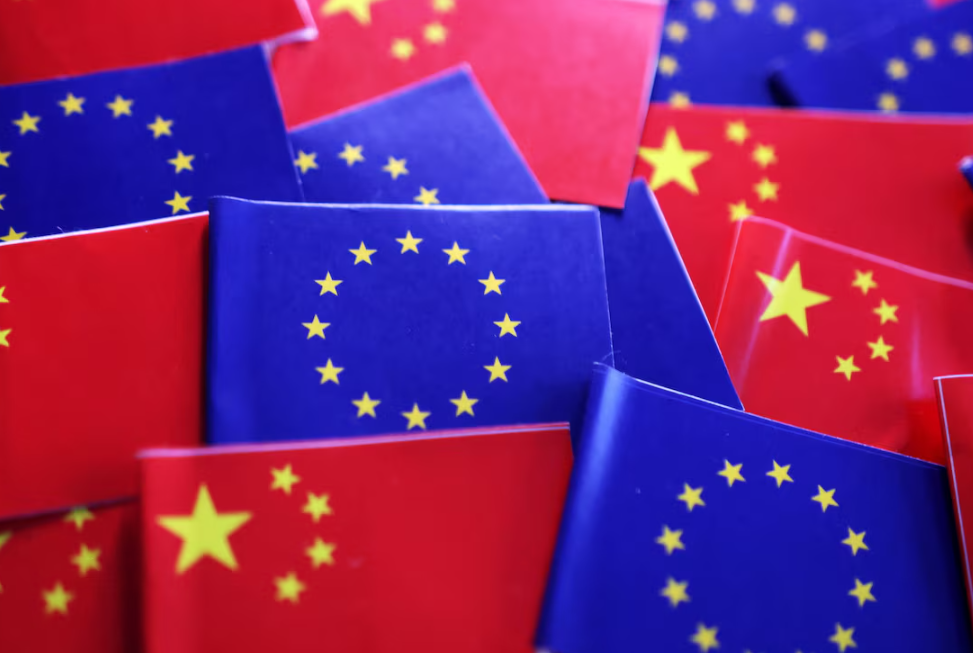
The European Union is seeking concrete steps from China to reduce its growing Trade Deficit as European Trade Commissioner Maros Sefcovic travels to Beijing for key talks with Chinese officials. The discussions come after months of negotiations over trade imbalances, Chinese exports and European access to the Chinese market.
Sefcovic is scheduled to meet Chinese Commerce Minister Wang Wentao as the EU pushes for measures that could improve the balance of trade between the two economies. The talks are particularly important for European industries facing increased competition from Chinese imports, including machinery, textiles, chemicals, metals and electric vehicles.
The European Commission has said it wants tangible results by October that can be presented to EU leaders when they meet in Brussels on October 15-16. 0
EU-China Trade Deficit Becomes Central Issue
The EU’s trade deficit in goods with China has become a major concern for European policymakers. According to the latest Reuters report, the deficit is now running at more than €1 billion, or about $1.12 billion, per day.
European officials argue that the growing imbalance is putting pressure on European manufacturers and could have consequences for industrial production and employment. The issue has therefore moved beyond conventional trade negotiations and become part of the EU’s wider economic and industrial policy.
The European Commission’s chief trade enforcement officer, Denis Redonnet, recently warned that imports from China were driving a worrying increase in several product categories. Reuters reported that Chinese imports into the EU reached €571 billion in 2025, contributing to a €360 billion EU trade deficit with China. 1
European officials are now looking for ways to increase European exports to China while also managing the rapid growth of Chinese goods entering the European market.
Sefcovic Wants Tangible Results From Beijing
Sefcovic has previously said that the EU and China should work toward a better balance in their trade and investment relationship. The European Commission has also established structured discussions with Beijing covering trade and investment balancing, export controls, intellectual property rights and World Trade Organization reform. 2
The latest Beijing meetings are intended to assess whether those discussions can produce practical measures. EU officials want commitments that can demonstrate progress before European leaders consider the future direction of the bloc’s China trade policy.
The timing adds pressure to both sides. EU leaders are due to discuss relations with China at their October 15-16 meeting, making the outcome of Sefcovic’s talks particularly important for the next stage of negotiations.
EU Wants Greater Access for European Companies
One of the EU’s priorities is greater access to the Chinese market for European companies. European officials argue that improving market access could help increase European exports and reduce the imbalance in bilateral trade.
However, the European Commission believes that market access alone will not solve the problem. It is also pushing China to consider limits on certain exports to Europe.
The proposal reflects growing European concern that rapid increases in Chinese exports could place additional pressure on industries already facing weak demand, high production costs and international competition.
The EU and China have been working through a structured dialogue since June. European Commission officials said at the time that the objective was to achieve a better balance, improve reciprocal market access and address trade imbalances and global overcapacity. 3
Chinese Export Controls Add Another Layer
The talks are also taking place against the backdrop of Chinese restrictions on exports of rare earths and other critical minerals.
Rare earth elements are important for numerous modern industries, including electric vehicles, electronics, renewable energy equipment and advanced manufacturing. European companies have therefore become increasingly focused on the reliability of access to these materials.
In June, Sefcovic said China had reassured the EU that existing export controls on rare earths and permanent magnets would not disrupt European supply chains. He also proposed measures to make the licensing process easier for European companies. 4
Any progress on critical minerals could therefore become an important part of broader efforts to stabilize EU-China economic relations.
Chinese Imports Rise Across Several Industries
European concerns extend well beyond electric vehicles. EU officials have identified rapidly rising imports in machinery, textiles, basic metals and chemicals.
Redonnet said nearly a quarter of all imports were increasing at a worrying rate, according to the Reuters report. The European Commission has responded by increasing its use of trade-defense investigations and other measures.
Reuters reported that the Commission opened 32 new trade-defense cases in 2025, close to the record of 33 cases opened in 2024. In 2026, 27 new investigations had already been opened by the time of the October report. 5
These developments show why the trade deficit is becoming a broader industrial policy issue for the European Union.
Chinese Electric Vehicle Imports Draw Particular Attention
Electric vehicles are among the most sensitive areas in the EU-China trade relationship. European policymakers are closely watching the rapid increase in Chinese vehicle imports even though the EU already applies tariffs to battery electric vehicles manufactured in China.
According to the Reuters report, imports of plug-in hybrid vehicles into the EU increased 86% in the year to September, while prices declined by 20%. Imports of battery electric vehicles rose 40% over the same period.
More than half of the plug-in hybrid and battery electric vehicles covered by these increases came from China, according to the report.
The figures are significant because Europe’s automotive industry remains a major source of manufacturing activity and employment. European carmakers are also investing heavily in electric vehicles while facing competition from Chinese manufacturers that have expanded rapidly in global markets.
Why the EU Is Concerned About Industrial Competition
The European debate over Chinese imports is closely linked to the future of European manufacturing. Policymakers want European companies to remain competitive while ensuring that consumers continue to benefit from competitive prices and product choice.
European officials are particularly concerned about situations in which excess production capacity in China results in large increases in exports to European markets.
China, however, rejects the argument that its trade surplus and industrial capacity should automatically be treated as evidence of unfair competition. Beijing has described efforts to emphasize economic imbalances and overcapacity as protectionist pressure intended to restrict Chinese trade.
The disagreement makes it difficult to find a solution that satisfies both sides. The EU wants greater balance and market access, while China has warned against measures it views as protectionist.
G20 Discussions Highlight Global Trade Concerns
The EU-China dispute is taking place within a wider debate about global trade imbalances. G20 finance leaders, with China absent from the agreement mentioned by Reuters, agreed in September to act against what they described as non-market distortions that contribute to economic imbalances.
The discussions reflect growing international concern about industrial subsidies, excess production capacity, trade barriers and the impact of state intervention on global markets.
For the EU, the challenge is to address these issues without triggering a broader deterioration in relations with one of its largest trading partners.
What China Could Offer in the Talks
It remains unclear which specific Chinese exports Beijing might agree to curb. The EU has not publicly identified a definitive list of products that would be subject to export limits.
European officials are instead seeking a combination of measures that could improve market access for European businesses while moderating the growth of certain Chinese exports.
Possible progress could involve trade-flow monitoring, changes to market-access conditions, export-management measures or commitments relating to critical minerals. However, any agreement would depend on negotiations between the two sides.
The EU and China have already agreed to establish a joint monitoring mechanism for trade flows as part of their structured dialogue. 6
October EU Summit Will Be Important
The outcome of the Beijing meetings is expected to feed into discussions among EU leaders later this month. The European Council meeting on October 15-16 is set to consider the bloc’s relationship with China, making trade one of the most important issues on the agenda.
EU leaders will have to consider whether negotiations with Beijing are producing enough progress or whether stronger trade-defense measures are necessary.
That decision could influence European policy on Chinese electric vehicles, industrial imports, critical minerals and access to the Chinese market.
EU-China Trade Talks Could Shape European Industry
The negotiations between Brussels and Beijing come at a critical point for European industry. The EU wants to increase opportunities for European companies in China while preventing rapidly growing imports from putting excessive pressure on domestic producers.
China, meanwhile, has strong economic incentives to maintain access to the European market while resisting measures it considers protectionist.
The outcome could have consequences beyond the immediate trade deficit. A successful agreement could improve market access and reduce tensions, while a failure to reach meaningful commitments could encourage the EU to rely more heavily on trade-defense instruments.
For European businesses, the most important questions will be whether Chinese market access improves, whether the flow of Chinese imports changes and whether critical mineral supplies remain reliable. For China, the talks will test its ability to address European concerns without accepting restrictions that could undermine its exporters.
Key Issues in the EU-China Trade Talks
- Trade deficit: The EU’s goods trade deficit with China has exceeded €1 billion per day, according to Reuters.
- Market access: The EU wants greater opportunities for European companies to sell in China.
- Chinese exports: Brussels is considering measures to manage rapidly increasing imports from China.
- Electric vehicles: Chinese vehicle imports have risen sharply despite existing EU tariffs on Chinese-built battery EVs.
- Critical minerals: European officials remain concerned about Chinese export controls affecting rare earths and other materials.
- EU summit: European leaders are expected to assess the state of China trade relations at their October 15-16 meeting.
What Happens Next in EU-China Trade Relations?
Sefcovic’s meetings with Wang Wentao will provide an important test of whether months of technical discussions can produce concrete political commitments.
The EU is seeking tangible progress before its leaders meet later in October. The negotiations will need to address several connected issues, including the trade deficit, Chinese exports, European market access, critical minerals and industrial competition.
Neither side has indicated that it wants a broad escalation in trade tensions. However, the growing imbalance means pressure on the relationship is increasing.
The next stage will depend on whether Beijing offers measures that Brussels considers sufficient to rebalance trade and whether the EU is prepared to moderate or expand its trade-defense policies in response.
For European manufacturers, Chinese exporters and consumers across both markets, the outcome of the negotiations could help shape the direction of EU-China economic relations for years to come.
Frequently Asked Questions
Why is the EU holding trade talks with China?
The EU is seeking to reduce its large trade deficit with China, improve market access for European companies and address concerns about rapidly rising Chinese imports.
Who is leading the EU talks in Beijing?
European Trade Commissioner Maros Sefcovic is leading the EU’s side of the discussions and is meeting Chinese Commerce Minister Wang Wentao.
How large is the EU’s trade deficit with China?
The EU’s goods trade deficit with China is running at more than €1 billion per day, according to the Reuters report.
Why are Chinese electric vehicles a concern for the EU?
Chinese electric vehicle imports have increased significantly in Europe, raising concerns about competition for European automakers and the future of the region’s automotive industry.
What does the EU want from China?
The EU wants greater access to China’s market for European companies and is also seeking measures to manage rapidly rising Chinese exports to Europe.
Why are rare earths important in the EU-China talks?
Rare earths and permanent magnets are important inputs for industries such as electric vehicles, electronics and advanced manufacturing. European companies are concerned about the impact of Chinese export controls on supply chains.
When will EU leaders discuss China trade relations?
EU leaders are expected to discuss trade relations with China at a European Council meeting in Brussels on October 15-16.
Could the EU-China trade dispute escalate?
The outcome depends on the progress made in negotiations. If the EU considers Chinese measures insufficient, it could increase reliance on trade-defense instruments, while Beijing has warned against what it considers protectionist pressure.
“`7
For breaking news and live news updates, like us on Facebook or follow us on Twitter and Instagram. Read more on Latest Business on thefoxdaily.com.






COMMENTS 0