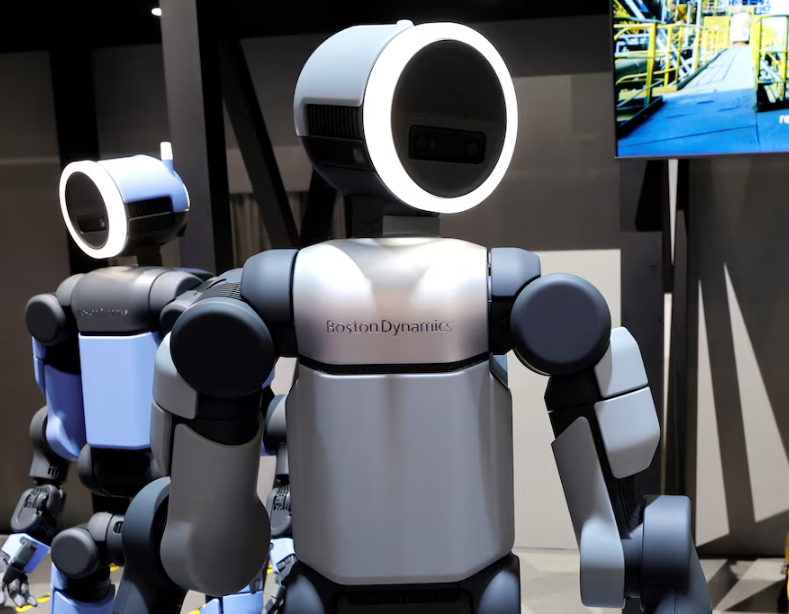
Boston Dynamics has appointed former Amazon executive Rohit Prasad as its new chief executive officer, marking a leadership change as the humanoid robot maker moves toward commercializing its Robotics technology at greater scale. Prasad takes charge on October 7 and brings experience in artificial intelligence, robotics-related technologies and the development of AI systems at Amazon.
The company, which is owned by Hyundai Motor Group, is developing humanoid robots designed for increasingly complex tasks in industrial and commercial environments. The leadership transition comes as Hyundai expands its ambitions for robot manufacturing and plans to deploy robots across its manufacturing operations.
Rohit Prasad Named Boston Dynamics CEO
Boston Dynamics announced that Rohit Prasad has been appointed chief executive officer effective October 7. Prasad previously served as senior vice president and head scientist for Alexa and Artificial General Intelligence at Amazon.
His background at Amazon gives him experience working on artificial intelligence technologies and taking advanced AI developments toward practical applications. Boston Dynamics said Prasad would bring experience in turning physical AI breakthroughs into commercial success.
The appointment places an executive with a strong AI background at the helm of one of the world’s best-known robotics companies at a time when the robotics industry is increasingly focused on combining artificial intelligence with machines capable of operating in physical environments.
Prasad Succeeds Robert Playter
Prasad succeeds Robert Playter, who stepped down as Boston Dynamics CEO in February. Playter had led the company during a period in which Boston Dynamics expanded its focus beyond highly advanced robotic demonstrations toward potential commercial applications.
The change in leadership comes as the company prepares for a new phase of growth. Boston Dynamics has developed several generations of robots, including its humanoid Atlas platform, which has attracted significant attention for its ability to perform movements and tasks in environments designed for humans.
Under Prasad, the company will be expected to continue advancing its robotics technology while focusing on how those systems can be manufactured and deployed economically at scale.
Why Rohit Prasad’s AI Experience Matters
Prasad’s previous role at Amazon gives him a background that is closely aligned with one of the most important developments in modern robotics: the integration of artificial intelligence with physical machines.
Traditional industrial robots are generally designed to perform specific, repetitive tasks under controlled conditions. Humanoid robots aim to operate in a wider range of environments and potentially handle multiple tasks without requiring the same level of specialized infrastructure.
Artificial intelligence can help such machines understand their surroundings, interpret instructions, recognize objects and adjust their movements. This combination of AI software and physical robotics is increasingly being described as physical AI.
Boston Dynamics said Prasad would bring experience in turning physical AI breakthroughs into commercial success. That focus could become particularly important as the company works to move humanoid robotics from demonstrations and pilot programs toward larger-scale industrial deployment.
Boston Dynamics and Hyundai Motor Group
Boston Dynamics is owned by Hyundai Motor Group, one of the world’s major automotive and industrial companies. The ownership gives Boston Dynamics access to a large manufacturing ecosystem and potential real-world applications for its robotics technology.
Hyundai Motor Group has increasingly highlighted robotics as an important part of its future business strategy. Robotics can potentially support manufacturing, logistics and other industrial activities while also contributing to the automation of workplaces.
The connection with Hyundai is particularly significant because automotive manufacturing requires highly automated production systems. If humanoid robots become capable of safely performing a broader range of tasks, automotive factories could become an important market for the technology.
Hyundai Plans Large-Scale Robot Manufacturing
Hyundai Motor Group said in January that it aims to build a factory capable of manufacturing 30,000 robot units annually by 2028. The group plans to begin deploying robots across all of its manufacturing sites around the same time.
The target illustrates the scale of Hyundai’s ambitions in robotics. Producing tens of thousands of robots each year would represent a major step beyond the relatively small-scale production associated with advanced humanoid robotics today.
For Boston Dynamics, the challenge will not only be developing capable robots but also creating the manufacturing, software and service infrastructure required to operate large fleets of machines.
Atlas Remains Central to Boston Dynamics’ Strategy
Boston Dynamics’ Atlas humanoid robot has become one of the company’s most recognizable platforms. The robot has been developed to perform complex physical movements and interact with industrial environments.
The company has demonstrated Atlas performing tasks associated with manufacturing and material handling. Such applications are important because industrial environments provide structured settings where robots can potentially be introduced before being used in more unpredictable environments.
Humanoid designs also offer a potential advantage because factories, warehouses and other workplaces are already designed around human dimensions. A robot with a human-like form could theoretically use existing workspaces and tools without requiring facilities to be completely redesigned.
From Robotics Demonstrations to Commercial Products
One of the biggest challenges facing advanced robotics companies is converting technological demonstrations into commercially viable products. A robot may be capable of performing an impressive task in a controlled demonstration, but large-scale deployment requires reliability, safety, maintenance and competitive operating costs.
Companies also need to ensure that robots can work consistently for long periods and integrate with existing business processes. For industrial customers, these factors can be as important as the robot’s technical capabilities.
Prasad’s appointment therefore comes at an important stage for Boston Dynamics. His experience in artificial intelligence could help the company focus on software and AI capabilities while Hyundai’s industrial resources could support manufacturing and deployment.
Humanoid Robotics Industry Enters a New Phase
The global humanoid robotics industry has attracted growing investment as advances in artificial intelligence have improved robots’ ability to perceive and respond to their surroundings.
Automakers, technology companies and robotics startups are exploring potential applications in manufacturing, logistics and other areas. The broader objective is to create machines capable of performing physical tasks that are difficult, repetitive or unsuitable for human workers.
However, the industry remains at an early stage. Commercial success depends on whether humanoid robots can demonstrate clear economic benefits compared with conventional automation and human labor.
Boston Dynamics enters this competition with decades of experience in advanced robotics. The company has developed robots known for sophisticated movement and balance, giving it a significant technical foundation as it seeks to expand commercial applications.
What Prasad’s Appointment Could Mean for Boston Dynamics
The appointment of Prasad could signal a stronger emphasis on artificial intelligence and commercialization at Boston Dynamics. His previous responsibilities at Amazon involved some of the company’s most advanced AI initiatives, including Alexa and Artificial General Intelligence.
That experience could be relevant as Boston Dynamics develops systems in which robots need to understand instructions, perceive physical environments and make decisions about how to complete tasks.
The company’s future strategy is likely to involve more than hardware development. Successful humanoid robots require advanced software, training systems, data, sensors, computing capabilities and integration with customer operations.
Bringing those elements together could help determine whether humanoid robots become a major industrial technology or remain limited to specialized applications.
Hyundai’s Manufacturing Ambitions Raise the Stakes
Hyundai’s plan to manufacture up to 30,000 robots annually by 2028 gives Boston Dynamics a clear potential path toward scale. The group’s own factories could serve as important testing and deployment environments for new robotic systems.
Using robots within Hyundai’s manufacturing operations could also allow the company to gather practical data about performance, reliability and workplace integration before expanding deployments to other customers.
If the technology proves commercially successful, Hyundai could potentially use its global manufacturing and business network to support broader adoption of Boston Dynamics robots.
Key Challenges Ahead for Boston Dynamics
Despite advances in AI and robotics, several challenges remain. Humanoid robots must operate safely around people, perform tasks reliably and function in environments that can change unexpectedly.
- Reliability: Robots must perform repetitive tasks consistently without frequent failures.
- Safety: Machines working alongside people need sophisticated systems to prevent accidents.
- Cost: Large-scale deployment requires robots to deliver sufficient economic value.
- AI performance: Robots need software capable of understanding complex physical environments and instructions.
- Manufacturing: Producing robots at high volume requires efficient supply chains and production systems.
Addressing these issues will be critical if Boston Dynamics is to achieve the commercial scale envisioned by Hyundai Motor Group.
What to Expect From Boston Dynamics Under Rohit Prasad
Rohit Prasad begins his tenure as Boston Dynamics CEO at a time when artificial intelligence and robotics are becoming increasingly interconnected. His experience at Amazon provides a background in AI development, while Boston Dynamics brings established expertise in sophisticated robotic systems.
The immediate focus is likely to remain on advancing humanoid robotics and translating those advances into practical industrial applications. Hyundai’s manufacturing ambitions provide a potential route for testing and scaling the technology.
The combination of AI expertise, advanced robotics and Hyundai’s industrial infrastructure could shape Boston Dynamics’ next phase. Whether that leads to widespread commercial adoption will depend on the company’s ability to demonstrate that humanoid robots can perform useful tasks safely, reliably and at an economically competitive cost.
Frequently Asked Questions
Who is the new CEO of Boston Dynamics?
Rohit Prasad is the new CEO of Boston Dynamics. He took over the role on October 7, 2026.
Where did Rohit Prasad work before Boston Dynamics?
Prasad previously served as senior vice president and head scientist for Alexa and Artificial General Intelligence at Amazon.
Who did Rohit Prasad replace at Boston Dynamics?
Prasad succeeds Robert Playter, who stepped down as Boston Dynamics CEO in February 2026.
Who owns Boston Dynamics?
Boston Dynamics is owned by Hyundai Motor Group.
What is Boston Dynamics known for?
Boston Dynamics is known for developing advanced robots, including its humanoid Atlas robot and other highly mobile robotic platforms.
What is the Atlas robot?
Atlas is Boston Dynamics’ humanoid robot platform, designed to perform complex physical tasks and operate in environments built for people.
How many robots does Hyundai plan to manufacture annually?
Hyundai Motor Group said it aims to build a factory capable of manufacturing 30,000 robot units annually by 2028.
Why is Rohit Prasad’s AI background important for Boston Dynamics?
Prasad’s AI experience could support Boston Dynamics’ efforts to combine artificial intelligence with physical robots and turn advanced robotics technology into commercially useful products.
For breaking news and live news updates, like us on Facebook or follow us on Twitter and Instagram. Read more on Latest Business on thefoxdaily.com.





COMMENTS 0