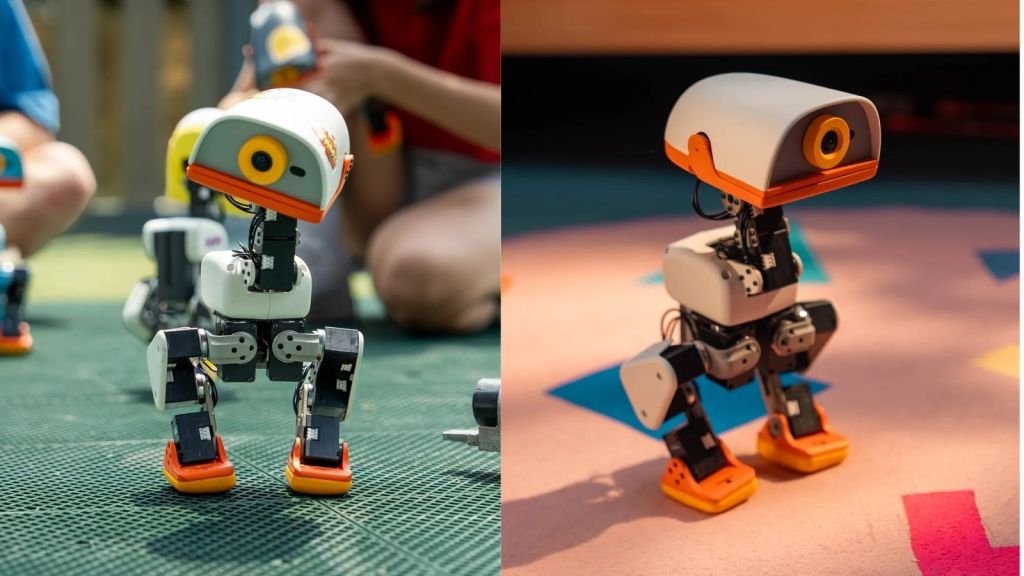
While humanoid robots are grabbing attention with demonstrations of running, fighting and navigating obstacle courses, Hugging Face has introduced a much smaller and more playful entrant to the Robotics race.
Meet Microduck, a 25-centimetre-tall biped robot designed to look and move like a duck. Priced at $399, the compact robot is aimed not just at people looking for a novelty gadget, but also at developers and researchers interested in experimenting with open-source robotics and reinforcement learning.
Hugging Face unveiled Microduck on Thursday, August 27, as the second edition of the robot Olympics in Beijing was drawing attention to increasingly capable humanoid machines.
Unlike those larger robots, Microduck’s appeal is its small size, unusual design and ability to be trained to perform new behaviours.
What is Microduck?
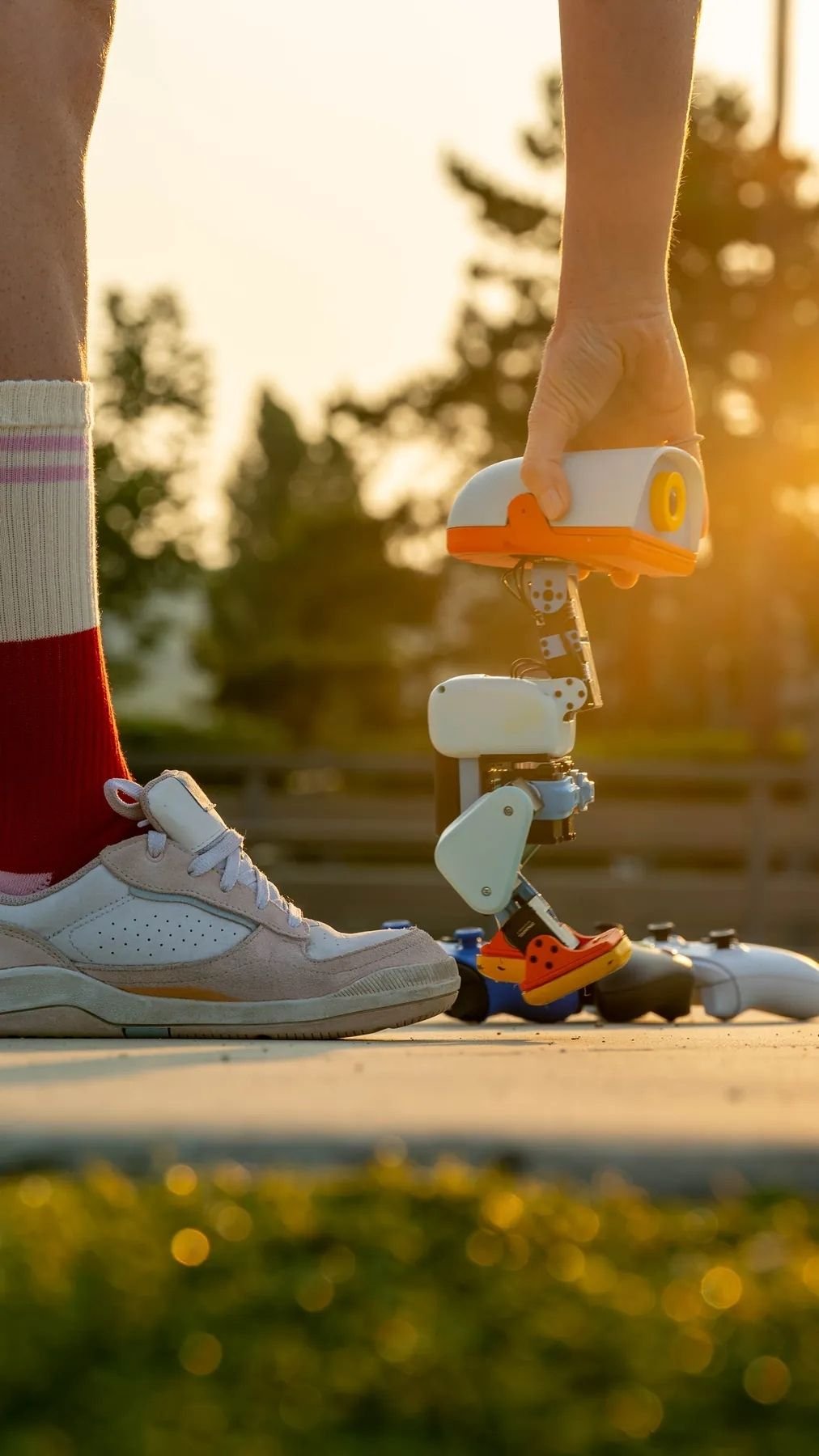
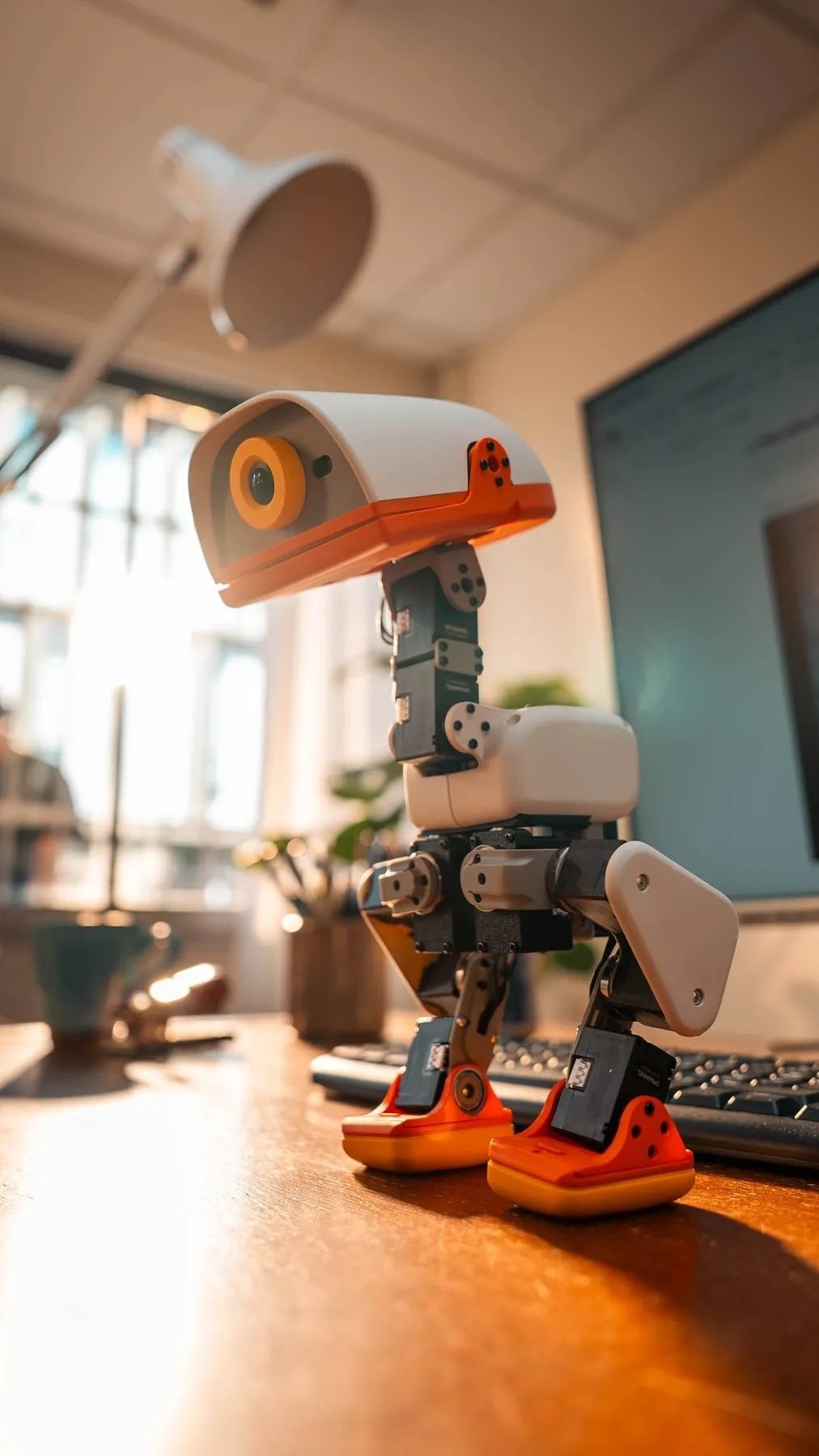
Microduck is a small two-legged robot measuring about 25 cm in height and weighing up to 800 grams.
Despite its compact form, Hugging Face has equipped it with more than 15 motors along with a Camera, lidar sensors and two inertial measurement units (IMUs). These components allow the robot to sense its surroundings, maintain balance and interact with objects.
One of its more practical capabilities is balance recovery. If Microduck falls, it can attempt to get itself back on its feet rather than remaining on the floor.
Its physical design is deliberately distinctive: it waddles like a duck and uses its beak to pick up objects.
The big difference: Microduck is open source
Microduck’s most significant feature is not its duck-like appearance but its open-source architecture.
Hugging Face is widely known as a platform where developers and researchers share, test and deploy open-source and open-weight AI models. With Microduck, the company is extending that philosophy into physical hardware.
Users can train the robot to perform additional behaviours using reinforcement learning. Developers can train behaviours in simulation before deploying them directly to the physical robot.
They can also fine-tune existing behaviours, retrain the robot and redeploy the resulting models.
What can Microduck do?
Microduck comes with seven pre-trained behaviours when purchased. These include:
- Walking
- Sitting and standing
- Kicking
- Picking up objects with its beak
- Roller-skating
- Recovering after falling onto its back
The pre-trained actions provide a starting point for experimentation rather than limiting what the robot can eventually do.
Hugging Face has made the robot’s SDK, simulation Environment and reinforcement-learning training stack available on GitHub, giving developers the tools needed to experiment with its behaviour and develop new skills.
Why Hugging Face is getting into robotics
Microduck fits into Hugging Face’s broader push into affordable open-source AI hardware.
The company acquired French robotics startup Pollen Robotics in April 2025. Pollen Robotics was known for developing robots designed to work with open-source AI research.
Hugging Face has since introduced other compact robots, including Reachy Mini, which uses a Raspberry Pi computer, and Reachy Mini Lite, which can be powered by a Mac or PC.
Microduck therefore represents another step in the company’s effort to make physical AI experimentation more accessible to developers rather than restricting robotics research to expensive industrial or laboratory systems.
Microduck price, colours and release date
Microduck is priced at $399, with pre-orders opening on August 27, 2026.
The robot is expected to begin Shipping before Christmas 2026.
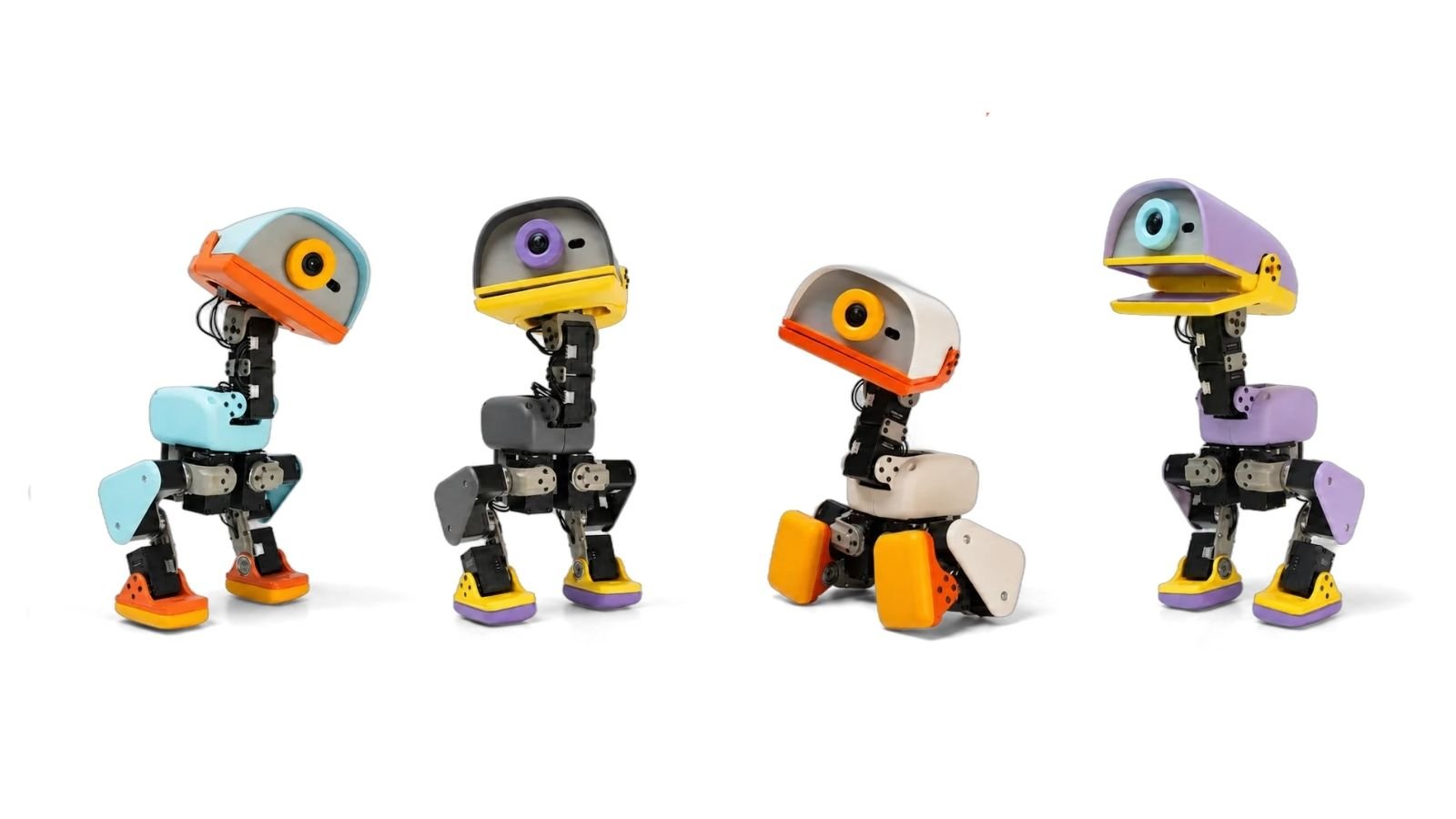
Its outer shells will be offered in four colour combinations:
- Orange and grey
- Purple and grey
- Black and grey
- Blue and grey
The package includes the Microduck robot, a USB-C cable and a game controller.
What accessories can you buy?
Hugging Face is also offering additional components and accessories separately. Buyers can choose from items including extra batteries, a dual-slot battery charger, spare motors, spare screws and motor cables.
Other available accessories include NFC tags, roller attachments, stickers, a ball and a laser pen.
Microduck arrives as Hugging Face makes bigger headlines
The robot’s launch comes during a particularly eventful period for Hugging Face.
The company has reportedly been the subject of acquisition interest from Nvidia at a valuation of around $13 billion. Hugging Face has also recently faced attention over a Cybersecurity incident involving OpenAI agents during safety testing, which reportedly resulted in access to its servers.
Against that backdrop, Microduck gives the company another way to demonstrate its open-source approach this time through a physical machine that developers can actually train and modify.
Why Microduck matters
Microduck is unlikely to compete with full-sized humanoid robots on strength, speed or industrial capability. Its significance lies elsewhere.
At $399, it offers a relatively inexpensive platform for experimenting with reinforcement learning, robotics simulation and the connection between AI software and physical hardware. Because its training tools are Open Source, developers can potentially build behaviours beyond the seven that come pre-installed.
That makes the little duck more than an entertaining robot. It is also an experiment in whether open-source AI development can move from computer screens into affordable physical machines.
With PTI Inputs
For breaking news and live news updates, like us on Facebook or follow us on Twitter and Instagram. Read more on Latest Technology on thefoxdaily.com.






COMMENTS 0