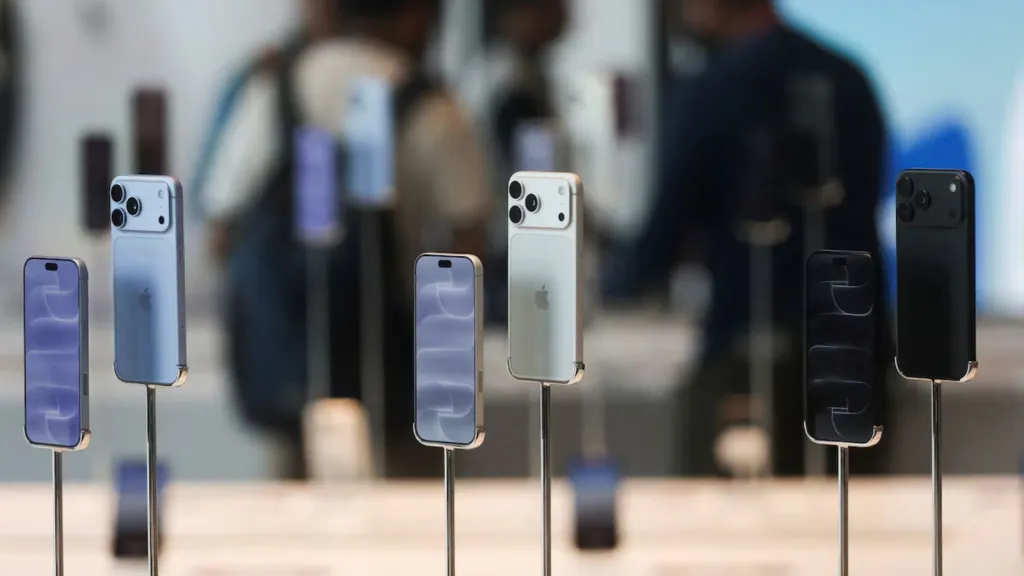
Apple has warned that rising memory chip costs could put pressure on its profitability during the crucial holiday quarter, even as strong iPhone sales helped the company deliver better-than-expected fiscal fourth-quarter results.
The company expects its gross margin to decline to between 45% and 46% in the quarter ending in December, compared with 47.9% in the September quarter. Executives said memory component prices are expected to keep increasing into next year, although Apple has taken steps to secure supplies and offset some of the additional costs.
Apple shares initially remained little changed in after-hours trading following the results. However, they fell around 4% during the earnings call as executives discussed the weaker margin outlook, before recovering some ground to trade about 2% lower.
Apple beats quarterly revenue and profit estimates
Apple reported fiscal fourth-quarter revenue of $114.48 billion, exceeding analysts’ estimates of $113.39 billion, according to LSEG data. Earnings came in at $2.10 per share, above the estimated $1.99, even after excluding five cents per share from tariff refunds.
Strong demand for the iPhone 18 Pro lineup and higher product prices helped support the results. iPhone revenue reached $57.58 billion, beating the $56.54 billion analysts had expected. The figure included iPhone 18 Pro sales but did not include the iPhone Duo.
Apple’s quarterly gross margin also exceeded expectations, reaching 47.9% against the analyst estimate of 47.5%. However, the company’s forecast for the December quarter indicates that higher component costs could reduce profitability during one of its most important sales periods.
iPhone Duo demand exceeds available supply
Apple’s new iPhone Duo, its first foldable smartphone, has attracted strong initial demand but remains constrained by limited supply. The device reportedly sold out online within hours of launch, with customers also queuing at stores.
In an interview with Reuters, CEO John Ternus said that a very small percentage of iPhone Duo units had been returned because of display issues. Apple is replacing affected devices, he said, while acknowledging that the company is currently unable to meet overall demand.
“Duo is constrained as of today. The ramp is going well… but at this point, we’re not able to predict when supply and demand will be in balance,” Ternus said.
Ternus also said Apple was replacing devices affected by screen problems. The company has not provided a timeline for when production will catch up with customer demand.
The supply situation comes as Apple changes its traditional product launch schedule. After nearly two decades of releasing most new iPhone models during the autumn, the company is now spreading launches across the year. The iPhone Pro and Duo models are shipping this year, while other models are expected next year.
Rising memory prices put pressure on Apple’s margins
The increase in memory chip prices is linked to growing demand from the artificial intelligence industry. Higher costs for memory components could reduce the profit benefit Apple receives from customers upgrading to devices with larger storage capacities.
Apple has attempted to soften the impact through product pricing. Alongside the iPhone 18 Pro launch, the company raised prices for the iPhone 17 range by $100 and increased prices for some MacBook models.
Ternus said higher memory costs compared with the June quarter were partly offset by inventory carried by the company and lower costs for certain non-memory components.
“These price increases provided some offset,” Ternus said.
Chief Financial Officer Kevan Parekh told investors that Apple expects memory costs to continue rising into next year. When asked whether the company had entered into a long-term supply agreement, Chief Operating Officer Sabih Khan did not directly confirm such an arrangement.
Khan said Apple was working closely with memory suppliers and that its purchasing commitments increased by $33 billion during the quarter. The move indicates the company’s efforts to secure components as demand and prices change across the Semiconductor Industry.
Apple expands its product lineup beyond iPhones
Apple has also introduced several new product categories as part of an effort to reduce its dependence on the traditional holiday-quarter sales surge. The latest launches include its first touchscreen laptops and a smart-home hub.
The company is gradually changing a revenue pattern that historically saw a major increase during the holiday season, followed by weaker sales towards the end of its financial year. Spreading product releases across different periods could help make revenue less dependent on a single quarter.
The strategy is unfolding under Ternus, who took over as CEO in September. His leadership comes as Apple navigates higher component costs, supply constraints and changes in the technology market.
Services growth forecast falls below analyst expectations
Apple expects services revenue to grow by 8% to 9% in the December quarter, below analysts’ expectations of 10.7%. The company reported services revenue of $31.57 billion in the fiscal fourth quarter, broadly in line with the estimated $31.58 billion.
Apple also highlighted the cost implications of its artificial intelligence services. Its Siri AI features run partly through Google’s cloud infrastructure, creating additional server-related expenses. The company plans to charge more for iCloud+ subscriptions to help offset AI costs, although it has not announced specific pricing changes.
Ternus said some features relying on server-side AI models would have usage limits. These include Siri AI and intelligent photo editing.
Mac sales exceed estimates, while China revenue falls short
Apple’s performance varied across its product categories. Mac revenue reached $10.79 billion, exceeding analyst estimates of $9.61 billion. Services revenue was largely in line with expectations.
However, iPad revenue came in at $6.23 billion, while wearables, home and accessories generated $8.30 billion. Both figures were below analyst estimates.
Sales in China also missed expectations. Apple reported revenue of $17.54 billion from the region, compared with the $18.58 billion analysts had forecast, according to Visible Alpha data.
Despite the stronger-than-expected quarterly results, Apple’s outlook highlights the challenges facing the company as memory prices rise and AI-related infrastructure costs increase. Its ability to manage component expenses, expand production of the iPhone Duo and sustain demand across its wider product lineup will be important factors for its profitability in the coming quarters.
For breaking news and live news updates, like us on Facebook or follow us on Twitter and Instagram. Read more on Latest Technology on thefoxdaily.com.






COMMENTS 0