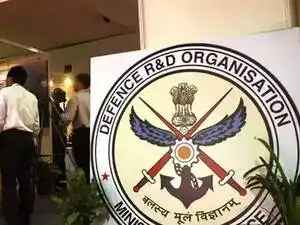
The Defence Research and Development Organisation (DRDO) has showcased indigenous semiconductor technologies designed for some of India’s most advanced defence applications at the Emerging Science, Technology and Innovation Conclave (ESTIC) 2026 in New Delhi. The exhibition highlighted two important technologies developed by DRDO’s Solid State Physics Laboratory (SSPL): Monolithic Microwave Integrated Circuits (MMICs) and Infrared Focal Plane Arrays (IRFPAs).
Held at Bharat Mandapam from October 27 to 29, the three-day conclave brought together representatives from government, scientific institutions, industry and academia to discuss emerging technologies and India’s research capabilities.
The technologies displayed by DRDO have applications in advanced radar systems, electronic warfare equipment and tactical missiles. Their significance extends beyond the development of individual defence components. They demonstrate India’s efforts to develop specialised semiconductor technologies domestically rather than relying entirely on foreign suppliers for strategically important electronic systems.
The exhibition included Gallium Arsenide (GaAs) and Gallium Nitride (GaN)-based MMICs, Multi-Chip Modules (MCMs), and infrared sensing technologies covering Short-Wave Infrared (SWIR), Mid-Wave Infrared (MWIR) and Long-Wave Infrared (LWIR) bands.
What DRDO Showcased at ESTIC 2026
DRDO’s participation focused on semiconductor technologies that support modern military electronics. The organisation presented its achievements in two specialised areas: microwave integrated circuits and infrared imaging sensors.
Both technologies perform different functions within defence systems. MMICs help process and manage high-frequency radio signals, making them important components in radar and electronic warfare equipment. IRFPAs convert incoming infrared radiation into electrical signals that can be processed to create images, allowing military systems to detect and track targets.
The technologies were developed by SSPL, Delhi, a DRDO laboratory specialising in advanced semiconductor materials and devices.
According to the Ministry of Defence, the GaAs and GaN-based MMICs and Multi-Chip Modules displayed at the exhibition have been employed in several strategic missions. The infrared focal plane arrays, meanwhile, serve as sensing elements in tactical missile systems equipped with Imaging Infrared seekers.
How MMIC Technology Supports Advanced Radar Systems
Monolithic Microwave Integrated Circuits are specialised semiconductor devices that combine multiple microwave-frequency electronic components on a single semiconductor chip. Instead of using several separate components connected through complex circuits, an MMIC integrates functions such as amplification, switching and signal processing into a compact structure.
These circuits are particularly important for defence equipment because modern radar and electronic warfare systems operate at high frequencies and require reliable handling of radio-frequency signals.
Radar systems transmit electromagnetic signals and analyse the reflections returning from objects. The quality of the electronic components used in these systems influences their ability to transmit, receive and process signals accurately.
MMICs support several important functions in this process, including:
- Signal amplification: Power amplifiers strengthen radio-frequency signals before transmission, while low-noise amplifiers help process weak incoming signals.
- Signal switching: Integrated switches control the movement of radio-frequency signals between different circuit paths.
- Electronic warfare: Specialised microwave circuits support equipment involved in detecting, receiving and transmitting electromagnetic signals.
- Compact electronic systems: Integration of multiple circuit functions can reduce component size and simplify system design.
For military applications, these capabilities are relevant to radar equipment, electronic support systems and electronic countermeasure technologies.
DRDO’s display of GaAs and GaN-based MMICs is significant because these semiconductor materials are widely used in specialised high-frequency electronics. Their development requires advanced expertise in semiconductor materials, device fabrication and circuit integration.
Why Gallium Nitride and Gallium Arsenide Matter
Two semiconductor materials featured prominently in DRDO’s exhibition: Gallium Nitride and Gallium Arsenide. Both have specialised electrical properties that make them suitable for applications where conventional silicon-based components may not offer the required performance.
Gallium Nitride: Supporting High-Power Defence Electronics
Gallium Nitride is a compound semiconductor material used in high-frequency and high-power electronic devices. GaN-based components are particularly useful in applications that require efficient amplification of radio-frequency signals.
In radar systems, power amplifiers help generate the signals transmitted by radar antennas. Higher-performance semiconductor devices can support more compact and efficient transmitter designs, depending on the overall system architecture.
GaN technology is also relevant to electronic warfare systems, where electronic equipment must operate across demanding frequency and power requirements.
DRDO’s work in this area extends beyond the exhibition. In November 2024, the Ministry of Defence announced that SSPL had developed indigenous processes for manufacturing four-inch silicon carbide wafers and fabricating GaN-based High Electron Mobility Transistors (HEMTs) with power handling capability of up to 150 watts.
The laboratory had also developed GaN-based MMICs with power levels of up to 40 watts for applications extending to X-band frequencies.
The announcement further stated that limited production capability for indigenous GaN-on-SiC-based MMICs had been established at the Gallium Arsenide Enabling Technology Centre (GAETEC) in Hyderabad.
This provides important background to the technologies displayed at ESTIC 2026. It demonstrates that India’s work involves not only designing specialised chips but also developing the semiconductor materials and manufacturing processes required to produce them.
Gallium Arsenide: Another Important Semiconductor for Microwave Electronics
Gallium Arsenide is another compound semiconductor used in high-frequency electronic devices. It has properties that make it suitable for microwave and radio-frequency applications.
GaAs-based technologies can support components used in communication systems, microwave circuits and specialised defence electronics.
For defence applications, the availability of both GaAs and GaN technologies gives researchers different material options depending on the performance requirements of a particular system.
The choice between semiconductor materials depends on several factors, including operating frequency, power requirements, efficiency, thermal management and manufacturing considerations.
Developing expertise in these materials is therefore an important part of India’s efforts to strengthen its domestic defence semiconductor ecosystem.
How Infrared Focal Plane Arrays Help Tactical Missiles Detect Targets
The second major technology highlighted by DRDO was the Infrared Focal Plane Array. Unlike MMICs, which primarily support microwave and radio-frequency electronics, IRFPAs are designed to detect infrared radiation.
Infrared radiation is emitted by objects as part of their thermal and electromagnetic characteristics. Sensors designed to detect this radiation can provide information about objects even when visible-light imaging is not sufficient for the application.
An infrared focal plane array consists of multiple detector elements arranged in a two-dimensional structure. Each element responds to incoming infrared radiation, and the resulting electrical signals are processed to generate an image.
In defence applications, this technology is particularly important for imaging infrared seekers used in tactical missiles.
What Is an Imaging Infrared Seeker?
An Imaging Infrared seeker is a sensing system that uses infrared images to identify and track a target. It acts as the missile’s visual sensing mechanism, allowing the guidance system to receive information about the target’s position.
Unlike systems that depend entirely on externally supplied tracking information, an imaging infrared seeker can use the infrared signature of an object to maintain target tracking during the terminal phase of flight.
The terminal phase is the final stage of a missile’s flight, when it approaches its intended target. During this stage, the seeker supplies important information to the guidance system.
DRDO’s exhibition highlighted IRFPAs as the sensing elements or eyes of tactical missiles. Their role in enabling target detection and tracking makes them an important component of modern precision-guided defence technologies.
The performance of an infrared seeker depends on more than the detector array alone. The complete system also requires suitable optics, signal processing electronics, cooling arrangements where necessary, image-processing capabilities and integration with the missile’s guidance architecture.
Consequently, indigenous IRFPA development represents one important part of a much larger technological effort to build advanced infrared imaging systems within the country.
SWIR, MWIR and LWIR: Three Infrared Technologies Displayed by DRDO
DRDO’s exhibition covered three major infrared wavelength categories: Short-Wave Infrared, Mid-Wave Infrared and Long-Wave Infrared.
These technologies operate across different portions of the infrared spectrum. Their detection characteristics and practical applications vary depending on the wavelength range, atmospheric conditions, target characteristics and sensor design.
Short-Wave Infrared (SWIR)
Short-Wave Infrared technology detects radiation in a relatively shorter infrared wavelength range. SWIR imaging can be useful in applications involving material identification, imaging through certain environmental conditions and specialised surveillance systems.
Unlike conventional visible-light cameras, SWIR sensors can detect infrared information that is not directly visible to the human eye.
Mid-Wave Infrared (MWIR)
Mid-Wave Infrared sensors are commonly associated with thermal imaging and target detection applications. They can detect infrared radiation emitted or reflected by objects, making them useful for surveillance and defence-related sensing systems.
MWIR technology is particularly relevant to systems that require the detection and tracking of objects based on their infrared characteristics.
Long-Wave Infrared (LWIR)
Long-Wave Infrared technology operates at longer infrared wavelengths and is widely associated with thermal imaging applications.
LWIR sensors can detect thermal radiation from objects and are used in applications such as night-vision imaging, surveillance and temperature-related observation.
The availability of SWIR, MWIR and LWIR technologies demonstrates the breadth of infrared semiconductor capabilities being developed by DRDO.
However, these technologies are not interchangeable. Selecting an appropriate infrared sensor depends on the intended application, operating environment, detection requirements and overall imaging-system design.
SSPL: The DRDO Laboratory Behind the Indigenous Semiconductor Technologies
The Solid State Physics Laboratory is one of the specialised research establishments working on advanced semiconductor materials and devices for strategic applications.
Its work is particularly important because defence electronics often require specialised components that cannot always be sourced from conventional commercial semiconductor markets.
Developing these components domestically requires expertise across several interconnected stages, including semiconductor material growth, wafer processing, device fabrication, circuit design and testing.
SSPL’s semiconductor research includes technologies based on gallium nitride, gallium arsenide and infrared-sensitive materials.
The laboratory’s capabilities are also connected to India’s broader defence semiconductor infrastructure, which includes specialised facilities such as GAETEC, the Semiconductor Technology and Applied Research Centre (STARC) and the Semiconductor Laboratory (SCL).
These institutions contribute to different areas of India’s semiconductor development ecosystem. Their combined capabilities are relevant to developing domestic expertise in compound semiconductors, microelectronic devices and established silicon manufacturing technologies.
One important distinction is that designing a semiconductor device and manufacturing it at scale are separate challenges. A successful research demonstration does not automatically mean that a technology is available for unlimited production.
The establishment of specialised production capabilities, manufacturing consistency, testing infrastructure and reliable supply chains remains essential for translating research achievements into operational equipment.
DRDO’s 2024 GaN Development Shows Progress Beyond Research
The semiconductor technologies displayed at ESTIC 2026 can also be understood through DRDO’s earlier work on GaN and silicon carbide.
In November 2024, the Ministry of Defence announced the indigenous development of four-inch silicon carbide wafers and GaN-based HEMTs by SSPL.
The development included GaN-based MMICs with power capabilities of up to 40 watts for applications up to X-band frequencies.
The same announcement highlighted the potential advantages of GaN-on-SiC technology, including improved efficiency and reduced size and weight in suitable electronic systems.
Silicon carbide provides a substrate for GaN-based devices, helping support applications that require demanding power and thermal performance.
The announcement also identified defence, aerospace, radar and electronic warfare systems among the potential application areas.
Another important detail was the establishment of limited production capability at GAETEC, Hyderabad. This demonstrates the importance of linking laboratory research with manufacturing infrastructure.
For India’s defence sector, such developments are relevant because specialised electronic components can influence the performance, reliability and long-term maintainability of larger military platforms.
DRDO Also Highlights Scramjet Engines, Neuromorphic Accelerators and Quantum Technologies
The semiconductor exhibition was only one part of DRDO’s broader technological presentation at ESTIC 2026.
The organisation also displayed several other technologies developed by its laboratories, reflecting research across propulsion, computing, communications, sensing and protective equipment.
Some of the notable exhibits included:
- Scramjet engine technology: Research related to air-breathing propulsion systems operating at hypersonic speeds.
- Neuromorphic accelerators: Computing technologies inspired by certain information-processing principles found in biological neural systems.
- Quantum Random Number Generators: Technologies that use quantum processes to generate random numbers, with potential applications in security-related systems.
- Photonic Integrated Circuits: Integrated technologies that use light to perform functions such as signal generation, processing and transmission.
- Advanced communication systems: Technologies supporting communication requirements in strategic and defence applications.
- Laser proximity sensors: Sensors that use laser-based measurements to detect the distance or presence of objects.
The DRDO outreach stall also featured quantum technology prototypes, high-power pulse laser diodes, extreme-cold-weather clothing, portable hybrid energy management systems, passive and powered exoskeletons and the PRABALA female full-body protector.
These exhibits illustrate the organisation’s broader research responsibilities, which extend beyond weapons development into electronics, materials science, protective systems and emerging computing technologies.
DRDO Leads ESTIC 2026 Session on Semiconductors and Next-Generation Chips
DRDO’s role at the conclave extended beyond displaying technologies. The organisation also led the thematic session on Semiconductors and Next-Generation Chips.
The session was chaired by Dr BK Das, Distinguished Scientist and Director General of Electronics and Communication Systems at DRDO.
A panel discussion moderated by Dr Das included Dr Sheena Rani, Distinguished Scientist and Director General of Micro Electronic Devices, Computational Systems and Cyber Systems.
Representatives from industry, academia, indigenous chip-development organisations and defence electronics participated in discussions covering emerging semiconductor technologies.
Topics included purpose-built Artificial Intelligence System-on-Chips, intelligence at the silicon edge and developments in the microprocessor landscape.
The discussions also examined how DRDO could support industries and start-ups working on advanced chip designs and indigenous technological solutions.
This collaboration is important because semiconductor development requires more than government-funded research. Universities, private manufacturers, design companies and specialised fabrication facilities all have roles in building a sustainable domestic ecosystem.
Why Indigenous Defence Chips Matter for India’s Strategic Self-Reliance
Semiconductors have become essential components in modern military equipment. Radar systems, communication networks, electronic warfare platforms, missile seekers and surveillance technologies all depend on specialised electronic devices.
When critical components depend heavily on external suppliers, restrictions on technology transfers, export controls and supply-chain disruptions can create challenges for strategic programmes.
Indigenous development can help reduce some of these dependencies by building domestic expertise in semiconductor design, materials, fabrication and testing.
However, technological self-reliance does not mean that every semiconductor component must immediately be manufactured domestically. It requires a gradual expansion of capabilities across the entire development and production chain.
For defence applications, reliability is particularly important. Semiconductor devices must meet demanding operating requirements and undergo extensive testing before they can be integrated into military platforms.
The ability to manufacture a component is therefore only one part of the challenge. Maintaining consistent quality, ensuring dependable supplies and supporting the technology throughout its operational life are equally important.
DRDO’s work on MMICs and IRFPAs addresses two specialised areas where semiconductor technology directly supports defence capabilities. One involves handling high-frequency electromagnetic signals, while the other enables infrared-based detection and tracking.
Both are examples of how advanced semiconductor research can contribute to the development of larger strategic systems.
What Comes Next for India’s Indigenous Semiconductor Capabilities?
The technologies displayed at ESTIC 2026 highlight progress in India’s specialised semiconductor research, but the next stage will involve strengthening the connection between research laboratories, manufacturing facilities and defence-system developers.
Several areas will remain important for the development of this ecosystem:
- Manufacturing expansion: Increasing the ability to produce specialised semiconductor devices consistently.
- Advanced testing: Ensuring that components meet the reliability requirements of demanding defence environments.
- Industry collaboration: Connecting government research institutions with private companies, start-ups and universities.
- Material development: Strengthening domestic expertise in GaN, GaAs, silicon carbide and infrared-sensitive materials.
- System integration: Ensuring that indigenous semiconductor devices can be effectively incorporated into radar, electronic warfare and missile platforms.
The wider objective is to create a semiconductor ecosystem that supports both strategic requirements and commercial technological development.
India’s semiconductor ambitions extend beyond defence applications. The same broad technological capabilities can support aerospace, telecommunications, advanced computing and other specialised industries.
Nevertheless, the progress of each technology will depend on its manufacturing readiness, production capacity, testing results and successful integration into operational systems.
DRDO’s ESTIC 2026 Showcase Highlights the Growing Role of Indigenous Chips in Defence
DRDO’s participation in ESTIC 2026 has brought attention to semiconductor technologies that are often less visible than missiles, aircraft and other major defence platforms but are essential to their operation.
The organisation’s GaAs and GaN-based MMICs demonstrate the importance of specialised microwave electronics for radar and electronic warfare applications. Its infrared focal plane arrays highlight the role of advanced semiconductor sensors in tactical missile target detection and tracking.
The inclusion of SWIR, MWIR and LWIR technologies further demonstrates the range of infrared capabilities being developed by SSPL.
Equally important is the broader focus on manufacturing, research collaboration and next-generation chip development discussed during the conclave.
India’s ability to strengthen its Defence Technology base will depend not only on developing advanced military platforms but also on building domestic capabilities in the electronic components that power them.
The ESTIC 2026 exhibition therefore offers a useful look at an important part of India’s technological development: the effort to develop specialised semiconductor devices at home and connect them with the country’s long-term defence and strategic requirements.
For breaking news and live news updates, like us on Facebook or follow us on Twitter and Instagram. Read more on Latest India on thefoxdaily.com.





COMMENTS 0