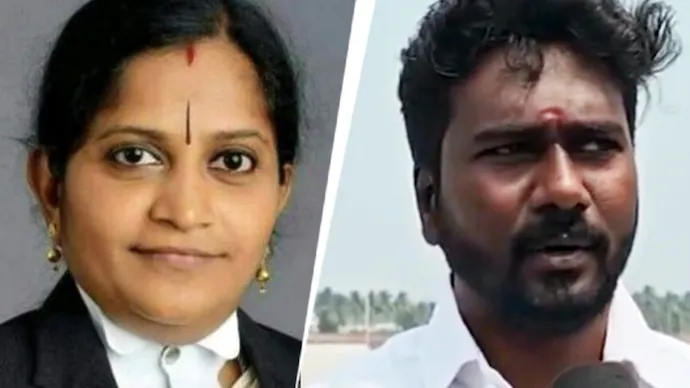
The Madras High Court has questioned the Tamilaga Vettri Kazhagam (TVK) government over its handling of allegations that party MLA C Arul Vignesh sent obscene messages to the Kallakurichi district collector. Justice Victoria Gowri raised concerns about the police response to the complaint, asking whether the alleged conduct amounted to workplace harassment and what action had been taken after the collector’s husband approached the authorities.
The allegations have triggered a political dispute in Tamil Nadu, with the DMK and AIADMK demanding action against the legislator. Vignesh has denied the accusations, describing them as politically motivated. The state government had earlier dismissed the claims as baseless while also indicating that an impartial inquiry would be conducted if an official complaint was received.
The High Court’s questions have brought renewed attention to the handling of complaints involving alleged harassment of public officials, particularly when the accused person is an elected representative of the ruling party.
Justice Victoria Gowri Questions Police Inaction
During the proceedings on Sunday, Justice Victoria Gowri questioned the TVK government over what she viewed as a lack of police action on the complaint against Vignesh. The judge referred to allegations that the MLA had sent obscene messages to the Kallakurichi district collector and asked whether the matter constituted workplace harassment.
“Isn’t this workplace harassment?” Justice Gowri asked, while seeking an explanation about the steps taken by the police after the complaint was lodged.
The judge also pointed out that the collector’s husband had submitted a complaint and questioned what action had followed. Her observations placed the focus on the response of the law enforcement authorities rather than solely on the political accusations surrounding the MLA.
The questions are significant because the allegations concern a serving district collector, a senior administrative officer responsible for coordinating government functions and overseeing district-level administration. A complaint involving alleged harassment of such an official raises questions about the protection available to public servants and the impartial handling of complaints involving politically influential individuals.
However, the allegations remain disputed. Vignesh has denied sending obscene messages or engaging in the conduct described in the reports. The court’s questions about the police response should not be interpreted as a finding that the allegations have been proved.
Kanimozhi Brings Allegations Into Public Debate
The controversy gained wider political attention on November 9, when DMK MP Kanimozhi referred to social media reports about the alleged conduct in a post on X.
According to the reports cited by Kanimozhi, Vignesh had allegedly sent obscene messages to the Kallakurichi collector and harassed her after visiting her residence while intoxicated. The reports also claimed that a dedicated security officer was subsequently assigned to the collector.
Kanimozhi’s intervention brought the allegations into the political spotlight and prompted calls for an investigation. The claims were particularly sensitive because they involved an elected representative and a senior district-level government officer.
Vignesh, who represents the Kallakurichi constituency, rejected the allegations the following day. He accused the DMK of engaging in “dirty politics” and questioned how he could have entered the collector’s residence given the security arrangements there.
“The Collector’s bungalow has security guards and CCTV. How can I enter there?” he said.
His response directly challenged the claims circulating on social media. While the allegations prompted demands for police action, Vignesh maintained that they were false and politically motivated.
TVK Government Promises an Impartial Inquiry
On November 10, School Education Minister Rajmohan said the government would conduct an impartial inquiry once it received an official complaint. He also stated that action would be taken if the allegations were substantiated.
The government’s position was important because the accused MLA belongs to the ruling TVK. An investigation involving a member of the ruling party is likely to attract scrutiny over whether the authorities can act independently and without political pressure.
Two days later, however, Law Minister CTR Nirmal Kumar dismissed the allegations as baseless. His remarks came as opposition parties moved to formally demand action against Vignesh.
Nirmal Kumar criticised Kanimozhi for sharing social media reports without first verifying them. “There is no truth to this. She has full freedom to call anyone and check,” he said.
The minister’s denial contrasted with the earlier assurance that an impartial inquiry would be conducted if an official complaint was received. The difference between the government’s stated willingness to investigate and its subsequent dismissal of the allegations became another point of contention in the political debate.
DMK and AIADMK Submit Separate Complaints on November 12
The controversy escalated on November 12, when the DMK and AIADMK submitted separate complaints seeking action against Vignesh. Both parties called for the allegations to be investigated and demanded criminal action against the MLA.
The DMK approached the Director General of Police (DGP), asking that the matter be handed over to the Crime Branch-Criminal Investigation Department (CB-CID). The party sought an independent investigation into the allegations.
DMK leader RS Bharathi said the party wanted the case to be investigated independently. Seeking a CB-CID probe was intended to ensure that the allegations were examined by an investigative agency rather than being left to a response shaped by the Political Controversy.
The AIADMK’s legal wing also submitted a complaint, addressing it to the Chief Secretary, Home Secretary and DGP. It sought criminal action against Vignesh over the alleged conduct.
AIADMK general secretary Edappadi K Palaniswami separately called for action against the MLA. The party’s intervention ensured that demands for an investigation were not limited to the DMK, with both major opposition parties pressing the government to respond.
The complaints marked a shift from public allegations and political statements to formal demands for action by senior government and police officials. They also increased pressure on the state administration to clarify whether a formal investigation had been initiated and what steps had been taken.
Kanimozhi Appeals to Women’s Commission
Kanimozhi renewed her demand for action on November 17, urging the Women’s Commission to intervene in the matter. Her appeal extended the issue beyond the political dispute between the ruling party and the opposition, placing emphasis on the institutional response to allegations of harassment.
The involvement of a women’s rights body could bring additional scrutiny to how the complaint is handled and whether the concerns raised by the collector have been addressed through the appropriate mechanisms.
The central question remains whether the allegations have been formally investigated and whether the authorities have taken adequate steps in response to the complaint reportedly lodged by the collector’s husband.
Why the Case Raises Questions About Workplace Harassment
Justice Gowri’s question about workplace harassment has brought attention to the broader issue of how alleged misconduct involving public officials should be addressed. Government officers are expected to perform their duties without intimidation, unwanted advances or pressure linked to political influence.
When allegations involve an elected representative and a senior administrative officer, the response of the police and government institutions becomes especially important. A credible process requires that the complaint be examined on its evidence, that the complainant’s concerns are handled appropriately and that the person accused is given a fair opportunity to respond.
The controversy also highlights the importance of distinguishing between political allegations, formal complaints and findings established through an investigation. Statements made by opposition leaders or government ministers do not independently prove or disprove the claims. Similarly, the High Court’s questions about police action do not amount to a final determination of Vignesh’s guilt.
For now, the allegations against the TVK MLA remain contested. Vignesh has denied them, while the DMK and AIADMK have demanded action and an independent investigation. Justice Victoria Gowri’s questions have added judicial scrutiny to the matter, placing the police response and the government’s handling of the complaint at the centre of the controversy.
For breaking news and live news updates, like us on Facebook or follow us on Twitter and Instagram. Read more on Latest India on thefoxdaily.com.





COMMENTS 0