- What Was the “America Reads the Bible” Event?
- Why the Event Sparked a Christian Nationalism Debate
- Historians and Scholars Push Back
- The Supporters’ Perspective: Faith as a National Foundation
- Trump, Religion, and Political Strategy
- The Broader Context: Religion in American Public Life
- Global Implications: When Domestic Faith Becomes Foreign Policy
- The Missing Insight: Symbolism vs Substance
- What Happens Next? Signs of the future
- Conclusion: A Defining Debate for Modern America
Introduction: When Faith Meets Power in the Oval Office
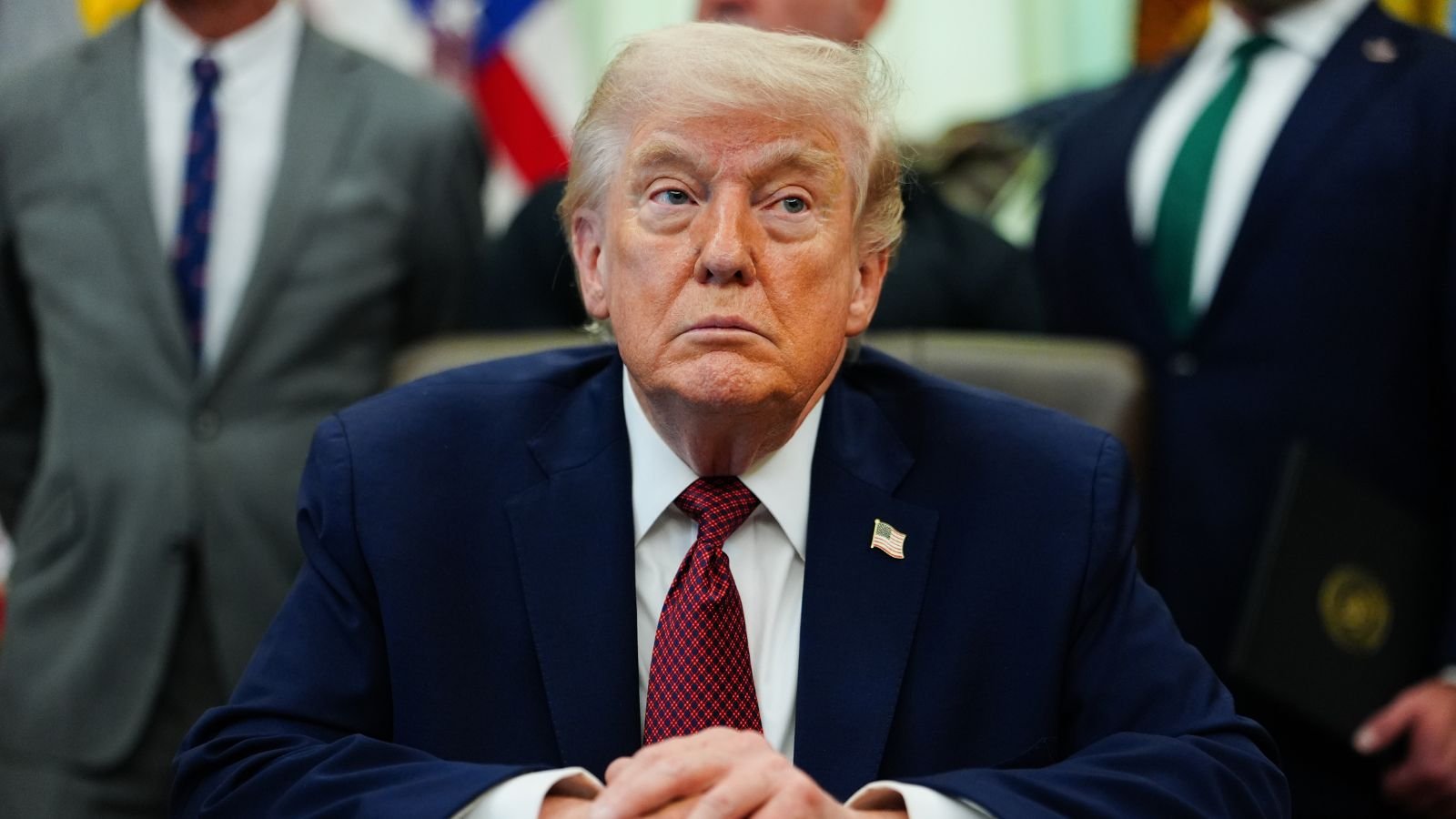
In a move that has reignited one of America’s most sensitive debates, former US President Donald Trump participated in a high-profile Bible reading event tied to the “America-250” initiative an effort marking the nation’s upcoming 250th anniversary. Broadcast from Washington and symbolically anchored in the Oval Office, the event quickly became more than a religious exercise. It turned into a flashpoint in the ongoing national conversation around Christian nationalism, political identity, and the separation of church and state.
The Controversy comes at a particularly charged moment just days after Trump faced backlash for sharing a stylized image portraying himself in a Christ-like form, and following his public disagreement with Pope Leo XIV over geopolitical issues. Together, these developments have intensified scrutiny over how religion is being invoked in political messaging.
So what exactly was this event, why is it controversial, and what does it reveal about the evolving relationship between faith and power in the United States?
What Was the “America Reads the Bible” Event?
The event, titled “America Reads the Bible”, was part of a broader cultural campaign tied to the America-250 celebrations. Hosted in Washington and livestreamed from the Museum of the Bible, it featured a marathon reading of scripture involving political leaders, faith figures, and supporters.
Trump’s participation stood out not just because of his political stature, but because of the symbolism: a sitting or former president reading from the Bible within the context of national identity.
In his recorded message, Trump emphasized that the Bible is “indelibly woven into our national identity and way of life,” framing the event as a call for Americans to return to what he described as the country’s spiritual roots.
The passage he read from the Old Testament book of 2 Chronicles focused on repentance and divine forgiveness, a theme frequently invoked in religious-political discourse.
Why the Event Sparked a Christian Nationalism Debate
The backlash was swift and pointed. Critics argue that the event was not merely about faith but about promoting a specific ideological vision often described as Christian nationalism.
Christian nationalism is broadly understood as the belief that the United States was founded as a Christian nation and should be governed according to Christian values. While supporters see this as a restoration of tradition, critics warn that it risks excluding other religious and secular identities.
Several factors fueled the controversy:
- Political Framing of Religion: The event was closely associated with Republican leaders and conservative groups, raising concerns about partisanship.
- Selective Historical Narrative: References to early Christian settlers were seen by some historians as oversimplifying America’s complex founding.
- Symbolic Timing: The event followed recent controversies involving religious imagery and political rhetoric.
For many observers, the issue wasn’t the reading of the Bible itself but the context in which it was presented.
Historians and Scholars Push Back
Historians and religious scholars were among the most vocal critics, arguing that the event blurred important constitutional boundaries.
One major criticism centered on the portrayal of America as inherently Christian a claim that many historians dispute. While religion undeniably played a role in early American life, the nation’s founding documents emphasize religious freedom and the separation of church and state.
Critics also pointed out that the event lacked ideological diversity, questioning whether it truly represented a unifying national effort.
“If this were meant to unite Americans, it would reflect broader religious and political diversity,” one analyst noted.
Others raised ethical concerns about using religious texts in ways that could justify political agendas, particularly in the context of ongoing global conflicts.
The Supporters’ Perspective: Faith as a National Foundation
Supporters of the event see it very differently.
For them, the Bible reading was not political but cultural and spiritual. They argue that religion has historically shaped American values, from Civil Rights movements to community-building efforts.
Event organizers emphasized that invitations were extended across political and denominational lines, even if participation ultimately skewed toward conservative groups.
From this perspective, the event was about:
- Reinforcing moral values
- Encouraging personal faith
- Promoting national unity through shared traditions
However, critics counter that intention does not always align with perception especially in a polarized political Environment.
Trump, Religion, and Political Strategy
Donald Trump’s relationship with religion has long been a subject of analysis.
While not traditionally seen as a deeply religious figure, Trump has consistently engaged with evangelical and conservative Christian communities key voting blocs in American Politics.
This event fits into a broader pattern of strategic alignment between political leadership and religious identity.
Recent developments add further complexity:
- The circulation of a Christ-like image sparked accusations of self-aggrandizement
- Public disagreements with global religious leaders introduced geopolitical dimensions
- Repeated references to biblical themes reinforced ideological messaging
For political analysts, these actions suggest a deliberate effort to connect faith with leadership narratives.
The Broader Context: Religion in American Public Life
To understand the significance of this event, it’s important to look at the bigger picture.
Religion has always played a role in American public life but its expression has evolved over time.
Historical Comparison
| Era | Role of Religion in Politics |
|---|---|
| 18th Century | Influential but separate from formal governance |
| 20th Century | Public references common, but less partisan |
| 21st Century | Increasingly tied to political identity and polarization |
The current moment reflects a shift toward more explicit integration of faith and political messaging something that both energizes supporters and alarms critics.
Global Implications: When Domestic Faith Becomes Foreign Policy
One often-overlooked aspect of this debate is its international dimension.
When political leaders invoke religion, it can influence how other nations perceive policy decisions especially in regions where religion plays a central role in governance and Conflict.
Trump’s recent clash with Pope Leo XIV over the Iran war highlights how religious narratives can intersect with Diplomacy.
This raises important questions:
- Does religious rhetoric strengthen or complicate foreign policy?
- Can it create misunderstandings on the global stage?
- Does it blur the line between moral leadership and political strategy?
These are not just theoretical concerns they have real-world implications for International Relations.
The Missing Insight: Symbolism vs Substance
Much of the coverage around this event focuses on political reactions. But a deeper issue lies beneath the surface the power of symbolism.
In politics, symbolism often matters as much as policy.
A Bible reading in the Oval Office is not just a religious act it’s a statement. It communicates values, priorities, and identity.
The key question is: What message does that symbolism send and to whom?
For supporters, it signals a return to tradition. For critics, it suggests exclusion or ideological bias.
This divergence in interpretation is at the heart of the controversy.
What Happens Next? Signs of the future
The debate over Christian nationalism and political religion is unlikely to fade anytime soon.
As the United States approaches its 250th anniversary, questions about national identity will only become more prominent.
Possible future developments include:
- Increased scrutiny of religious messaging in political campaigns
- Legal and constitutional debates over church-state boundaries
- Greater polarization around cultural and ideological issues
At the same time, public interest in faith-based discussions may continue to grow, especially in times of social and political uncertainty.
Conclusion: A Defining Debate for Modern America
The Trump Bible reading event is more than a single moment it’s a reflection of a larger transformation in American political Culture.
It highlights the tension between tradition and pluralism, between personal belief and public policy, and between unity and division.
Whether seen as a sincere expression of faith or a calculated political move, the event has succeeded in one undeniable way: it has forced a national conversation.
And in a country built on both freedom of religion and freedom from religious imposition, that conversation may be more important than ever.
Ultimately, the real question isn’t just about one event it’s about the future of how faith and power coexist in a democratic society.
For breaking news and live news updates, like us on Facebook or follow us on Twitter and Instagram. Read more on Latest World on thefoxdaily.com.





COMMENTS 0