- Introduction: What’s Happening Right Now?
- Trump Iran Threats
- The Strait of Hormuz: Why This Crisis Matters Globally
- What Triggered the Latest Escalation?
- “No More Mr Nice Guy”: Rhetoric vs Reality
- Iran’s Response: Strategic Resistance
- Oil Markets React: The Economic Fallout
- Military vs Diplomatic Path: What Happens Next?
- Unique Insight: The Hidden Risk of Miscalculation
- Global Implications Beyond Oil
- Prediction: A Prolonged Standoff Likely
- Conclusion: A Crisis with Global Consequences
Tensions between the United States and Iran have sharply intensified once again, as former US President Donald Trump issued a stark warning of sweeping military action following alleged violations of a fragile ceasefire in the Strait of Hormuz. With Diplomacy faltering and oil routes under threat, the situation has evolved into a high-stakes geopolitical crisis with global implications.
At the heart of the dispute lies a volatile mix of military brinkmanship, economic pressure, and strategic miscalculation raising urgent questions about whether the region is heading toward renewed conflict or a last-minute diplomatic breakthrough.
Introduction: What’s Happening Right Now?
The current crisis revolves around six key elements:
- Who: The United States and Iran, with global stakeholders watching closely
- What: Alleged ceasefire violations and threats of military escalation
- When: Ongoing, with a critical deadline approaching
- Where: Strait of Hormuz, a vital global oil transit chokepoint
- Why: Disagreements over nuclear policy, sanctions, and regional control
- How: Failed negotiations, naval blockades, and escalating rhetoric
While negotiations remain technically open, the tone has shifted significantly suggesting diplomacy is now competing with the real possibility of direct confrontation.
Trump Iran Threats
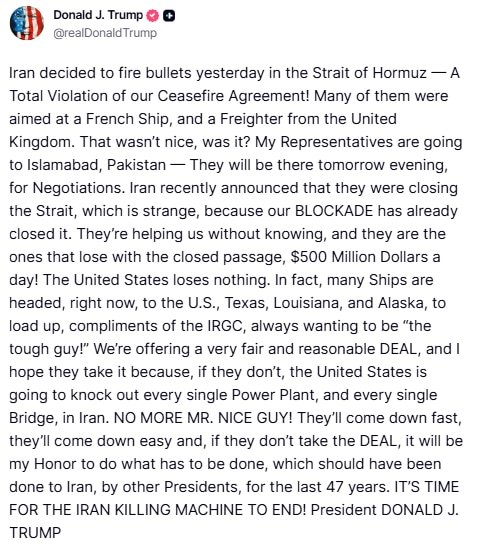
The phrase Trump Iran threats has quickly become central to global discourse, reflecting the intensity of recent statements and the potential consequences of escalation.
Related Keywords (LSI)
- US Iran conflict 2026
- Strait of Hormuz crisis
- oil supply disruption
- US Iran negotiations Islamabad
- Middle East tensions
- Iran nuclear dispute
- global oil prices surge
- naval blockade Iran
The Strait of Hormuz: Why This Crisis Matters Globally
The Strait of Hormuz is not just a regional waterway it is one of the most critical energy corridors in the world.
| Factor | Importance |
|---|---|
| Global Oil Flow | ~20% of world oil supply passes through |
| Key Stakeholders | US, Iran, Gulf nations, Europe, Asia |
| Economic Impact | Direct influence on global fuel prices |
Any disruption in this narrow passage has immediate ripple effects fuel costs rise, supply chains tighten, and Financial Markets react.
Insight: This crisis is not just about Geopolitics it directly affects what people pay for fuel, goods, and transportation worldwide.
What Triggered the Latest Escalation?
The latest surge in tensions stems from multiple overlapping developments:
1. Alleged Ceasefire Violation
The US has accused Iran of firing on international vessels, including European-linked ships, in what it describes as a breach of a prior agreement.
2. Naval Blockade
In response to stalled negotiations, the US imposed a naval blockade, restricting maritime movement and increasing pressure on Iran’s economy.
3. Failed Diplomacy
Talks in Islamabad collapsed after disagreements over uranium enrichment limits, a long-standing sticking point in US-Iran Relations.
These events have created a feedback loop: each side’s actions reinforce the other’s mistrust, making compromise increasingly difficult.
“No More Mr Nice Guy”: Rhetoric vs Reality
Trump’s strong language signals a shift toward a more aggressive stance. However, rhetoric in geopolitics often serves multiple purposes:
- Deterrence: Sending a message to discourage further actions
- Negotiation leverage: Increasing pressure ahead of talks
- Domestic signaling: Appealing to political audiences
Key insight: While the language is aggressive, it does not necessarily guarantee immediate military action but it significantly raises the stakes.
Iran’s Response: Strategic Resistance
Iran has rejected further negotiations under current conditions, citing:
- Unrealistic demands
- Frequent shifts in US positions
- The ongoing naval blockade
From Iran’s perspective, agreeing to terms under pressure could signal weakness making resistance both a strategic and symbolic choice.
Oil Markets React: The Economic Fallout
The most immediate global impact of this crisis is on Energy Markets.
Key Developments
- Oil prices have surged due to supply uncertainty
- Shipping routes are being disrupted or rerouted
- Insurance costs for tankers have increased
Even partial closures or threats to the Strait can trigger significant price volatility.
Real-World Impact
- Higher fuel costs for consumers
- Increased transportation and logistics expenses
- Potential inflationary pressure globally
Comparison: Similar disruptions in the past have led to rapid spikes in oil prices though the current situation is more prolonged and complex.
Military vs Diplomatic Path: What Happens Next?
The situation now hinges on two possible paths:
| Scenario | Outcome |
|---|---|
| Diplomatic Breakthrough | De-escalation, reopening of Strait, oil price stabilization |
| Military Escalation | Strikes on infrastructure, wider regional conflict |
Both outcomes remain plausible, and the next round of negotiations if they occur will be critical.
Unique Insight: The Hidden Risk of Miscalculation
One of the most dangerous aspects of this crisis is not intentional escalation but accidental miscalculation.
With military forces operating in close proximity, even a minor incident could:
- Trigger unintended conflict
- Force rapid escalation
- Limit diplomatic options
Insight: History shows that many conflicts begin not with deliberate decisions, but with misunderstandings or misjudgments.
Global Implications Beyond Oil
While energy markets dominate headlines, the broader implications are equally significant:
- Geopolitical alliances: Countries may be forced to take sides
- Trade routes: Disruptions could affect global commerce
- Security risks: Increased military presence raises tension worldwide
This is not just a regional issue it is a global stability challenge.
Prediction: A Prolonged Standoff Likely
Given the current dynamics, a quick resolution appears unlikely.
Short-term: Continued tension, fluctuating oil prices, and limited negotiations
Medium-term: Potential partial agreements or temporary de-escalation
Long-term: Ongoing strategic rivalry between the US and Iran
The most probable outcome is not immediate war but a drawn-out standoff with periodic escalations.
Conclusion: A Crisis with Global Consequences
The latest developments in the US-Iran conflict highlight the fragile balance between diplomacy and confrontation. Trump’s threats, Iran’s resistance, and the strategic importance of the Strait of Hormuz have combined to create a situation with far-reaching consequences.
While negotiations may still offer a path forward, the risks of escalation remain high. For the global community, the stakes extend far beyond politics touching Energy Security, economic stability, and international peace.
In the coming days, the world will be watching closely. Because in a crisis like this, even small decisions can have enormous consequences.
For breaking news and live news updates, like us on Facebook or follow us on Twitter and Instagram. Read more on Latest World on thefoxdaily.com.





COMMENTS 0