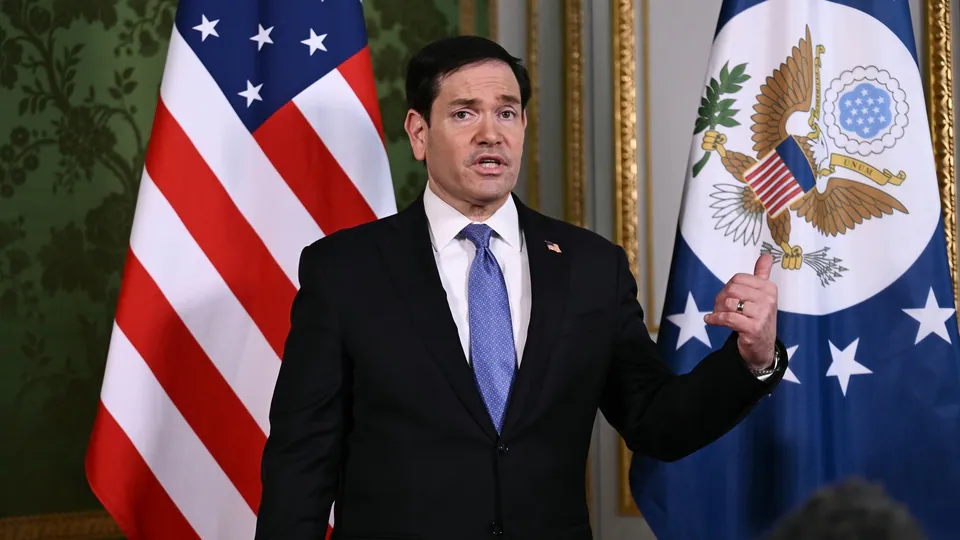
US Secretary of State Marco Rubio has said the Trump administration remains open to a diplomatic agreement with Iran but has dismissed several of Tehran’s demands as “absurd” and “unrealistic”. At the same time, Washington plans to intensify its economic pressure campaign against the Islamic Republic, signalling that it intends to use sanctions and restrictions on Iranian oil exports as key tools in the ongoing conflict.
Speaking to reporters in Paris on the sidelines of the G7 Foreign Ministers Meeting, Rubio argued that US sanctions and a naval blockade of Iranian ports had already caused significant damage to Iran’s economy. He suggested that the economic campaign could allow Washington to avoid restarting major combat operations, while warning that the US military remained prepared to respond if Iran crossed specified red lines.
His remarks came after President Donald Trump said the US military campaign against Iran was “effectively over” and indicated that Washington wanted to maintain the existing regional situation. However, diplomatic negotiations remain complicated by disagreements over the conditions for ending the conflict, including Iran’s demands for reparations and changes to the US pressure campaign.
Rubio Says Washington Is Still Open to Negotiations
Rubio said the United States was prepared to consider a peace agreement, but argued that Iran’s current conditions were preventing meaningful progress. He suggested that Tehran wanted a deal but was not yet presenting demands that Washington considered acceptable.
“Iran would love a deal. The problem is the conditions they continue to place are absurd. Like, they’re not even serious right now. But that could change, certainly,” Rubio told reporters.
He added that Iran would eventually have to address the economic consequences of the conflict, including its ability to generate revenue and pay its military personnel and security forces.
The secretary of state’s comments indicate that the Trump administration is not formally closing the door to diplomacy. However, Washington appears to be linking the possibility of an agreement to changes in Iran’s negotiating position and the continued impact of economic restrictions.
The distinction is important because the US position combines an offer to negotiate with a warning that economic pressure will continue. Rather than immediately returning to large-scale military operations, the administration is signalling that it intends to increase the financial and economic costs facing Tehran.
US Plans to Intensify Economic Pressure on Iran
Rubio described the US economic campaign as increasingly damaging to Iran and said its effects would become more severe in the coming months. He pointed particularly to restrictions on Iranian oil exports, which remain an important source of revenue for the country.
According to Rubio, Iran still has a limited quantity of oil shipments that managed to get past the blockade during an earlier memorandum of understanding period and a brief ceasefire. He argued that once those remaining shipments are exhausted, much of Iran’s oil revenue could disappear.
“The economic pressure is going to get even worse. I mean, understand that these sanctions begin to compound,” Rubio said.
He suggested that the combination of sanctions and restrictions on maritime trade would continue to weaken Iran’s ability to generate income. The administration is therefore presenting economic pressure as a central part of its strategy rather than relying exclusively on direct military action.
Rubio also said the economic campaign was working so effectively that Trump did not need to conduct major combat operations at present. However, he stressed that the US military remained ready to respond if Iran crossed certain red lines.
This position leaves open the possibility of renewed military action even as Washington emphasises economic measures and diplomatic negotiations. It also makes clear that the administration does not consider the conflict’s underlying security concerns fully resolved.
Rubio Rules Out Paying Reparations to Iran
Another major point of disagreement concerns Iran’s reported demand for reparations as part of a possible settlement. Rubio firmly rejected the possibility that the United States would make such payments.
“We’re not going to pay. Iran is demanding reparations. They should be the ones paying reparations because they’re the ones that have destabilized the region,” he said.
Rubio also referred to Iran’s demands as a request for large amounts of cash and said Trump had made clear that Washington would not agree to such a payment.
The dispute over reparations could become a significant obstacle to negotiations. If Tehran considers compensation an essential condition for ending the conflict, while Washington rules out making payments, both sides would need to find another basis for reaching an agreement.
The disagreement also reflects the wider differences between the two governments over responsibility for the conflict and the conditions required for a lasting settlement. Washington has accused Iran of destabilising the region, while Tehran has challenged US policy and demanded respect for its conditions.
Iranian Foreign Minister Abbas Araghchi Criticises Rubio
Iranian Foreign Minister Abbas Araghchi responded sharply to Rubio’s comments, accusing the US administration of repeating an approach that Tehran considers ineffective and hostile towards the Iranian population.
In a social media statement, Araghchi compared Rubio’s remarks with comments made eight years earlier by former US Secretary of State Mike Pompeo. He referred to Pompeo’s previous position that Iranians would need to follow Washington’s demands if they wanted access to food and economic stability.
“Today, Rubio whose fellow Cubans are victims of same policy repeats that drivel,” Araghchi said, describing the latest comments as “delusions” and arguing that they reflected a failed US approach.
Araghchi’s response shows that Tehran rejects Washington’s portrayal of economic pressure as a path towards a settlement. Iranian officials have instead argued that diplomacy must be based on respect and recognition of Iran’s conditions.
The exchange highlights the sharply different messages coming from the two governments. Washington is presenting sanctions and restrictions as leverage to push Iran towards an agreement, while Tehran is criticising those measures as coercive and politically misguided.
Trump Considers Economic Pressure an Alternative to Renewed War
According to an Axios report cited in the source material, Rubio told G7 allies that Trump had considered two possible approaches: resuming military action against Iran or reaching a negotiated agreement. The report said the president ultimately selected a third option centred on intensifying economic pressure against the Iranian government.
This approach would allow Washington to maintain pressure on Tehran without immediately returning to major combat operations. It also gives the administration an opportunity to continue diplomatic discussions while attempting to weaken Iran’s economic position.
Trump had earlier described the US military campaign as “effectively over” and said Washington wanted to maintain the status quo. His comments suggested a preference for avoiding an immediate escalation, although the administration has not ruled out further military action.
Rubio’s remarks in Paris reinforce that position. He presented the economic campaign as an effective instrument while emphasising that the US military remains available if the situation changes.
However, an economic pressure strategy does not automatically guarantee a diplomatic breakthrough. The two governments continue to disagree over the terms of a settlement, and the impact of sanctions may influence negotiations without resolving the political and security issues at their centre.
Regional Leaders Push for a Diplomatic Solution
Diplomatic efforts to end the US-Iran Conflict have continued, with regional leaders seeking to prevent a return to major military operations. The leaders of Saudi Arabia, the United Arab Emirates, Turkey and Qatar have reportedly been trying to persuade Trump against renewed attacks on Iran.
Their involvement reflects concerns about the wider consequences of an escalation in the region. A prolonged conflict could complicate regional security arrangements and create further uncertainty for countries that have an interest in maintaining stability.
Iran has also indicated that it is willing to consider steps connected to the Strait of Hormuz. According to the source material, Tehran offered to reopen the strategic waterway within two days if Washington agreed to a set of conditions.
Iran has maintained that diplomacy and mutual respect are necessary to end the conflict. However, the offer remains tied to demands that the United States has not accepted, leaving the two sides with significant differences to resolve.
The Strait of Hormuz is particularly important because of its role in international energy transportation. Any disruption to shipping through the waterway can create uncertainty for oil markets and countries that depend on energy supplies moving through the region.
What Is Preventing a US-Iran Peace Agreement?
Despite statements from both sides indicating that diplomacy remains possible, several disagreements continue to complicate negotiations.
- Iran’s conditions: Rubio has described Tehran’s demands as unrealistic, while Iranian officials insist that any settlement must address their conditions.
- Economic sanctions: Washington intends to intensify economic restrictions, but Iran has criticised the pressure campaign as an ineffective approach.
- Oil revenue: The US blockade and sanctions are central to Washington’s strategy, with Rubio arguing that restrictions will increasingly affect Iran’s ability to earn revenue from oil exports.
- Reparations: Iran’s reported demand for compensation has been rejected by Rubio, creating another potential obstacle to an agreement.
- Military escalation: Although Trump has described the military campaign as effectively over, Rubio has warned that US forces remain ready to respond if Iran crosses certain red lines.
- Strait of Hormuz: Iran’s offer to reopen the waterway is linked to conditions that still need to be addressed through diplomacy.
These issues demonstrate why the possibility of negotiations does not necessarily mean that an agreement is close. Even if both governments are willing to discuss an end to the conflict, they must still find common ground on economic restrictions, security concerns, compensation and regional arrangements.
Economic Pressure and Diplomacy Shape Washington’s Iran Strategy
Rubio’s comments in Paris suggest that the Trump administration wants to maintain pressure on Iran while keeping diplomatic channels open. The strategy relies on the expectation that mounting economic difficulties could eventually encourage Tehran to reconsider its negotiating position.
However, Iran’s response indicates that it does not accept Washington’s interpretation of the situation. Araghchi’s criticism shows that Tehran continues to oppose the US approach and is unlikely to publicly accept the demands Rubio described as necessary for a settlement.
The involvement of regional leaders and Iran’s proposal concerning the Strait of Hormuz suggest that diplomatic efforts are continuing despite these differences. Whether those efforts produce an agreement will depend on the willingness of both sides to reconsider their positions.
For now, Washington is signalling that it prefers economic pressure and negotiations over an immediate return to major combat operations. But with disagreements over reparations, sanctions, oil exports and the conditions for reopening the Strait of Hormuz still unresolved, the path towards a lasting US-Iran peace deal remains uncertain.
For breaking news and live news updates, like us on Facebook or follow us on Twitter and Instagram. Read more on Latest World on thefoxdaily.com.



COMMENTS 0