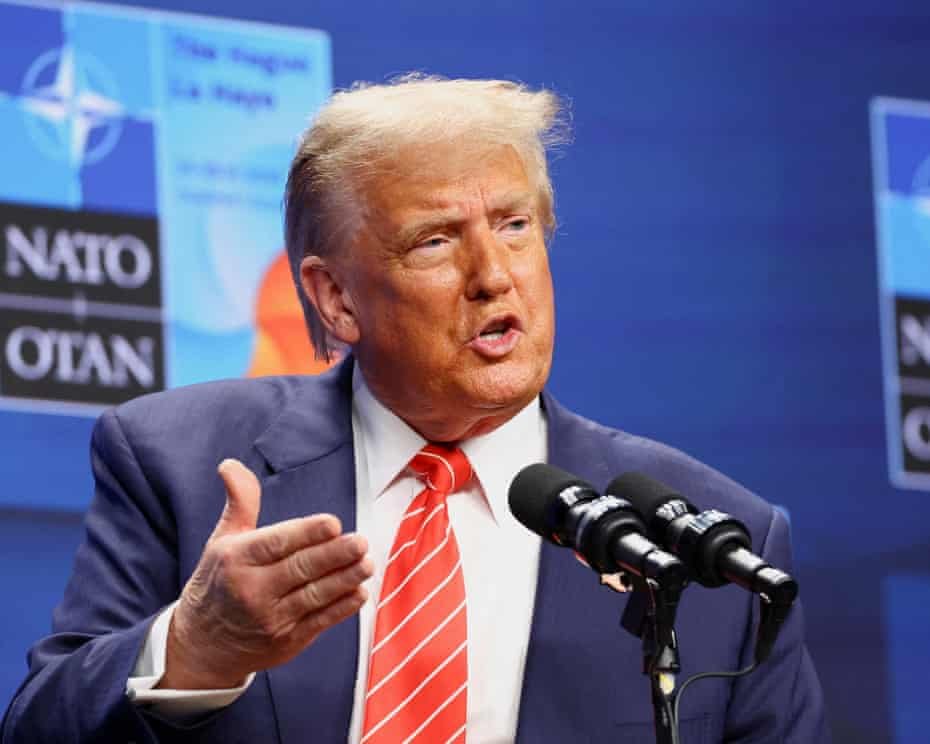
Days before NATO leaders gather in Ankara for a crucial summit, US President Donald Trump has once again challenged America’s role within the alliance. Calling the current arrangement “ridiculous” and “one-sided,” Trump argued that the United States continues to shoulder an unfair share of NATO’s responsibilities while receiving insufficient support from European allies.
The comments come amid heightened geopolitical tensions, continued debates over defense spending, and disagreements surrounding the recent conflict involving Iran. Trump’s latest statements are expected to shape discussions during the July summit, where leaders from all 32 NATO member states will examine the alliance’s security priorities, military readiness, and long-term strategy.
What Did Donald Trump Say About NATO?
President Trump criticized what he described as an unequal partnership between the United States and NATO member countries. He argued that America’s financial and military commitments significantly exceed those of many allies while claiming that several European nations failed to provide meaningful support during recent US military operations involving Iran.
Sharing defense spending figures, Trump emphasized that Washington contributes substantially more resources than many other members, reinforcing his long-standing position that NATO allies should assume greater responsibility for their own defense.
Although burden-sharing has been a recurring topic across multiple US administrations, Trump’s remarks stand out because they directly question whether the current balance of commitments remains sustainable.
Why the Timing Matters
The statements arrive just days before NATO’s high-profile summit in Ankara, where heads of government will discuss collective defense, military modernization, regional security, and the alliance’s response to emerging global threats.
Because the meeting brings together leaders from all 32 member nations, Trump’s comments are likely to influence both public messaging and private negotiations throughout the summit.
Diplomats will be watching closely for signs of unity or further disagreement, particularly regarding defense spending targets and future US military commitments in Europe.
Understanding NATO’s Role
Founded in 1949, NATO was created to provide collective security among its member states. The alliance is built upon the principle that an attack against one member is considered an attack against all.
For more than seven decades, NATO has evolved from a Cold War defense organization into a broader security alliance involved in crisis management, counterterrorism, cyber defense, intelligence sharing, and military cooperation across Europe and North America.
Its combined military capabilities make NATO the world’s largest and most powerful defensive alliance.
How Defense Spending Became a Major Issue
Questions about defense spending are not new. Successive US presidents have encouraged European allies to increase military investment, arguing that America’s contribution has remained disproportionately large for decades.
Trump has consistently made this issue central to his foreign policy, maintaining that wealthier NATO members should contribute more toward their own security rather than relying heavily on US military resources.
Following extensive negotiations, alliance members agreed to work toward significantly increasing defense-related spending over the coming decade. While many governments have announced higher military budgets, implementation varies considerably among member states.
The Iran Conflict Added New Tensions
One factor driving Trump’s criticism is the recent conflict involving Iran. According to senior US officials, several European countries limited the use of military facilities or declined deeper involvement during American operations.
From Washington’s perspective, these decisions raised fresh concerns about whether allies are providing sufficient practical support during periods of military crisis.
European governments, however, often balance alliance commitments with domestic political considerations, legal restrictions, and broader diplomatic objectives. These differing priorities frequently shape how each country responds to international military operations.
Why NATO Burden-Sharing Is So Controversial
The debate extends beyond simple budget figures.
Military contributions involve numerous factors, including troop deployments, intelligence sharing, logistics, cybersecurity, air defense, naval operations, and humanitarian assistance. Some nations contribute relatively smaller defense budgets but play important strategic roles through specialized capabilities or regional expertise.
This complexity means evaluating burden-sharing requires more than comparing overall spending totals.
| Issue | United States’ View | Many European Allies’ View |
|---|---|---|
| Defense Spending | More countries should spend substantially more. | Budgets are increasing but require time and political approval. |
| Military Leadership | Europe should assume greater responsibility. | US leadership remains essential for deterrence. |
| Regional Security | Shared responsibility should be balanced. | Collective cooperation remains the alliance’s strength. |
| Future Commitments | US involvement should not be one-sided. | Strong transatlantic cooperation benefits all members. |
What Leaders Are Expected to Discuss in Ankara
The summit agenda is expected to cover several major priorities that will influence NATO’s future direction.
- Implementation of higher defense spending commitments.
- Military modernization across member states.
- Support for collective deterrence.
- Cybersecurity and emerging technological threats.
- Regional security challenges in Europe and beyond.
- The future balance between US leadership and European defense capabilities.
While public attention has focused on Trump’s remarks, alliance leaders are also expected to address long-term strategic planning extending well beyond immediate political disagreements.
How Trump’s Position Reflects a Broader Foreign Policy Strategy
Trump’s criticism aligns with his long-standing “America First” approach to international alliances. Rather than opposing NATO itself, he has repeatedly argued that partnerships should produce measurable and balanced benefits for the United States.
This philosophy has influenced discussions on trade, defense cooperation, international organizations, and overseas military deployments throughout his political career.
Supporters argue the approach encourages allies to become more self-reliant. Critics contend that public disputes risk weakening alliance cohesion during periods of global uncertainty.
Potential Impact on Global Security
Any significant shift in US-NATO relations has implications far beyond Europe.
Financial markets, defense industries, diplomatic partnerships, and military planning all closely monitor signals regarding American security commitments. Strategic competitors likewise observe alliance unity when assessing geopolitical risks.
If member nations increase defense capabilities as planned, NATO could emerge with stronger overall military readiness. Conversely, prolonged political disagreements could complicate coordination during future international crises.
A Historical Perspective
Disagreements within NATO are not unprecedented. Throughout its history, member governments have debated military strategy, operational priorities, defense budgets, and foreign policy decisions.
Despite these differences, the alliance has generally adapted to changing global conditions by negotiating compromises that preserve collective security.
Today’s debate over spending and shared responsibilities represents another chapter in that long history of internal evolution.
Expert Insight: Why Burden-Sharing Will Shape NATO’s Next Decade
Defense analysts increasingly believe that future NATO discussions will focus less on whether allies should spend more and more on how additional funding is invested. Modern warfare requires advanced technologies, missile defense systems, cyber resilience, artificial intelligence, space capabilities, and integrated command structures.
Simply increasing budgets may not be enough. Strategic coordination, interoperability, and long-term planning will determine whether higher spending translates into stronger collective defense.
This shift means future summit discussions are likely to emphasize military effectiveness alongside financial commitments.
Possible Outcomes of the Summit
Several scenarios could emerge following the Ankara meeting.
- Leaders could reaffirm commitments to higher defense spending while emphasizing alliance unity.
- Additional timelines or accountability measures may be introduced to monitor spending goals.
- The United States and European members could negotiate clearer divisions of military responsibility.
- Political disagreements may continue publicly while operational military cooperation remains largely unchanged.
Much will depend on the tone of discussions between heads of government and whether consensus can be reached on future strategic priorities.
Conclusion
Donald Trump’s renewed criticism of NATO arrives at a pivotal moment for the alliance. As leaders prepare to meet in Ankara, debates over defense spending, military responsibility, and alliance solidarity are expected to dominate the agenda.
While disagreements over burden-sharing are not new, the combination of ongoing geopolitical tensions and evolving security challenges gives this year’s summit unusual significance. Whether the meeting produces greater unity or exposes deeper divisions, its outcomes are likely to influence transatlantic security policy for years to come. The broader challenge for NATO will be balancing national interests with the collective defense principles that have defined the alliance for more than seven decades.</p
For breaking news and live news updates, like us on Facebook or follow us on Twitter and Instagram. Read more on Latest World on thefoxdaily.com.






COMMENTS 0