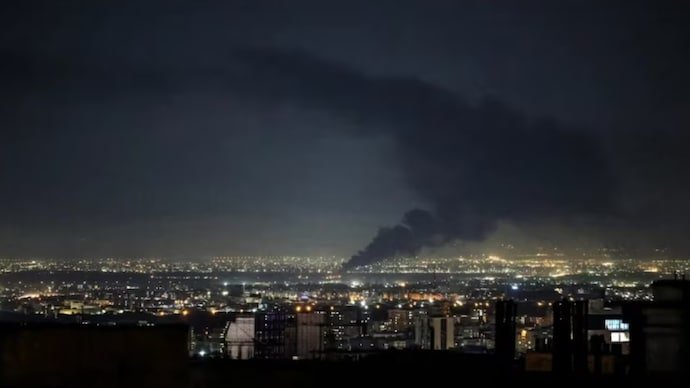
The United States and Iran have once again found themselves at the center of global attention after both countries exchanged military actions near the Strait of Hormuz despite an ongoing ceasefire. The latest developments underscore how fragile the current truce remains and demonstrate the continuing risks of escalation in the Gulf region.
According to US Military officials, American forces carried out strikes on Iranian radar installations and drone command-and-control facilities in Goruk and on Qeshm Island over the weekend. Washington described the operation as a defensive response to what it called aggressive actions by Iran, including the alleged downing of a US MQ-1 drone operating over international waters.
Iran, meanwhile, accused the United States of conducting attacks on strategic infrastructure and responded through its Islamic Revolutionary Guard Corps (IRGC), which claimed it targeted an air base connected to American military operations. Although both countries continue to maintain diplomatic channels and officially support a ceasefire framework, the latest military exchange has raised serious questions about whether the current calm can hold.
The incident matters far beyond the Middle East. The Strait of Hormuz remains one of the most important waterways on Earth, handling a substantial portion of global oil and natural gas exports. Any military confrontation in the region has the potential to affect energy prices, shipping routes, financial markets, and geopolitical stability worldwide.
Understanding the Latest US-Iran Military Exchange
The recent exchange began when the United States announced strikes targeting Iranian military assets associated with drone operations and air-defense systems. US Central Command stated that the operation was intended to neutralize threats against American personnel, naval assets, and commercial shipping operating in regional waters.
According to the US military, the targets included radar systems, a drone control station, and one-way attack drones that were believed to pose a threat to maritime traffic. American officials emphasized that no US personnel were injured during the operation.
Iran rejected the US characterization of events and accused Washington of violating regional stability through attacks on infrastructure. The IRGC subsequently announced retaliatory measures, claiming responsibility for striking an air base allegedly linked to American activities.
While neither side appears eager to enter a full-scale conflict, the exchange illustrates how quickly isolated incidents can escalate into broader military confrontations.
Why the Strait of Hormuz Is So Important
The Strait of Hormuz is often described as the world’s most important energy chokepoint. Located between Iran and the Arabian Peninsula, it connects the Persian Gulf with the Gulf of Oman and the Arabian Sea.
Every day, millions of barrels of crude oil and petroleum products pass through this narrow waterway. Major energy exporters including Saudi Arabia, the United Arab Emirates, Kuwait, Iraq, and Qatar rely heavily on the route to reach international markets.
Because there are limited alternative routes for shipping Gulf energy exports, even minor disruptions can create significant volatility in Global energy markets.
| Strategic Factor | Importance |
|---|---|
| Global Oil Transport | One of the world’s busiest oil shipping corridors |
| Natural Gas Exports | Critical route for LNG shipments, especially from Qatar |
| Regional Security | Key military and naval operating zone |
| Global Trade | Supports international energy supply chains |
| Economic Stability | Direct impact on fuel prices and inflation worldwide |
This strategic significance explains why every military incident near the Strait of Hormuz attracts intense attention from governments, investors, and energy companies around the world.
The Long History of US-Iran Tensions
The latest confrontation is part of a much larger geopolitical rivalry that has shaped Middle Eastern politics for decades. Relations between the United States and Iran have remained strained since the Iranian Revolution of 1979, which dramatically altered the political landscape of the region.
Over the years, disputes have centered on nuclear development, regional influence, sanctions, maritime security, proxy conflicts, and military deployments. Periods of Diplomacy have often been interrupted by new crises, making lasting stability difficult to achieve.
The Gulf region has repeatedly witnessed incidents involving naval vessels, drones, missile systems, and economic sanctions. While both sides have generally avoided direct large-scale warfare, tensions frequently flare up through limited military engagements and strategic signaling.
The current ceasefire was intended to reduce these risks, but recent events demonstrate that mistrust remains deeply entrenched.
The Growing Role of Drones in Modern Conflict
One of the most important aspects of the latest exchange is the central role played by drone technology. Unmanned aerial vehicles have become increasingly influential in modern military operations because they offer surveillance, reconnaissance, and strike capabilities at relatively low cost.
The reported downing of a US MQ-1 drone highlights how drones have become strategic assets rather than simple reconnaissance tools. Both the United States and Iran have invested heavily in drone capabilities, making aerial systems a critical component of regional military strategy.
Modern drone warfare changes the dynamics of conflict in several ways:
- Reduces risks to military personnel
- Provides real-time intelligence gathering
- Allows precision targeting capabilities
- Creates new challenges for air-defense systems
- Enables rapid responses in contested areas
As drone technology continues to evolve, incidents involving unmanned systems are likely to remain a recurring source of tension between major powers.
Impact on Global Oil Prices and Energy Security
One of the most immediate consequences of instability near the Strait of Hormuz is its potential effect on global Energy Markets. Traders closely monitor military developments in the Gulf because disruptions can affect supply expectations almost instantly.
Even when actual oil flows remain uninterrupted, perceived risks can increase market volatility. Energy companies, shipping operators, and governments often adjust their strategies based on security assessments rather than waiting for physical disruptions to occur.
For energy-importing nations, including many countries in Asia and Europe, stability in the Gulf remains a major economic concern. Rising oil prices can contribute to higher transportation costs, increased inflation, and broader economic uncertainty.
This is one reason why governments around the world continue to support diplomatic efforts aimed at preventing escalation between Washington and Tehran.
How Regional Countries Are Watching the Situation
The Gulf states find themselves in a delicate position whenever tensions rise between the United States and Iran. Many countries in the region maintain security partnerships with Washington while also seeking stable relations with Tehran.
Regional governments generally prefer de-escalation because conflict threatens economic development, investment, tourism, and energy exports. Several countries have invested heavily in diversification strategies designed to reduce dependence on oil revenues, making regional stability more important than ever.
Military confrontations can also create challenges for commercial shipping, insurance costs, and foreign investment confidence.
As a result, neighboring states often support diplomatic initiatives even when political disagreements remain unresolved.
Why the Ceasefire Remains Fragile
The latest exchange demonstrates that ceasefires do not automatically eliminate the underlying causes of conflict. Instead, they often serve as temporary mechanisms for reducing immediate violence while broader disputes remain unresolved.
Several factors continue to threaten stability:
- Competing security interests
- Disagreements over military activities
- Regional power competition
- Maritime security concerns
- Drone and missile deployments
- Political mistrust between both governments
Even a single incident involving a drone, naval vessel, or military installation can trigger a chain reaction of retaliatory actions. This cycle creates ongoing risks despite formal ceasefire arrangements.
Comparison With Previous Gulf Crises
The current situation differs from earlier Gulf crises in several important ways. While past confrontations often centered on naval incidents or economic sanctions, modern disputes increasingly involve advanced technologies such as drones, cyber capabilities, and precision-guided systems.
| Earlier Gulf Crises | Current Situation |
|---|---|
| Naval confrontations dominated | Drone operations play a major role |
| Traditional military deployments | Technology-driven engagements |
| Limited surveillance capabilities | Real-time intelligence systems |
| Slower response cycles | Rapid escalation potential |
| Regional focus | Global market implications |
This evolution means future confrontations may develop faster and become more difficult to manage through traditional diplomatic channels.
The Broader Geopolitical Implications
Beyond the immediate military exchange, the incident highlights broader shifts in global Geopolitics. Competition among major powers is increasingly intersecting with regional conflicts, creating more complex security environments.
The Middle East remains strategically important not only because of energy resources but also because of its location along major trade routes connecting Asia, Europe, and Africa. Stability in the region affects global commerce, supply chains, and international security partnerships.
The latest developments may also influence future diplomatic negotiations, defense planning, and regional security arrangements.
An Overlooked Insight: The Economic Cost of Uncertainty
Much of the public discussion surrounding US-Iran tensions focuses on military actions, but one of the most significant consequences is uncertainty itself. Businesses, investors, shipping companies, and energy producers often make decisions based on risk perceptions rather than actual conflict.
Even if large-scale warfare never occurs, repeated military incidents can increase insurance premiums, raise transportation costs, discourage investment, and create market instability.
In many cases, uncertainty becomes an economic burden long before physical disruptions occur. This hidden cost is often overlooked but can have substantial consequences for both regional and global economies.
What Happens Next?
The immediate future will likely depend on whether diplomatic channels can prevent further retaliatory actions. Both Washington and Tehran have incentives to avoid a major conflict, yet both also seek to demonstrate strength and protect strategic interests.
Military activity near the Strait of Hormuz is likely to remain closely monitored by international observers, energy markets, and regional governments. Additional incidents could increase pressure for new negotiations, while a period of restraint could help reinforce the existing ceasefire.
Much will depend on how both sides interpret future military movements and whether communication mechanisms remain effective during periods of heightened tension.
Conclusion
The latest exchange of strikes between the United States and Iran illustrates how fragile peace remains in the Gulf region. Despite an active ceasefire and ongoing diplomatic engagement, military incidents continue to expose deep-rooted tensions that have shaped relations between the two countries for decades.
Because the confrontation occurred near the Strait of Hormuz, the implications extend far beyond the immediate participants. Global energy markets, international trade routes, regional security arrangements, and diplomatic efforts all have a stake in maintaining stability.
Looking ahead, the most likely scenario is continued strategic competition combined with efforts to avoid outright war. However, the weekend’s events serve as a reminder that even limited incidents can carry global consequences. As drone warfare, maritime security challenges, and geopolitical rivalries continue to evolve, the Gulf will remain one of the world’s most closely watched regions for the foreseeable future.
For breaking news and live news updates, like us on Facebook or follow us on Twitter and Instagram. Read more on Latest World on thefoxdaily.com.





COMMENTS 0