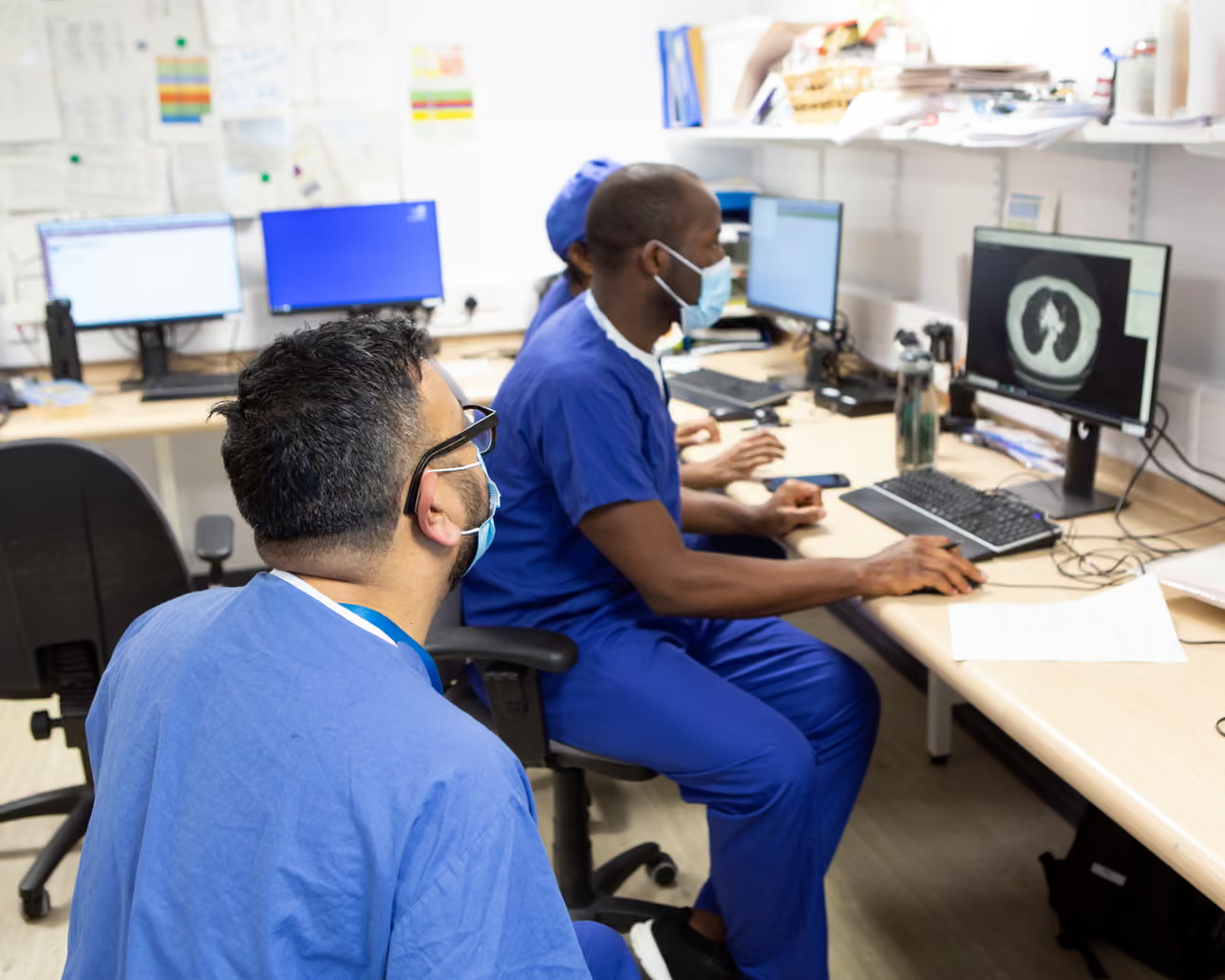
Healthcare professionals representing radiographers and other medical workers say racist abuse and discrimination directed at non-white NHS staff have become more frequent over the past 18 months. The findings have prompted renewed calls for NHS trusts to improve how incidents are recorded, investigated and addressed, while professional organisations stress that discrimination has no place in Britain’s public healthcare system.
A new survey conducted by the Society of Radiographers (SoR) indicates that non-white healthcare workers across the UK’s National Health Service (NHS) are experiencing an increase in racist behaviour from patients and others in clinical settings. Respondents described incidents involving racial slurs, discriminatory remarks and patients refusing treatment from non-white medical professionals.
The findings come at a time when healthcare organisations continue to emphasize the importance of maintaining an inclusive workplace for one of the world’s most diverse Public health systems. Professional bodies argue that beyond documenting incidents, NHS organisations should ensure complaints are consistently investigated and appropriate action is taken to protect staff.
Survey Reports Increase in Racist Abuse Toward NHS Staff
According to the Society of Radiographers, members participating in the survey reported a noticeable rise in racist incidents over approximately the past 18 months. The organisation said workers described being subjected to offensive racial abuse, including derogatory language aimed at their ethnicity and national background.
Some respondents also reported patients declining treatment solely because of the ethnicity or race of the healthcare professional assigned to them. Such incidents, according to the organisation, have become increasingly concerning because they affect staff wellbeing, workplace morale and the delivery of Patient Care.
While the survey focuses on experiences reported by participants rather than the entire NHS workforce, the findings have drawn attention to the challenges some healthcare professionals continue to face despite long-standing workplace equality policies.
Examples Shared by Healthcare Workers
The survey includes accounts from healthcare professionals describing situations in which patients openly expressed anti-immigrant views or made discriminatory remarks.
One sonographer of Asian heritage working in England‘s Midlands said patients had repeatedly commented:
“This country isn’t the same, with all those people coming over here, taking our jobs.”
The healthcare worker said such comments appeared to have become more common, adding that people seemed increasingly willing to express hostile opinions publicly.
Other respondents reported being targeted with racial insults, illustrating how discrimination can occur during routine clinical interactions that should instead be focused on patient care.
Professional Body Condemns the Trend
Dean Rogers, Executive Director of Industrial Strategy and Member Relations at the Society of Radiographers, described the reported increase in racist incidents as both unacceptable and deeply concerning.
He said the NHS benefits from having a highly diverse workforce and stressed that discrimination, harassment, bullying and intimidation whether verbal or behavioural should never be tolerated within healthcare settings.
The organisation believes healthcare staff should be able to perform their duties without fear of abuse, regardless of their ethnicity, nationality or background.
Why the NHS Depends on an International Workforce
The NHS has long relied on professionals recruited from across the world to support patient care throughout the United Kingdom. Internationally trained doctors, nurses, radiographers and allied health professionals help address workforce shortages and provide services across hospitals, community healthcare and specialist departments.
According to the information accompanying the survey:
- Approximately 21% of the NHS workforce consists of non-British nationals.
- Indian professionals represent the largest group of internationally trained medics employed by the NHS.
- Around 45,000 NHS employees are Indian-trained or of Indian medical backgrounds within a workforce exceeding 1.5 million people.
- Roughly one in four radiographers registered with the Health and Care Professions Council received their professional training overseas.
These figures highlight the significant contribution made by international healthcare professionals to Britain’s public healthcare system.
| Key Workforce Information | Reported Figure |
|---|---|
| Total NHS workforce | More than 1.5 million staff |
| Non-British nationals in NHS workforce | Approximately 21% |
| Indian-trained or Indian-origin medics employed | Around 45,000 |
| Radiographers trained overseas | About one in four |
Why These Findings Matter Beyond Individual Incidents
Racist abuse affects more than the individual healthcare worker involved. Professional organisations argue that repeated discrimination can contribute to workplace stress, reduce morale and make it harder for employers to recruit and retain experienced staff.
Healthcare systems depend on trust between patients and medical professionals. When clinicians encounter abuse while carrying out their duties, it may affect their working environment and increase pressure on already stretched services.
The survey therefore raises broader questions about how healthcare organisations respond to discriminatory behaviour and whether existing reporting systems provide sufficient protection for employees.
Calls for Better Reporting and Accountability
In response to the survey findings, the Society of Radiographers said it intends to place renewed emphasis on ensuring NHS trusts consistently record racist incidents and monitor how complaints are handled.
The organisation believes collecting reliable information is an important first step toward understanding the scale of the issue and evaluating whether appropriate responses are being implemented.
It also said NHS trusts should work closely with recognised trade unions where necessary to ensure staff concerns are properly addressed.
Improved reporting could help identify recurring patterns, support affected employees and enable organisations to review whether workplace policies are being applied consistently.
The Response From the British Association of Physicians of Indian Origin
The British Association of Physicians of Indian Origin (BAPIO), the UK’s largest representative organisation for doctors and nurses of Indian origin, has repeatedly condemned Racism and discriminatory behaviour affecting healthcare workers.
The organisation said ethnic minority healthcare professionals have played an irreplaceable role in helping build the NHS and continue to deliver healthcare to patients regardless of ethnicity, nationality, gender or political beliefs.
BAPIO said these professionals deserve respect and should be able to perform their duties without facing threats, intimidation or racist abuse.
Historical Context: Diversity Has Long Been Central to the NHS
The NHS has depended on international recruitment for decades. Healthcare professionals from India and many other countries have helped sustain Britain’s healthcare services by filling essential clinical roles across hospitals and community care.
This diversity has often been described by healthcare leaders as one of the NHS’s greatest strengths, enabling the organisation to provide care across a multicultural society while addressing workforce shortages in numerous specialties.
The survey therefore highlights a tension between the NHS’s reliance on an internationally diverse workforce and the discrimination some employees continue to report experiencing.
Understanding Patient Discrimination in Healthcare
Patient discrimination can take several forms. These may include refusing treatment from a clinician because of race or ethnicity, making offensive comments during consultations or directing abusive language toward healthcare workers.
Professional organisations argue that such behaviour should be clearly documented and managed through established workplace procedures while ensuring patients continue to receive appropriate medical care whenever possible.
The issue also raises questions about balancing patient rights with employers’ responsibility to provide a safe working environment for healthcare staff.
How NHS Trusts Could Respond
Although individual NHS trusts operate within broader NHS policies, professional bodies suggest several practical measures could strengthen responses to workplace racism:
- Consistently recording every reported racist incident.
- Monitoring how complaints are investigated and resolved.
- Providing support for affected employees.
- Working with recognised trade unions where appropriate.
- Reviewing whether existing workplace policies are being implemented effectively.
These recommendations focus primarily on improving accountability rather than introducing new national policies.
Broader Implications for Healthcare
The reported increase in racist incidents comes as healthcare systems across many countries continue to face staffing pressures and growing demand for medical services. Maintaining an inclusive workplace is widely regarded as important for attracting skilled professionals and supporting employee wellbeing.
While the survey does not establish the causes behind the reported increase, respondents linked their experiences to what they perceived as more visible anti-immigrant rhetoric in public discourse. Their observations represent personal experiences shared through the survey rather than independently verified causal findings.
Professional organisations argue that ensuring healthcare workers feel safe and respected ultimately benefits both employees and patients by helping maintain stable, effective healthcare services.
What Happens Next?
The Society of Radiographers has indicated that it will continue pressing NHS trusts to strengthen reporting and oversight of racist incidents involving healthcare workers.
The next phase will likely depend on how individual NHS organisations implement these recommendations, monitor reported cases and support affected employees. Continued engagement between NHS employers, professional bodies and trade unions could shape future workplace practices.
The survey does not by itself determine national trends across every NHS organisation, but it provides insight into the experiences reported by participating healthcare professionals. Its findings have renewed discussion about protecting a workforce that plays a central role in delivering healthcare across the United Kingdom.
As the NHS continues to rely on professionals from a wide range of ethnic and national backgrounds, organisations representing healthcare workers say ensuring respect, dignity and equal treatment remains essential not only for staff wellbeing but also for maintaining public confidence in one of the world’s largest publicly funded healthcare systems.
For breaking news and live news updates, like us on Facebook or follow us on Twitter and Instagram. Read more on Latest World on thefoxdaily.com.






COMMENTS 0