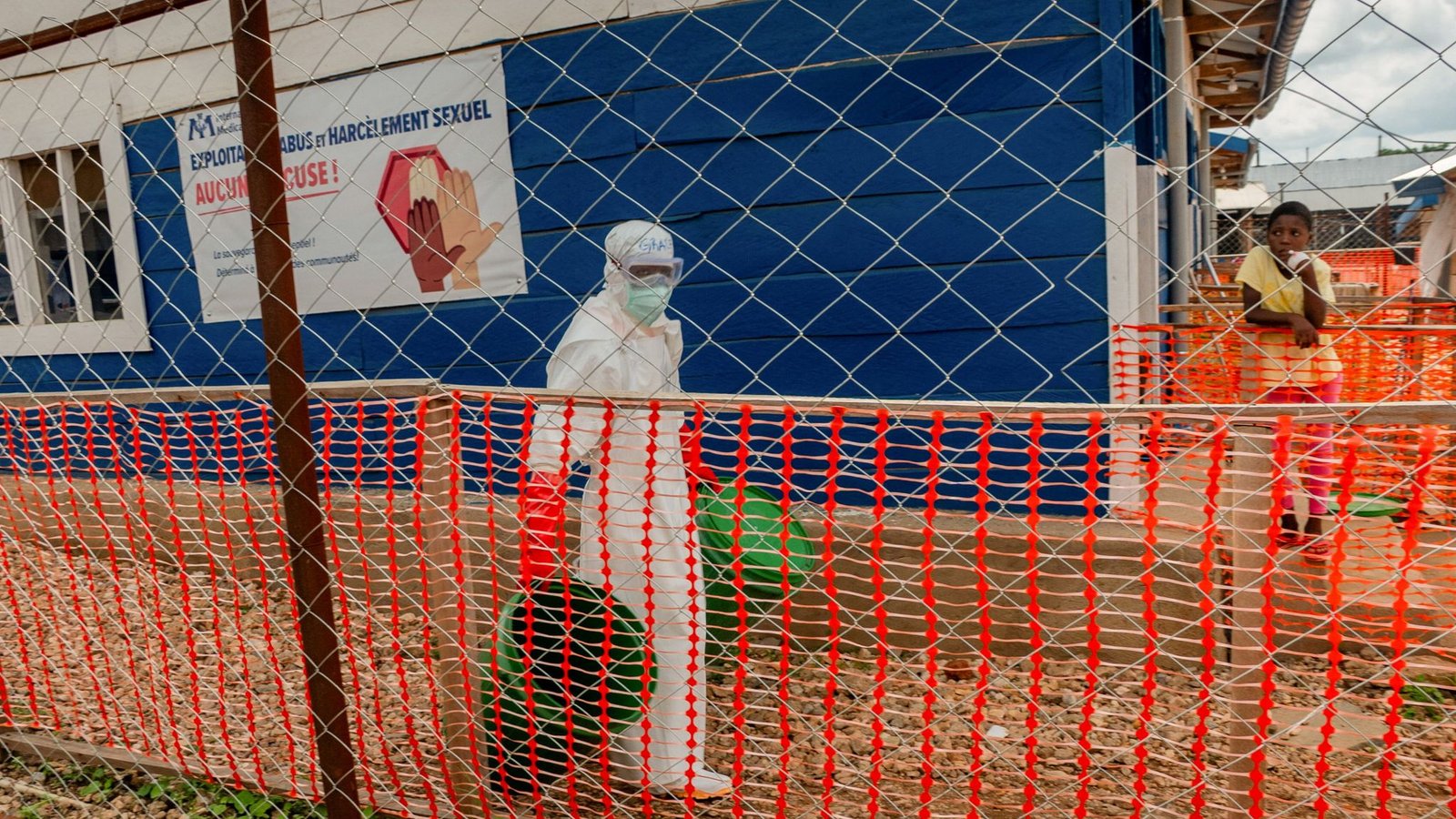
A British healthcare worker who tested positive for Ebola in the Democratic Republic of the Congo (DR Congo) is being evacuated to the United Kingdom for specialist medical treatment, the British government has confirmed. The patient, whose identity has not been disclosed, is reported to be in a stable condition and is expected to arrive in Britain on Wednesday or Thursday.
The evacuation comes amid a major Ebola Outbreak in DR Congo that has recorded more than 10,000 cases and 5,000 deaths, making it the largest and deadliest outbreak in the country’s history. The infected healthcare worker had travelled to the country as part of a humanitarian organisation’s response to the outbreak.
British authorities have activated established procedures for managing imported Ebola infections, with the patient expected to be transferred by specialist ambulance to a high-consequence infectious disease unit after arrival. The government has also stressed that the risk to the wider UK public remains low.
The case marks the first time a British national has contracted Ebola during the current outbreak, bringing renewed attention to international efforts to contain the disease and the importance of preparedness beyond the affected regions.
UK Confirms Ebola Infection in British Healthcare Worker
The UK government confirmed on Wednesday that a British citizen currently in DR Congo had tested positive for Ebola and was being evacuated to Britain for treatment.
In an official statement, a government spokesperson said: “A British citizen currently in the DR Congo has tested positive for Ebola.”
The spokesperson added that the UK had established procedures for handling such cases and that the necessary arrangements had been activated. The government also emphasised that the risk to the British public remained low.
According to an official document seen by Reuters, the patient is in a stable condition and is expected to reach the UK on Wednesday or Thursday. Following arrival, the individual will be transported in a specialist ambulance to a designated high-consequence infectious disease unit.
The patient’s identity has not been made public. Authorities have also not disclosed further personal details, including the individual’s age or the specific location where the infection was contracted.
The evacuation reflects the procedures used by British health authorities to manage confirmed cases of serious infectious diseases while reducing the possibility of exposure to other people.
Healthcare Worker Was Supporting Ebola Response in DR Congo
The British national had travelled to DR Congo through a humanitarian organisation to assist with the response to the ongoing Ebola outbreak.
Healthcare workers and humanitarian personnel play an important role during major disease emergencies. Their work can involve supporting medical facilities, assisting affected communities and helping coordinate efforts to contain infections.
However, responding to an Ebola outbreak can expose medical and humanitarian personnel to significant occupational risks, particularly when they work in environments where infected patients require direct care.
The British worker’s infection is the first confirmed case involving a British national in the current outbreak. The case has prompted the activation of the UK’s specialist medical arrangements for the safe transfer and treatment of people infected with Ebola.
The evacuation also highlights the international nature of the response. Although the outbreak is centred in DR Congo, the involvement of foreign healthcare workers means that countries outside the affected region must maintain systems for managing potential imported cases.
Where Will the British Patient Receive Treatment?
After arriving in the UK, the patient is expected to be transferred by specialist ambulance to a high-consequence infectious disease unit.
These specialised facilities are designed to manage serious infections that require strict isolation and additional protective measures for healthcare staff. Their purpose is to provide medical treatment while reducing the risk of transmission within hospitals and the wider community.
London’s Royal Free Hospital has a high-level isolation unit equipped to manage infectious diseases such as Ebola. Other specialist centres are located in Newcastle and Liverpool.
The official document seen by Reuters confirmed that the patient would be taken to a specialist unit, although the supplied information did not identify the specific hospital where treatment would take place.
Specialist transport is an important part of the process because patients with highly infectious diseases require carefully managed transfers. Medical teams must follow established infection-control procedures throughout the journey from arrival to hospital admission.
UK Government Says Risk to Public Remains Low
Despite the confirmed infection, British authorities have maintained that the risk to the wider population remains low.
The UK government said established procedures for managing Ebola cases had been activated. British health authorities have also emphasised that the National Health Service has arrangements for dealing with suspected and confirmed infections.
The distinction between an imported case and wider community transmission is important. A person arriving in the UK with Ebola does not automatically mean that the disease will spread among the population. The risk depends on factors including contact with the infected person, infection-control measures and the management of potential exposures.
According to the UK Health Security Agency, only four confirmed Ebola cases have been recorded in Britain since 1976.
This limited number reflects the rarity of confirmed infections in the country, although the latest evacuation demonstrates why specialist medical facilities and emergency preparedness remain necessary.
Authorities are expected to manage the patient through established isolation and treatment procedures. The government has not indicated that the case has resulted in wider transmission within the UK.
DR Congo Ebola Outbreak Becomes Largest and Deadliest in the Country’s History
The British healthcare worker’s infection comes during an exceptionally serious Ebola outbreak in DR Congo. The country’s health ministry declared the current outbreak on May 15, and it has since surpassed 10,000 reported cases and 5,000 deaths.
The outbreak is the 17th recorded in DR Congo since Ebola was first identified. However, its scale has made it the largest and deadliest outbreak in the country’s history.
The current outbreak is caused by the Bundibugyo virus, a species of the Ebola virus responsible for severe illness. The supplied information states that there is no approved treatment specifically for the Bundibugyo virus, although vaccine trials are under way.
The scale of the outbreak has created significant pressure on health authorities and humanitarian organisations working to contain infections and support affected communities.
More than 10,000 cases and 5,000 deaths underline the challenges involved in controlling the disease, particularly when infections spread across large geographical areas and require sustained medical and public health interventions.
What Is Ebola and How Does It Spread?
Ebola is a severe and highly contagious illness that can be fatal. It spreads through direct contact with the bodily fluids of an infected person, including blood and vomit. Contact with the bodies of people who have died from the disease can also transmit the infection.
This means that healthcare workers and others providing direct care to infected patients can face exposure risks if appropriate protective and infection-control measures are not followed.
Unlike diseases that spread easily through the air over long distances, the transmission described in the supplied information involves direct contact with infected bodily fluids or contaminated bodies. This makes careful handling of patients, medical waste and deceased individuals an important part of outbreak control.
Early recognition of suspected infections and appropriate isolation procedures are also important for limiting further transmission.
Because Ebola can cause severe illness, countries affected by outbreaks require coordinated medical responses, including facilities capable of isolating patients and protecting healthcare personnel.
Ebola Outbreak Spreads Beyond DR Congo
The current outbreak has expanded beyond DR Congo, raising concerns about the possibility of further international spread.
According to the supplied information, the outbreak has reached Kenya and Uganda in East Africa. Nigeria also confirmed a case in its capital, Abuja, last month after a woman who had arrived from Uganda tested positive for the virus.
The woman and a close contact were subsequently evacuated to Switzerland for treatment.
These developments demonstrate the challenges involved in containing an outbreak that crosses national borders. The movement of infected individuals between countries can require rapid coordination among health authorities, medical facilities and international organisations.
Countries that receive people suspected or confirmed to have Ebola must be prepared to identify infections, arrange safe transfers and manage potential contacts.
The spread beyond DR Congo has therefore increased the importance of international cooperation and preparedness, particularly in regions with regular cross-border movement.
Africa CDC Warns That Ebola Could Reach Other Regions
Dr Jean Kaseya, director general of the Africa Centres for Disease Control and Prevention (Africa CDC), warned last month that the geographical spread of the current outbreak was unprecedented and could affect countries beyond Africa.
In an interview with The Guardian, Kaseya said the spread of the outbreak meant that the UK and other countries could also be affected if appropriate preparedness measures were not introduced.
He said: “We want all countries to know that they are not safe if they don’t take appropriate measures.”
Kaseya also called on countries across all continents to increase their preparedness and strengthen their ability to provide treatment.
He highlighted the geographical expansion of the outbreak, noting that three African regions had been affected for the first time.
His warning underlined the need for countries outside the immediate outbreak zone to maintain surveillance, medical preparedness and access to specialist treatment facilities.
The British patient’s evacuation illustrates how international health systems must be prepared to respond when citizens or humanitarian workers become infected while supporting emergency operations overseas.
Why the UK Evacuation Matters for International Ebola Preparedness
The evacuation of the British healthcare worker demonstrates the importance of specialist medical arrangements when infectious disease outbreaks affect international personnel.
Humanitarian organisations often send medical and support workers into regions experiencing major health emergencies. Their presence can help strengthen local response efforts, but it also creates a need for effective medical support if workers become infected.
Countries whose citizens participate in international outbreak responses must be able to coordinate safe evacuation, specialist transport and appropriate hospital care.
The UK’s response is based on established procedures for managing high-consequence infectious diseases. These arrangements are intended to protect both the patient and healthcare workers while minimising the risk of transmission.
The wider outbreak also highlights the importance of international coordination. The involvement of DR Congo, neighbouring African countries and medical facilities in Europe shows that containing serious infectious diseases requires cooperation across borders.
Although British authorities have said the risk to the public remains low, the case reinforces the need for continued vigilance and preparedness as the outbreak develops.
Conclusion
A British healthcare worker who tested positive for Ebola in DR Congo is being evacuated to the UK for specialist treatment. The patient is reported to be in a stable condition and is expected to arrive on Wednesday or Thursday before being transferred to a high-consequence infectious disease unit.
The case is the first involving a British national during the current outbreak, which has surpassed 10,000 cases and 5,000 deaths in DR Congo. Caused by the Bundibugyo virus, the outbreak has also spread to other African countries, increasing concerns about international preparedness.
British authorities have activated established procedures and maintain that the risk to the wider UK public remains low. The evacuation nevertheless highlights the challenges faced by healthcare workers responding to dangerous outbreaks and the importance of specialist treatment facilities, infection-control measures and international cooperation.
For breaking news and live news updates, like us on Facebook or follow us on Twitter and Instagram. Read more on Latest World on thefoxdaily.com.



COMMENTS 0