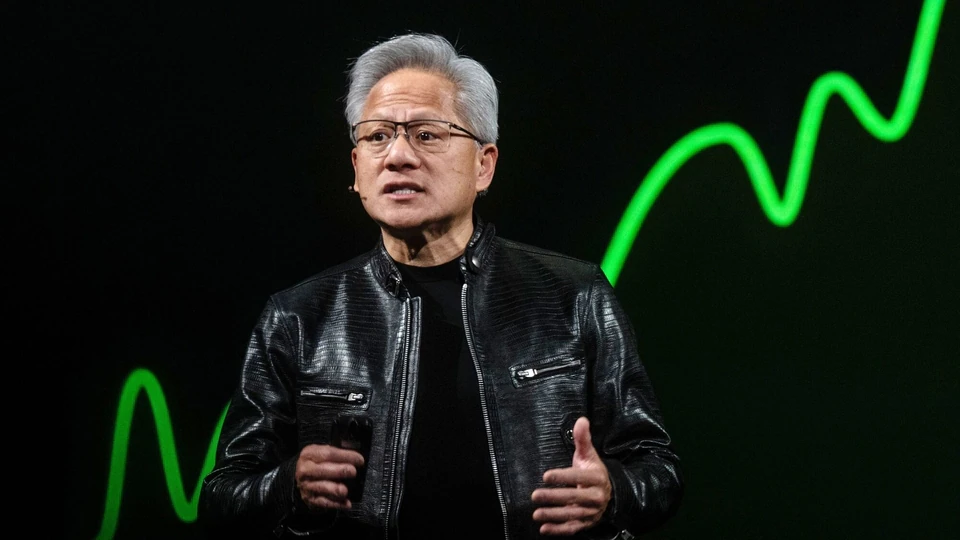
In Hollywood, a comeback often provides the most memorable moment of a story. A central character faces defeat, loses power or is pushed aside, only to return and reclaim the spotlight. In corporate America, however, such reversals are far less predictable. Once a chief executive loses the confidence of a company’s board, employees or investors, returning to the top can be extremely difficult.
Yet some of the world’s most recognisable business leaders have managed to do exactly that. Apple co-founder Steve Jobs returned to the company he had helped build. OpenAI CEO Sam Altman reclaimed his position just days after being dismissed. Disney’s Robert Iger returned during a period of operational challenges, while Michael Dell and Howard Schultz also resumed leadership roles after stepping away.
The latest addition to this group is Jensen Huang, the co-founder and chief executive of Nvidia. His return followed a dramatic leadership episode that briefly raised questions about the future of the world’s most influential artificial intelligence chipmaker.
Huang’s comeback is particularly unusual because it unfolded in just 11 days and reportedly involved discussions with the US government. Unlike several earlier CEO returns driven primarily by internal corporate pressure, Nvidia’s situation brought national security and government interests into the discussion.
Jensen Huang: Nvidia’s CEO Returns After an 11-Day Crisis
Jensen Huang’s return to Nvidia became one of the most closely watched Corporate Leadership developments of November 2026. Huang, who co-founded the semiconductor company in 1993, had stepped down as CEO on November 12, prompting Nvidia to announce that its chief financial officer, Colette Kress, would serve as interim chief executive while the board considered its next steps.
The announcement raised questions about the company’s leadership, particularly because Nvidia had become central to the global artificial intelligence industry. Its graphics processing units and related computing platforms are widely used to train and operate advanced AI systems, making the company strategically important to technology businesses and governments.
On November 23, Nvidia announced that its board had unanimously reinstated Huang as CEO following discussions and an assessment of the circumstances surrounding his departure. The company also indicated that it had considered national security implications as part of the process.
Huang subsequently addressed employees at an internal meeting, discussing the leadership crisis, his personal mistakes and his management style. He thanked Kress for handling the interim responsibilities and acknowledged that his intense approach to running the company had sometimes negatively affected employees.
His return was also accompanied by renewed attention to the reported circumstances behind his resignation. Reports had linked the episode to allegations involving multiple extramarital relationships, including an alleged relationship with a Chinese businesswoman whose possible connections to Chinese intelligence had attracted scrutiny from US authorities. Those intelligence-related claims remain allegations, not established findings.
Huang rejected the suggestion that political pressure from US President Donald Trump had caused his reinstatement. Nevertheless, the reported involvement of government officials in discussions surrounding Nvidia’s leadership made the episode different from a conventional boardroom comeback.
Sam Altman Returned to OpenAI Within Four Days
Sam Altman’s return to OpenAI in November 2023 remains one of the most dramatic leadership reversals in the technology industry. The company’s board removed him as CEO on November 17, 2023, triggering an immediate crisis inside one of the world’s most prominent artificial intelligence organisations.
The board said it had lost confidence in Altman’s leadership after concluding that he had not been consistently candid in his communications. However, the abrupt decision created uncertainty among employees, investors and commercial partners.
OpenAI’s workforce reacted strongly. Nearly all employees signed a letter threatening to leave the company unless the board reversed its decision and reinstated Altman. The situation became even more complicated when Microsoft CEO Satya Nadella announced that Altman and former OpenAI president Greg Brockman would join Microsoft to lead a new advanced AI research team if they did not return to OpenAI.
Microsoft was a major OpenAI investor and had a substantial commercial relationship with the company, making Nadella’s response particularly consequential.
Within days, negotiations led to an agreement for Altman to return as CEO under a reconstituted board. His reinstatement was announced on November 22, just five days after his removal.
The episode demonstrated how employee confidence, investor relationships and commercial partnerships can influence corporate governance decisions. Although the board initially exercised its authority to remove the CEO, the reaction from employees and key stakeholders changed the balance of power.
Altman’s comeback was also a defining moment for the AI industry. OpenAI’s leadership crisis had raised questions about who ultimately controlled the direction of a company developing increasingly influential artificial intelligence technology.
Steve Jobs Returned to Apple and Changed Its Direction
Steve Jobs is perhaps the most famous example of a founder returning to a company after being pushed out. He co-founded Apple in 1976 with Steve Wozniak and Ronald Wayne, helping turn the personal computer business into a major technology enterprise.
However, disagreements over the company’s direction and management eventually created a serious conflict between Jobs and then-CEO John Sculley. In 1985, Jobs left Apple after losing influence over its leadership and strategic decisions.
For more than a decade, he remained outside the company he had founded. During that period, Jobs established NeXT, a computer company focused on advanced systems, and became closely involved with Pixar, which developed into a major animation studio.
Apple acquired NeXT in 1996, bringing Jobs back into the organisation. He initially returned in an advisory capacity before becoming interim CEO in 1997 and later taking the permanent position.
His second period at Apple, often described as the Jobs 2.0 era, transformed the company’s product strategy and public identity. Jobs helped reposition the Mac as part of a broader digital lifestyle ecosystem, introducing the idea of the computer as a digital hub for managing music, photographs and other personal content.
The launch of the iPod in 2001 expanded Apple’s reach beyond computers. The iPhone, introduced in 2007, later reshaped the mobile phone industry, while the App Store created a new platform for mobile software distribution.
Jobs stepped down as CEO in August 2011 because of health problems and died in October that year. His return is remembered not simply as a founder reclaiming a leadership position, but as a period in which Apple developed the products and business model that helped establish its modern identity.
Robert Iger Returned to Disney During a Difficult Period
Robert Iger’s return to Disney in November 2022 showed how a board may bring back a former CEO when a company faces operational and strategic difficulties.
Iger first became Disney’s chief executive in 2005 and led the entertainment group through a period of major expansion. During his first tenure, Disney acquired Pixar, Marvel Entertainment, Lucasfilm and 21st Century Fox’s entertainment assets, strengthening its position across film, television and popular franchises.
He stepped down as CEO in February 2020, handing the role to Bob Chapek while remaining involved as chairman for a period. Chapek’s tenure coincided with the pandemic, which disrupted Disney’s theme parks, film releases and other major operations.
Although the company continued investing heavily in streaming, its direct-to-consumer business faced substantial financial pressure. Disney also experienced disagreements over strategy, costs and its broader operating structure.
In November 2022, Disney’s board removed Chapek and appointed Iger as CEO again. His return came with the task of restructuring the business, controlling costs and addressing the financial challenges associated with streaming.
Iger’s second tenure demonstrated the value boards may place on an experienced former leader when a company needs a change in direction. However, returning to the same position does not automatically recreate the conditions of an earlier successful period. The business environment, competitive pressures and expectations of shareholders may have changed considerably.
Michael Dell Returned to Lead the Company He Founded
Michael Dell’s leadership journey is another example of a founder stepping away from the CEO role before returning to guide a major corporate transformation.
Dell founded the computer company in 1984 while he was a student at the University of Texas at Austin. The business grew rapidly by selling personal computers directly to customers, allowing it to build a major position in the global PC market.
Dell served as CEO until 2004, when he stepped down from the position and became chairman. The decision came as the company faced changing market conditions and increasing competition in the computer industry.
However, he returned as CEO in 2007, resuming direct control over the company’s operations and strategy.
One of the most consequential decisions during his later leadership period was the move to take Dell private in 2013. The transaction gave the company greater flexibility to pursue a longer-term transformation away from its traditional dependence on personal computer sales.
Dell subsequently led the company through its acquisition of EMC in 2016, a major transaction that expanded its capabilities in enterprise technology, data storage and infrastructure. The combined business became Dell Technologies.
Unlike a short-lived leadership reversal, Dell’s return became part of a broader effort to reposition the company for a changing technology market. His experience as founder and CEO helped provide continuity during a major corporate restructuring.
Jack Dorsey Returned to Twitter for a Second Leadership Term
Jack Dorsey’s return to Twitter in 2015 was another prominent example of a technology founder regaining control of a company he helped establish.
Dorsey co-founded Twitter in 2006 and initially served as its CEO. However, in 2008, fellow co-founder Evan Williams took over the position, while Dorsey moved into the role of chairman.
Dorsey remained associated with the company but shifted his attention towards other ventures, including the payments business Square, which later became Block.
In 2015, Twitter brought Dorsey back as CEO after the company faced challenges involving user growth, advertising performance and competition from other social media platforms.
He remained in the position for approximately six years, overseeing the platform during a period of major changes in social media, online advertising and public debate over content moderation.
Dorsey stepped down again in November 2021, with then-technology chief Parag Agrawal taking over. Twitter was later acquired by Elon Musk in 2022 and rebranded as X.
Dorsey’s return illustrates how founders can retain influence even after an initial departure, particularly when boards believe their familiarity with a company’s culture and product could help address business challenges.
Howard Schultz Led Starbucks in Three Separate CEO Terms
Howard Schultz’s relationship with Starbucks is unusual because he served as CEO on three separate occasions. His leadership was closely connected to the company’s identity, expansion and transformation into a global coffeehouse brand.
Schultz joined Starbucks in 1982 and later acquired the company, helping develop the coffeehouse model that became central to its business. Under his leadership, Starbucks expanded from a relatively small American coffee retailer into an international chain.
He stepped down as CEO in 2000, handing operational leadership to another executive while remaining involved with the company.
However, Starbucks encountered difficulties during the following years as rapid expansion affected its operations and customer experience. Schultz returned as CEO in 2008, focusing on restructuring the business and reinforcing its core coffeehouse identity.
He remained in the role until 2017, when Kevin Johnson became CEO. Schultz later returned for a third period as interim CEO in April 2022, following Johnson’s departure.
His final term lasted until March 2023, when Laxman Narasimhan took over the position.
Schultz’s repeated returns demonstrate how a founder or long-serving executive can become closely associated with a company’s brand and operating philosophy. At the same time, his career highlights the challenges of separating a company’s long-term identity from the individual who helped build it.
Why Jensen Huang’s Comeback Is Different From Other CEO Returns
Although Huang now belongs in the same broad category as Jobs, Altman, Iger, Dell, Dorsey and Schultz, the circumstances surrounding his return are unusually complex.
Most high-profile CEO comebacks have involved some combination of boardroom disagreements, employee pressure, poor business performance or a change in corporate strategy. Huang’s situation attracted an additional dimension: the reported involvement of the US government in discussions surrounding Nvidia’s leadership.
Nvidia is not an ordinary technology company. Its processors and computing systems are central to the development of advanced artificial intelligence, while its products are also relevant to defence, research and national security. The company’s position has made its leadership and operations matters of interest beyond its shareholders and employees.
Reports indicated that US officials were involved in discussions with Nvidia’s board as it considered Huang’s return. The board reportedly assessed national security concerns before reaching its decision. Huang, however, denied that Trump had pressured the company to reinstate him.
Michael Useem, emeritus professor of management at the University of Pennsylvania’s Wharton School, described the situation as highly unusual. He said he could not recall a comparable instance in which a US president or administration official had directly intervened and asked for a particular individual to lead a company.
Useem also pointed out that Nvidia was not partly owned by the US government or formally dependent on it in the way a government-controlled enterprise might be. He suggested the episode could prove to be a one-off development, while raising questions about whether it might influence future relationships between Washington and strategically important businesses.
Can a CEO Comeback Become a Corporate Governance Precedent?
Huang’s return raises a broader question about the relationship between corporate boards, executives, employees, investors and governments.
In principle, a company’s board is responsible for appointing and removing its CEO. Directors are expected to act in the interests of the company and its shareholders while considering legal obligations, long-term strategy and business risks.
However, companies operating in strategically important industries may face pressures that extend beyond conventional commercial considerations. Semiconductor manufacturing, artificial intelligence, telecommunications, defence technology and critical infrastructure can all have national security implications.
That creates a complicated environment for corporate governance. Government officials may have legitimate reasons to communicate concerns about technology access, supply chains or national security, but direct involvement in leadership decisions can raise questions about the independence of corporate boards.
Huang’s case does not establish that governments can routinely decide who should lead private companies. Nor does it demonstrate that other technology executives will receive similar treatment. Its significance lies in the unusual circumstances surrounding a major company’s leadership decision.
For Nvidia, the immediate priority is maintaining operational stability and investor confidence. The company remains central to the global AI infrastructure market, and leadership uncertainty can create questions about long-term strategy even when its products and business operations continue functioning.
The CEO Comeback Club: What These Returns Have in Common
The experiences of these business leaders reveal that a CEO’s departure does not always mark the end of their influence. In some cases, a former executive returns because the company faces challenges that require their experience. In others, employee resistance, investor concerns or a major strategic opportunity changes the board’s assessment.
- Steve Jobs: Returned to Apple in 1997 after leaving in 1985 and led the company through the development of products such as the iPod and iPhone.
- Sam Altman: Reclaimed the OpenAI CEO position in November 2023, five days after the board removed him.
- Robert Iger: Returned to Disney in November 2022 after leaving the CEO position in 2020.
- Michael Dell: Resumed the CEO role in 2007 after stepping down in 2004, later leading the company through its transformation into Dell Technologies.
- Jack Dorsey: Returned to Twitter as CEO in 2015 after initially leaving the position in 2008.
- Howard Schultz: Served as Starbucks CEO during three separate periods, returning in 2008 and again in 2022.
- Jensen Huang: Was reinstated as Nvidia CEO on November 23, 2026, after an 11-day leadership crisis.
These cases are not identical. Jobs and Dell returned to companies they had founded, while Iger and Schultz were experienced executives brought back by their boards. Altman’s reinstatement followed an extraordinary employee revolt, and Dorsey’s return came amid concerns about Twitter’s business performance.
Huang’s case is distinct because of Nvidia’s strategic importance and the reported government involvement in the board’s deliberations. The common thread is that boards sometimes conclude that bringing back a familiar leader is preferable to continuing with a leadership transition during a period of uncertainty.
What Jensen Huang’s Return Means for Nvidia’s Future
Huang’s reinstatement restores the leadership of the executive most closely associated with Nvidia’s growth into a dominant force in AI computing. His return may reduce immediate uncertainty over the company’s direction, but it does not automatically resolve the questions raised during the leadership crisis.
The board and management will still need to maintain confidence among employees, customers, investors and government stakeholders. Nvidia’s position in the AI industry means that decisions involving its products, supply chains and international business relationships will continue to attract scrutiny.
Huang has also acknowledged concerns about his management style and said he would hold himself to higher standards. His comments suggest that the internal consequences of the episode may extend beyond the question of who occupies the CEO position.
For the wider corporate world, his return adds another chapter to the history of high-profile executive comebacks. But unlike the familiar Hollywood narrative, a successful return to the top does not guarantee that every problem has been solved.
Steve Jobs returned to Apple and helped reshape the technology industry. Sam Altman reclaimed control of OpenAI after an employee revolt. Robert Iger returned to Disney during a difficult business period, while Michael Dell and Howard Schultz resumed leadership roles during important transitions.
Jensen Huang now joins that group, but his comeback carries an additional question: how far should government concerns influence leadership decisions at privately owned companies that have become strategically important to national security?
The answer may shape how boards and governments interact in the technology industry. For now, Huang is back at Nvidia, but the circumstances of his return have made it one of the most unusual CEO comebacks in recent corporate history.
For breaking news and live news updates, like us on Facebook or follow us on Twitter and Instagram. Read more on Latest World on thefoxdaily.com.


COMMENTS 0