A Chinese university with longstanding links to the country’s military has purchased Nvidia‘s powerful H200 Artificial Intelligence chips despite being placed on a US export blacklist, raising fresh questions about the effectiveness of Washington’s restrictions on advanced technology exports to China.
Procurement records reviewed by Reuters show that Northwestern Polytechnical University bought two H200 processors in October for 874,700 yuan, equivalent to approximately $123,000. The purchase was made through a domestic technology supplier rather than directly from Nvidia, highlighting how restricted American technology can reach Chinese institutions through local commercial channels.
The university also obtained access to powerful Nvidia processors through rented computing services supplied by Chinese companies. Its purchases are part of a broader pattern identified in procurement records involving Chinese universities and research institutions that have acquired restricted chips or rented access to servers containing them.
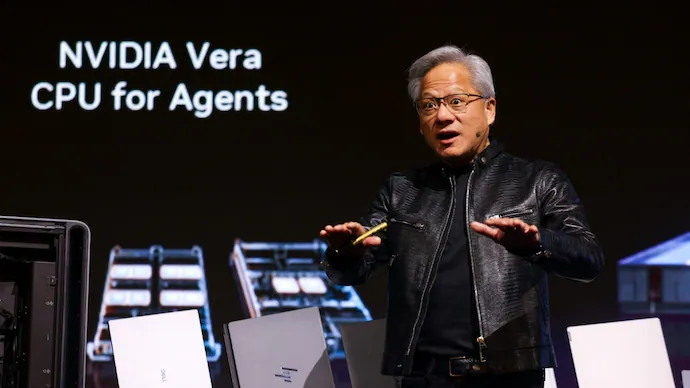
The findings come as Nvidia and its chief executive, Jensen Huang, face growing scrutiny in Washington over the company’s efforts to secure access to the Chinese market. The debate has become more politically sensitive amid reports alleging that Huang was targeted by a Chinese intelligence operation, although those allegations have not been established as fact.
Northwestern Polytechnical University Purchased Two H200 Chips
Northwestern Polytechnical University, based in Xi’an in northwestern China, purchased two Nvidia H200 chips for its management school, according to a procurement record dated October 21. The contract was awarded to Shaanxi Bosuan Network Technology for 874,700 yuan.
The H200 is among Nvidia’s most capable processors for training and running advanced AI systems. Its performance makes it valuable for applications that require substantial computing power, including large-scale model development and complex simulations.
The purchase is significant because Northwestern Polytechnical is included on the US Commerce Department’s Entity List, which imposes restrictions on exports of controlled American technology to designated organisations. Export licences for the university are generally subject to a policy of denial, making the reported acquisition a potential example of how domestic supply chains can complicate US export-control enforcement.
The procurement record indicates that the university obtained the chips through a Chinese supplier rather than purchasing them directly from Nvidia. However, the available records do not establish where the processors originated, how they entered China or whether the transaction involved a breach of a specific export-control rule.
That distinction matters because the presence of restricted chips at a blacklisted institution does not, by itself, reveal who exported them, which intermediary supplied them or whether a particular transaction violated US law.
Why Northwestern Polytechnical Is on the US Trade Blacklist
Northwestern Polytechnical University is part of China’s group of seven elite defence-focused institutions commonly known as the Seven Sons of National Defense. The universities in this group have links to research and development connected with China’s defence and military-industrial sectors.
The university conducts research involving military aircraft, missiles and satellites. Its research profile has made it a focus of US concerns about the transfer of advanced American technology to institutions with potential military applications.
The US Commerce Department added Northwestern Polytechnical to its Entity List in 2001, citing alleged involvement in missile-proliferation activities and military research. Restrictions were tightened in 2019, when exports of controlled US technology to the institution became subject to a presumption of denial in most circumstances.
The Entity List is designed to restrict access to American goods, software and technology when the US government believes particular organisations could contribute to activities that threaten national security or foreign policy interests.
For universities with defence-related research programmes, access to advanced AI computing can have implications beyond ordinary academic work. High-performance processors can support simulations, data analysis and the development of sophisticated AI models. US lawmakers have therefore raised concerns that unrestricted access could contribute to military modernisation.
University Also Rented Servers Containing Restricted Nvidia Chips
The two H200 processors were not the university’s only reported access to advanced Nvidia computing technology. Procurement records show that Northwestern Polytechnical also secured several contracts for rented computing capacity during the year.
In January, its cybersecurity school awarded two seven-month contracts for access to servers containing eight H200 chips each. The contracts were valued at 441,700 yuan and 441,000 yuan, respectively.
The stated purposes included fine-tuning artificial intelligence models and conducting reinforcement-learning training. Both activities require significant computing resources, particularly when researchers work with large models or complex training environments.
The university also rented access to servers containing eight Nvidia A100 processors and eight A800 processors. Both chip models are subject to US export restrictions affecting sales to Chinese entities.
In April, another institute at the university awarded a 375,000-yuan contract for computing services requiring at least 24 A100 processors. The services were intended for structural and fluid-dynamics simulations, according to the procurement information.
These contracts illustrate why US authorities face a more complicated enforcement challenge than simply monitoring direct chip sales. A university may obtain computing power through a service provider without purchasing the physical processors itself.
The procurement documents, however, provide limited information about the physical locations of the servers, the original suppliers of the processors and the routes through which the equipment was obtained.
US Relaxed Some H200 Export Rules, but Blacklist Restrictions Remain
The reported purchase comes against the background of a change in US semiconductor export policy in January 2026. President Donald Trump’s administration introduced a system allowing certain H200 exports to China to be considered on a case-by-case basis, subject to security and compliance requirements.
The policy change did not remove the separate restrictions imposed on organisations listed on the Entity List. Northwestern Polytechnical University remains subject to those restrictions, meaning the revised rules do not automatically make it eligible to receive H200 processors.
Under the revised licensing framework, exporters must meet conditions relating to the availability of chips for US customers, supply-chain capacity, customer screening and security procedures. The processors must also undergo independent third-party testing in the United States.
The rules include safeguards intended to prevent restricted organisations and military end-users from remotely accessing chips exported under approved arrangements. These requirements are particularly relevant when computing services are provided through third-party companies rather than through direct sales to universities.
The procurement records reviewed by Reuters do not establish whether the two H200 processors purchased by Northwestern Polytechnical were originally exported from the United States under an approved licence, acquired through another route or supplied from existing inventories. They also do not establish whether the university accessed the rented servers remotely or where those servers were physically located.
Other Chinese Universities Also Obtained Restricted Nvidia Chips
The procurement records indicate that Northwestern Polytechnical is not an isolated case. A Reuters review of 26 Chinese procurement and corporate records from 2026 identified multiple universities and research institutions that purchased restricted Nvidia processors or obtained access to computing services powered by them.
Several of the institutions have connections to China’s defence industry, aerospace research or military-related academic programmes. The records suggest that domestic suppliers have become an important channel through which Chinese organisations can obtain access to advanced computing resources.
Examples identified in the procurement documents include:
- Shenzhen University: Purchased three Nvidia H100 processors for 769,800 yuan in September.
- Wuhan University of Technology: Bought a server containing an H100 processor for 355,000 yuan in June and separately purchased four A100 chips for 344,000 yuan.
- Beihang University: Purchased four Nvidia A800 processors for 489,000 yuan in April. The university is another member of China’s Seven Sons of National Defense group.
- University of Chinese Academy of Sciences: Procurement announcements in July and September identified suppliers selected to provide computing services using Nvidia H800 and A800 processors.
One procurement announcement listed access to H800 computing capacity at 10 yuan per chip-hour. Another January contract named a supplier for six A100 processors worth 484,800 yuan for a public institution based in Shenzhen.
The records do not establish that every purchase or computing contract involved an illegal export. They do, however, show that Chinese institutions can obtain access to processors subject to US restrictions through domestic suppliers and service providers, creating challenges for authorities attempting to monitor the movement and use of advanced computing technology.
Why Nvidia’s AI Chips Matter to China’s Military Research
Advanced AI processors are important because they provide the computing capacity needed to train sophisticated artificial intelligence models and process large volumes of information. Their applications extend across commercial technology, scientific research, industrial development and national security.
In military-related research, powerful AI computing can support data analysis, image recognition, simulation, autonomous systems and the processing of intelligence information. Researchers can also use high-performance processors for engineering simulations involving aircraft, missiles and other complex systems.
These potential applications explain why US lawmakers have raised concerns about China’s access to Nvidia’s most advanced chips. Their argument is that providing powerful computing resources to institutions with military connections could accelerate research relevant to China’s defence capabilities.
However, the procurement records do not establish that the specific H200 processors purchased by Northwestern Polytechnical were used for weapons development or classified military projects. The October purchase was listed for the university’s management school, while the rented computing contracts included AI training, cybersecurity research and engineering simulations.
Distinguishing between academic, commercial and military applications is a central challenge in technology export controls. A processor can have legitimate civilian uses while also providing computing capabilities that may be relevant to defence research.
Jensen Huang Faces Growing Political Pressure in Washington
The findings add to the pressure facing Nvidia CEO Jensen Huang as US lawmakers debate how much access China should have to American artificial intelligence technology.
Huang has argued that allowing controlled sales to China would help preserve US technological leadership. His position is that keeping Chinese customers connected to American technology could prevent domestic Chinese alternatives from gaining an advantage and maintain Nvidia’s influence in the global AI industry.
Some lawmakers disagree, arguing that even limited access to high-performance processors could help China develop advanced AI systems with potential military applications. Members of both the Democratic and Republican parties have called for stronger oversight of chip exports.
Proposals discussed in Washington include requirements to track advanced processors after export and greater congressional supervision of licensing decisions. Such measures would aim to make it more difficult for restricted organisations to obtain computing power through intermediaries.
Three Republican congressional committee chairmen have also requested a briefing with Huang on November 18 concerning his reported contacts with an alleged Chinese intelligence operative. The request comes amid wider scrutiny of claims that a Chinese spying operation targeted the Nvidia chief executive.
Those allegations remain separate from the procurement findings involving Northwestern Polytechnical. The purchase records do not establish any connection between Huang, the university’s suppliers or the alleged intelligence operation.
Indirect Supply Chains Complicate US Export Controls
The growing use of domestic technology suppliers and rented computing services highlights a major enforcement challenge for Washington. Export controls can restrict direct shipments to designated organisations, but monitoring every subsequent transfer, resale or use of computing infrastructure is considerably more complicated.
Universities and research institutions may purchase complete servers, obtain access to cloud-style computing services or sign contracts with local companies that operate high-performance processors. In such arrangements, the customer may pay for computing capacity rather than take physical possession of the chips.
Reuters has previously reported that Chinese institutions obtained restricted Nvidia processors embedded in servers manufactured by companies including Super Micro Computer, Dell and Gigabyte through domestic resellers. It has also documented an underground market involving restricted chips sourced from overseas inventories and third-country intermediaries.
Last week, Reuters reported that small quantities of H200 processors had reached China through indirect routes, even as Beijing withheld approval for large-scale imports.
The latest university procurement findings add another dimension to the issue: access to advanced AI computing is not necessarily dependent on a direct purchase from a US chipmaker. Domestic service providers can offer processing capacity using hardware that may have entered the country through different supply channels.
Chinese public procurement rules require agencies to verify that suppliers can fulfil orders before announcing successful bidders and signing contracts. Nevertheless, the documents reviewed in this case provided limited information about the original source of the processors and the locations of the rented servers.
What the Nvidia Chip Purchases Reveal About the US-China Technology Rivalry
The reported purchases underline the difficulty of restricting access to advanced AI technology in an interconnected global market. Washington can impose licensing requirements, blacklist organisations and penalise unauthorised exports, but the effectiveness of those measures also depends on identifying intermediaries and monitoring computing services.
For the United States, the issue involves balancing commercial interests against national security concerns. Nvidia and other American technology companies have an interest in selling to international customers, while US policymakers are concerned that advanced processors could strengthen the military and technological capabilities of strategic competitors.
For China, access to powerful processors remains important as universities, research institutions and technology companies expand their AI capabilities. Domestic suppliers and computing-service providers can help organisations obtain processing capacity even when direct access to certain American products is restricted.
The Northwestern Polytechnical case does not, on its own, prove that US export controls have been entirely ineffective or that the university violated export laws. But the reported purchase of two H200 chips, alongside contracts for access to other restricted Nvidia processors, raises questions about how authorities can enforce restrictions beyond the point of direct export.
Further scrutiny of suppliers, server locations, licensing records and the final users of computing services may determine whether the reported transactions involved regulatory violations. The findings are also likely to intensify the debate in Washington over whether existing safeguards are sufficient to prevent advanced American AI technology from reaching organisations that remain subject to export restrictions.
For breaking news and live news updates, like us on Facebook or follow us on Twitter and Instagram. Read more on Latest World on thefoxdaily.com.





COMMENTS 0