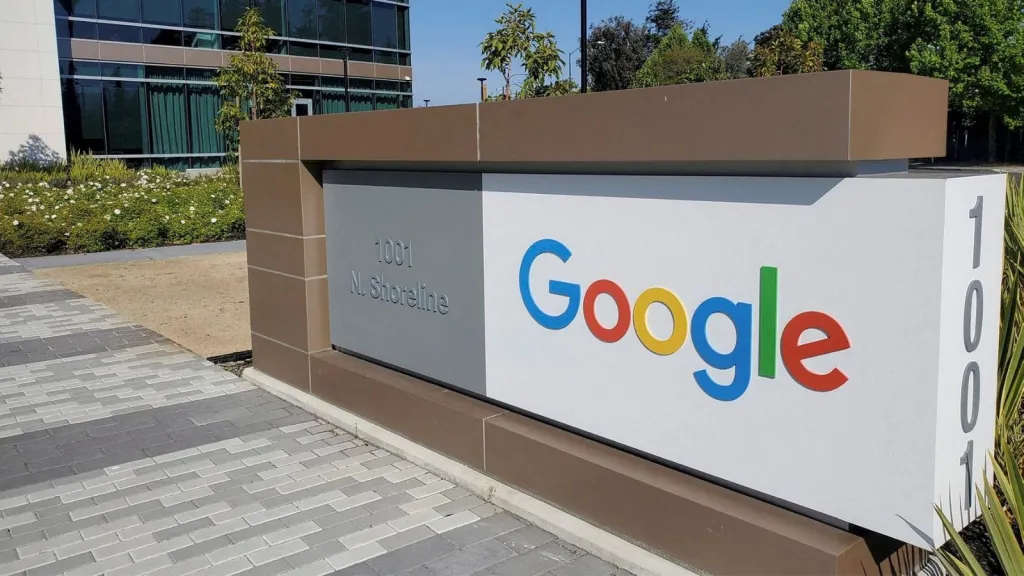
Alphabet, the parent company of Google, suffered one of the biggest single-day losses in stock market history after its shares plunged 12.64% on Thursday. The decline wiped nearly $500 billion off its market capitalisation, as disappointing quarterly sales growth and rising Artificial Intelligence (AI) expenditure triggered concerns among investors.
The sell-off reflected growing uncertainty about whether Alphabet’s massive investments in AI will generate sufficient returns while protecting its traditional search advertising business. Investors are increasingly questioning whether the growing popularity of AI chatbots could change how people access information online and weaken Google’s long-standing dominance in search.
Other major US technology companies also faced selling pressure. Amazon shares fell more than 4% during the regular trading session, while Intel experienced a further sharp decline in after-hours trading following concerns about its manufacturing operations and expansion costs.
Why Did Alphabet Shares Fall So Sharply?
Alphabet’s quarterly financial results, released on Wednesday, fell short of analysts’ expectations. Slower growth in Google’s search advertising business added to investor concerns, particularly as the company continued increasing its investment in artificial intelligence infrastructure and services.
Google’s search business remains a major source of revenue for Alphabet. Its advertising model depends heavily on users searching for information, products and services before interacting with sponsored results.
However, the growing use of AI-powered chatbots is creating uncertainty about the future of traditional online search. Consumers can increasingly use conversational AI tools to receive direct answers instead of navigating multiple search results and websites.
This shift could eventually affect how advertisements are displayed and how companies generate revenue from online searches. Although Google is developing its own AI products, investors are assessing whether the company can adapt its business model without weakening its existing advertising operations.
Alphabet’s Nearly $500 Billion Market Value Wipeout
The 12.64% decline erased approximately $500 billion from Alphabet’s market capitalisation in a single trading session. According to the reported figures, it was the company’s second-largest single-day loss in market value, behind Nvidia’s nearly $600 billion decline in early 2025.
The scale of the fall exceeded the daily losses Alphabet experienced during the COVID-19 pandemic and the 2008 financial crisis.
Alphabet is much more than Google Search. Its wider business portfolio includes several technology, research and investment operations, making it a major player across multiple industries.
These businesses include Google DeepMind, which focuses on artificial intelligence and scientific research; Waymo, which develops autonomous driving technology; and Isomorphic Labs, which works on AI-driven drug discovery. Other operations include biotechnology company Calico, drone-delivery business Wing, software developer Intrinsic, Google Fiber and investment fund CapitalG.
Despite this diversification, concerns about the profitability of its core advertising business and the financial demands of AI expansion contributed to the negative investor reaction.
Rising AI Spending Puts Pressure on Alphabet’s Cash Flow
Another major concern for investors is Alphabet’s increasing expenditure on AI infrastructure. The company reported negative free cash flow for a second consecutive quarter, adding to questions about how comfortably it can finance its expansion plans while maintaining shareholder returns.
Free cash flow represents the money a company generates after covering its operating expenses and capital investments. It is important because businesses can use this cash to fund dividends, repurchase shares, reduce debt and reinvest in future growth.
According to the reported figures, Alphabet’s capital expenditure reached $51.4 billion in the third quarter alone, compared with $91.4 billion for the whole of 2025.
A significant portion of the spending is directed towards AI infrastructure, including data centres and computing capacity needed to develop and operate advanced AI systems.
These investments could strengthen Alphabet’s competitive position in the long term, but they also require substantial upfront funding. Investors are concerned about whether the expected returns will justify the scale of expenditure and how much cash will remain available for other corporate priorities.
Google Faces Growing Competition From AI Chatbots
The expansion of generative AI has created a major strategic challenge for Google’s traditional search business. AI assistants can provide conversational answers, summarise information and help users complete tasks, potentially reducing their reliance on conventional search results.
Google is responding by integrating AI features into its products and developing its own models and services. However, the transition also creates a financial challenge because AI-powered search and chatbot services can require significant computing resources.
The company must therefore balance two priorities: maintaining the advertising revenue generated by traditional search while investing in technologies that could reshape how people interact with information online.
For investors, the central question is whether AI will become a new source of revenue for Alphabet or place additional pressure on its existing business model. The latest share-price decline suggests that concerns about this transition remain significant.
Amazon Shares Fall After Quarterly Results Disappoint
Amazon also faced a sharp sell-off on Thursday after its third-quarter profit and revenue fell short of market expectations. Its shares declined 4.25% at the market close, falling to approximately $243 on Nasdaq from the previous closing price of $254.60.
The decline came despite strong growth in Amazon Web Services (AWS), the company’s cloud computing division. AWS remains an important part of Amazon’s business, providing cloud infrastructure and services to companies around the world.
Investor concerns increased after Amazon maintained its plan to spend approximately $220 billion on capital expenditure during the year, with a significant portion directed towards artificial intelligence investments.
In after-hours trading, Amazon shares reportedly fell further, with losses reaching approximately 7%. The reaction highlighted investor sensitivity to high technology spending, even when companies continue to report growth in important business segments.
Intel Shares Slide as Manufacturing and Expansion Costs Raise Concerns
Chipmaker Intel also experienced selling pressure during Thursday’s trading session. Its shares fell 3.62% at market close before plunging approximately 23% in after-hours trading.
The decline followed concerns surrounding the company’s manufacturing operations, the unstable personal computer market and the substantial investment required to expand production capacity.
Intel’s plans to invest more money in its operations and manufacturing expansion have raised questions about the financial demands of its turnaround strategy. Semiconductor manufacturing requires expensive facilities, advanced equipment and sustained investment in research and development.
The company’s challenges illustrate the pressure facing technology manufacturers as they attempt to compete in an industry increasingly shaped by AI infrastructure and demand for advanced chips.
What the Big Tech Sell-Off Means for Investors
The declines in Alphabet, Amazon and Intel reflect a broader shift in how investors evaluate major technology companies. Rapid AI development has created significant growth opportunities, but markets are increasingly focused on the costs involved and the time required for those investments to generate profits.
Companies are committing billions of dollars to data centres, specialised chips, cloud infrastructure and AI research. While these investments could create new revenue streams, they can also reduce free cash flow and put pressure on profitability in the short term.
For Alphabet, the challenge is particularly important because its search advertising business remains central to its financial performance. If AI changes user behaviour and reduces traditional search activity, the company may need to develop new ways to generate advertising and service revenue.
Amazon must demonstrate that its substantial AI investments can strengthen AWS and other operations, while Intel faces the challenge of improving manufacturing competitiveness and managing expansion costs.
AI Investment Faces a New Test on Wall Street
The sharp decline in Alphabet’s market value demonstrates that investors are no longer evaluating technology companies solely on their AI ambitions. They also want evidence that spending can translate into sustainable revenue growth, stronger profitability and healthy cash flow.
Alphabet’s latest results have brought the financial risks of the AI race into sharper focus. The company continues to operate across search, advertising, cloud computing and advanced technology research, but its ability to protect its established businesses while funding new AI products remains a central concern.
The performance of Alphabet, Amazon and Intel in the coming quarters will help investors assess whether their large technology investments are producing the expected returns. For the wider technology sector, the sell-off signals that enthusiasm for artificial intelligence is increasingly being measured against financial performance rather than future potential alone.
For breaking news and live news updates, like us on Facebook or follow us on Twitter and Instagram. Read more on Latest Business on thefoxdaily.com.





COMMENTS 0