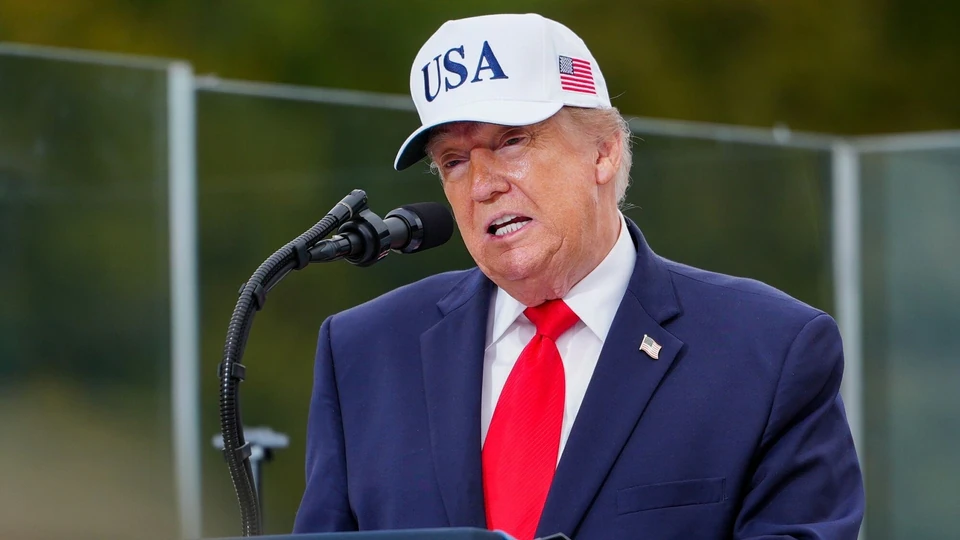
US President Donald Trump delivered a confident defence of his leadership during an Election Day appearance on Fox News’ Fox & Friends on Tuesday, presenting the United States as a stronger and more respected country under his administration. His remarks came as voters prepared to decide the balance of power in Congress, with Republicans facing growing scrutiny over economic conditions and the President’s approval ratings.
Speaking just hours before polling stations opened for the 2026 midterm elections, Trump argued that his administration had restored America’s position on the global stage. He contrasted the country’s current standing with what he described as a period of weakness under the previous administration, claiming that foreign leaders now treated Washington with greater respect.
“Well, we have to keep America great. We’re great now,” Trump told the programme.
“We were terrible two years ago. We were laughing stock all over the world. The leaders of other countries didn’t even take us seriously. They thought we were fools. And we’re hot now,” he added.
Trump used the appearance to highlight several areas of his administration’s record, including energy prices, the US naval blockade around the Strait of Hormuz, tax provisions and relations with China. He also addressed growing opposition to Artificial Intelligence data centres, suggesting that companies should compensate residents living near major projects.
The interview formed part of Trump’s final Election Day messaging as Republicans sought to defend their congressional majorities. The outcome of the elections will shape the political environment during the final two years of his second presidential term.
Trump highlights oil prices and Strait of Hormuz blockade
Energy prices featured prominently in Trump’s defence of his economic and foreign policy record. The President pointed to a reported fall in oil prices, presenting the decline as evidence that his administration’s policies were producing results.
“You saw oil came down $10 – a record yesterday. Dropped $10, and the Hormuz Strait, we have total control of it with the Navy blockade,” he said.
Trump also argued that the United States had regained international respect, linking his claims about energy policy and military positioning to a broader assessment of his administration’s performance.
“I mean, everything’s going good. Everybody respects us again,” the President added.
The Strait of Hormuz is a strategically important waterway for international energy supplies. Disruptions in the region can affect the movement of oil and influence global energy markets, making developments around the strait an important concern for governments, businesses and consumers.
Trump’s comments came amid continued pressure on American motorists over gasoline and diesel costs. The conflict involving the United States and Iran, alongside disruptions around the Strait of Hormuz, has contributed to uncertainty in energy markets.
Although Trump highlighted the reported decline in oil prices, household fuel expenses remained an important concern for voters. Changes in international crude prices do not always translate immediately or equally into lower prices at petrol stations, leaving consumers sensitive to broader energy-market developments.
Trump promotes tax breaks under One Big Beautiful Bill
Trump also used the interview to highlight his administration’s tax agenda, particularly provisions included in the One Big Beautiful Bill.
Among the measures he emphasised was the tax exemption on tips. The President presented the provision as part of his wider effort to provide financial relief to workers and strengthen the economy.
The policy featured in Trump’s broader Election Day argument that his administration had delivered economic benefits to Americans. By highlighting tax breaks alongside energy prices, he sought to connect federal economic policy with issues that directly affect household finances.
However, the economic debate ahead of the midterms extended beyond individual tax provisions. Inflation, everyday expenses, housing costs and fuel prices remained central concerns for many voters.
The difference between the administration’s assessment of economic progress and public concerns over affordability became one of the major challenges facing Republicans during the election campaign.
Trump claims China’s Xi Jinping praised his leadership
International relations were another important part of Trump’s Election Day message. The President claimed that Chinese President Xi Jinping had praised his leadership during their September meeting.
Recalling the conversation, Trump said Xi told him: “What you’ve done is amazing.”
The President used the reported remark to support his argument that America’s international standing had improved under his administration. His comments were part of a broader effort to portray foreign leaders as recognising the strength of the United States.
Relations between Washington and Beijing remain an important issue for the global economy. The two countries have significant economic and strategic interests, with trade, technology, security and international influence shaping their relationship.
Trump’s reference to Xi also allowed him to connect his domestic election message with foreign policy, presenting international recognition as evidence of his leadership.
Low approval ratings raise questions over Trump’s economic claims
Despite Trump’s positive assessment of his presidency, opinion polling indicated that a substantial share of Americans remained dissatisfied with his performance.
According to CNN’s Poll of Polls, Trump’s overall approval rating stood at 34%, while 64% disapproved of his performance as of October 27, 2026. An October CNN survey also found that 73% of respondents disapproved of his handling of the economy.
The figures highlighted the challenge facing the President as he attempted to persuade voters that the country was moving in the right direction. While Trump focused on oil prices, tax provisions and America’s international position, polling suggested that economic dissatisfaction remained widespread.
Affordability was a particularly important issue in the midterm campaign. Inflation, household expenses and fuel costs affected how voters assessed the economy and the administration’s performance.
The contrast between Trump’s claims and public opinion created a difficult political environment for Republicans. A President can point to improvements in selected economic indicators, but voters often judge economic conditions through their personal experiences, including the cost of groceries, transport, housing and other essential expenses.
Fuel costs and Iran conflict remain important election issues
Trump’s comments about falling oil prices came as American motorists continued to face concerns about gasoline and diesel costs.
The conflict involving the United States and Iran, together with disruptions around the Strait of Hormuz, added uncertainty to the energy market. The waterway is an important route for international oil shipments, meaning any disruption can have consequences beyond the immediate region.
Energy prices are closely watched in the United States because changes in fuel costs can affect household budgets, transportation expenses and business operations. Higher fuel prices can also contribute to wider inflationary pressure by increasing the cost of moving goods and providing services.
For the Trump administration, the reported decline in oil prices offered an opportunity to highlight its economic record. However, the broader energy situation remained complicated by geopolitical tensions and concerns about supply disruptions.
The issue demonstrated how domestic economic conditions and international developments had become closely connected in the 2026 midterm campaign.
Trump suggests payments to communities to ease data centre opposition
During the interview, Trump also addressed growing opposition to the construction of artificial intelligence data centres in residential communities.
The rapid expansion of AI infrastructure has triggered debate across the United States over electricity consumption, water requirements, environmental effects and the impact of large facilities on nearby neighbourhoods.
Data centres require significant infrastructure to operate computing systems and support digital services. Their expansion has increased concerns among some residents about pressure on local electricity supplies, water resources and public infrastructure.
Trump suggested that companies developing such projects should provide direct financial compensation to people living nearby. He argued that sharing some of the economic benefits could help reduce opposition from local communities.
“Pay the people. Let them be happy. Give them $10,000, $15,000, $20,000 each,” Trump said.
His proposal appeared to favour direct payments as a way of addressing residents’ concerns about the impact of major data centre developments.
However, Trump did not provide details about how the proposed payments would be funded, which communities would qualify or how such a programme could be implemented.
Why AI data centres are facing opposition in the US
Artificial intelligence has increased demand for computing infrastructure, including large data centres equipped with powerful processors and extensive cooling systems.
These facilities are essential for training and operating advanced AI models, supporting cloud computing and handling large volumes of digital information. As technology companies expand their infrastructure, more communities are being asked to accommodate large-scale developments.
Supporters of data centre projects point to potential economic benefits, including investment, infrastructure development and employment opportunities. However, residents have raised concerns about the local costs associated with these facilities.
Electricity demand is one of the central issues. Large data centres can consume substantial amounts of power, raising questions about whether existing energy infrastructure can support additional demand without affecting households and other businesses.
Water consumption and environmental effects have also become part of the debate, particularly in areas where resources are limited.
Trump’s suggestion that companies should pay residents directly reflects an approach based on financial incentives. However, compensation alone may not resolve concerns about electricity availability, environmental impact or long-term pressure on local infrastructure.
2026 midterm elections become a test of Trump’s second-term leadership
Trump’s Election Day appearance reflected the political importance he has attached to the 2026 midterm elections. The contests will determine the balance of power in Congress and influence how much legislative support the administration can expect during the final two years of his second term.
All 435 seats in the House of Representatives and 35 Senate seats are being contested. Voters are also participating in gubernatorial and state-level elections across the country.
Republicans are seeking to defend their congressional majorities, while Democrats are attempting to gain control of one or both chambers. The results will shape the legislative environment for the remainder of Trump’s presidency.
Congress plays a central role in advancing legislation, approving federal spending and conducting oversight of the executive branch. The party controlling each chamber can influence which proposals receive consideration and how the administration’s priorities progress.
For Trump, retaining Republican control would provide a more favourable environment for advancing his legislative agenda. A change in control could create additional obstacles for policies involving taxation, immigration, economic initiatives and other priorities.
What the midterm results could mean for Trump’s agenda
The outcome of the elections will have consequences beyond the immediate political contest. Control of the House and Senate can affect the administration’s ability to pass legislation, negotiate spending measures and secure support for policy proposals.
If Republicans retain control of both chambers, Trump would continue working with congressional majorities from his own party. If Democrats gain control of either chamber, the administration could face greater resistance to parts of its agenda.
A change in congressional control could also increase scrutiny of the administration through hearings, investigations and oversight proceedings.
The midterms therefore represent an important test of the relationship between the President and the electorate. Although Trump was not personally seeking re-election, his approval ratings, policy record and public messaging became central parts of the campaign.
Trump’s final Election Day message focuses on strength and economic confidence
Trump’s appearance on Fox & Friends brought together several themes that have defined his defence of the administration: America’s international standing, energy prices, tax policy, relations with China and the economic opportunities associated with artificial intelligence.
His declaration that the country was now “hot” reflected his attempt to project confidence and portray the United States as stronger under his leadership. He also sought to counter criticism by pointing to specific policy measures and international developments.
However, the President’s claims faced scrutiny against a backdrop of low approval ratings and widespread concerns about the economy. Polling figures showed that many Americans remained dissatisfied with his performance, particularly on economic issues.
With all House seats and 35 Senate seats at stake, the 2026 midterms became a significant measure of public opinion on Trump’s second-term leadership. The results will determine the political balance in Washington and shape the administration’s ability to pursue its priorities during the remainder of the presidency.
Ultimately, Trump’s upbeat Election Day message placed confidence in his record at the centre of the campaign. Whether voters shared that assessment would be reflected in the results and the composition of the next Congress.
For breaking news and live news updates, like us on Facebook or follow us on Twitter and Instagram. Read more on Latest World on thefoxdaily.com.






COMMENTS 0