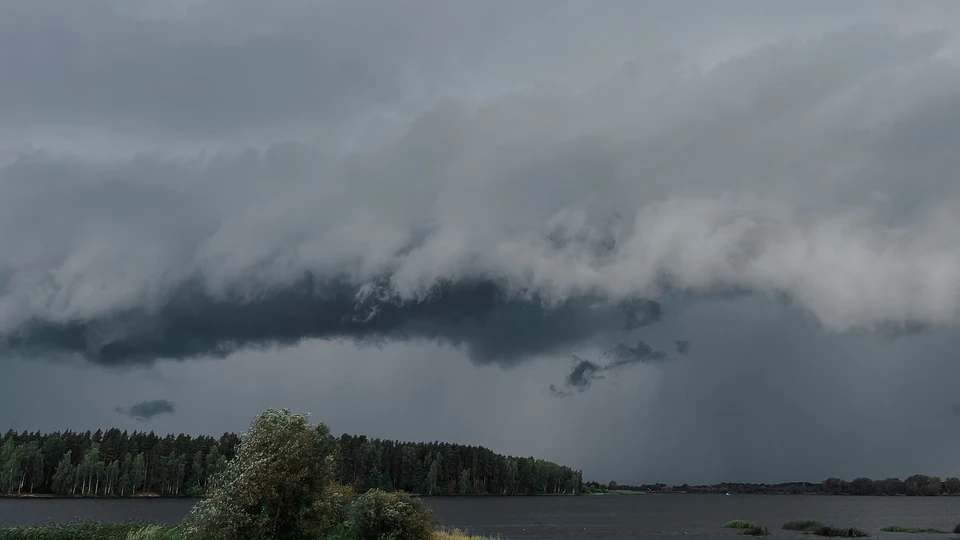
Thanksgiving Day travel across the United States has been disrupted by a powerful storm sweeping through the Northeast and Mid-Atlantic, leaving thousands of passengers facing Flight Cancellations, airport delays and difficult road conditions. More than 820 flights had been cancelled and approximately 500 delayed nationwide by 8:30 a.m. ET on Thursday, November 26, according to figures from flight-tracking website FlightAware reported by CNN.
The storm is affecting some of the country’s busiest air travel corridors, including New York, Washington, Philadelphia and Baltimore. The Federal Aviation Administration (FAA) has warned that weather-related restrictions could cause further disruption throughout the day, even as airlines operate reduced schedules for the Thanksgiving holiday.
Beyond airports, strong winds have forced the closure of the Commodore Barry Bridge between Pennsylvania and New Jersey. Coastal communities are also preparing for potentially severe flooding as storm-driven winds push seawater towards the shoreline during exceptionally high king tides. Several traditional Thanksgiving celebrations have been affected, including Philadelphia’s annual parade, while cities farther from the storm’s path are continuing with their events.
Thanksgiving storm brings widespread travel disruption across the US
Thanksgiving is one of the busiest travel periods in the United States, with millions of people travelling by air and road to spend the holiday with family and friends. The timing of the storm has therefore created additional pressure on an already busy transportation network.
The developing nor’easter is bringing strong winds, rain and low cloud cover across parts of the Northeast and Mid-Atlantic. These conditions can affect aircraft arrivals and departures, reduce visibility and make it more difficult for airport operators to maintain normal flight schedules.
The FAA has forecast significant weather-related disruption across the affected regions throughout Thursday. Arrival delays of approximately 30 minutes have already been reported across much of the area, with the possibility of additional restrictions as conditions develop.
Although airlines generally reduce their schedules around Thanksgiving, the storm has forced further cancellations. This means passengers could face limited alternative flight options, particularly at airports already experiencing a high proportion of cancelled services.
FAA warns of delays and possible ground stops at major airports
The FAA has warned that ground stops or ground delay programmes could be introduced after 9 a.m. ET for flights travelling towards several major metropolitan areas. The airports and destinations facing potential restrictions include:
- New York
- Washington, DC
- Philadelphia
- Baltimore
A ground stop is a temporary restriction that prevents certain aircraft from departing for an affected airport. Airlines may be instructed to keep planes at their departure airports until traffic conditions or weather improve at the destination.
Ground delay programmes work differently. Under these restrictions, aircraft may be assigned revised departure times to manage the number of planes arriving at an airport during a period of reduced capacity. Both measures can create delays that extend beyond the airport directly affected by the weather.
Arrival delays are also possible when aircraft have to wait for permission or suitable conditions to land. In some circumstances, planes may be required to remain in holding patterns while air traffic controllers manage congestion and changing weather conditions.
The disruption is not limited to the East Coast. The FAA has also warned of possible delays at San Francisco International Airport, where scattered clouds and mist could affect flight operations.
More than 820 flights cancelled as Thanksgiving travel takes a hit
FlightAware data showed that more than 820 flights had been cancelled and around 500 delayed across the United States by 8:30 a.m. ET on Thanksgiving Day.
The figures reflect the early impact of the storm and could change as airlines and airports respond to evolving weather conditions. The disruption is particularly significant because the cancellations are occurring during a major holiday travel period, when passengers may have fewer opportunities to change their journeys without affecting family plans.
Airlines had already adjusted their schedules for Thanksgiving, but the weather has created additional operational challenges. When aircraft cannot reach their destinations on time, the disruption can affect later flights because the same planes and crews are often scheduled to operate multiple services throughout the day.
As a result, a weather-related delay at one airport can have consequences for passengers travelling elsewhere in the country. Aircraft and crew positioning, airport congestion and restrictions on arriving flights can all contribute to a wider network disruption.
Passengers travelling through affected airports may therefore experience delays even if their own departure location is not directly experiencing the worst weather.
Baltimore airport among the worst-hit by cancellations
Baltimore/Washington International Thurgood Marshall Airport is among the airports experiencing the most significant disruption. More than 25% of all flights scheduled to arrive at or depart from the airport have been cancelled for Thanksgiving Day.
The cancellation rate highlights the extent to which the storm is affecting air travel in the Mid-Atlantic region. With a substantial share of scheduled services removed from the day’s operations, passengers may have difficulty finding alternative flights, especially when travelling to other weather-affected destinations.
The airport’s position within a major regional transportation corridor also makes the disruption relevant to travellers heading towards Washington and other parts of the eastern United States.
New York and Washington airports report flight cancellations
Airports serving Washington and New York have also reported cancellations as the storm moves across the East Coast.
At Ronald Reagan Washington National Airport, approximately 8% of scheduled departures have been cancelled. The airport is particularly important for travellers visiting the US capital and nearby communities, making disruptions there significant during the holiday period.
New York’s LaGuardia Airport and John F. Kennedy International Airport are also experiencing cancellations. Around 7% of flights to or from each airport have been cancelled, according to figures reported by CNN.
New York is one of the country’s most important aviation hubs, connecting domestic routes with international destinations. Disruption at its airports can therefore affect passengers travelling far beyond the immediate region.
The possibility of further FAA restrictions could add to the uncertainty. Travellers scheduled to fly through New York, Washington, Philadelphia or Baltimore should not assume that a flight will operate normally simply because it has not yet been cancelled.
Commodore Barry Bridge closed as strong winds loosen equipment
The storm has also disrupted road travel, with the Commodore Barry Bridge between Pennsylvania and New Jersey completely closed in both directions because of strong winds.
The closure followed an incident involving equipment used in an ongoing bridge repainting project. Part of the equipment reportedly came loose in the high winds, creating a potential safety risk for motorists and workers.
The Delaware River Port Authority (DRPA) ordered the closure as a precaution while crews work to address the situation. The authority said that teams were working to resolve the issue as quickly and safely as possible.
The bridge will remain closed until further notice, and officials have not provided a confirmed reopening time. Stronger winds are also expected in the area, making it difficult to determine when conditions will be safe enough for traffic to resume.
The closure could affect motorists travelling between southeastern Pennsylvania and southern New Jersey, particularly those using the bridge as part of their holiday journeys. Drivers may need to consider alternative routes and allow additional travel time.
Coastal flooding risk rises along the Mid-Atlantic
One of the storm’s most serious threats is the possibility of coastal flooding. Strong winds are pushing seawater towards the Mid-Atlantic shoreline, increasing water levels in coastal communities already experiencing unusually high tides.
The situation is being intensified by king tides, which are exceptionally high natural tides that occur when the gravitational effects of the Moon and Sun combine to produce higher-than-usual water levels.
When strong onshore winds coincide with king tides, seawater can rise further along exposed coastlines, increasing the likelihood of flooding in low-lying neighbourhoods, roads and waterfront areas.
Water levels were expected to continue rising through Thursday morning, with the highest tides forecast between then and 10 a.m. ET from Virginia Beach to southern New Jersey.
The National Oceanic and Atmospheric Administration (NOAA) has warned that several areas face major coastal flooding. Depending on local conditions, floodwater could enter homes, inundate streets and force authorities to close roads.
The combination of high tides and strong winds is particularly concerning because coastal flooding can disrupt communities even without heavy rainfall directly over them. Water pushed inland from the ocean or through bays and waterways can affect areas that are not normally exposed to significant flooding.
Delaware and New Jersey towns face potentially record-high water levels
Several coastal communities in Delaware and New Jersey are facing the possibility of exceptionally high water levels as the storm approaches its peak.
Lewes and Bowers Beach in Delaware, along with Cape May in New Jersey, could approach or potentially exceed their previous all-time water-level records. Such conditions could create serious problems for properties and infrastructure located close to the shoreline.
Atlantic City in New Jersey and Ocean City in Maryland are also expected to experience their highest water levels since Superstorm Sandy struck the region in 2012.
Superstorm Sandy caused widespread destruction across parts of the US East Coast, particularly in New Jersey and New York. The comparison highlights why officials are treating the latest coastal flooding threat seriously, although the current storm is a separate weather event and should not automatically be considered equivalent to Sandy in overall damage or intensity.
For coastal residents, the immediate concern is the combination of rising water, strong winds and the possibility that roads could become impassable. Flooding can also affect emergency access, electricity infrastructure and local transport services.
Atlantic City urges residents in flood-prone areas to evacuate
Authorities in Atlantic City have strongly urged residents living in flood-prone areas to voluntarily evacuate ahead of the storm’s strongest conditions. Residents were asked to leave vulnerable locations by 7 a.m. ET on Thursday.
The warning came as the New Jersey coastline prepared for the arrival of the nor’easter, with the highest tides and strongest winds expected to affect the region over the following hours.
Atlantic City Mayor Marty Small Sr. warned that homes flooded during a storm in September could face similar problems again. He urged residents to take the latest warning seriously rather than wait until floodwater begins entering their properties.
Small said that people whose homes experienced flooding during the September storm should prepare for the possibility of water entering their houses again. He also stressed that officials would rather take precautions than put residents’ safety at risk.
The mayor compared the expected conditions to those associated with a tropical storm, underscoring concerns about the strength of the approaching weather system.
Voluntary evacuation requests are particularly important in low-lying coastal neighbourhoods, where rising water can quickly make roads difficult or impossible to use. Residents who delay leaving may find it harder to reach safer locations once flooding intensifies.
Philadelphia Thanksgiving Day Parade cancelled due to storm
The weather has also disrupted one of the United States’ longest-running Thanksgiving traditions. Philadelphia’s Thanksgiving Day Parade, widely recognised as the oldest Thanksgiving parade in the country, has been grounded because of the storm.
The event has been held annually since 1920 and traditionally features floats, marching bands and performances as part of the city’s holiday celebrations.
Organisers have instead arranged for a televised celebration through media sponsor and CNN affiliate WPVI. The broadcast will provide viewers with an alternative way to mark the occasion, but it will not feature the usual parade floats and marching bands moving through the city.
The decision reflects the difficulty of safely organising a large outdoor event during conditions involving strong winds and rain. High winds can create particular risks for parade structures, temporary installations and participants, while wet conditions can make public gathering areas more difficult to manage.
For residents and visitors who had planned to attend the event in person, the cancellation represents another disruption to Thanksgiving celebrations across the storm-affected region.
Detroit and Chicago parades expected to continue as planned
Not all major Thanksgiving celebrations are being affected by the weather. Cities outside the main storm-affected areas are continuing with their scheduled events.
America’s Thanksgiving Parade in Detroit, Michigan, is expected to take place according to its regular programme. The event is also marking its 100th anniversary this year, making it a particularly significant celebration for the city.
Chicago’s Thanksgiving Parade is also scheduled to continue. The procession will travel through the Loop area in downtown Chicago, with events scheduled to begin at 7:45 a.m. CT.
The contrast between the cities illustrates how unevenly the storm is affecting the country. While communities along the Northeast and Mid-Atlantic are dealing with flight disruptions, road closures and coastal flooding concerns, other parts of the United States are continuing with their holiday traditions.
What Thanksgiving travellers should do before heading to airports
With flight schedules and road conditions potentially changing throughout the day, travellers heading through the affected regions should check their journey details before leaving home.
- Check flight status directly: Use the airline’s official website or mobile application to confirm whether a flight is operating, delayed or cancelled.
- Monitor airport updates: Check information from the departure and arrival airports, particularly if travelling through New York, Washington, Baltimore or Philadelphia.
- Allow extra travel time: Road closures, poor weather and airport congestion could make journeys to terminals longer than usual.
- Review alternative flights: Passengers whose services are cancelled should contact their airlines to understand rebooking options.
- Follow local weather warnings: People travelling near the Mid-Atlantic coastline should monitor flood advisories and avoid roads affected by rising water.
- Do not attempt to cross flooded roads: Floodwater can conceal road damage and make it difficult to judge the depth or strength of moving water.
Travellers should also keep in mind that a flight showing as scheduled may still be affected by later weather restrictions. Conditions at an aircraft’s departure airport, destination and connecting hubs can all influence whether a journey proceeds on time.
Why the storm is creating a wider Thanksgiving travel challenge
The Thanksgiving storm is affecting more than individual flights or isolated roads. Its impact across several major transportation corridors demonstrates how severe weather can disrupt different parts of the travel network at the same time.
Airports in the Northeast and Mid-Atlantic are facing operational restrictions, while the Commodore Barry Bridge closure is affecting road connectivity between Pennsylvania and New Jersey. Along the coast, flooding concerns are prompting precautionary evacuation requests and creating the possibility of additional road closures.
The timing is particularly difficult because Thanksgiving travel involves a large number of people moving within a relatively short period. Families travelling to holiday gatherings, airport workers, airline crews and other transport staff may all be affected by the same weather system.
The storm’s effects are also extending into public celebrations. Philadelphia’s decision to replace its traditional parade with a televised event shows how weather-related safety concerns can alter major community gatherings, even when organisers attempt to preserve some elements of the celebration.
For now, the main concerns remain flight delays and cancellations, strong winds, coastal flooding and the safety of people travelling through affected areas. With the FAA warning of possible additional restrictions and coastal authorities monitoring rising water levels, Thanksgiving travel conditions across parts of the eastern United States remain uncertain.
For breaking news and live news updates, like us on Facebook or follow us on Twitter and Instagram. Read more on Latest World on thefoxdaily.com.



COMMENTS 0