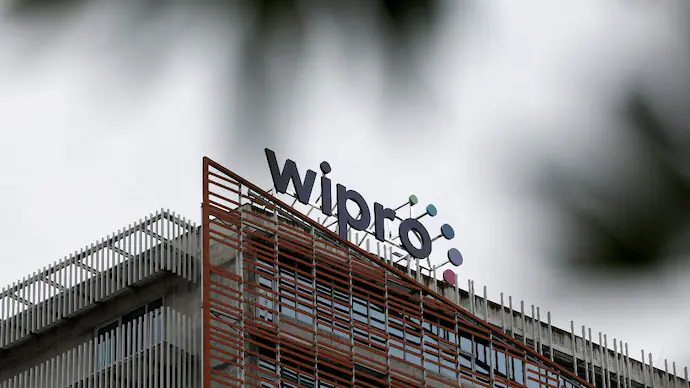
Indian IT services company Wipro is set to take over approximately 3,000 employees working in British energy major BP’s finance operations across India, Hungary and Malaysia in 2027. The arrangement marks another major outsourcing transition as multinational companies reconsider how they manage internal support functions amid pressure to lower costs and adopt Artificial Intelligence (AI).
Under the agreement, employees currently working in BP’s finance operations will move to Wipro, which will take responsibility for delivering the relevant services. BP will continue to oversee operational standards and data even after the workforce transfer, allowing the company to retain oversight while shifting the delivery of selected functions to an external technology services provider.
The deal reflects a wider change in the global outsourcing industry. Companies are increasingly transferring established in-house teams to IT services firms through long-term service agreements rather than simply recruiting external vendors to perform individual tasks. The approach can provide service providers with an existing workforce and a longer-term client relationship, while allowing companies such as BP to reorganise their cost structures.
The development comes as BP focuses on reducing debt, controlling expenditure and simplifying its business operations. It also highlights how AI-led disruption is changing the relationship between multinational companies and the large technology firms that manage their back-office and support functions.
3,000 BP finance employees to move to Wipro in 2027
The planned transfer will involve around 3,000 employees working in BP’s finance operations in three countries: India, Hungary and Malaysia. The transition is expected to take place in 2027, subject to applicable conditions attached to the agreement.
These employees currently work within BP’s internal finance operations. Following the transfer, they will become part of Wipro’s workforce and support the delivery of services covered by the partnership.
BP will continue to oversee operational standards and data after the employees move to Wipro. This arrangement indicates that outsourcing the workforce does not necessarily mean handing over every aspect of financial governance or business oversight to the service provider.
The companies have not disclosed what proportion of BP’s overall finance operations workforce will be affected. They have also not provided a detailed breakdown of how the 3,000 employees are distributed among India, Hungary and Malaysia.
BP’s existing presence in these countries provides context for the scale of the transfer. According to the company’s website, it employs approximately 7,500 people in India, more than 3,300 in Hungary and around 1,400 in Malaysia.
Wipro, meanwhile, has a much larger global workforce, employing more than 240,000 people across 65 countries. The company provides technology services, consulting and business process solutions to organisations across industries.
For Wipro, the agreement offers an opportunity to expand its relationship with a major international energy company while taking over an established finance operations workforce. For BP, the arrangement is part of a broader effort to streamline how selected corporate functions are managed.
Why BP is transferring employees to an IT services company
The agreement reflects a growing preference among multinational companies to move certain in-house operations to specialist service providers. Finance, human resources, procurement, customer support and technology management are among the functions that companies may consider for outsourcing when they believe an external provider can deliver them more efficiently.
Traditionally, large corporations have maintained their own teams in multiple countries to manage these activities. Many established global capability centres (GCCs) perform functions such as financial reporting, accounting, transaction processing, data management and internal technology support.
However, maintaining these operations directly involves expenses related to salaries, recruitment, training, infrastructure, technology and administration. Companies seeking to reduce costs may examine whether some of these activities can be delivered through an outsourcing arrangement.
Transferring an existing workforce to an IT services provider offers a different route from conventional outsourcing. Instead of building a new team from scratch, the service provider takes over employees who already understand the client’s systems, processes and operational requirements.
This can help maintain continuity during the transition. The employees bring existing institutional knowledge, while the outsourcing company gains an operational team and a commercial relationship with the client.
For BP, the arrangement is expected to simplify finance operations and support its cost-reduction efforts. For Wipro, taking over the workforce creates an opportunity to manage a larger part of the client’s operational requirements and potentially expand the relationship through additional services.
How artificial intelligence is accelerating the outsourcing shift
Artificial intelligence is becoming an important factor in decisions about corporate support operations. Companies are reassessing whether their existing internal teams, technology systems and operating models are suitable for a business environment in which AI can automate an increasing range of routine activities.
Finance operations are particularly exposed to this change because many processes involve structured information and repetitive workflows. Tasks such as invoice processing, transaction classification, reconciliation, data extraction and preparation of financial reports can increasingly be supported by automation and AI-based tools.
These technologies do not eliminate the need for human involvement in every situation. Financial reporting, regulatory compliance, complex accounting decisions and sensitive business approvals still require appropriate controls and professional oversight. However, automation can reduce the time employees spend on repetitive activities and change the skills required to manage finance operations.
As companies introduce new systems, they may decide that a specialist IT services provider is better positioned to manage technology implementation, process redesign and ongoing operations at scale.
That creates an opportunity for outsourcing companies such as Wipro. Their business models increasingly involve more than supplying employees to perform routine tasks. They can combine technology platforms, consulting, automation and AI tools with existing operational teams to deliver services under long-term contracts.
The BP-Wipro arrangement therefore reflects a wider shift in how companies think about internal support functions. Rather than treating every corporate operation as a permanent in-house responsibility, businesses are increasingly evaluating whether an external partner can manage it with a different cost structure and technology model.
Why global capability centres are being reconsidered
Global capability centres have become an important part of the operating structure of multinational companies. These centres allow businesses to manage specialised functions from locations where they can access skilled employees, technology infrastructure and competitive operating costs.
India has emerged as a major destination for GCCs because of its large technology and professional services workforce. International companies use Indian centres for software development, finance, analytics, engineering, research and other business operations.
Hungary and Malaysia also play roles in multinational companies’ international operating networks. Maintaining teams across multiple countries can provide access to different talent pools and time zones, but it can also create complex management structures and overlapping costs.
As AI changes the economics of back-office operations, headquarters are increasingly reviewing whether their existing GCC structures remain the most effective option. Some companies may retain these centres, while others may transfer selected functions to specialist outsourcing providers.
Pareekh Jain, founder of technology advisory firm EIIR Trend, said AI-led disruption was prompting global companies to rethink their captive operations. He observed that headquarters were increasingly viewing the transfer of global capability centre employees to IT services providers as an alternative to layoffs.
His assessment highlights an important distinction. Moving employees to an outsourcing company does not necessarily mean that their work disappears immediately. Instead, the legal employer and the organisation responsible for delivering the service may change, while the employees continue performing related functions for the same corporate client.
However, the longer-term impact will depend on how the service provider restructures the work, introduces automation and manages the workforce after the transfer.
How carve-out outsourcing deals work
The BP-Wipro agreement is part of a model commonly described as a carve-out outsourcing arrangement. In such deals, a company transfers a defined business function or operational team to an external service provider, which then delivers services under a commercial agreement.
According to Pareekh Jain, these arrangements are often supported by guaranteed outsourcing contracts lasting between three and five years. Such commitments provide the service provider with a degree of revenue visibility and help justify the cost of taking over an existing operation.
The model can offer advantages to both sides:
- For the client company: It can reduce the need to manage selected support functions directly and create opportunities to simplify operating costs.
- For the IT services provider: It gains an established team, operational expertise and a long-term commercial relationship.
- For employees: The transfer can provide continuity of employment within a new organisation, although their employment terms, reporting structures and future responsibilities may change.
- For operations: Existing teams can continue supporting business processes while the service provider gradually introduces new technology and automation.
Service providers may also seek additional business after completing the initial transfer. Once they manage a client’s established operations, they can demonstrate their capabilities in areas such as digital transformation, AI adoption, cloud services and process automation.
However, the success of these deals depends on more than the initial workforce transfer. Service providers must maintain service quality, protect sensitive information and meet contractual performance requirements while adapting the operation to new technologies.
BP expects simpler finance operations under the partnership
BP Chief Financial Officer Kate Thomson said the partnership with Wipro would help the company improve its finance operations and simplify processes.
The statement reflects the company’s intention to reorganise selected support activities through an external partner. BP will continue to oversee operational standards and data, indicating that the arrangement is not a complete withdrawal from responsibility for the financial information and processes involved.
For a multinational energy company, finance operations cover a wide range of activities that support business management. These can include accounting processes, reporting, transaction handling and financial administration across different markets.
Maintaining consistent procedures across countries is important for companies operating in multiple regulatory environments. An outsourcing partner must therefore work within the client’s governance requirements while ensuring that processes remain reliable and secure.
BP has not disclosed the exact share of its finance workforce affected by the deal or provided a detailed account of the financial savings it expects. Wipro has also not released further details about the agreement.
Without those figures, the precise financial impact of the partnership cannot yet be assessed. The number of employees involved, however, demonstrates the scale at which multinational companies are willing to restructure established corporate operations through outsourcing.
What the deal means for Wipro’s business
For Wipro, the BP agreement represents a significant workforce and operations transition involving a major global energy company. Taking over 3,000 employees across three countries would expand the company’s role in managing BP’s finance-related services.
Large outsourcing agreements can provide IT services firms with a more predictable stream of business when they include multi-year service commitments. They can also create opportunities to introduce additional services once the provider becomes familiar with the client’s systems and operational requirements.
However, absorbing a large workforce also brings responsibilities. Wipro will need to manage the transition, integrate employees into its organisational structure and maintain the service standards expected by BP.
The company will also need to determine how AI and automation can improve productivity without disrupting essential financial processes. This may involve redesigning workflows, introducing new technology platforms and retraining employees for responsibilities that require greater analytical or technical skills.
The agreement also reflects the changing nature of competition in the IT services industry. Companies are increasingly expected to deliver measurable business outcomes rather than simply provide technology support or additional manpower.
What happens to employees after the transfer?
The planned movement of 3,000 employees raises important questions about employment conditions, career progression and the future structure of finance operations. The companies have not disclosed detailed information about individual employee terms or how roles may change after the transition.
In workforce-transfer arrangements, employees may continue performing similar responsibilities initially because they already understand the client’s processes and systems. Over time, however, their reporting structures, training requirements and performance management may become aligned with the service provider.
The growing use of automation also means that some roles could evolve. Employees may need to develop skills in data analysis, AI-assisted finance systems, process management and technology-enabled reporting.
It would be premature to conclude that the transfer will automatically lead to job losses or that all existing positions will remain unchanged. The final outcome will depend on the contractual arrangements, the transition plan and how Wipro manages the operation after taking responsibility for the workforce.
For employees, the most important details will include the terms of transfer, continuity of benefits, location requirements, career opportunities and the extent to which their responsibilities change as automation is introduced.
AI is changing the future of India’s IT outsourcing industry
The BP-Wipro agreement arrives at a time when India’s IT services industry is adapting to a new phase of technology-led transformation. For years, Indian IT companies built their businesses around providing software development, technical support and business process services to international clients.
Artificial intelligence is changing that model by allowing companies to automate tasks that previously required substantial human involvement. As a result, traditional outsourcing arrangements are being reassessed, and service providers are under pressure to offer technology-driven productivity improvements.
India’s large professional workforce remains an important advantage, but the skills required by the industry are changing. Companies increasingly need employees who can manage AI-enabled workflows, analyse complex information, supervise automated systems and handle tasks that require human judgement.
Workforce-transfer deals could become one route through which multinational companies restructure their operations without immediately dismantling established teams. They also provide IT services firms with access to experienced employees and an opportunity to build larger relationships with global clients.
At the same time, the long-term effects on employment will depend on how quickly AI adoption changes the volume and nature of work. If automation reduces the number of people required for routine tasks, service providers may need to redeploy employees, retrain them or restructure teams over time.
BP-Wipro agreement highlights a new phase of global outsourcing
The transfer of around 3,000 BP finance employees to Wipro in 2027 illustrates how global companies are responding to the combined pressures of cost reduction, operational simplification and AI adoption. Instead of managing every support function internally, businesses are increasingly considering specialist providers that can combine established teams with technology and automation.
For BP, the partnership is intended to make finance operations simpler while supporting its wider cost-control priorities. For Wipro, it offers a substantial opportunity to expand its relationship with an international energy company and manage a large workforce across India, Hungary and Malaysia.
The agreement also highlights the changing role of Indian IT services companies. Their growth is no longer limited to traditional outsourcing and technology support. Increasingly, they are being asked to take responsibility for entire business operations, integrate AI into established processes and deliver productivity improvements over multi-year contracts.
Whether this model becomes more common will depend on the results of such partnerships. The ability to maintain service quality, protect employee interests and deliver genuine efficiency gains will determine whether workforce-transfer deals become a lasting feature of the AI-led outsourcing economy.
For breaking news and live news updates, like us on Facebook or follow us on Twitter and Instagram. Read more on Latest Careers on thefoxdaily.com.






COMMENTS 0