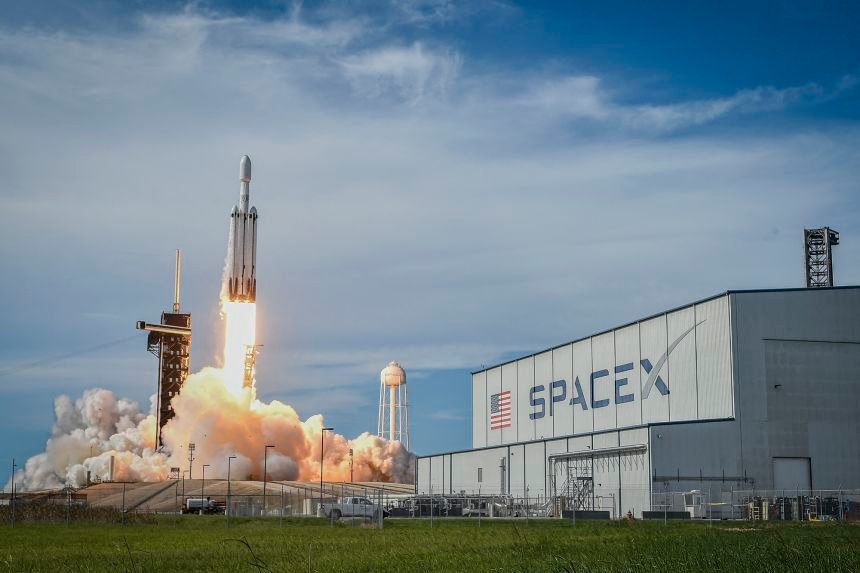
The US Federal Communications Commission (FCC) has authorized Elon Musk‘s SpaceX to deploy up to 1 million satellites in orbit to create a network of space-based data centers designed to support the rapidly growing demand for Artificial Intelligence computing power. The decision marks a significant regulatory development for the company’s ambitions to move some computing infrastructure beyond Earth.
The proposed constellation, named Starmind, will consist of orbital computing modules capable of processing large volumes of data in space before transmitting the results back to Earth. SpaceX believes the system could offer an alternative to conventional data centers, which require substantial electricity, cooling infrastructure and land.
The FCC’s authorization comes as the United States seeks to strengthen its position in the global artificial intelligence industry. As demand for advanced AI models and computing resources increases, technology companies are exploring new ways to expand processing capacity. Space-based infrastructure is one of the more ambitious approaches being considered, although its commercial and technical feasibility remains uncertain.
FCC Approves SpaceX’s Plan for 1 Million Orbital Computing Satellites
The FCC announced on Wednesday that it had authorized SpaceX to deploy its proposed Starmind constellation, comprising up to 1 million orbital compute modules. According to the agency, the satellites will help address rapidly increasing demand for AI computing power by processing large amounts of information in orbit and making the results available on Earth.
FCC Chairman Brendan Carr described the authorization as an important step towards developing infrastructure for the next generation of computing.
“This action opens a bold new frontier for the computing infrastructure needed to power America’s leadership and growth,” Carr said.
The approval gives SpaceX regulatory permission to begin developing the proposed network, but it does not mean that the entire constellation will be deployed immediately. The company will have to meet specific deployment milestones over the coming years.
The scale of the authorization is notable. With approximately 1 million satellites permitted under the license, the proposed network would be substantially larger than the existing population of operational satellites in Earth’s orbit.
What Is SpaceX’s Starmind Project?
Starmind is SpaceX’s proposed network of orbital computing modules designed to function as data-processing infrastructure in space. Instead of relying entirely on facilities built on the ground, the concept involves placing computing hardware in orbit and using it to process data before sending the results back to Earth.
The project is linked to the growing computing requirements of artificial intelligence. Training and operating advanced AI systems require substantial processing capacity, while the data centers supporting these services consume significant amounts of electricity and need extensive cooling systems.
SpaceX’s proposal aims to use the space environment to address some of these infrastructure challenges. The company argues that satellites could access near-constant solar energy, reducing their dependence on conventional electricity supplies.
The proposed architecture would involve several interconnected elements, including orbital computing hardware, solar power systems and communications links capable of transferring information between satellites and users on Earth.
However, the FCC’s authorization does not establish that all these technical components have been demonstrated at the scale required for a million-satellite network. The project remains an ambitious infrastructure proposal that will require substantial engineering and operational development.
Why Elon Musk Wants AI Data Centers in Space
One of the main motivations behind the project is the growing energy demand associated with artificial intelligence. Modern data centers require large amounts of electricity to operate servers, process information and maintain cooling systems. As AI adoption expands, technology companies are under pressure to secure additional power and computing capacity.
SpaceX believes orbital data centers could reduce some of the costs and constraints associated with building and operating large facilities on Earth.
In its application to the FCC, the company argued that satellites could directly harness near-constant solar power while requiring relatively little operating or maintenance expenditure. It also said that space-based computing could improve energy efficiency and reduce the environmental impact associated with terrestrial data centers.
SpaceX described the proposed system as a way to combine solar energy generation with computing infrastructure in orbit. If the concept works at scale, it could offer a different approach to supplying the processing capacity needed by AI services.
However, access to solar energy alone does not resolve every challenge. Orbital computing systems must also manage heat, protect sensitive electronic equipment, maintain reliable communications and operate in a difficult space environment.
SpaceX Has Warned That the Technology Is Unproven
Despite the ambitious scale of the proposal, SpaceX has acknowledged that space-based data centers involve significant technological uncertainty.
In a regulatory filing ahead of its planned June initial public offering, the company cautioned that launching data centers in space relies on “unproven” technologies and “may not achieve commercial viability.”
This disclosure is important because regulatory approval and commercial success are separate matters. The FCC’s decision permits SpaceX to pursue the project within the conditions of its license, but it does not guarantee that the company can build, operate or finance the network successfully.
SpaceX will need to demonstrate that orbital computing modules can function reliably over extended periods. It must also establish how the system will handle data transmission, hardware failures, maintenance requirements and the costs associated with launching and replacing equipment.
These challenges could determine whether the project develops into a commercially useful computing network or remains a limited technological experiment.
Elon Musk Welcomes the FCC’s Decision
Elon Musk welcomed the regulatory approval, describing the project as beneficial for the United States and the wider world.
“This will be a great asset to America and the world,” Musk wrote on X, his social media platform.
The approval is relevant to SpaceX’s broader ambitions in the technology and infrastructure sectors. The company already operates the Starlink satellite internet network, which provides connectivity through satellites in low Earth orbit. Starmind would represent a different application of orbital infrastructure, with computing rather than internet access as its central purpose.
The two initiatives could potentially share elements of SpaceX’s experience in satellite manufacturing, launch operations and orbital network management. However, operating computing infrastructure in space introduces technical requirements beyond those associated with providing satellite internet services.
Scientific Community Raises Concerns About the Satellite Constellation
The FCC’s decision has drawn criticism from astronomers and scientific organizations concerned about the environmental and observational effects of deploying such a large number of satellites.
The American Astronomical Society said it was “dismayed” by the agency’s decision. The organization had previously opposed the proposal through filings submitted to the FCC.
Its concerns focus on the potential effects of the constellation on astronomical research and the public’s ability to observe the night sky.
The organization argued that the proposed network could undermine decades of federal investment in astronomical facilities and interfere with the ability of researchers to study celestial objects.
One concern is satellite brightness. The American Astronomical Society warned that the spacecraft could appear as extremely bright objects in the night sky for extended periods. Their movement across the field of view of telescopes could interfere with observations and affect the quality of astronomical data.
The organization also highlighted the potential effects of radio emissions and waste heat from the satellites. These could create additional challenges for sensitive instruments used in astronomical research.
Concerns Over Radio Interference, Space Pollution and Atmospheric Impact
Beyond visible satellite trails, the scientific community has raised concerns about the broader environmental consequences of a constellation of this size.
Radio emissions are a particular issue because astronomical researchers use sensitive instruments to detect signals from distant objects in space. Unwanted emissions from satellites could interfere with observations, depending on their frequency, intensity and operating conditions.
The American Astronomical Society also warned that waste heat generated by orbital computing equipment could threaten sensitive astronomical instruments. These concerns highlight the need to consider how large computing satellites might affect the wider space environment.
Another issue involves the number of launches and eventual satellite reentries required to operate and maintain such a network. A constellation of up to 1 million satellites could require an extensive launch programme, while spacecraft reaching the end of their operational lives would need to be managed or removed from orbit.
The organization warned that launches and reentries could contribute to atmospheric pollution. The scale of the potential impact would depend on the number of spacecraft launched, their materials, propulsion systems and disposal methods.
These concerns place the Starmind project within a wider debate about how to balance the expansion of satellite infrastructure with the protection of scientific research and the space environment.
SpaceX Must Meet Strict Deployment Deadlines
The FCC authorization includes a phased deployment schedule requiring SpaceX to meet specific milestones. The company cannot simply retain permission for the entire constellation indefinitely without making progress towards deployment.
Under the license, SpaceX must deploy at least one authorized space station by November 2033. It must then deploy 10% of the approved constellation, equivalent to 100,000 satellites, by November 2035.
The next major milestone requires the company to have deployed 50% of the total authorized network by November 2038.
The schedule provides a framework for measuring progress while giving SpaceX several years to develop the necessary technology and launch capacity.
However, meeting the deadlines would involve a substantial manufacturing and launch operation. SpaceX would need to produce large numbers of computing satellites, arrange launches and maintain the network as spacecraft are deployed and eventually replaced.
The milestones also make clear that the authorization is a long-term undertaking rather than an immediate expansion of existing satellite services.
How Large Would a Million-Satellite Network Be?
The scale of the proposed Starmind constellation becomes clearer when compared with the number of satellites currently operating in orbit.
According to Orbital Radar, a platform that provides real-time tracking of objects in orbit, there are approximately 16,700 operational satellites in space. The European Space Agency places the number of functioning satellites slightly lower, at around 15,800.
Even using the higher estimate, SpaceX’s proposed authorization would allow a network roughly 60 times larger than the current operational satellite population.
The comparison illustrates the potential scale of the project and explains why the proposal has attracted attention beyond the technology industry. A constellation of this size would raise questions about orbital coordination, collision avoidance, spectrum management and the long-term sustainability of space operations.
It is important to distinguish between the number of satellites authorized and the number actually deployed. The FCC’s decision permits a network of up to 1 million modules, but SpaceX will have to meet the deployment schedule and demonstrate that the system can operate as intended.
Starship Test Flight Adds to SpaceX’s Space Infrastructure Ambitions
The FCC decision follows another important development in SpaceX’s launch programme. Earlier this month, the company’s Starship spacecraft completed a historic test flight during which it deployed Starlink internet satellites before returning to Earth and achieving an unprecedented landing.
The test is relevant to SpaceX’s longer-term plans because large-scale orbital infrastructure depends on reliable and increasingly capable launch systems. Deploying a constellation containing hundreds of thousands of satellites would require substantial launch capacity and the ability to place spacecraft into their intended orbits.
Starship is central to the company’s ambitions to expand its operations in space. Its development could support the deployment of larger payloads and potentially reduce the logistical barriers associated with launching extensive satellite networks.
However, a successful test flight does not by itself establish that Starship can support the operational requirements of the Starmind project. The company would still need to demonstrate reliable launch performance, regular operations and the ability to deploy and maintain orbital computing infrastructure at the required scale.
What the FCC Approval Means for the Future of AI Infrastructure
The authorization places space-based computing among the emerging approaches being explored to meet the growing infrastructure needs of artificial intelligence. It also demonstrates how the competition to develop AI capabilities is expanding beyond software, chips and conventional data centers into energy and Space Technology.
If SpaceX can overcome the technical and financial challenges, orbital data centers could eventually become an additional source of computing capacity. Their ability to use solar power directly could be attractive in a period when electricity availability and data center energy consumption are increasingly important considerations.
However, the project faces several unresolved questions. These include the reliability of computing hardware in orbit, the management of waste heat, the cost of launches, the availability of high-capacity communications and the environmental consequences of deploying and operating such a large constellation.
The concerns raised by astronomers also suggest that future expansion may require careful coordination between commercial satellite operators, regulators and scientific organizations.
Conclusion
The FCC’s authorization for SpaceX to deploy up to 1 million satellites represents a major step in Elon Musk’s plans to develop AI computing infrastructure in space. The proposed Starmind constellation is intended to process large volumes of data in orbit, using solar energy to support computing capacity that would otherwise depend on terrestrial facilities.
However, regulatory approval is only the beginning. SpaceX has acknowledged that the technology remains unproven and may not achieve commercial viability. The project also faces concerns from the scientific community over satellite brightness, radio interference, waste heat and atmospheric pollution.
The company’s ability to meet the FCC’s deployment deadlines, demonstrate reliable orbital computing and address environmental concerns will shape the project’s future. For now, the authorization establishes a framework for one of the largest proposed satellite infrastructure networks, while leaving its technical and commercial success to be demonstrated.
For breaking news and live news updates, like us on Facebook or follow us on Twitter and Instagram. Read more on Latest Business on thefoxdaily.com.






COMMENTS 0