India is seeking to move beyond its reputation as the world’s back office and establish itself as a major global centre for advanced technology, with Bengaluru emerging as the driving force behind a growing deep-tech startup ecosystem. Companies working in Space Technology, defence systems, semiconductors and Artificial Intelligence are attracting investment, securing government contracts and developing products for international markets.
For decades, India’s technology industry was primarily associated with software services and IT outsourcing. Bengaluru became home to major companies such as Infosys, Wipro and Tata Consultancy Services (TCS), while the following decade produced consumer-focused technology businesses such as Flipkart and Ola.
The latest startup wave is different. Entrepreneurs are increasingly building businesses around advanced engineering and scientific research, targeting sectors that require substantial technical expertise, long development cycles and significant capital. This shift is bringing India closer to industries traditionally dominated by established technology economies.
According to Nasscom-Zinnov, Bengaluru has more than 1,300 deep-tech companies, while funding for deep-tech startups across India is growing almost twice as fast as investment in other startup categories. The expansion reflects the country’s large engineering talent pool, stronger government support and growing interest from global investors and customers.
Bengaluru Emerges as India’s Deep-Tech Startup Hub
Bengaluru has developed from India’s leading software and IT services centre into an increasingly important location for startups working on complex technologies. The city attracts engineers, researchers, entrepreneurs and multinational companies, creating an ecosystem that supports innovation across several advanced industries.
Its deep-tech companies are working in areas such as satellite imaging, reusable rockets, defence electronics, semiconductor design and artificial intelligence. These businesses are attempting to develop products that can compete internationally rather than relying only on India’s domestic consumer market.
The growth also represents a change in the ambitions of Indian entrepreneurs. Earlier startup generations often concentrated on adapting successful business models from overseas for Indian consumers. The current wave is increasingly focused on creating original technologies and intellectual property that could serve customers around the world.
India’s deep-tech ecosystem is still developing, but the emergence of hundreds of companies suggests that the country is beginning to build a broader technology manufacturing and innovation base.
Pixxel Shows India’s Growing Space Technology Ambitions
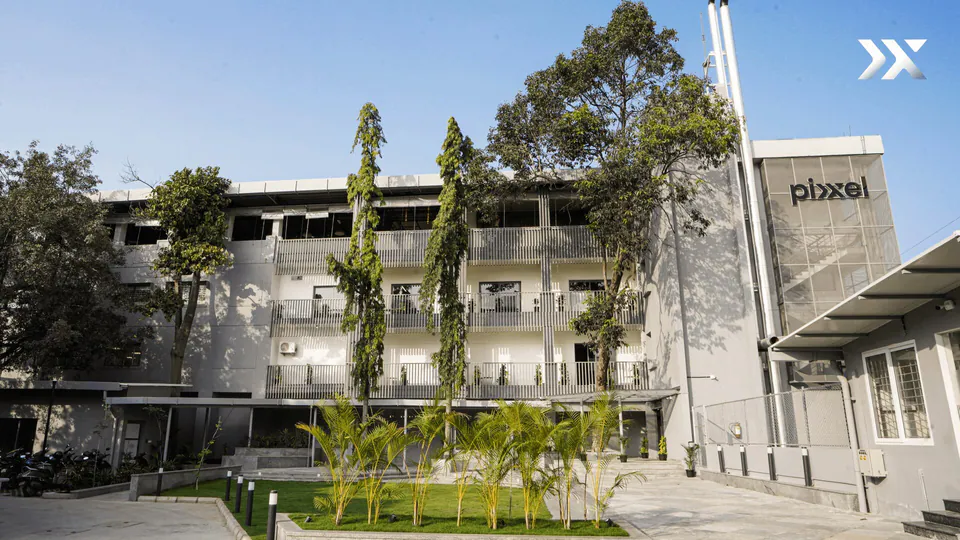
One of the most prominent examples of India’s deep-tech ambitions is Pixxel, a Bengaluru-based space technology startup founded by Awais Ahmed when he was 20 years old. The company is developing satellites equipped with hyperspectral imaging technology that can capture information across dozens of wavelengths invisible to the human eye.
Unlike conventional satellite images, hyperspectral data can reveal detailed information about the physical and chemical characteristics of objects on Earth. This makes the technology useful for applications such as identifying stressed crops, detecting oil leakages, locating mineral deposits and monitoring camouflaged military positions.
Pixxel has raised $200 million and secured contracts with India’s air force and America’s spy-satellite agency. Six of its satellites are currently orbiting Earth, and the company aims to increase that number fourfold within a year.
Ahmed’s broader ambition is to build what he describes as the world’s most comprehensive Earth-observation company. The strategy reflects an effort to position an Indian startup as a global provider of advanced satellite data rather than simply a supplier to domestic customers.
Hyperspectral Imaging Creates New Commercial Opportunities
Hyperspectral imaging could have applications across agriculture, energy, mining, environmental monitoring and national security. In agriculture, detailed satellite data can help identify crop stress and provide information that may support better land and resource management.
In the energy sector, the technology can help identify oil leakages, while mining companies could use it to assess mineral deposits. Defence applications may include detecting objects that are difficult to identify through conventional imaging methods.
These applications give Pixxel access to several potential markets. However, turning advanced satellite technology into a large commercial business will require reliable data services, continued investment and the ability to expand its satellite network.
India’s Space Startup Ecosystem Expands Rapidly
The growth of Pixxel is part of a wider transformation in India’s space industry. Around a decade ago, the country had only one space startup. Today, the number has grown to more than 400, reflecting the expansion of private-sector participation.
One of the most significant developments has been the emergence of Skyroot, a private rocket company that became India’s first space unicorn in May. It reached a valuation of $1.1 billion shortly before completing its first satellite launch.
Skyroot is among a small group of companies developing reusable rocket technology, following the model established by SpaceX. Reusable launch systems are intended to reduce the cost of sending payloads into space by allowing important rocket components to be used multiple times.
Pixxel currently relies on international launch providers, including SpaceX in California. However, Ahmed hopes to launch future satellites from India using Skyroot’s rockets. Such a development could strengthen domestic connections between satellite manufacturers and launch-service providers.
Private Companies Challenge Traditional Space Industry Structures
India’s expanding space startup ecosystem reflects a broader shift towards private-sector participation in an industry historically dominated by government institutions. Startups are developing specialised products and services that could support both commercial customers and national requirements.
The emergence of companies focused on rockets, satellite imaging and other space technologies could create a more complete domestic supply chain. If these businesses expand their capabilities, India may become better positioned to compete in international space markets.
However, the sector still needs long-term investment, reliable launch infrastructure and predictable regulatory conditions. Space technology requires substantial research and development, and companies must demonstrate that their products can operate reliably before achieving large-scale commercial adoption.
Defence Startups Attract Orders as Military Modernisation Accelerates
Deep-tech activity in Bengaluru is not limited to space exploration. Defence startups developing solar-powered drones, radar systems and other advanced equipment are also attracting significant interest as India’s armed forces undergo modernisation.
Demand for sophisticated surveillance, communication and monitoring systems is creating opportunities for private technology companies. Startups can focus on specialised products that complement the capabilities of larger defence manufacturers and public-sector organisations.
Companies such as Tonbo Imaging illustrate the growing role of Indian entrepreneurs in developing advanced defence technologies. The sector also highlights how domestic innovation can support national security requirements while creating products with potential international applications.
However, defence technology operates under stricter regulatory and security requirements than many conventional startup industries. Companies must navigate procurement processes, security clearances and restrictions on the transfer of sensitive technologies.
India’s Semiconductor and AI Ecosystem Gains Momentum
Semiconductor design is another area attracting entrepreneurial interest. Indian engineers and technology executives are increasingly establishing companies focused on specialised chips, including products required for artificial intelligence infrastructure.
In October, C2i, a company specialising in power-management chips for AI servers, was acquired by a German company for an estimated $100 million. The transaction highlighted the growing international interest in Indian semiconductor design capabilities.
Agrani Labs is also seeking to raise a similar amount to develop advanced chips. Its fundraising plans reflect the capital-intensive nature of semiconductor innovation, where companies need substantial resources to develop products and compete with established global manufacturers.
Although India has traditionally been stronger in software services than semiconductor manufacturing, the emergence of specialised chip-design businesses could help broaden its role in the global technology supply chain.
Sarvam Strengthens India’s Indigenous AI Ambitions
Artificial intelligence is another important part of the country’s deep-tech expansion. Sarvam, a government-backed initiative focused on developing an indigenous AI model, was valued at more than $1.5 billion following a $234 million funding round in June.
The initiative reflects India’s interest in developing domestic AI capabilities rather than depending entirely on technology created by overseas companies. Building local AI models could support applications designed around Indian languages, businesses and public services.
However, competing in the global AI industry requires access to advanced computing infrastructure, skilled researchers, large datasets and sustained financial resources. The success of domestic AI companies will depend on their ability to turn technical progress into useful products and commercially sustainable businesses.
India’s Engineering Talent Gives Deep-Tech Startups an Advantage
India’s large pool of technical talent is one of the most important foundations supporting its deep-tech ambitions. The country has more than 30 million engineering graduates, alongside a large number of ambitious professionals working in technology and research.
Bengaluru attracts many of these engineers because of its established technology ecosystem and employment opportunities. Hundreds of foreign companies have also established global capability centres in the city, creating access to international projects, technical expertise and professional networks.
These centres have helped strengthen the city’s position as a global technology destination. They also provide an environment in which engineers can gain experience in advanced technologies before moving into entrepreneurship.
Indian founders have traditionally been attracted to Silicon Valley when building AI startups. However, more entrepreneurs are choosing to remain in India or return from overseas, partly because tighter immigration rules in the United States have changed the choices available to skilled professionals.
The growing willingness of founders to build advanced technology businesses in India could help retain talent and encourage the development of domestic research and development capabilities.
Government Support Plays a Major Role in Deep-Tech Expansion
Unlike India’s earlier IT boom, which largely developed despite limited government involvement, the current deep-tech expansion has received substantial policy support. The Narendra Modi government has identified space, defence, semiconductors and artificial intelligence as strategic sectors where domestic capabilities could have economic and national-security benefits.
One of the most important policy changes came in 2020, when India opened its space sector to private companies. The government also established the Indian National Space Promotion and Authorisation Centre (IN-SPACe) to support and promote private-sector participation in space activities.
The Prime Minister’s Office has also helped startups obtain security clearances and pursue sensitive government contracts. Public procurement has become another route through which technology companies can secure early customers and demonstrate their capabilities.
Government Creates an $11 Billion Research Funding Pool
The government has established an $11 billion fund for high-risk research, with financing being distributed through venture-capital funds. The first awards from the programme were made in October.
Such funding is important because deep-tech companies often face a different financial challenge from conventional software startups. Developing satellites, advanced chips, rockets and defence systems requires significant investment before products can generate meaningful revenue.
Private investors may be reluctant to finance projects with long development cycles and uncertain commercial outcomes. Government-backed funding can help reduce some of this early-stage financing pressure and encourage research in strategically important technologies.
However, the effectiveness of these initiatives will depend on how efficiently capital reaches promising businesses and whether startups can convert research funding into commercially viable products.
Funding and Regulatory Challenges Could Slow India’s Deep-Tech Growth
Despite the expansion of the ecosystem, Indian deep-tech startups face several challenges. One of the biggest concerns is access to growth capital. Companies working in space, defence and semiconductors often require much larger investments than businesses operating in conventional software markets.
India’s relatively weak currency can also complicate international fundraising and technology procurement. In addition, some foreign investors remain concerned about the process of moving investment capital out of the country, which could affect their willingness to commit funds.
Founders have also complained about uneven deregulation across government departments. While the space sector has benefited from policy changes, other areas, including mining and access to rare-earth materials, remain difficult to navigate.
Government Coordination Remains a Concern
The government has launched several technology missions, but coordination between them remains limited. This can create uncertainty for startups that depend on multiple departments for approvals, funding, procurement or access to essential resources.
Deep-tech businesses often operate across several sectors. A semiconductor company, for example, may depend on research institutions, manufacturing facilities, specialised materials and international suppliers. Fragmented policymaking can increase costs and delay development.
Improving coordination between government departments could therefore become an important requirement for sustaining the sector’s growth.
National Security Concerns Could Complicate International Expansion
As Indian deep-tech companies become more successful, they are likely to seek larger overseas markets and additional foreign investment. However, their international expansion could create new questions about national security and the regulation of sensitive technologies.
Some government officials are concerned that the rapid growth of private technology businesses may be outpacing the state’s ability to monitor companies working on strategically important products. These concerns could become more significant as startups expand abroad and develop relationships with foreign investors.
Criticism has already emerged from national-security hawks and established companies over the international relationships and loyalties of some Indian Startups. Such concerns may influence decisions about investment, ownership and the export of sensitive technologies.
One important test will be India’s approach to export controls on technologies that could potentially be used by adversaries, particularly Pakistan. The government will need to balance the commercial interests of startups with national-security requirements.
Excessively restrictive rules could limit access to international capital and customers, while insufficient oversight could create security risks. Establishing a clear and predictable regulatory framework will be important for companies operating in these sectors.
Bengaluru’s Infrastructure Problems Threaten Its Technology Ambitions
Even as Bengaluru attracts more deep-tech companies and skilled professionals, the city faces serious infrastructure challenges. Traffic congestion, unreliable utilities and poorly maintained roads have become persistent concerns for residents and businesses.
These problems could weaken Bengaluru’s ability to compete with established global technology centres. Deep-tech companies need reliable transport, electricity, industrial facilities and access to skilled workers. Poor urban infrastructure can increase operating costs and make it more difficult to attract and retain talent.
Krishna Byre Gowda, the urban development minister in Karnataka’s Congress-led government, has said the state plans to build nearly 100 kilometres of metro tracks over the next five years or so. The proposed infrastructure programme also includes additional roads and two tunnels intended to cross the city.
However, entrepreneurs remain sceptical about whether these plans will translate into visible improvements quickly enough. Pixxel founder Awais Ahmed has pointed to the contrast between Bengaluru’s technological ambition and its poor road conditions.
Despite the infrastructure shortcomings, Ahmed believes the city’s talent and ambition will remain its biggest strengths. He argues that Bengaluru will continue to attract people who want to build globally significant technology companies.
Can India Become a Global Deep-Tech Powerhouse?
India’s growing deep-tech ecosystem represents a major change in the country’s technology ambitions. The expansion of space startups, defence companies, semiconductor designers and AI businesses suggests that the country is moving beyond its traditional strengths in IT services and software outsourcing.
Companies such as Pixxel and Skyroot demonstrate that Indian entrepreneurs are increasingly developing sophisticated products for international markets. Semiconductor firms and AI initiatives are also attempting to establish domestic capabilities in areas that are central to the global technology economy.
Government support, a large engineering workforce and growing private investment provide a strong foundation for further expansion. However, access to growth capital, regulatory coordination, national-security restrictions and Bengaluru’s infrastructure problems remain important obstacles.
The next phase of India’s deep-tech journey will depend on whether the country can convert its growing startup activity into sustainable businesses with global reach. If policymakers can maintain a supportive regulatory environment while addressing infrastructure and funding gaps, Bengaluru could strengthen its position as an international centre for advanced technology.
For now, India’s ambition to become a deep-tech powerhouse is increasingly visible. The challenge will be to ensure that its startups can move from promising research and early contracts to large-scale commercial success.
For breaking news and live news updates, like us on Facebook or follow us on Twitter and Instagram. Read more on Latest Business on thefoxdaily.com.






COMMENTS 0