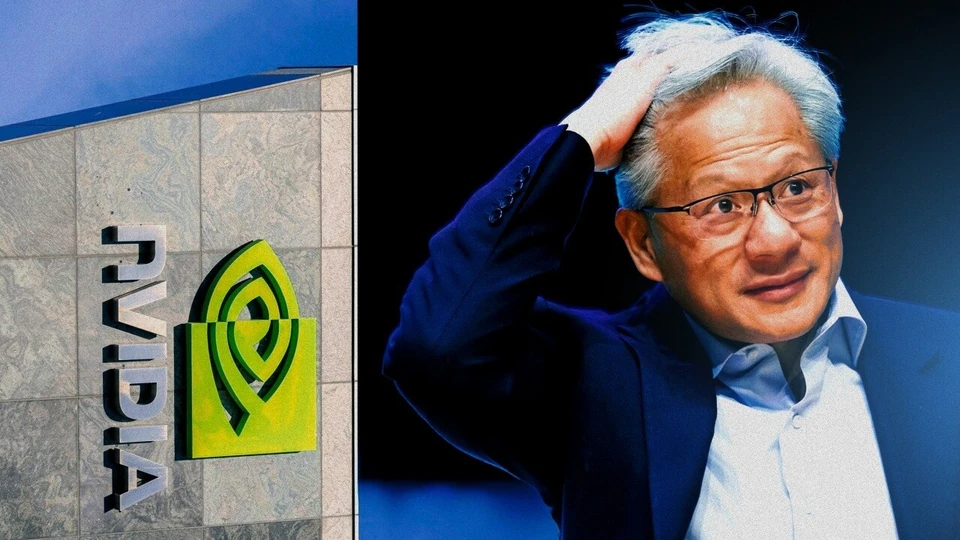
Jensen Huang’s return as Nvidia chief executive has triggered celebrations inside the chipmaker and expressions of support from prominent technology and business leaders. But beyond the dramatic comeback, his reinstatement has raised a difficult question for corporate America: should a company’s most influential executive be treated differently when allegations of personal misconduct threaten their position?
Huang resigned after allegations involving two extramarital relationships, one with a subordinate and another with a customer whom US officials reportedly believed had connections to Chinese intelligence. His return followed pressure from employees, support from President Donald Trump and a sharp market selloff that reportedly erased more than $2 trillion from Nvidia’s market capitalisation.
The reaction was swift. Bill Ackman, chief executive of Pershing Square, wrote on X, “The wisdom of the crowd prevails.” Elon Musk posted, “The mistake has been corrected.” Sam Altman, who was briefly removed as OpenAI chief executive in 2023 before returning, welcomed Huang with an upbeat “Jensen!”
Yet Corporate Governance experts and former executives have focused on a different consequence. They are questioning what Huang’s reinstatement signals about workplace conduct, executive accountability, board independence and the risks of allowing one individual to become indispensable to a company.
The debate extends well beyond Nvidia. Over the past two decades, several high-profile executives have lost their jobs after workplace relationships or allegations of misconduct came to light. Huang’s return has reopened the discussion about whether corporate policies are applied consistently when the executive involved is also central to a company’s financial and strategic success.
Why Jensen Huang’s Return Has Become a Corporate Governance Debate
Huang’s reinstatement was unusual because it followed a period of intense uncertainty about his position and the future of Nvidia. The company is central to the global artificial intelligence industry, supplying advanced processors used in data centres and AI systems around the world.
His departure was followed by a major decline in Nvidia’s market value, while his return brought a strong recovery in its share price. The financial reaction highlighted how closely investors associate the company’s prospects with its co-founder and chief executive.
President Trump reportedly supported Huang’s return, while employees also appealed for him to resume leadership. These factors contributed to the pressure surrounding the board’s decision.
However, the episode has created a governance dilemma. If a board reverses a leadership decision because the executive is considered too important to lose, it risks creating the impression that corporate rules are flexible for powerful individuals.
Harry Kraemer Jr., former chief executive of Baxter International and now a management professor at Northwestern University’s business school, said the episode prompted calls and messages from former colleagues. He said he kept returning to one central question: “What is the message that’s sent to every other CEO in the U.S.?”
That question captures the wider concern. Companies routinely establish workplace policies to protect employees, prevent conflicts of interest and maintain professional boundaries. If a chief executive is treated differently from other employees, boards may have to explain why the decision is consistent with the organisation’s stated principles.
Corporate America Has Seen High-Profile Executives Lose Their Jobs Over Workplace Relationships
Huang’s case comes after several prominent corporate leaders faced professional consequences over relationships or conduct involving colleagues.
Former McDonald’s chief executive Steve Easterbrook lost his position after a consensual relationship with an employee came to light. The company said the relationship violated its policies, and it later pursued legal action over severance payments after alleging that Easterbrook had concealed additional relationships.
BP’s former chief executive Bernard Looney resigned in 2023 after the company examined his disclosures about past relationships with colleagues. The controversy focused on whether he had provided complete information to the board about personal relationships involving employees.
Norfolk Southern chief executive Alan Shaw was dismissed in 2024 following an investigation into an undisclosed relationship with the company’s chief legal officer. The company said the relationship violated its policies.
Another widely discussed example involved Andy Byron, the former chief executive of technology company Astronomer. He resigned after appearing on a stadium kiss-cam with another company executive during a Coldplay concert, triggering intense public attention and questions about workplace relationships.
These cases are not identical. They involved different company policies, circumstances, investigations and board decisions. Nevertheless, they demonstrate that relationships involving senior executives can become corporate governance issues, particularly when reporting lines, disclosure obligations or workplace rules are involved.
The central distinction is not simply whether a relationship is consensual. Boards must also consider whether one person has authority over the other, whether conflicts of interest exist, whether company policies were followed and whether the relationship was properly disclosed.
Why Silicon Valley’s ‘Brilliant Leader’ Culture Complicates Accountability
The technology industry has long celebrated founders and executives who are seen as unusually ambitious, demanding or disruptive. Their ability to build successful companies can create a culture in which employees and directors become reluctant to challenge their behaviour.
Margaret O’Mara, a historian of the technology industry at the University of Washington, said Silicon Valley has a longstanding tension between rules designed to protect workers and the idea of the exceptional leader whose unconventional behaviour is tolerated because of their achievements.
She explained: “If there’s a tone set at the top of tolerating certain actions, managerial behavior, that’s the culture of the company.”
Her observation points to an important aspect of corporate culture: employees often judge an organisation not only by the rules written in its handbook but also by how those rules are enforced at the highest level.
If a company disciplines junior employees for violating workplace policies but makes exceptions for its chief executive, the difference can undermine confidence in management. It can also create uncertainty about whether employees can raise concerns without risking their careers.
O’Mara said Huang did not simply disappear from public view after the controversy. Instead, he pressed his case and returned to leadership, potentially establishing a precedent that other corporate boards may examine.
The implications are especially relevant in founder-led technology companies, where a chief executive may exercise significant influence over strategy, hiring, product development and corporate identity.
Huang’s Influence and Nvidia’s Dependence on One Executive
One major factor behind Huang’s comeback is his perceived importance to Nvidia. He is not merely the company’s chief executive; he is its co-founder and the public face of its rise during the artificial intelligence boom.
Huang has built close relationships with employees, customers, suppliers and political leaders. His influence has helped position Nvidia at the centre of the global AI industry, where access to advanced chips and computing infrastructure has become strategically important.
Leadership experts have pointed to the company’s organisational structure as another reason his departure was difficult. Huang reportedly had dozens of direct reports, while Nvidia had no obvious successor ready to take over his responsibilities.
This concentration of authority can create operational risks. When a company relies heavily on one individual, the board may find it difficult to make decisions that could threaten that person’s position, even when governance concerns arise.
The problem is not limited to personal controversies. A sudden departure caused by illness, retirement or another unexpected event could also disrupt a company that lacks a credible succession plan.
Charles Elson, a former board member at Sunbeam Corporation and AutoZone and founding director of the University of Delaware’s Weinberg Center for Corporate Governance, questioned whether Nvidia’s decision was consistent with the principle of equal treatment under company policy.
“You can’t have one person subject to the policy and someone else not they’re all employees,” Elson said.
He argued that the company risks weakening its own management standards if it creates exceptions for an executive because of their reputation or commercial importance. He also questioned the business logic of allowing one leader to become so central that the company struggles to function without them.
“It is really poor, in my view, business management,” he said.
Should Boards Make Exceptions for Irreplaceable CEOs?
The debate over Huang’s return raises a difficult question for corporate boards: how should they balance the interests of shareholders, employees and the long-term stability of a company when a chief executive becomes closely identified with its success?
In theory, boards are responsible for supervising management, evaluating executive performance and ensuring that company policies are applied consistently. They must also protect the organisation from risks arising from conflicts of interest, misconduct or inadequate succession planning.
In practice, the decision can become more complicated when the executive is a founder with a strong relationship with investors and employees. If the company is highly dependent on that individual, replacing them may carry significant commercial and operational risks.
Some corporate advisers have therefore urged caution about treating Huang’s reinstatement as a universal precedent. They argue that executive departures and returns depend on the circumstances of each case, including the nature of the allegations, the board’s investigation and the company’s specific business position.
Irina Wolpert, who leads the Americas FinTech practice at executive search and leadership advisory firm Egon Zehnder, said employees pay attention to what companies reward, tolerate and hold people accountable for.
“When a uniquely consequential leader is treated differently, the board has to be particularly clear about the principles behind that decision and how those principles connect to the culture it wants to sustain,” Wolpert said.
Her point highlights the importance of transparency. A board may have reasons to retain a particular executive, but it must also explain how its decision fits the company’s values and governance standards.
The ‘Too Big to Fail’ Comparison in Corporate Leadership
Peter Gleason, chief executive of the National Association of Corporate Directors, compared the situation with the debates surrounding institutions considered too important to fail during the 2008 financial crisis.
His comparison reflects Nvidia’s influence beyond its own shareholders. The company’s market valuation and position in the AI supply chain mean that its performance can have consequences for technology companies, investors and the wider global economy.
When a business becomes deeply embedded in the financial system or a critical technology sector, a sudden leadership crisis can create uncertainty far beyond its headquarters. That can make boards more cautious about decisions that might destabilise the company.
However, Gleason emphasised that boards must preserve their independence. Founder-led chief executives are relatively rare among publicly traded companies, but succession planning remains one of a board’s most important responsibilities.
A company that has no credible plan for replacing its chief executive is already exposed to a governance risk, regardless of whether a leadership crisis has occurred.
Gleason described Huang’s return as a case that could be studied for years. The episode illustrates the tension between retaining a leader who has helped create extraordinary business value and maintaining governance systems that do not depend on one person’s position.
What Huang’s Return Could Mean for Employees and Corporate Culture
The implications of Nvidia’s decision extend to employees who may be watching how the company handles allegations involving senior leadership.
Workplace policies are intended to establish clear expectations around professional relationships, conflicts of interest, disclosure and the use of authority. Their credibility depends on whether they apply consistently across the organisation.
Relationships between executives and subordinates can create particular challenges because senior leaders often control promotions, compensation, performance reviews and career opportunities. Even when a relationship is described as consensual, differences in professional power can raise questions about fairness and conflicts of interest.
Boards therefore need procedures that allow employees to report concerns, ensure investigations are independent and prevent senior executives from influencing the handling of complaints involving themselves.
Huang’s return also creates a leadership challenge inside Nvidia. He told employees who welcomed him back with chants of “Jen-sen” that he intended to improve as a chief executive.
“I’m going to be a better CEO the second time around,” he said.
That statement sets an expectation, but rebuilding trust will depend on how the company responds to the questions raised during the controversy. Employees will be watching whether internal standards, reporting channels and management practices receive greater attention.
Nvidia’s Board Faces Questions About Independence and Succession Planning
The reinstatement has placed Nvidia’s board under scrutiny over how it reached its decision and how it intends to oversee the company going forward.
A board must be able to challenge a chief executive even when that executive is a founder or a major reason for the company’s commercial success. Its responsibility is not simply to protect the company’s short-term market value but also to safeguard its long-term stability and reputation.
The controversy has highlighted two related governance priorities: independent oversight and succession planning.
- Independent oversight: Boards need processes that allow allegations involving senior executives to be examined without undue influence from the person concerned.
- Consistent policy enforcement: Workplace rules must apply across the organisation, with clear explanations for decisions involving senior leadership.
- Succession planning: Companies should identify and prepare potential successors rather than relying on a single executive to manage every major strategic relationship.
- Transparent communication: Employees, shareholders and other stakeholders need a clear explanation of the principles behind major leadership decisions.
These measures do not mean that every controversy must automatically result in an executive’s dismissal. They mean that the process for assessing conduct and deciding consequences should be credible, independent and consistent.
Jensen Huang’s Comeback Could Become a Long-Term Corporate Governance Case Study
Huang’s return to Nvidia has demonstrated how difficult it can be for a board to separate an executive’s personal conduct from the company’s commercial interests when the leader is deeply associated with its success.
His reinstatement has been welcomed by prominent business figures and employees, while Nvidia’s share-price recovery suggests that many investors were relieved to see him return. But those reactions do not settle the wider questions about workplace accountability, board independence and the risks of concentrating authority in one individual.
For corporate America, the episode is a reminder that leadership decisions send signals throughout an organisation. Employees observe whether policies are enforced consistently, investors assess whether boards can exercise independent judgment, and customers consider whether a company can remain stable through a leadership transition.
The lasting significance of Huang’s return may therefore depend less on the immediate market reaction and more on what Nvidia does next. If the company strengthens oversight and succession planning, the episode could become a catalyst for governance reforms. If its dependence on one executive remains unchanged, the same vulnerabilities could reappear during a future crisis.
Huang has regained his position, but the questions raised by his departure have not disappeared. His comeback has become a test not only of his leadership but also of how modern corporations balance exceptional executive influence with the rules and accountability expected of everyone else.
For breaking news and live news updates, like us on Facebook or follow us on Twitter and Instagram. Read more on Latest Business on thefoxdaily.com.






COMMENTS 0