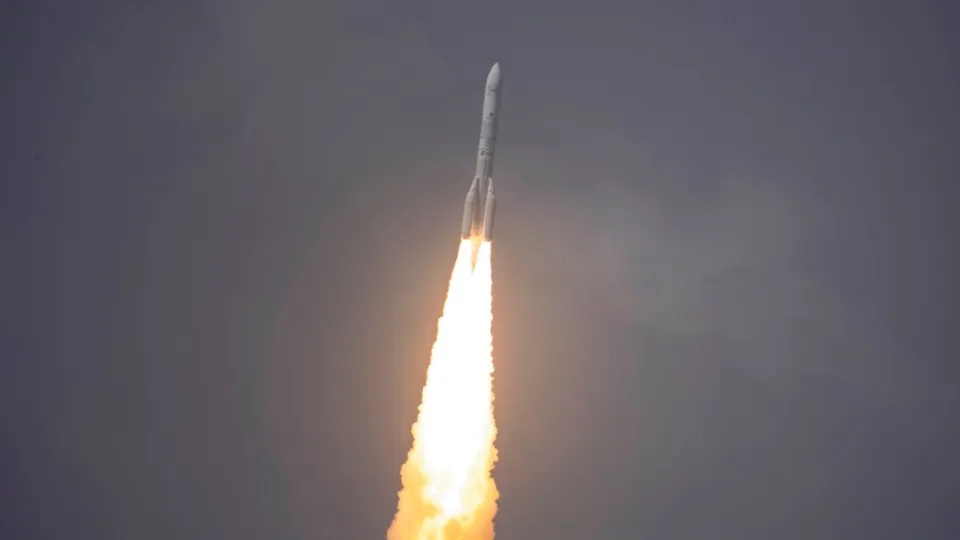
Amazon is facing mounting challenges in its effort to build a satellite-internet business capable of competing with Elon Musk’s Starlink. Its Amazon Leo constellation is designed to deliver high-speed internet to remote and underserved locations, but repeated rocket launch setbacks and the high cost of operating a large satellite network are slowing its progress.
The company is racing to introduce commercial services by the end of the year. However, a series of launch-related problems has raised questions about whether Amazon can deploy enough satellites quickly enough to meet its ambitions. A vehicle failure earlier this month disrupted its launch programme, while rocket company Arianespace briefly delayed another launch involving 36 satellites on Monday.
Amazon says it remains on track to meet its year-end commercial launch target. Nevertheless, the gap between its satellite network and Starlink remains substantial. Amazon Leo has almost 400 satellites in orbit, compared with more than 11,000 operated by Starlink, according to the companies.
The challenge is particularly significant because Starlink has already established a large operational network and has been providing Satellite Internet services for years. Amazon must overcome launch capacity constraints, activate its existing satellites and develop a commercially competitive service while investing billions of dollars in the project.
Amazon Leo Faces Major Rocket Launch Challenges
Amazon Leo, originally known as Project Kuiper, received authorisation from the Federal Communications Commission (FCC) in 2020. The project aims to establish a constellation of thousands of low-Earth-orbit satellites capable of providing broadband connectivity to customers outside the reach of conventional internet infrastructure.
Unlike SpaceX, which operates its own rockets through its launch business, Amazon depends on several external launch providers. These include Jeff Bezos’ Blue Origin, United Launch Alliance and Arianespace. The strategy gives Amazon access to multiple launch vehicles but also exposes the programme to delays and failures across different providers.
One major setback came in May, when Blue Origin’s New Glenn rocket exploded, delaying the deployment of Amazon Leo satellites. Another disruption occurred earlier this month when a launch involving 40 Amazon satellites aboard United Launch Alliance’s Vulcan rocket failed.
The company also experienced a brief delay to a launch scheduled for Monday, when Arianespace was preparing to send 36 additional satellites into orbit. Although the delay was described as temporary, it added to the difficulties facing Amazon as it tries to accelerate its deployment schedule.
These setbacks have created a bottleneck between satellite manufacturing and deployment. Amazon has been able to produce satellites in significant numbers, but getting them into orbit remains a major operational challenge.
Clayton Swope, deputy director of the Aerospace Security Project at the Center for Strategic and International Studies, said Amazon appeared to have manufactured satellites at scale, leaving some waiting for launch. Swope, who previously worked on the Amazon satellite project, compared the situation to waiting for a ride-share vehicle during a busy period.
His comparison highlights the central problem: even if Amazon can manufacture enough satellites, the constellation cannot expand at the required pace without reliable access to launch vehicles.
Starlink Has a Significant Advantage in Satellite Numbers
The difference in the size of the two satellite networks illustrates how far Amazon has to go before it can compete directly with Starlink on global coverage and operational scale.
Amazon Leo currently has almost 400 satellites in orbit, while Starlink has more than 11,000, according to figures provided by the companies. Starlink’s much larger constellation gives it an established presence in the satellite broadband market, while Amazon is still building the infrastructure needed to begin commercial operations.
SpaceX benefits from controlling both satellite production and rocket launches. Its ability to use its own launch vehicles gives it greater coordination between manufacturing schedules and deployment requirements.
Amazon, by contrast, must coordinate with multiple external providers. Although this approach can reduce dependence on a single launch company, it also means that the satellite programme is exposed to the availability, performance and schedules of different rockets.
Amazon has also used SpaceX as one of its launch partners and said it has moved several missions forward using the company’s Falcon 9 rocket. This creates an unusual situation in which Amazon is relying partly on its principal competitor to help deploy the infrastructure needed to challenge Starlink.
The company believes that working with several providers offers greater flexibility and reduces the risk associated with depending on one launch system. However, the recent failures demonstrate that diversification alone cannot eliminate launch-related bottlenecks.
Regulatory Support Gives Amazon More Time
Amazon’s satellite programme has received regulatory and policy support as it works towards building a large-scale broadband network. In June, the Federal Communications Commission waived a requirement that Amazon have more than 1,600 satellites in orbit by the summer.
The waiver gives the company additional flexibility as it deals with launch delays and works towards expanding its constellation. Without sufficient time to deploy satellites, Amazon could face difficulties meeting regulatory milestones while completing the infrastructure required for commercial service.
Government broadband policies have also created opportunities for both Amazon Leo and Starlink. Commerce Department policies have encouraged states to direct some federal broadband grants towards satellite internet providers, rather than limiting support to traditional fibre-optic cable companies.
The Commerce Department said the administration’s broadband approach supports innovation and avoids favouring one internet technology over another.
This policy direction could help satellite providers compete for public broadband funding, particularly in areas where extending conventional infrastructure is difficult or expensive. For Amazon, such opportunities could become important as it tries to establish a customer base against Starlink’s existing network.
However, regulatory flexibility and government support cannot replace the need for reliable launches. Amazon still has to put its satellites into orbit, activate them and establish a network capable of delivering consistent broadband services.
Building Amazon Leo Is an Expensive Operation
The financial scale of Amazon’s satellite project is another major challenge. Although Amazon is one of the world’s largest companies by annual revenue, developing a broadband constellation in low-Earth orbit requires substantial investment in satellite manufacturing, rocket launches and supporting infrastructure.
According to Mark Mahaney of Evercore ISI, each Amazon Leo satellite costs approximately $2 million to manufacture, while the company is expected to spend at least $4 billion on the project this year. Amazon declined to comment on these estimates.
The cost of building a satellite network extends beyond manufacturing individual spacecraft. Satellites must be launched, placed into their intended orbits, activated and integrated into a functioning communications system. The company also needs the supporting infrastructure required to provide broadband services to consumers and businesses.
Clayton Swope said developing space infrastructure at scale is expensive, particularly when the objective is to build a large broadband constellation. The combination of manufacturing and launch expenses makes the project financially demanding even for a company with Amazon’s resources.
Launch failures can add further pressure because they delay the use of already manufactured satellites and disrupt deployment schedules. A longer rollout could also postpone the point at which Amazon begins generating commercial revenue from its network.
For Amazon, the challenge is therefore not simply to spend enough money to build thousands of satellites. It must ensure that its manufacturing capacity, launch partnerships and commercial plans progress together.
Starlink’s Ukraine Controversy Creates Demand for an Alternative
Despite Starlink’s substantial lead, concerns about the company’s geopolitical influence have created an opportunity for competing satellite internet providers. Governments and consumers are increasingly interested in having alternatives to a service that has become important in both civilian and military communications.
The debate intensified after The Wall Street Journal reported in October that Musk had ordered a slowdown of a military-grade version of Starlink’s service used by Ukraine. The report said the service was relied upon to support Ukrainian operations against Russian forces, including targeting military positions and defending against missile and drone attacks.
The reported disruption renewed concerns about the consequences of relying heavily on a privately controlled satellite network during a conflict. It also raised questions about how decisions by a commercial technology company could affect military communications and national security.
Chris Quilty, an analyst and partner at research and advisory firm Quilty Space, said the satellite industry was eager to develop a counterweight to SpaceX.
The controversy has strengthened the argument for having multiple providers capable of delivering satellite connectivity. If governments and businesses have access to alternative networks, they may be less dependent on a single company’s infrastructure and commercial decisions.
However, developing such an alternative requires more than announcing a competing service. Amazon must build a sufficiently large constellation, demonstrate reliable coverage and establish the operational capabilities needed to serve customers at scale.
Musk and Zelensky Dispute Claims Over Starlink Restrictions
Musk has disputed claims that SpaceX controls Ukraine’s access to a government version of its satellite communications service. He has said that the US government, rather than SpaceX, controls Starshield, a government-focused version of the technology.
Speaking at the New York Times DealBook Summit last week, Musk said SpaceX had denied Ukrainian President Volodymyr Zelensky’s requests to use Starlink’s commercial satellites for offensive military operations.
When asked about Zelensky’s claim that Starshield had been slowed down, Musk rejected the allegation, saying, “That’s false.”
Zelensky subsequently defended his statement in an interview with CNN. Referring to his earlier comments about the service not working, he said, “When I said that Starshield doesn’t work, it was 100% truth.”
The disagreement has added to the wider debate over the relationship between private satellite operators, governments and military users. It has also highlighted why some policymakers and industry participants want more competition in satellite communications.
For Amazon, the controversy creates a potential commercial opening. However, the company will need to demonstrate that Amazon Leo can offer a dependable alternative rather than relying solely on concerns about Starlink’s position.
Amazon’s Globalstar Deal and Airline Wi-Fi Agreements
Amazon’s satellite ambitions extend beyond providing broadband to homes and businesses in remote locations. The company is also exploring ways to connect consumer smartphones directly to satellite networks.
Its agreement to acquire satellite operator Globalstar, announced earlier this year, forms part of this strategy. The deal is intended to support the development of satellite connectivity for consumer smartphones, potentially expanding Amazon’s services beyond conventional broadband terminals.
Direct satellite-to-smartphone connectivity could provide communication options in areas where mobile networks are unavailable or unreliable. It also gives Amazon an opportunity to participate in a growing market for satellite-based mobile services.
Amazon has separately signed agreements to provide in-flight Wi-Fi services to Delta Air Lines and JetBlue. These partnerships could offer another commercial route for its satellite network by targeting the aviation sector, where airlines need reliable connectivity for passengers and onboard operations.
Delta Chief Executive Ed Bastian recently told Bloomberg that he was confident in the airline’s decision not to select Starlink, saying the company plays “the long game.”
His comments indicate that some potential customers may be willing to consider alternatives to Starlink, particularly if they believe another provider can offer a suitable long-term service. However, Amazon will still need to deliver the coverage, reliability and capacity required by airlines.
Can Amazon Leo Catch Up With SpaceX?
Amazon’s year-end commercial service target is an important milestone for the company. Achieving it would demonstrate that the project has moved beyond satellite manufacturing and initial deployment towards providing a functioning broadband service.
Yet the scale of Starlink’s existing network means Amazon is unlikely to close the gap quickly. With more than 11,000 satellites already in orbit, SpaceX has a substantial infrastructure advantage over Amazon Leo’s constellation of almost 400 satellites.
Amazon’s progress will depend heavily on the reliability of its launch partners, the speed at which it can activate satellites and its ability to manage the substantial costs of building a global network. Its decision to work with multiple launch providers could improve flexibility, but recent rocket failures show that deployment remains vulnerable to technical setbacks.
The opportunity is nevertheless significant. Demand for high-speed internet in remote areas, growing interest in direct-to-smartphone satellite connectivity and the need for alternatives to Starlink could create markets for Amazon Leo beyond traditional residential broadband.
Amazon has the financial resources, manufacturing ambitions and commercial partnerships to pursue the project. What it still needs is a dependable path from satellite production to a fully operational network.
Until that bottleneck is resolved, Amazon Leo will remain behind Starlink in deployment scale and market maturity. Its year-end commercial launch target will therefore be an important test of whether Amazon can turn its satellite investment into a credible competitor in the global space-based internet market.
For breaking news and live news updates, like us on Facebook or follow us on Twitter and Instagram. Read more on Latest Business on thefoxdaily.com.






COMMENTS 0