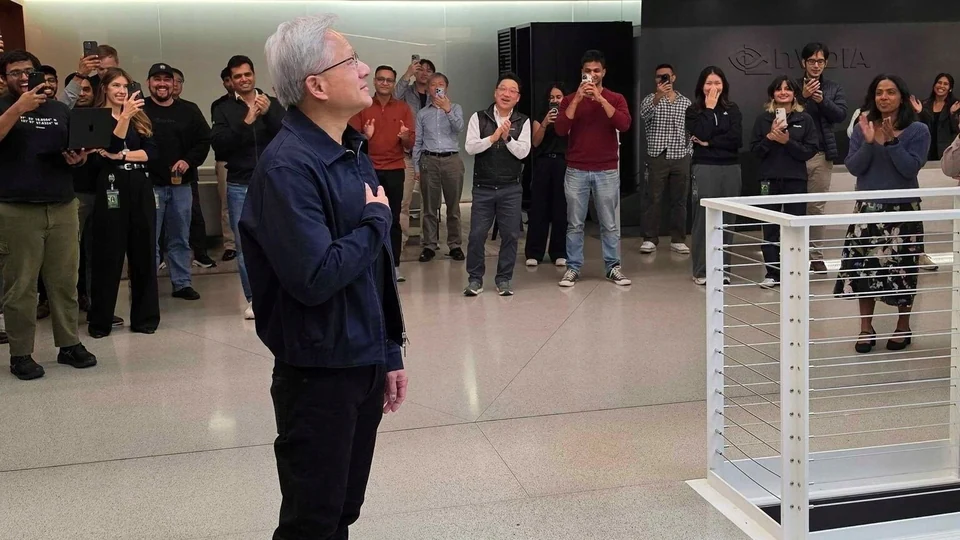
Jensen Huang is back as chief executive of Nvidia, but his reinstatement has not erased the controversy that forced him out or the questions now surrounding the world’s most influential Artificial Intelligence chipmaker. On November 23, 2026, Nvidia’s board reinstated its co-founder just 12 days after his resignation, reversing an earlier position that it had no intention of restoring him to the role.
The decision followed a turbulent period for the company. Huang resigned on November 11 amid allegations involving personal relationships, including an alleged connection with a Chinese national suspected of links to intelligence activities. The controversy triggered questions about national security, corporate governance and Nvidia’s compliance with restrictions on advanced semiconductor exports to China.
Nvidia’s board said it was satisfied with Huang’s candour and confident that his return did not pose a national-security risk. However, its internal investigation had not yet concluded. The rapid reversal has therefore restored Huang’s position without resolving the issues that brought his leadership under scrutiny.
The financial reaction has been dramatic. Nvidia reportedly lost more than $1 trillion in market value during the period following Huang’s resignation, while its share price surged by roughly a third after the board announced his return. But the market rebound does not necessarily mean the company’s wider problems have disappeared.
Huang returns to a different political and corporate environment, with tougher export-control proposals, congressional scrutiny and questions from employees, customers and suppliers. His challenge is no longer simply to lead Nvidia through the AI boom. He must also rebuild confidence in his leadership and address concerns about how the company manages national-security risks and corporate accountability.
Why Nvidia’s Board Reinstated Jensen Huang
The speed of Huang’s return has made the episode particularly unusual in Silicon Valley. The board reinstated him on November 23, only 12 days after he stepped down. Its decision reversed the position it had communicated on November 17, when it said there was no intention of giving him his job back.
The board’s explanation centred on its assessment of Huang’s conduct and the national-security implications of his reinstatement. It said it was satisfied with his candour and believed his return did not create a national-security risk.
However, the timing raises questions about the relationship between the board’s public assurances and the unfinished investigation. Reinstating a chief executive before an inquiry is complete does not automatically settle the underlying allegations or establish that every relevant concern has been addressed.
The episode also places Nvidia’s governance arrangements under greater scrutiny. Huang co-founded the company and has led it for decades, making him closely associated with its strategy, culture and rise to a multitrillion-dollar business. His return may reassure investors who regard his leadership as central to Nvidia’s success, but it also raises questions about how independently the company can assess concerns involving its most powerful executive.
December 1 Congressional Appearance Will Be Huang’s First Major Test
Huang’s immediate challenge is expected to come on December 1, when he is due to face questions before Congress. The appearance will place his relationship with Alice Huang, a Chinese national and former executive at Singapore-based data-centre developer Megaspeed, under renewed attention.
Megaspeed purchased Nvidia chips, making the company’s business relationships relevant to wider questions about how advanced AI computing equipment reaches customers and whether export restrictions are being respected.
The allegations surrounding the relationship have raised concerns because of Alice Huang’s reported connections and the national-security questions examined during the controversy. These matters remain subject to scrutiny, and allegations should not be treated as proof that Jensen Huang engaged in espionage or knowingly facilitated the transfer of restricted technology.
The Nvidia board has maintained that Huang’s reinstatement does not pose a national-security risk. Nevertheless, lawmakers are likely to examine the company’s due diligence, its commercial relationships and the information available to its leadership when dealing with customers and intermediaries connected to international chip sales.
Congressional scrutiny may extend beyond the December appearance. Democrats have indicated that they intend to pursue investigations when they take control of both chambers of Congress next year. This could keep the controversy in public view well after Huang has resumed his executive responsibilities.
Trump Administration Divided Over Huang’s Return
The controversy has also exposed differing views within the Trump administration about Huang’s leadership and Nvidia’s position in the global semiconductor market.
President Donald Trump reportedly supported Huang’s return and is said to have joined a board meeting by telephone to argue in favour of reinstating the Nvidia co-founder. His position reflects the importance of Nvidia to the American technology industry and the administration’s broader interest in maintaining US leadership in artificial intelligence.
Other senior officials have expressed reservations. Treasury Secretary Scott Bessent called for a dramatic shake-up at Nvidia on November 15 and argued that the company should appoint an outside chief executive. A week later, he appeared to soften his position, suggesting that Huang could now be regarded as an outsider after resigning from his position.
Secretary of State Marco Rubio has also been associated with the national-security concerns surrounding Huang. Rubio oversaw an intelligence memorandum examining the chief executive’s reported connections to Alice Huang, which became part of the circumstances surrounding his departure.
These differing positions matter because Nvidia operates at the intersection of commercial technology, national security and US-China competition. The company is not simply selling processors to ordinary customers. Its advanced chips are essential to the development and operation of powerful AI systems, making decisions about who can access them a major policy issue.
US Export Controls Could Become a Bigger Challenge for Nvidia
One of Huang’s most persistent arguments has been that restricting advanced chip sales to China could ultimately benefit Chinese semiconductor companies. He has maintained that limiting access to American technology encourages China to accelerate the development of domestic alternatives rather than remain dependent on US suppliers.
That position is becoming harder to advance as Washington considers additional restrictions on China’s access to advanced computing infrastructure.
Five days after Huang resigned, the US Commerce Department announced a rule intended to prevent Chinese companies from renting access to advanced AI chips through data centres located outside China. The measure targets a potential route through which restricted computing capabilities could be accessed without directly importing the hardware into China.
The issue is particularly important for Nvidia because its chips are widely used in data centres that provide computing capacity to businesses, research organisations and AI developers. Restrictions on access to those systems could affect the company’s ability to serve international customers and structure its commercial relationships.
Congress is also considering legislation that could tighten export controls further. If lawmakers pursue stricter limits, Nvidia may face additional compliance requirements and greater scrutiny over the final users of its products.
For Huang, this creates a difficult policy challenge. He must defend the company’s commercial interests while demonstrating that Nvidia can operate within US national-security rules. His argument that restrictions may strengthen Chinese competitors will have to compete with concerns about preventing sensitive computing technology from reaching prohibited users.
Allegations About Huang’s Management Style Add to Internal Pressure
Beyond government scrutiny, Huang faces questions about his management style and the working culture inside Nvidia. The controversy has become more complicated following allegations that he had relationships with subordinates and reports describing his treatment of employees.
On November 20, The New York Times published accounts from more than a dozen current and former Nvidia employees who alleged that Huang had used public humiliation and threats to pressure staff. His spokesperson disputed the claims.
Huang has previously spoken openly about maintaining demanding standards inside the company. He once said he would be willing to “torture” employees “into greatness”, a remark that has attracted renewed attention amid the latest allegations about his leadership methods.
The distinction between a demanding corporate culture and allegations of inappropriate workplace conduct is important. The reported accounts have not, by themselves, established that every allegation is true. However, their publication has intensified questions about the company’s internal environment and the extent to which employees can challenge decisions made by its chief executive.
Two of Huang’s alleged relationships were reportedly with subordinates, adding a workplace-governance dimension to the controversy. Nvidia may face questions about reporting structures, internal safeguards and whether employees had sufficient channels to raise concerns involving senior leadership.
Huang’s return therefore involves more than resuming control of product strategy and business operations. He will also need to lead a company whose employees have been exposed to weeks of public controversy about its leadership and workplace culture.
Nvidia’s Dependence on One Leader Raises Succession Concerns
Another issue emerging from the episode is Nvidia’s dependence on Huang. The co-founder has played a central role in the company’s development, and his influence extends across product strategy, relationships with major customers, partnerships and the wider AI industry.
One employee described the situation as absurd, arguing that a company worth trillions of dollars appeared to be held together by a single individual. Another questioned how Huang would operate after returning to a company where his decisions and personal conduct are likely to face greater scrutiny.
Huang has reportedly managed Nvidia with around 60 direct reports, while the company has no obvious successor. That structure may have helped maintain a highly centralised decision-making system, but the recent leadership crisis has exposed the risks of relying so heavily on one executive.
For a company of Nvidia’s size and strategic importance, succession planning is not simply an internal human-resources issue. A sudden leadership departure could affect investor confidence, commercial negotiations, product planning and relationships with governments around the world.
Before Huang’s reinstatement, Nvidia’s board had announced plans to establish a committee made up entirely of independent directors to oversee national-security risks and compliance with trade regulations. The committee could provide an additional layer of oversight, although its effectiveness will depend on its authority, independence and access to relevant information.
The episode may therefore accelerate discussions about governance and succession planning even though Huang has returned to the chief executive’s office.
Customers and Suppliers May Reconsider Their Dependence on Nvidia
Huang’s influence has traditionally extended well beyond Nvidia’s headquarters. As the public face of the AI boom, he has appeared alongside political leaders, visited major technology markets and promoted the role of advanced computing in transforming industries.
His endorsement has carried significant commercial weight. Companies associated with Nvidia have benefited from investor attention, while customers and suppliers have sought access to its chips and computing ecosystem.
The recent controversy could weaken some of that influence. Political leaders may be more cautious about public association with Huang until the investigations are resolved. Technology companies may also reconsider how much of their business depends on Nvidia and its chief executive’s personal relationships.
One potential consequence involves Taiwan Semiconductor Manufacturing Company (TSMC), whose largest customer is Nvidia. An analyst cited in the source argues that TSMC may become more cautious about relying so heavily on a single customer.
Cloud providers could also become more willing to explore alternatives. Some companies have historically preferred Nvidia’s products because of their performance and established software ecosystem. However, concerns about business continuity, leadership concentration and access to supply could encourage customers to diversify their technology partnerships.
Such a shift would not necessarily mean that Nvidia loses its leading position. Its hardware and software ecosystem remain central to much of the AI industry. But customers may increasingly consider supplier diversification as a way to reduce dependence on a single company.
Investors Still Have Questions Despite Nvidia’s Share Price Rebound
The market reaction to Huang’s return suggests that investors attach considerable importance to his leadership. Nvidia’s shares surged by roughly a third after the board announced his reinstatement, reversing part of the decline that followed his resignation.
However, a share-price recovery should not be confused with the resolution of corporate, regulatory or national-security concerns. Investors must still assess whether the company can maintain its commercial momentum while responding to a more demanding regulatory environment.
Bernstein analyst Stacy Rasgon has highlighted concerns about Huang’s reported associations and his conduct towards the board. Rasgon pointed to what he described as Huang’s tendency to keep “questionable company” and his “willingness to lie to the board” as issues that remain troubling.
These are critical assessments rather than established legal findings. Nevertheless, they illustrate why the board’s decision may not be enough to restore confidence among every investor.
Nvidia’s future performance will depend on several factors: demand for AI computing, its ability to maintain technological leadership, access to global markets, compliance with export controls and the confidence of customers and suppliers.
Jensen Huang Has His Job Back, but Nvidia’s Leadership Era Has Changed
Huang’s reinstatement ends a brief but extraordinary leadership crisis at Nvidia. The co-founder has returned to the position he held before his resignation, and the immediate market reaction suggests that investors welcomed the board’s decision.
Yet the company is returning to business under conditions that are substantially different from those before the controversy. Congressional investigations, export-control debates, internal workplace allegations and questions about corporate oversight are unlikely to disappear simply because Huang is back in charge.
The episode has also exposed a structural concern: Nvidia’s extraordinary growth has been closely associated with one leader, leaving questions about succession and the company’s ability to operate independently of his personal influence.
Huang’s next challenge will be to demonstrate that Nvidia can maintain its position in the AI industry while meeting the expectations of regulators, employees, customers and investors. His return may restore the familiar leadership structure, but rebuilding the trust and influence associated with his earlier role will require more than a board announcement and a market rally.
For breaking news and live news updates, like us on Facebook or follow us on Twitter and Instagram. Read more on Latest Business on thefoxdaily.com.






COMMENTS 0